Physical tbr - 1900-1949

Items in this hypelist
1905

Where Angels Fear to Tread
E. M. Forster · 2021
Penguin English Library the House of Mirth (The Penguin English Library)
Edith Wharton · 2012
1907

The Longest Journey
E. M. Forster · 2015
1910
Pennskaftet
Elin Wägner · 2021
1912
The Gods Will Have Blood (Penguin Twentieth Century Classics)
Anatole France · 1980
1913
Petersburg
Andrei Bely · 2010
<b>Set in Saint Petersburg during the Revolution of 1905, this classic of Russian literature draws comparisons to James Joyce’s <i>Ulysses</i> for its display of symbolism and humor</b><br> <br> After enlisting in a revolutionary terrorist organization, the university student Nikolai Apollonovich Ableukhov is entrusted with a highly dangerous mission: to plant a bomb and assassinate a major government figure.<br><br> But the real central character of <i>Petersburg</i> is the Russian capital itself—caught in the grip of political agitation and social unrest at the beginning of the twentieth century.<br><br> Intertwining the worlds of history and myth, and parading a cast of unforgettable characters, <i>Petersburg</i> is a story of apocalypse and redemption played out through family dysfunction, conspiracy, and murder.<br> <br> “The most important, most influential, and most perfectly realized Russian novel written in the 20th century.” <b>—<i>The New York Times</i></b><i> <b>Book Review</b></i>
1915

Knulp: Three Tales from the Life of Knulp
Hermann Hesse · 2012

Of Human Bondage: A Novel (Vintage International)
W. Somerset Maugham · 2024
1916

A Portrait of the Artist as a Young Man (Penguin Classics)
James Joyce · 2003
1922

Modern Classics #1 Forsyte Saga
John Galsworthy · 2001
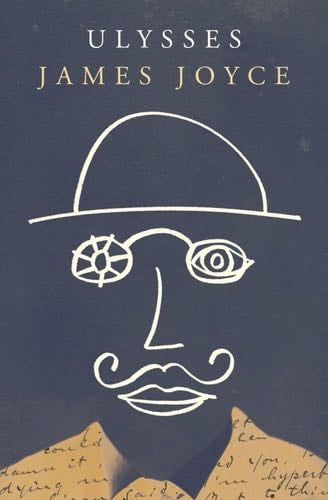
Ulysses
James Joyce · 2022
1924
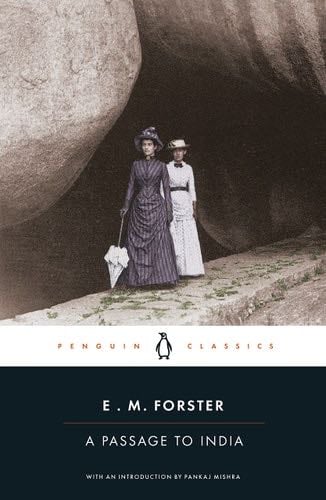
A Passage to India (Penguin Classics)
E. M. Forster · 2022
E. M. Forster's beloved classic and sharp critique of imperialism<br/><br/>A Penguin Classic<br/><br/>When Adela and her elderly companion Mrs. Moore arrive in the Indian town of Chandrapore, they quickly feel trapped by its insular and prejudiced British community. Determined to explore the "real India," they seek the guidance of the charming and mercurial Dr. Aziz, a cultivated Indian Muslim. But a mysterious incident occurs while they are exploring the Marabar caves with Aziz, and the well-respected doctor soon finds himself at the center of a scandal that rouses violent passions among both the British and their Indian subjects. A masterly portrait of a society in the grip of imperialism, A Passage to India compellingly depicts the fate of individuals caught between the great political and cultural conflicts of the modern world.<br/><br/>The Penguin Classics edition reproduces the authoritative Abinger text and also includes four of Forster's finest essays on India, a chronology of Forster's life and works, suggestions for further reading, explanatory notes, and an illuminating introduction by the distinguished critic and novelist Pankaj Mishra.<br/><br/>For more than seventy-five years, Penguin has been the leading publisher of classic literature in the English-speaking world. With more than 2,000 titles, Penguin Classics represents a global bookshelf of the best works throughout history and across genres and disciplines. Readers trust the series to provide authoritative texts enhanced by introductions and notes by distinguished scholars and contemporary authors, as well as up-to-date translations by award-winning translators.
1925

Der Kurgast: Aufzeichnungen von einer Badener Kur
Hermann Hesse · 1977

The White Guard
Mikhail Afanasevich Bulgakov · 2006
<p><b>Discover Mikhail Bugakov's classic literary love letter to the city of Kyiv.</b> <p>Drawing closely on Bulgakov's personal experiences of the horrors of civil war as a young doctor, <i>The White Guard</i> takes place in Kyiv, 1918, a time of turmoil and suffocating uncertainty as the Bolsheviks, Socialists and Germans fight for control of the city. It tells the story of the Turbins, a once-wealthy Russian family, as they are forced to come to terms with revolution and a new regime. <p>Bulgakov's first novel, <i>The White Guard</i> is one of the greatest works of twentieth century Russian literature. As epic a chronicle of life and death in the Russian Empire as <i>War and Peace</i>. <p><b>'The tumultuous atmosphere of the Ukrainian revolution and civil war is brilliantly evoked' <i>Daily Telegraph</i></b></p>
1927

Penguin Classics Aspects of the Novel
E M Forster · 2005

Amerika
Franz Kafka · 2019

Steppenwolf
Hermann Hesse · 2012
1928

Lady Chatterley's Lover
D. H. Lawrence · 2024
Modern Classics Parades End
Ford Madox Ford · 2002

NADJA BY (BRETON, ANDRE) PAPERBACK
Andr' Breton · 2007
1929
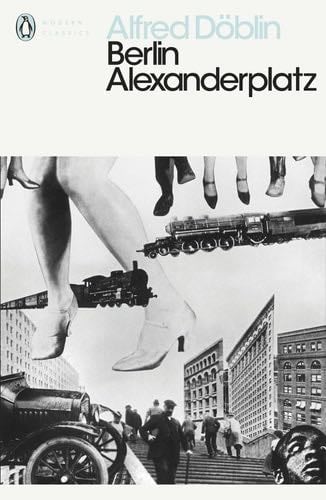
Berlin Alexanderplatz
Alfred Döblin · 2019
The great novel of 1920s Berlin life, in a superb new translation by Michael Hofmann<br/><br/>Franz Biberkopf is back on the streets of Berlin. Determined to go straight after a stint in prison, he finds himself thwarted by an unpredictable external agency that looks an awful lot like fate. Cheated, humiliated, thrown from a moving car; embroiled in an underworld of pimps, thugs, drunks and prostitutes, Franz picks himself up over and over again - until one day he is struck a monstrous blow which might just prove his final downfall.<br/><br/>A dazzling collage of newspaper reports, Biblical stories, drinking songs and urban slang, Berlin Alexanderplatz is the great novel of Berlin life: inventing, styling and recreating the city as reality and dream; mimicking its movements and rhythms; immortalizing its pubs, abattoirs, apartments and chaotic streets. From the gutter to the stars, this is the whole picture of the city.<br/><br/>Berlin Alexanderplatz brought fame in 1929 to its author Alfred Döblin, until then an impecunious writer and doctor in a working-class neighbourhood in the east of Berlin. Success at home was short-lived, however; Doblin, a Jew, left Germany the day after the Reichstag Fire in 1933, and did not return until 1945. This landmark translation by Michael Hofmann is the first to do justice to Berlin Alexanderplatz in English, brilliantly capturing the energy, prodigality and inventiveness of Döblin's masterpiece.

The Sound and the Fury (Vintage International)
William Faulkner · 2011

A Farewell to Arms
Ernest Hemingway · 2012
1930

The Edwardians
Vita Sackville-West · 2016
<b>A glittering portrait of fashionable Edwardian English high society seen through the lives of a brother and sister torn by ties to the past and the lure of the modern era.</b> <br>Sebastian is the heir of Chevron, a vast and beautiful English country estate. As such he is a fixed part of an eternal round of lavish parties, intrigues, traditions and fashions at the cold, decadent heart of Edwardian high society. Everyone knows the role Sebastian must play, but Sebastian isn't sure he wants the part. His sister Viola, meanwhile, scorns every part of her inheritance and is searching for a way out. The brave new world of the twentieth--century offers both escape and destruction."

The Man Without Qualities
Robert Musil · 1979

As I Lay Dying
Faulkner William · 1996
The death and burial of Addie Bundren is told by members of her family, as they cart the coffin to Jefferson, Mississippi, to bury her among her people. And as the intense desires, fears and rivalries of the family are revealed in the vernacular of the Deep South, Faulkner presents a portrait of extraordinary power - as epic as the Old Testament, as American as Huckleberry Finn.
1931

Virginia Woolf The Waves (Penguin Classics)
WOOLF VIRGINIA · 2019
1932

Laughter in the Dark
Vladimir Nabokov · 2012
1933

The Autobiography of Alice B. Toklas
Gertrude Stein · 2013
1934
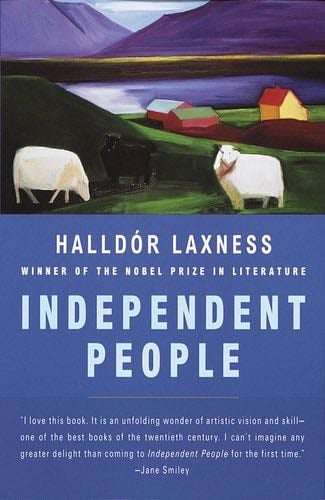
Independent People
Halldor Laxness · 1997
<b>From the Nobel Prize-winning Icelandic author: a magnificent novel that recalls Iceland's medieval epics and classics, set in the early twentieth century starring an ordinary sheep farmer and his heroic determination to achieve independence. • "A strange story, vibrant and alive…. There is a rare beauty in its telling." —<i>Atlantic Monthly</i><br> </b> <br> If Bjartur of Summerhouses, the book's protagonist, is an ordinary sheep farmer, his flinty determination to free himself is genuinely heroic and, at the same time, terrifying and bleakly comic.<br><br>Having spent eighteen years in humiliating servitude, Bjartur wants nothing more than to raise his flocks unbeholden to any man. But Bjartur's spirited daughter wants to live unbeholden to <i>him</i>. What ensues is a battle of wills that is by turns harsh and touching, elemental in its emotional intensity and intimate in its homely detail. Vast in scope and deeply rewarding, <i>Independent People</i> is a masterpiece.

I, Claudius
Robert Graves · 2014
“One of the really remarkable books of our day”—the story of the Roman emperor on which the award-winning BBC TV series was based (The New York Times). Once a rather bookish young man with a limp and a stammer, a man who spent most of his time trying to stay away from the danger and risk of the line of ascension, Claudius seemed an unlikely candidate for emperor. Yet, on the death of Caligula, Claudius finds himself next in line for the throne, and must stay alive as well as keep control. Drawing on the histories of Plutarch, Suetonius, and Tacitus, noted historian and classicist Robert Graves tells the story of the much-maligned Emperor Claudius with both skill and compassion. Weaving important themes throughout about the nature of freedom and safety possible in a monarchy, Graves’s Claudius is both more effective and more tragic than history typically remembers him. A bestselling novel and one of Graves’ most successful, I, Claudius has been adapted to television, film, theatre, and audio. “[A] legendary tale of Claudius . . . [A] gem of modern literature.” —Publishers Weekly (starred review)
1935

It Can't Happen Here
Sinclair Lewis · 2017

Nässlorna blomma (Albert Bonniers klassiker)
· 2015
1936
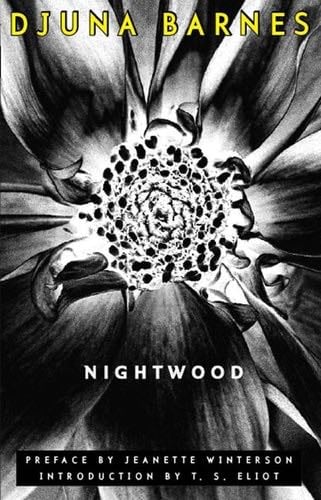
Nightwood
Djuna Barnes · 2006
The fiery and enigmatic masterpiece―one of the greatest novels of the Modernist era. Nightwood, Djuna Barnes' strange and sinuous tour de force, "belongs to that small class of books that somehow reflect a time or an epoch" (Times Literary Supplement). That time is the period between the two World Wars, and Barnes' novel unfolds in the decadent shadows of Europe's great cities, Paris, Berlin, and Vienna―a world in which the boundaries of class, religion, and sexuality are bold but surprisingly porous.<br/><br/>The outsized characters who inhabit this world are some of the most memorable in all of fiction―there is Guido Volkbein, the Wandering Jew and son of a self-proclaimed baron; Robin Vote, the American expatriate who marries him and then engages in a series of affairs, first with Nora Flood and then with Jenny Petherbridge, driving all of her lovers to distraction with her passion for wandering alone in the night; and there is Dr. Matthew-Mighty-Grain-of-Salt-Dante-O'Connor, a transvestite and ostensible gynecologist, whose digressive speeches brim with fury, keen insights, and surprising allusions. Barnes' depiction of these characters and their relationships (Nora says, "A man is another persona woman is yourself, caught as you turn in panic; on her mouth you kiss your own") has made the novel a landmark of feminist and lesbian literature.<br/><br/>Most striking of all is Barnes' unparalleled stylistic innovation, which led T. S. Eliot to proclaim the book "so good a novel that only sensibilities trained on poetry can wholly appreciate it." Now with a new preface by Jeanette Winterson, Nightwood still crackles with the same electric charge it had on its first publication in 1936.

The Makioka Sisters
Jun'ichiro Tanizaki · 1993

Mephisto
Klaus Mann · 2019
1937
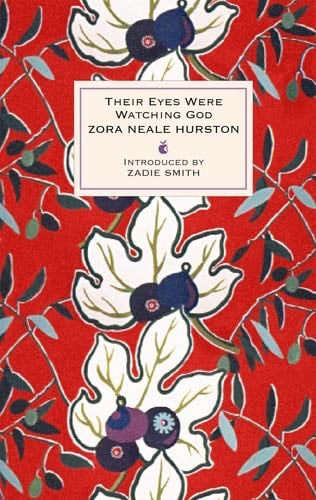
Their Eyes Were Watching God
Zora Neale Hurston · 2001

Wolf Among Wolves
Hans Fallada · 2010

Everybodys Autobiography 1st Edition
Stein, Gertrude

Ferdydurke
Witold Gombrowicz · 2012
In this bitterly funny novel by the renowned Polish author Witold Gombrowicz, a writer finds himself tossed into a chaotic world of schoolboys by a diabolical professor who wishes to reduce him to childishness. Originally published in Poland in 1937, <I>Ferdydurke </I>became an instant literary sensation and catapulted the young author to fame. Deemed scandalous and subversive by Nazis, Stalinists, and the Polish Communist regime in turn, the novel (as well as all of Gombrowicz’s other works) was officially banned in Poland for decades. It has nonetheless remained one of the most influential works of twentieth-century European literature.</I></B><BR></I></B><I>Ferdydurke </I>is<I> </I>translated here directly from the Polish for the first time. Danuta Borchardt deftly captures Gombrowicz’s playful and idiosyncratic style, and she allows English speakers to experience fully the masterpiece of a writer whom Milan Kundera describes as “one of the great novelists of our century.”<br></I></B><BR>
1938

The Death of the Heart
Elizabeth Bowen · 2000
Miss Pettigrew Lives for a Day
Winifred Watson · 2000
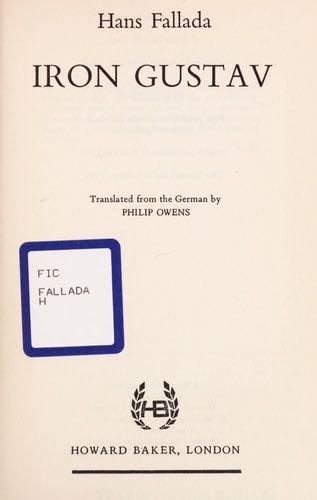
Iron Gustav
Hans Fallada · 1969
Text: English, German (translation)
1939

The Possessed
Witold Gombrowicz · 2023
In The Possessed, Witold Gombrowicz, considered by many to be Poland's greatest modernist, draws together the familiar tropes of the Gothic novel to produce a darkly funny and playful subversion of the form. With dreams of escaping his small-town existence and the limitations of his status, a young tennis coach travels to the heart of the Polish countryside where he is to train Maja Ocholowska, a beautiful and promising player whose bourgeois family has fallen upon difficult circumstances. But no sooner has he arrived than his relationship with his pupil develops into one of twisted love and hate, and he becomes embroiled in the fantastic happenings taking place at the dilapidated castle nearby. Haunted kitchens, bewitched towels, conniving secretaries and famous clairvoyants all conspire to determine the fate of the young lovers and the mad prince residing in the castle. Translated directly into English for the first time by Antonia Lloyd-Jones, The Possessed is a comic masterpiece that, despite being a literary pastiche, has all the hallmarks of Gombrowicz's typically provocative style.
1940

The Heart Is a Lonely Hunter
Carso Mccullers · 2000
1943

Interrupted Life
Etty Hillesum · 1983
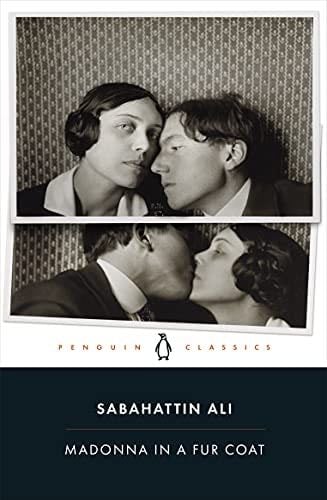
Madonna in a Fur Coat
Sabahattin Ali · 2020
The bestselling Turkish classic of love and longing in a changing world, available in English for the first time. 'It is, perhaps, easier to dismiss a man whose face gives no indication of an inner life. And what a pity that is: a dash of curiosity is all it takes to stumble upon treasures we never expected.' A shy young man leaves his home in rural Turkey to learn a trade in 1920s Berlin. The city's crowded streets, thriving arts scene, passionate politics and seedy cabarets provide the backdrop for a chance meeting with a woman, which will haunt him for the rest of his life. Emotionally powerful, intensely atmospheric and touchingly profound, Madonna in a Fur Coat is an unforgettable novel about new beginnings and the unfathomable nature of the human soul. 'Passionate but clear . . . Ali's success [is in ] his ability to describe the emergence of a feeling, seemingly straightforward from the outside but swinging back and forth between opposite extremes at its core, revealing the tensions that accompanies such rise and fall.' Atilla Özkirimli, writer and literary historian
1944
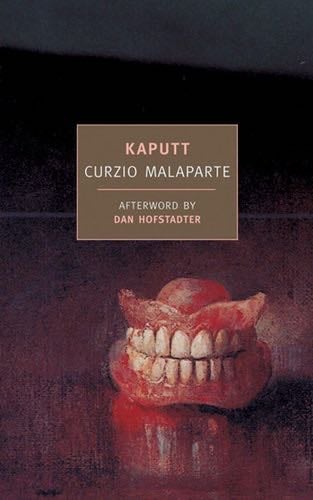
Kaputt
Curzio Malaparte · 2005

No Exit and Three Other Plays
Jean-Paul Sartre · 1989
1945

Brideshead Revisited
Evelyn Waugh · 2024
1946

Miracle of the Rose
M. Jean Genet · 2019
Jean Genet, French playwright, novelist and poet, turned the experiences in his life amongst pimps, whores, thugs and other fellow social outcasts into a poetic literature, with an honesty and explicitness unprecedented at the time. Widely considered an outstanding and unique figure in French literature, Genet wrote five novels between 1942 and 1947, now being republished by Faber & Faber in beautiful new paperback editions.<br/>Miracle of the Rose was Jean Genet's second novel, composed in 1943 while incarcerated in prison. The novel is informed by Genet's memories of confinement, both in prison and the Mettray reformatory where he spent three years from the age of 15. The central figure of the novel is Harcamone, whom Genet first encountered at Mettray, and who resurfaces in an adult prison -- now a murderer and, in the world-turned-upside-down of Genet's vision, a quasi-divine figure.
1947

The Woman of Rome (Italia)
Alberto Moravia · 2011
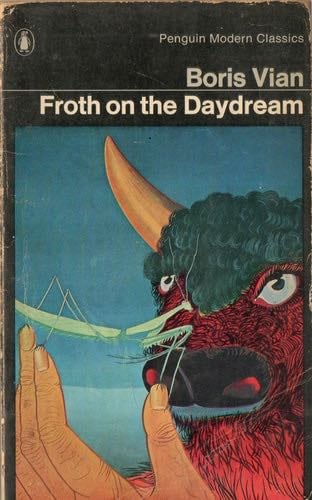
Froth on the Daydream
Boris Vian · 1970
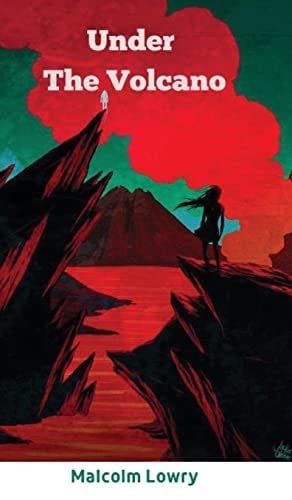
Under The Volcano
Malcolm Lowry · 2022
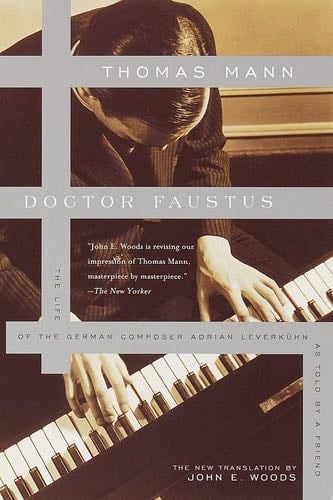
Doctor Faustus
Thomas Mann · 1999
1948

Family Roundabout
Richmal Crompton · 2001
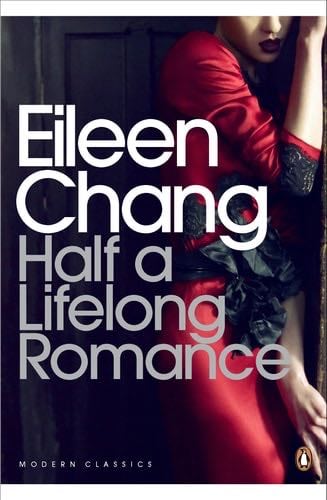
Half a Lifelong Romance (Penguin Modern Classics)
Eileen Chang · 2014
1949

The Second Sex
Simone de Beauvoir · 2012

Thiefs Journal
M. Jean Genet · 2019