
power, knowledge production, & epistemic violence
Items in this hypelist
Truth Regimes & Discourses of Control

Can the Subaltern Speak?
Gayatri Chakravorty Spivak · 2020
<p>In 1985 Gayatri Chakravorty Spivak's seminal essay, 'Can the Subaltern Speak' transformed the analysis of colonialism. In a deeply divided world Spivak's text interrogated the historical and ideological factors that, by obstructing the potential for certain subjects to be heard, maintained the degraded status of those subjects on the world's peripheries. The text remains, in the third decade of the twenty-first century, as compelling as ever, and affirms the continuing relevance of Marxism to contemporary decolonial thought.<br> <br> In this volume, the essay is given new life in dialogue with especially commissioned artwork by Ecuadorian artist Estefanía Peñafiel Loaiza. Loaiza's preoccupation with questions of visibility and occlusion, the need for and absence of the image, has guide the creation of a mesmerising set of works. These form a visual vocabulary that echoes and refracts Spivak's central terms, bringing new inflections to an enduringly important text.</p>
Language and Power Exploring Political Cultures in Indonesia
Benedict Richard O'Gorman Anderson · 1990
<p>In this lively book, Benedict R. O'G Anderson explores the cultural and political contradictions that have arisen from two critical facts in Indonesian history?that while the Indonesian nation is young, the Indonesian state is ancient, originating in the early seventeenth-century Dutch conquests; and that contemporary politics are conducted in a new language, Bahasa Indonesia, by peoples (especially the Javanese) whose cultures are rooted in medieval times. Analyzing a spectrum of examples from classical poetry to public monuments and cartoons, Anderson deepens our understanding of the interaction between modern and traditional notions of power, the meditation of power by language, and the development of national consciousness.</p> <p>This volume brings together eight of Anderson's most influential essays written over the past two decades. Most of the essays address aspects of Javanese political culture?from the early nineteenth century, when the Javanese did not yet have words for politics, colonialism, society, or class, through the early nationalism of the 1900s, to the era of independence after World War II, when deep internal tensions exploded into large-scale massacres. In the first group of essays Anderson considers how power was imagined in traditional Javanese society, and how these imaginings shaped Indonesia's modern politics. Other essays focus on the significance of the incongruences between the egalitarian, ironizing national language through which modern Indonesia has been imagined and the powerful influence of the hierarchical, authoritarian Javanese official culture. Finally, two essays on consciousness illuminate the crucial eras before and after the rise of Indonesia's nationalist movement. One reflects on Javanese intellectuals' phantasmagoric efforts to keep imagining "Java" as the island was overrun by colonial capitalism and absorbed into the huge, heterogeneous Netherlands East Indies; the second traces the transition from old culture to new nation through the autobiography of an eminent Javanese first-generation nationalist politician.</p>

State Terrorism and Political Identity in Indonesia Fatally Belonging
Ariel Heryanto · 2006
Power and Knowledge in Southeast Asia State and Scholars in Indonesia and the Philippines
Rommel Argamosa Curaming · 2020
<p>Examining two state-sponsored history writing projects in Indonesia and the Philippines in the 1970s, this book illuminates the contents and contexts of the two projects and, more importantly, provides a nuanced characterization of the relationship between embodiments of power (state, dictators, government officials) and knowledge (intellectuals, historians, history). </p><p>Known respectively as Sejarah Nasional Indonesia (SNI) and the Tadhana project, these projects were initiated by the Suharto and Marcos authoritarian regimes against the backdrop of rising and competing nationalisms, as well as the regimes' efforts at political consolidation. The dialectics between actors and the politico-academic contexts determine whether scholarship and politics would clash, mutually support, or co-exist parallel with one another. Rather than one side manipulating or co-opting the other, this study shows the mutual need or partnership between scholars and political actors in these projects. This book proposes the need to embrace rather than deny or transcend the entwined power/knowledge if the idea is for scholarship to realize its truly progressive visions. </p><p>Analyzing the dynamics of state-scholar relations in the two countries, the book will be of interest to academics in the fields on Southeast Asian history and politics, nationalism, historiography, intellectual history, postocolonial studies, cultural studies, and the sociology of knowledge.</p>

Red Skin, White Masks Rejecting the Colonial Politics of Recognition
Glen Sean Coulthard · 2014

Black Skin, White Masks
Frantz Fanon · 2008
<p>Few modern voices have had as profound an impact on the black identity and critical race theory as Frantz Fanon, and <i>Black Skin, White Masks</i> represents some of his most important work. Fanon's masterwork is now available in a new translation that updates its language for a new generation of readers.</p> <p>A major influence on civil rights, anti-colonial, and black consciousness movements around the world, <i>Black Skin, White Masks</i> is the unsurpassed study of the black psyche in a white world. Hailed for its scientific analysis and poetic grace when it was first published in 1952, the book remains a vital force today from one of the most important theorists of revolutionary struggle, colonialism, and racial difference in history.</p>

The Myth of the Lazy Native A Study of the Image of the Malays, Filipinos and Javanese from the 16th to the 20th Century and Its Function in the Ideology of Colonial Capitalism
Syed Hussein Alatas · 2010
<p>The Myth of the Lazy Nativeis Syed Hussein Alatas’ widely acknowledged critique of the colonial construction of Malay, Filipino and Javanese natives from the 16thto the 20thcentury. Drawing on the work of Karl Mannheim and the sociology of knowledge, Alatas analyses the origins and functions of such myths in the creation and reinforcement of colonial ideology and capitalism.</p><p>The book constitutes in his own words: ‘an effort to correct a one-sided colonial view of the Asian native and his society’ and will be of interest to students and scholars of colonialism, post-colonialism, sociology and South East Asian Studies.</p>
Orientalism: Western Concepts of the Orient
Edward W. Said · 1995

The Archeology of Knowledge
Michel Foucault · 2017
This book is one of the many Islamic publications distributed by Mustafa Organization throughout the world in different languages with the aim of conveying the message of Islam to the people of the world. Mustafa Organization is a registered Organization that operates and is sustained through collaborative efforts of volunteers in many countries around the world, and it welcomes your involvement and support. Its objectives are numerous, yet its main goal is to spread the truth about the Islamic faith in general and the Shi`a School of Thought in particular due to the latter being misrepresented, misunderstood and its tenets often assaulted by many ignorant folks, Muslims and non-Muslims. Organization's purpose is to facilitate the dissemination of knowledge through a global medium, the Internet, to locations where such resources are not commonly or easily accessible or are resented, resisted and fought!

Power/Knowledge Selected Interviews and Other Writings, 1972-1977
Michel Foucault · 1980
Michel Foucault has become famous for a series of books that have permanently altered our understanding of many institutions of Western society. He analyzed mental institutions in the remarkable Madness and Civilization; hospitals in The Birth of the Clinic; prisons in Discipline and Punish; and schools and families in The History of Sexuality. But the general reader as well as the specialist is apt to miss the consistent purposes that lay behind these difficult individual studies, thus losing sight of the broad social vision and political aims that unified them.<br><br>Now, in this superb set of essays and interviews, Foucault has provided a much-needed guide to Foucault. These pieces, ranging over the entire spectrum of his concerns, enabled Foucault, in his most intimate and accessible voice, to interpret the conclusions of his research in each area and to demonstrate the contribution of each to the magnificent -- and terrifying -- portrait of society that he was patiently compiling.<br><br>For, as Foucault shows, what he was always describing was the nature of power in society; not the conventional treatment of power that concentrates on powerful individuals and repressive institutions, but the much more pervasive and insidious mechanisms by which power "reaches into the very grain of individuals, touches their bodies and inserts itself into their actions and attitudes, their discourses, learning processes and everyday lives"<br><br>Foucault's investigations of prisons, schools, barracks, hospitals, factories, cities, lodgings, families, and other organized forms of social life are each a segment of one of the most astonishing intellectual enterprises of all time -- and, as this book proves, one which possesses profound implications for understanding the social control of our bodies and our minds.
Epistemic Injustice, Erasure, & Willful Ignorance

Indigenous Knowledges in Global Contexts Multiple Readings of Our World
Research Foundation for Science, Technology, and Natural Resources · 2000
As We Have Always Done Indigenous Freedom Through Radical Resistance
Leanne Betasamosake Simpson · 2017
<p><b>Winner: Native American and Indigenous Studies Association's Best Subsequent Book 2017 <br> Honorable Mention: Labriola Center American Indian National Book Award 2017</b></p><p> <br> Across North America, Indigenous acts of resistance have in recent years opposed the removal of federal protections for forests and waterways in Indigenous lands, halted the expansion of tar sands extraction and the pipeline construction at Standing Rock, and demanded justice for murdered and missing Indigenous women. In <i>As We Have Always Done</i>, Leanne Betasamosake Simpson locates Indigenous political resurgence as a practice rooted in uniquely Indigenous theorizing, writing, organizing, and thinking.</p><p>Indigenous resistance is a radical rejection of contemporary colonialism focused around the refusal of the dispossession of both Indigenous bodies and land. Simpson makes clear that its goal can no longer be cultural resurgence as a mechanism for inclusion in a multicultural mosaic. Instead, she calls for unapologetic, place-based Indigenous alternatives to the destructive logics of the settler colonial state, including heteropatriarchy, white supremacy, and capitalist exploitation.</p>

The End of the Cognitive Empire The Coming of Age of Epistemologies of the South
Boaventura de Sousa Santos · 2018
In <i>The End of the Cognitive Empire</i> Boaventura de Sousa Santos further develops his concept of the "epistemologies of the South," in which he outlines a theoretical, methodological, and pedagogical framework for challenging the dominance of Eurocentric thought. As a collection of knowledges born of and anchored in the experiences of marginalized peoples who actively resist capitalism, colonialism, and patriarchy, epistemologies of the South represent those forms of knowledge that are generally discredited, erased, and ignored by dominant cultures of the global North. Noting the declining efficacy of established social and political solutions to combat inequality and discrimination, Santos suggests that global justice can only come about through an epistemological shift that guarantees cognitive justice. Such a shift would create new, alternative strategies for political mobilization and activism and give oppressed social groups the means through which to represent the world as their own and in their own terms.

Knowledges Born in the Struggle Constructing the Epistemologies of the Global South
Boaventura de Sousa Santos · 2020
<p>In a world overwhelmingly unjust and seemingly deprived of alternatives, this book claims that the alternatives can be found among us. These alternatives are, however, discredited or made invisible by the dominant ways of knowing. Rather than alternatives, therefore, we need an alternative way of thinking of alternatives. Such an alternative way of thinking lies in the knowledges born in the struggles against capitalism, colonialism, and patriarchy, the three main forms of modern domination. In their immense diversity, such ways of knowing constitute the Global South as an epistemic subject. The epistemologies of the South are guided by the idea that another world is possible and urgently needed; they emerge both in the geographical north and in the geographical south whenever collectives of people fight against modern domination. Learning from and with the epistemic South suggests that the alternative to a general theory is the promotion of an ecology of knowledges based on intercultural and interpolitical translation.</p>

Pedagogy of the Oppressed 50th Anniversary Edition
Paulo Freire · 2018
<p>First published in Portuguese in 1968,<i> Pedagogy of the Oppressed</i> was translated and published in English in 1970. Paulo Freire's work has helped to empower countless people throughout the world and has taken on special urgency in the United States and Western Europe, where the creation of a permanent underclass among the underprivileged and minorities in cities and urban centers is ongoing.</p><p>This 50th anniversary edition includes an updated introduction by Donaldo Macedo, a new afterword by Ira Shor and interviews with Marina Aparicio Barber�n, Noam Chomsky, Ram�n Flecha, Gustavo Fischman, Ronald David Glass, Valerie Kinloch, Peter Mayo, Peter McLaren and Margo Okazawa-Rey to inspire a new generation of educators, students, and general readers for years to come.</p>
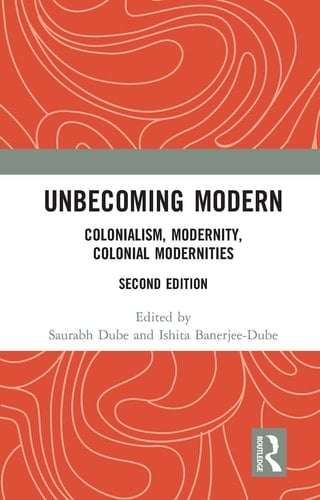
Unbecoming Modern Colonialism, Modernity, Colonial Modernities
Ishita Banerjee-Dube · 2024
<p>In this volume well-known scholars from India and Latin America - Enrique Dussel, Madhu Dubey, Walter D. Mignolo, and Sudipta Sen, to name a few - discuss the concepts of modernity and colonialism and describe how the two relate to each other. This second edition to the volume comes with a new introduction which extends and critically supplements the discussion in the earlier introduction to the volume. It explores the vital impact of the colonial pasts of India, Mexico, China, and even the Unites States, on the processes through which these countries have become modern. The collection is unique, as it brings together a range of disciplines and perspectives. The topics discussed include the Zapatista movement in Southern Mexico, the image of the South in recent African-American literature, the theories of Andre Gunder Frank about the early modernization of Asian countries, and the contradictions of the colonial state in India.</p>

The Making of Middle Indonesia Middle Classes in Kupang Town, 1930s-1980s
Geert Arend van Klinken · 2014
What holds Indonesia together? 'A strong leader' is the answer most often given. This book looks instead at a middle level of society. Middle classes in provincial towns around the vast archipelago mediate between the state and society and help to constitute state power. 'Middle Indonesia' is a social zone connecting extremes. <i>The Making of Middle Indonesia</i> examines the rise of an indigenous middle class in one provincial town far removed from the capital city. Spanning the late colonial to early New Order periods, it develops an unusual, associational notion of political power. 'Soft' modalities of power included non-elite provincial people in the emerging Indonesian state. At the same time, growing inequalities produced class tensions that exploded in violence in 1965-1966.<br>Full text (Open Access)

Mainstreaming Islam in Indonesia Television, Identity, and the Middle Class
Inaya Rakhmani · 2017

The Social Production of Indifference Exploring the Symbolic Roots of Western Bureaucracy
Michael Herzfeld · 2021
In this fascinating book, Michael Herzfeld argues that 'modern' bureaucratically regulated societies are no more 'rational' or less 'symbolic' than the societies traditionally studied by anthropologists.

Decolonization, Development and Knowledge in Africa Turning Over a New Leaf
Sabelo J. Ndlovu-Gatsheni · 2020
<p>This provocative book is anchored on the insurgent and resurgent spirit of decolonization of the twenty-first century. The author calls upon Africa to turn over a new leaf in the domains of politics, economy, and knowledge as it frees itself from imperial global designs and global coloniality.</p> <p>With a focus on Africa and its Diaspora, the author calls for a radical turning over of a new leaf, predicated on decolonial turn and epistemic freedom. The key themes subjected to decolonial analysis include: (1) decolonization/decoloniality - articulating the meaning and contribution of the decolonial turn; (2) subjectivity/identity - examining the problem of Blackness (identity) as external and internal invention; (3) the Bandung spirit of decolonization as an embodiment of resistance and possibilities, development and self-improvement; (4) development and self-improvement - of African political economy, as entangled in the colonial matrix of power, and the African Renaissance, as weakened by undecolonized political and economic thought; and (5) knowledge - the role of African humanities in the struggle for epistemic freedom.<br> <br> This groundbreaking volume opens the intellectual canvas on the challenges and possibilities of African futures. It will be of great interest to students and scholars of Politics and International Relations, Development, Sociology, African Studies, Black Studies, Education, History Postcolonial Studies, and the emerging field of Decolonial Studies.</p>

Changing Theory Concepts from the Global South
Dilip M. Menon · 2022
<p>This book is an original, systematic, and radical attempt at decolonizing critical theory. Drawing on linguistic concepts from 16 languages from Asia, Africa, the Arab world, and South America, the essays in the volume explore the entailments of words while discussing their conceptual implications for the humanities and the social sciences everywhere. The essays engage in the work of thinking through words to generate a conceptual vocabulary that will allow for a global conversation on social theory which will be necessarily multilingual.</p> <p>With essays by scholars, across generations, and from a variety of disciplines - history, anthropology, and philosophy to literature and political theory - this book will be essential reading for scholars, researchers, and students of critical theory and the social sciences.</p>
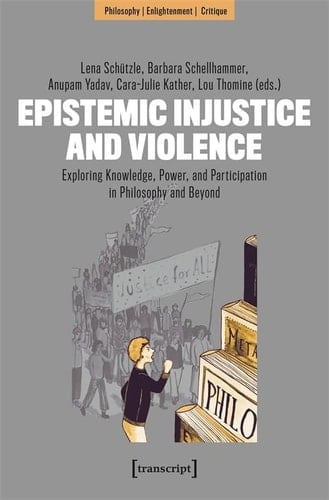
Epistemic Injustice and Violence Exploring Knowledge, Power, and Participation in Philosophy and Beyond
Lena Schützle · 2024
The practice of philosophy has led to both emancipation and exclusion in society. Questions around how philosophy should be practiced, who should engage in it, and with which issues philosophy should deal are subject to debate and controversy. This volume is dedicated to the special role of epistemic injustice and violence in philosophy. By shedding light on the inherent unjust structures of academic philosophy, the contributors to this volume help to better understand this powerful tool that impacts the academic landscape as well as individual and collective ways of being. From graphic novel to philosophical essay, they design a concept of transformative philosophy and offer various entry points to the conversation.

Centering Epistemic Injustice Epistemic Labor, Willful Ignorance, and Knowing Across Hermeneutical Divides
Kamili Posey · 2023
In Centering Epistemic Injustice: Epistemic Labor, Willful Ignorance, and Knowing Across Hermeneutical Divides, Kamili Posey asks what it means for accounts of epistemic injustice to take seriously the lives and perspectives of socially marginalized knowers. The first part of this book takes up the predominant account of testimonial injustice offered by Miranda Fricker, arguing that testimonial injustice is not merely about the epistemic harms perpetrated by dominant knowers against marginalized knowers, but also about the strategies that marginalized knowers use to circumvent those harms. Such strategies expand current conceptions of epistemic injustice by centering how marginalized knowers engage and resist in hostile epistemic environments. The second part of the book examines Fricker’s concept of hermeneutical injustice, rooted in hermeneutical marginalization. Thinking alongside critics of hermeneutical injustice, Centering Epistemic Injustice explores the relationship between dominant knowing and marginalized knowing and asks if social power—including the power to shape collective resources and ways of meaning-making—makes it impossible for dominant knowers to know and “hear well” across hermeneutical divides. Finally, the book asks whether hermeneutical divides are real divides in understanding and how dominant knowers might come to be better knowers in the pursuit of a more thoroughgoing epistemic justice.

Epistemic Injustice Power and the Ethics of Knowing
Miranda Fricker · 2009
Epistemic Injustice explores the idea that there is a distinctively epistemic kind of injustice - injustice which consists in a wrong done to someone specifically in their capacity as a knower. Miranda Fricker distinguishes two forms of epistemic injustice: testimonial injustice andhermeneutical injustice. Testimonial injustice occurs when prejudice causes a hearer to give a deflated level of credibility to a speaker's word; as in the case where the police do not believe someone because he is black. Hermeneutical injustice, by contrast, occurs when a gap in collectiveinterpretative resources puts someone at an unfair disadvantage when it comes to making sense of their social experiences. A central case of this sort of injustice is found in the example of a woman who suffers sexual harassment prior to the time when we acquired this critical concept, so that shecannot properly comprehend her own experience, let alone render it communicatively intelligible to others. In connection with each of these forms of epistemic injustice, Fricker develops the idea that our testimonial sensibility needs to incorporate a corrective, anti-prejudicial virtue that can beused to promote a more veridical and a more democratic epistemic practice. Epistemology as it has traditionally been pursued has been impoverished by the lack of any theoretical framework conducive to revealing the ethical and political aspects of our epistemic conduct. Epistemic Injustice shows that virtue epistemology provides a general epistemological idiom in whichthese issues can be fruitfully and forcefully discussed.
