sciences 🫀 humanities

Items in this hypelist
Reading

Proust Was a Neuroscientist
Jonah Lehrer · 2008
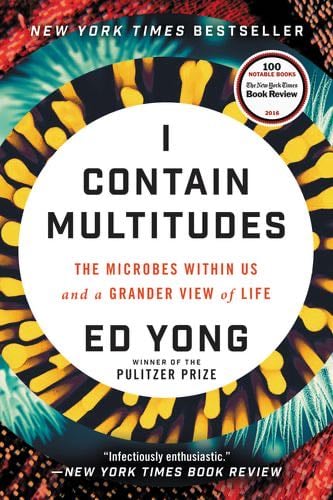
I Contain Multitudes: The Microbes Within Us and a Grander View of Life
Ed Yong · 2018
The New York Times Bestseller<br/>From Pulitzer Prize winner Ed Yong, a groundbreaking, wondrously informative, and vastly entertaining examination of the most significant revolution in biology since Darwin—a “microbe’s-eye view” of the world that reveals a marvelous, radically reconceived picture of life on earth.<br/>Every animal, whether human, squid, or wasp, is home to millions of bacteria and other microbes. Pulitzer Prize-winning author Ed Yong, whose humor is as evident as his erudition, prompts us to look at ourselves and our animal companions in a new light—less as individuals and more as the interconnected, interdependent multitudes we assuredly are.<br/>The microbes in our bodies are part of our immune systems and protect us from disease. In the deep oceans, mysterious creatures without mouths or guts depend on microbes for all their energy. Bacteria provide squid with invisibility cloaks, help beetles to bring down forests, and allow worms to cause diseases that afflict millions of people.<br/>Many people think of microbes as germs to be eradicated, but those that live with us—the microbiome—build our bodies, protect our health, shape our identities, and grant us incredible abilities. In this astonishing book, Ed Yong takes us on a grand tour through our microbial partners, and introduces us to the scientists on the front lines of discovery. It will change both our view of nature and our sense of where we belong in it.
Finished

Steve Jobs
Walter Isaacson · 2011
Walter Isaacson’s “enthralling” (The New Yorker) worldwide bestselling biography of Apple cofounder Steve Jobs.<br/><br/>Based on more than forty interviews with Steve Jobs conducted over two years—as well as interviews with more than 100 family members, friends, adversaries, competitors, and colleagues—Walter Isaacson has written a riveting story of the roller-coaster life and searingly intense personality of a creative entrepreneur whose passion for perfection and ferocious drive revolutionized six industries: personal computers, animated movies, music, phones, tablet computing, and digital publishing. Isaacson’s portrait touched millions of readers.<br/><br/>At a time when America is seeking ways to sustain its innovative edge, Jobs stands as the ultimate icon of inventiveness and applied imagination. He knew that the best way to create value in the twenty-first century was to connect creativity with technology. He built a company where leaps of the imagination were combined with remarkable feats of engineering.<br/><br/>Although Jobs cooperated with the author, he asked for no control over what was written. He put nothing off-limits. He encouraged the people he knew to speak honestly. He himself spoke candidly about the people he worked with and competed against.<br/><br/>His friends, foes, and colleagues offer an unvarnished view of the passions, perfectionism, obsessions, artistry, devilry, and compulsion for control that shaped his approach to business and the innovative products that resulted.<br/><br/>His tale is instructive and cautionary, filled with lessons about innovation, character, leadership, and values.<br/><br/>Steve Jobs is the inspiration for the movie of the same name starring Michael Fassbender, Kate Winslet, Seth Rogen, and Jeff Daniels, directed by Danny Boyle with a screenplay by Aaron Sorkin.

The Code Breaker: Jennifer Doudna, Gene Editing, and the Future of the Human Race
Walter Isaacson · 2021

Why Fish Don't Exist
Lulu Miller · 2021
A Best Book of 2020: The Washington Post * NPR * Chicago Tribune * Smithsonian<br/><br/>A “remarkable” (Los Angeles Times), “seductive” (The Wall Street Journal) debut from the new cohost of Radiolab, Why Fish Don’t Exist is a dark and astonishing tale of love, chaos, scientific obsession, and—possibly—even murder.<br/><br/>“At one point, Miller dives into the ocean into a school of fish…comes up for air, and realizes she’s in love. That’s how I felt: Her book took me to strange depths I never imagined, and I was smitten.” —The New York Times Book Review<br/><br/>David Starr Jordan was a taxonomist, a man possessed with bringing order to the natural world. In time, he would be credited with discovering nearly a fifth of the fish known to humans in his day. But the more of the hidden blueprint of life he uncovered, the harder the universe seemed to try to thwart him. His specimen collections were demolished by lightning, by fire, and eventually by the 1906 San Francisco earthquake—which sent more than a thousand discoveries, housed in fragile glass jars, plummeting to the floor. In an instant, his life’s work was shattered.<br/><br/>Many might have given up, given in to despair. But Jordan? He surveyed the wreckage at his feet, found the first fish that he recognized, and confidently began to rebuild his collection. And this time, he introduced one clever innovation that he believed would at last protect his work against the chaos of the world.<br/><br/>When NPR reporter Lulu Miller first heard this anecdote in passing, she took Jordan for a fool—a cautionary tale in hubris, or denial. But as her own life slowly unraveled, she began to wonder about him. Perhaps instead he was a model for how to go on when all seemed lost. What she would unearth about his life would transform her understanding of history, morality, and the world beneath her feet.<br/><br/>Part biography, part memoir, part scientific adventure, Why Fish Don’t Exist is a wondrous fable about how to persevere in a world where chaos will always prevail.
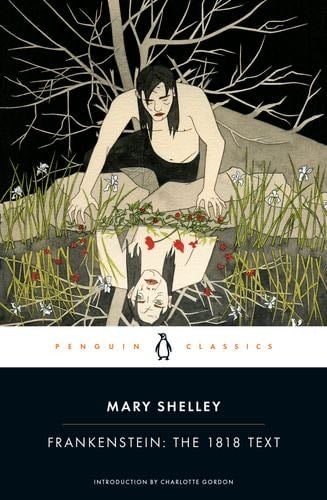
Frankenstein: The 1818 Text (Penguin Classics)
Mary Shelley · 2018
<b>Mary Shelley’s classic novel, presented in its original 1818 text, with an introduction from National Book Critics Circle award-winner Charlotte Gordon</b><br> <br> <b>Nominated as one of America’s best-loved novels by PBS’s <i>The Great American Read</i></b><br> <br>The original 1818 text of <i>Frankenstein</i> preserves the hard-hitting and politically-charged aspects of Shelley’s original writing, as well as her unflinching wit and strong female voice. This edition also emphasizes Shelley’s relationship with her mother—trailblazing feminist Mary Wollstonecraft, who penned <i>A Vindication of the Rights of Woman</i>—and demonstrates her commitment to carrying forward her mother’s ideals, placing her in the context of a feminist legacy rather than the sole female in the company of male poets, including Percy Shelley and Lord Byron.<br> <br> This edition includes a new introduction and suggestions for further reading by National Book Critics Circle award-winner and Shelley expert Charlotte Gordon, literary excerpts and reviews selected by Gordon, and a chronology and essay by preeminent Shelley scholar Charles E. Robinson. <br> <br>Penguin Classics is the leading publisher of classic literature in the English-speaking world, representing a global bookshelf of the best works throughout history and across genres and disciplines. Readers trust the series to provide authoritative texts enhanced by introductions and notes by distinguished scholars and contemporary authors, as well as up-to-date translations by award-winning translators.

Bad Blood: Secrets and Lies in a Silicon Valley Startup
John Carreyrou · 2018
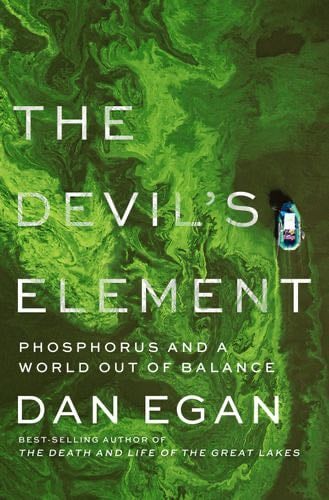
The Devil''s Element: Phosphorus and a World Out of Balance
Dan Egan · 2023
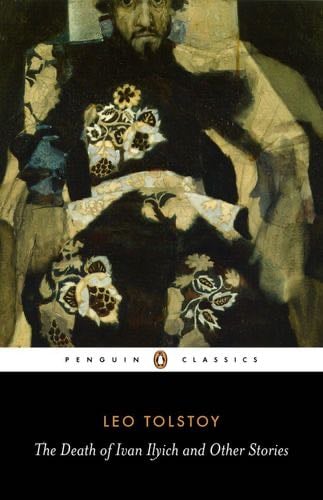
The Death of Ivan Ilyich and Other Stories (Penguin Classics)
Leo Tolstoy · 2008
Here are some of Tolstoy's extraordinary short stories, from "The Death of Ivan Ilyich." in a masterly new translation, to "The Raid," "The Wood-felling," "Three Deaths," "Polikushka," "After the Ball," and "The Forged Coupon," all gripping and eloquent lessons on two of Tolstoy's most persistent themes: life and death. More experimental than his novels, Tolstoy's stories are essential reading for anyone interested in his development as one of the major writers and thinkers of his time.<br/><br/>For more than seventy years, Penguin has been the leading publisher of classic literature in the English-speaking world. With more than 1,700 titles, Penguin Classics represents a global bookshelf of the best works throughout history and across genres and disciplines. Readers trust the series to provide authoritative texts enhanced by introductions and notes by distinguished scholars and contemporary authors, as well as up-to-date translations by award-winning translators.
When Breath Becomes Air
Abraham Verghese, Paul Kalanithi
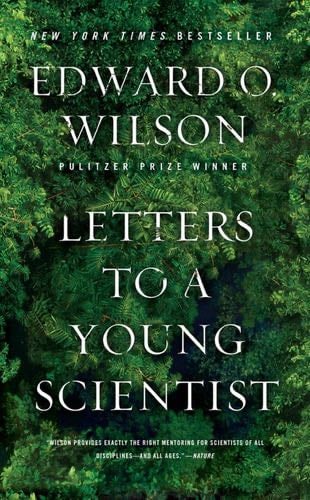
Letters to a Young Scientist
Edward O. Wilson · 2014
Pulitzer Prize–winning biologist Edward O. Wilson imparts the wisdom of his storied career to the next generation. Edward O. Wilson has distilled sixty years of teaching into a book for students, young and old. Reflecting on his coming-of-age in the South as a Boy Scout and a lover of ants and butterflies, Wilson threads these twenty-one letters, each richly illustrated, with autobiographical anecdotes that illuminate his career―both his successes and his failures―and his motivations for becoming a biologist. At a time in human history when our survival is more than ever linked to our understanding of science, Wilson insists that success in the sciences does not depend on mathematical skill, but rather a passion for finding a problem and solving it. From the collapse of stars to the exploration of rain forests and the oceans’ depths, Wilson instills a love of the innate creativity of science and a respect for the human being’s modest place in the planet’s ecosystem in his readers. 21 illustrations
To Read

American Prometheus: The Triumph and Tragedy of J. Robert Oppenheimer
Kai Bird, Martin J. Sherwin
THE INSPIRATION FOR THE ACADEMY AWARD®-WINNING MAJOR MOTION PICTURE OPPENHEIMER • "A riveting account of one of history’s most essential and paradoxical figures.”—Christopher Nolan<br/><br/>#1 NEW YORK TIMES BESTSELLER • PULITZER PRIZE WINNER • The definitive biography of J. Robert Oppenheimer, one of the iconic figures of the twentieth century, a brilliant physicist who led the effort to build the atomic bomb for his country in a time of war, and who later found himself confronting the moral consequences of scientific progress.<br/><br/>In this magisterial, acclaimed biography twenty-five years in the making, Kai Bird and Martin Sherwin capture Oppenheimer’s life and times, from his early career to his central role in the Cold War. This is biography and history at its finest, riveting and deeply informative.<br/><br/>“A masterful account of Oppenheimer’s rise and fall, set in the context of the turbulent decades of America’s own transformation. It is a tour de force.” —Los Angeles Times Book Review<br/><br/>“A work of voluminous scholarship and lucid insight, unifying its multifaceted portrait with a keen grasp of Oppenheimer’s essential nature.... It succeeds in deeply fathoming his most damaging, self-contradictory behavior.” —The New York Times
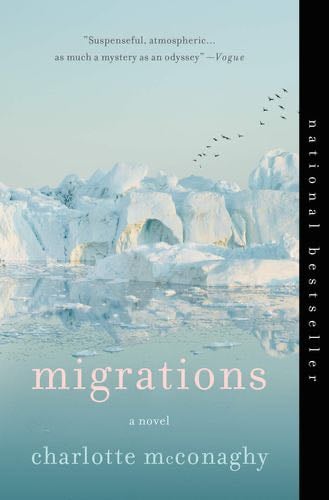
Migrations
Charlotte Mcconaghy · 2021

Leaves Of Grass: 1855
Walt Whitman · 2018
This is a copy of the first self-published copy of Leaves of Grass, published on July 4, 1855 in Brooklyn, NY. 795 copies were printed, although only 200 copies were bound with the green cover.<br/>The author's name did not appear on the cover, although it does appear in the poem on page 31 in this edition.<br/>Walt Whitman continued to work on this masterwork until his death. Six more versions appeared during his lifetime, and after his death a “death-bed” version appeared.<br/>History buffs will know that the 1855 edition was printed six years before Abraham Lincoln became president. Later editions are important because of the poems Whitman wrote about the Civil War and Abraham Lincoln.<br/>This 1855 edition is a favorite of many poets because of the fresh energy in the presentation and language.<br/>This edition was gone over line by line to be sure the text is readable, and the line breaks closely represent Whitman's original intention. Also, the full 1855 introduction by Walt Whitman is included in this edition.<br/>period reviews<br/>"We find upon our table (and shall put into the fire) a thin octavo volume, handsomely printed and bound. We shall not aid in extending the sale of this intensely vulgar, nay, absolutely beastly book, by telling our readers where it may be purchased." - Frank Leslie, Illustrated Newspaper<br/>"In glancing rapidly over the 'Leaves of Grass' you are puzzled whether to set the author down as a madman or an opium eater; when you have studied them you recognize a poet of extraordinary vigor, nay even beauty of thought, beneath the most fantastic garments of diction." The New York Daily News<br/>"We had ceased, we imagined, to be surprised at anything that America could produce...but the last monstrous importation from Brooklyn, New York, has scattered our indifference to the winds...This portrait expresses all the features of the hard democrat, and none of the flexile delicacy of the civilized poet." London Critic<br/>"Walt is one of the most amazing, one of the most startling, one of the most perplexing creations of the modern American mind." Translatlantic Leader<br/>"We have glanced through this book with disgust and astonishment; - astonishment that anyone can be found who would dare to print such a farrago of rubbish." Dublin Review<br/>Other Whitman collections available from Cholla Needles on Amazon<br/>Leaves Of Grass: 1855<br/>Short Stories (1848)<br/>Three Novellas (1846)<br/>Drum Taps (1865)<br/>Goodbye My Fancy (1988-1991)
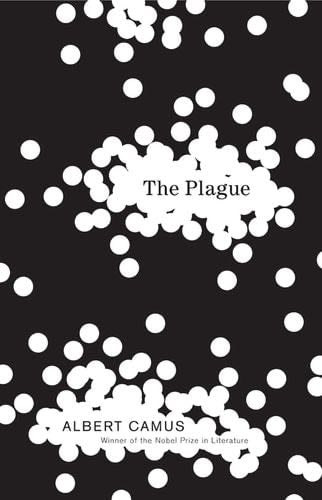
The Plague (Vintage International)
Albert Camus · 2012
“Its relevance lashes you across the face.” —Stephen Metcalf, The Los Angeles Times • “A redemptive book, one that wills the reader to believe, even in a time of despair.” —Roger Lowenstein, The Washington Post A haunting tale of human resilience and hope in the face of unrelieved horror, Albert Camus' iconic novel about an epidemic ravaging the people of a North African coastal town is a classic of twentieth-century literature. The townspeople of Oran are in the grip of a deadly plague, which condemns its victims to a swift and horrifying death. Fear, isolation and claustrophobia follow as they are forced into quarantine. Each person responds in their own way to the lethal disease: some resign themselves to fate, some seek blame, and a few, like Dr. Rieux, resist the terror. An immediate triumph when it was published in 1947, The Plague is in part an allegory of France's suffering under the Nazi occupation, and a timeless story of bravery and determination against the precariousness of human existence.