sexy rock’n roll artists

Items in this hypelist
bands
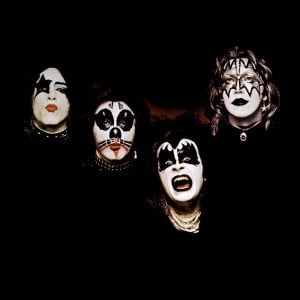
KISS
KISS
Rooted in the campy theatrics of <a href="spotify:artist:3EhbVgyfGd7HkpsagwL9GS">Alice Cooper</a> and the sleazy hard rock of glam rockers <a href="spotify:artist:0WhGV9lzljq2QKJ8ipw6jx">the New York Dolls</a>, Kiss became a favorite of American teenagers in the '70s. Most kids were infatuated with the look of Kiss, not their music. Decked out in outrageously flamboyant costumes and makeup, the band fashioned a captivating stage show featuring dry ice, smoke bombs, elaborate lighting, blood spitting, and fire breathing that captured the imaginations of thousands of kids. But Kiss' music shouldn't be dismissed -- it is a commercially potent mix of anthemic, fist-pounding hard rock driven by sleek hooks and ballads powered by loud guitars, earworm melodies, and sweeping strings. It's a sound that laid the groundwork for both arena rock and the pop-metal that dominated rock in the late '80s. In 1983 the band went unmasked, resulting in the platinum-selling LP of the same name, but re-applied the makeup ten years later. Since then, the Rock & Roll Hall of Famers have remained a potent live draw and have sold over 75 million records worldwide, with highlights arriving via influential efforts like Alive!, Destroyer, Rock and Roll Over, Love Gun, Dynasty, and Lick It Up. Kiss was the brainchild of <a href="spotify:artist:5gAbCaW9OmfIqqZGLpKb3f">Gene Simmons</a> (bass, vocals) and <a href="spotify:artist:5W0GCoUUwU3SF6qpJanlug">Paul Stanley</a> (rhythm guitar, vocals), former members of the New York-based hard rock band <a href="spotify:artist:4mnC6BVhObGZnXtQm4hjzH">Wicked Lester</a>; the duo brought in drummer <a href="spotify:artist:5DWj9QLyCN9dyQydd1P9QG">Peter Criss</a> through his ad in Rolling Stone, while guitarist <a href="spotify:artist:62olK5zZHSgFUXGDykgBL8">Ace Frehley</a> responded to an advertisement in The Village Voice. Even at their first Manhattan concert in 1973, the group's approach was theatrical, and Flipside producer Bill Aucoin offered the band a management deal after the show. Two weeks later, they were signed to Neil Bogart's fledgling record label, <a href="spotify:search:label%3A%22Casablanca%22">Casablanca</a>. Kiss released their self-titled debut in February of 1974; it peaked at number 87 on the U.S. charts. By April of 1975, the group had released three albums and had been touring America constantly, building up a sizable fan base. Culled from those numerous concerts, Alive! (released in the fall of 1975) made the band rock & roll superstars; it climbed into the Top Ten and its accompanying single, "Rock 'N' Roll All Nite," made it to number 12. Their follow-up, Destroyer, was released in March of 1976 and became the group's first platinum album; it also featured their first Top Ten single, <a href="spotify:artist:5DWj9QLyCN9dyQydd1P9QG">Peter Criss</a>' power ballad "Beth." Kiss mania was in full swing; thousands of pieces of merchandise hit the marketplace (including pinball machines, makeup and masks, and board games), and the group had two comic books released by Marvel as well as a live-action TV movie, Kiss Meet the Phantom of the Park. A 1977 Gallup poll named Kiss the most popular band in America. They were never seen in public without their makeup, and their popularity was growing by leaps and bounds; the membership of the Kiss Army, the band's fan club, was in the six figures. Even such enormous popularity had its limits, though, and the band reached them in 1978, when all four members released solo albums on the same day in October. <a href="spotify:artist:5gAbCaW9OmfIqqZGLpKb3f">Simmons</a>' record was the most successful, reaching number 22 on the charts, yet all of them made it into the Top 50. Dynasty, released in 1979, continued their streak of platinum albums, yet it was their last record with the original lineup -- <a href="spotify:artist:5DWj9QLyCN9dyQydd1P9QG">Criss</a> left in 1980. Kiss Unmasked, released in the summer of 1980, was recorded with session drummer <a href="spotify:artist:5xeqgtq9Fkg7XBHuPEm9pf">Anton Fig</a>; <a href="spotify:artist:5DWj9QLyCN9dyQydd1P9QG">Criss</a>' true replacement, <a href="spotify:artist:7vwL5Cm5W4dhdH7lswEfSx">Eric Carr</a>, joined the band in time for their 1980 world tour. Kiss Unmasked was their first record since Destroyer to fail to go platinum, and 1981's Music from the Elder, their first album recorded with <a href="spotify:artist:7vwL5Cm5W4dhdH7lswEfSx">Carr</a>, didn't even go gold -- it couldn't climb past number 75 on the charts. <a href="spotify:artist:62olK5zZHSgFUXGDykgBL8">Ace Frehley</a> left the band after its release; he was replaced by <a href="spotify:artist:3uBH6ZCj6xlrjHG41YepTn">Vinnie Vincent</a> in 1982. <a href="spotify:artist:3uBH6ZCj6xlrjHG41YepTn">Vincent</a>'s first album with the group, 1982's Creatures of the Night, fared better than Music from the Elder, yet it couldn't make it past number 45 on the charts. Sensing it was time for a change, Kiss dispensed with their makeup for 1983's Lick It Up. The publicity worked, as the album became their first platinum record in four years. Animalize, released the following year, was just as successful, and the group essentially recaptured their niche. <a href="spotify:artist:3uBH6ZCj6xlrjHG41YepTn">Vincent</a> left after Animalize and was replaced by Mark St. John, although St. John was soon taken ill with Reiter's Syndrome and left the band. <a href="spotify:artist:30TJoJIn79ZTDn7J93ymi8">Bruce Kulick</a> became Kiss' new lead guitarist in 1984. For the rest of the decade, Kiss turned out a series of best-selling albums, culminating in the early 1990 hit ballad "Forever," which was their biggest single since "Beth." Kiss was scheduled to record a new album with their old producer, Bob Ezrin, in 1990 when <a href="spotify:artist:7vwL5Cm5W4dhdH7lswEfSx">Eric Carr</a> became severely ill with cancer; he died in November of 1991 at the age of 41. Kiss replaced him with <a href="spotify:artist:7zEEexBlaAamW68arysqIZ">Eric Singer</a> and recorded Revenge (1992), their first album since 1989; it was a Top Ten hit and went gold. Kiss followed it with the release of Alive III the following year; it performed respectably but wasn't up to the standards of their two previous live records. In 1996, the original lineup of Kiss -- featuring <a href="spotify:artist:5gAbCaW9OmfIqqZGLpKb3f">Simmons</a>, <a href="spotify:artist:5W0GCoUUwU3SF6qpJanlug">Stanley</a>, <a href="spotify:artist:62olK5zZHSgFUXGDykgBL8">Frehley</a>, and <a href="spotify:artist:5DWj9QLyCN9dyQydd1P9QG">Criss</a> -- reunited to perform an international tour, complete with their notorious makeup and special effects. The tour was one of the most successful of 1996, and in 1998 the reunited group issued Psycho Circus. While the ensuing tour in support of Psycho Circus was a success, sales of Kiss' reunion album weren't as stellar as anticipated. Reminiscent of the band's unfocused late-'70s period, few tracks on Psycho Circus featured all four members playing together (most tracks were supplemented with session musicians), as the band seemed more interested in flooding the marketplace with merchandise yet again instead of making the music their top priority. With rumors running rampant that the Psycho Circus Tour would be their last, the quartet announced in the spring of 2000 that they would be launching a U.S. farewell tour in the summer, which became one of the year's top concert draws. But on the eve of a Japanese and Australian tour in early 2001, <a href="spotify:artist:5DWj9QLyCN9dyQydd1P9QG">Peter Criss</a> suddenly left the band once again, supposedly discontent with his salary. Taking his place was previous Kiss drummer <a href="spotify:artist:7zEEexBlaAamW68arysqIZ">Eric Singer</a>, who in a controversial move for some longtime fans, donned <a href="spotify:artist:5DWj9QLyCN9dyQydd1P9QG">Criss</a>' cat-man makeup (since <a href="spotify:artist:5gAbCaW9OmfIqqZGLpKb3f">Simmons</a> and <a href="spotify:artist:5W0GCoUUwU3SF6qpJanlug">Stanley</a> own both <a href="spotify:artist:62olK5zZHSgFUXGDykgBL8">Frehley</a> and <a href="spotify:artist:5DWj9QLyCN9dyQydd1P9QG">Criss</a>' makeup designs, there was no threat of a lawsuit) as the farewell tour continued. With the band scheduled to call it a day (supposedly) by late 2001, a mammoth career-encompassing box set was set for release later in the year, while the summer saw perhaps the most over-the-top piece of Kiss merchandise yet: the "Kiss Kasket," a real coffin fans could buy for $4,000. The group was relatively quiet throughout the rest of the year, but 2002 started with a bang as <a href="spotify:artist:5gAbCaW9OmfIqqZGLpKb3f">Gene Simmons</a> turned in an entertaining and controversial interview on NPR where he criticized the organization and berated host Terry Gross with sexual comments and condescending answers. He was promoting his autobiography at the time, which also caused dissent in the Kiss camp because of inflammatory remarks made about <a href="spotify:artist:62olK5zZHSgFUXGDykgBL8">Ace Frehley</a>. <a href="spotify:artist:62olK5zZHSgFUXGDykgBL8">Frehley</a> subsequently declined to appear at an American Bandstand anniversary show; his place was taken by a wig-wearing Tommy Thayer, and <a href="spotify:artist:5gAbCaW9OmfIqqZGLpKb3f">Simmons</a> was quick to dismiss the performance as another in a long series of money-oriented decisions. The band kept touring the globe with no new album in stores, but in 2008 they returned to the studio, re-recorded their hits, and released Jigoku-Retsuden aka KISSology or Kiss Klassics (the release was initially exclusive to Japan). In spring of 2009, the band began recording their first studio album in 11 years and released Sonic Boom in October. Produced by <a href="spotify:artist:5W0GCoUUwU3SF6qpJanlug">Paul Stanley</a> and Greg Collins, the album was exclusively distributed in North America by Wal-Mart. In 2012, the band's 20th studio album, Monster, surfaced, rewriting the cowbell-heavy party rock of their '70s heyday and adding some nods to the sinister metal of 1992's Revenge. In 2014, after 15 years of eligibility, Kiss was inducted into the Rock & Roll Hall of Fame. The following year they released a collaborative single with the Japanese idol group <a href="spotify:artist:3Zl0EsuYV23OgNw6WqGelN">Momoiro Clover Z</a>. In 2017, a career-spanning single-disc best-of, Kissworld, was released to coincide with a massive world tour of the same name. The tour, which the band announced would be their final jaunt, was eventually renamed the "End of the Road" tour, and in true Kiss fashion, it was still going strong in 2021. ~ Stephen Thomas Erlewine & Greg Prato, Rovi
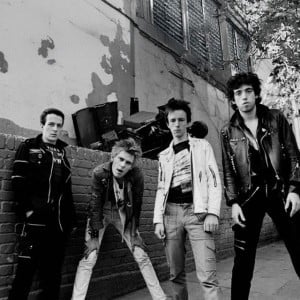
The Clash
The Clash
The Clash was one of the first and most important British punk bands. In the 1970s, they were <a href="spotify:artist:3WrFJ7ztbogyGnTHbHJFl2">the Beatles</a> to the <a href="spotify:artist:1u7kkVrr14iBvrpYnZILJR">Sex Pistols</a>' <a href="spotify:artist:22bE4uQ6baNwSHPVcDxLCe">Stones</a> and went on to incorporate elements from all the roots music they loved -- reggae, rockabilly, soul, blues -- without ever straying too far from their punk roots and their political commitment. Their landmark 1979 double album, London Calling, stands as one of rock music's finest and most ambitious achievements. <a href="spotify:artist:6QFIIkwi4R2erQsIp0TDSb">Mick Jones</a>, <a href="spotify:artist:62bYKAZ5EdmG5Aca9dtVan">Paul Simonon</a>, and <a href="spotify:artist:2A09V0kHlETOFfT8Hz8oba">Joe Strummer</a> all went on to other projects after the Clash (<a href="spotify:artist:7hqZBHSgDs1odG9aupMzEI">Big Audio Dynamite</a>, <a href="spotify:artist:5LMqGAPnXjYBwv4CmaWQTG">Havana 3 AM</a>, <a href="spotify:artist:2A09V0kHlETOFfT8Hz8oba">Strummer</a>'s solo albums). Plans to reunite for their induction to the Rock & Roll Hall of Fame were pre-empted by <a href="spotify:artist:2A09V0kHlETOFfT8Hz8oba">Strummer</a>'s death in December of 2002. For a band that constantly sang about revolution and the working class, the Clash had surprisingly traditional roots. <a href="spotify:artist:2A09V0kHlETOFfT8Hz8oba">Joe Strummer</a> had spent most of his childhood in boarding school. By the time he was in his early twenties, he had busked on the streets of London and had formed a pub rock band called <a href="spotify:artist:75s7RfViwIXirjnRYkZWPe">the 101'ers</a>. Around the same time, <a href="spotify:artist:6QFIIkwi4R2erQsIp0TDSb">Mick Jones</a> was leading a hard rock group called the London SS. Unlike <a href="spotify:artist:2A09V0kHlETOFfT8Hz8oba">Strummer</a>, <a href="spotify:artist:6QFIIkwi4R2erQsIp0TDSb">Jones</a> came from a working-class background in Brixton. Throughout his teens, he was fascinated with rock & roll, and he had formed the London SS with the intent of replicating the hard-driving sound of <a href="spotify:artist:6ysQi6NI88X627t2srsWz6">Mott the Hoople</a> and <a href="spotify:artist:3v4feUQnU3VEUqFrjmtekL">Faces</a>. <a href="spotify:artist:6QFIIkwi4R2erQsIp0TDSb">Jones</a>' childhood friend <a href="spotify:artist:62bYKAZ5EdmG5Aca9dtVan">Paul Simonon</a> joined the group as a bassist in 1976 after hearing the <a href="spotify:artist:1u7kkVrr14iBvrpYnZILJR">Sex Pistols</a>; he replaced <a href="spotify:artist:7qLiVFiF7qR2cYynxyv7pv">Tony James</a>, who would later join <a href="spotify:artist:1inWec2E2UgfzMAhwjgTXe">Generation X</a> and <a href="spotify:artist:6GKVXdXGEOPzpilArcqBun">Sigue Sigue Sputnik</a>. At the time, the band also featured drummer Tory Crimes, who had recently replaced Topper Headon. After witnessing <a href="spotify:artist:1u7kkVrr14iBvrpYnZILJR">the Sex Pistols</a> in concert, <a href="spotify:artist:2A09V0kHlETOFfT8Hz8oba">Joe Strummer</a> decided to break up <a href="spotify:artist:75s7RfViwIXirjnRYkZWPe">the 101'ers</a> in early 1976 in order to pursue a new, harder-edged musical direction. He left the band just before their first single, "Keys to Your Heart," was released. Along with fellow <a href="spotify:artist:75s7RfViwIXirjnRYkZWPe">101'er</a> guitarist <a href="spotify:artist:18dpDwVQHRruFad7SBmFQc">Keith Levene</a>, <a href="spotify:artist:2A09V0kHlETOFfT8Hz8oba">Strummer</a> joined the revamped London SS, now renamed the Clash. The Clash performed its first concert in the summer of 1976, supporting <a href="spotify:artist:1u7kkVrr14iBvrpYnZILJR">the Sex Pistols</a> in London. <a href="spotify:artist:18dpDwVQHRruFad7SBmFQc">Levene</a> left the band shortly afterward. Hiring Bernard Rhodes -- a former business associate of <a href="spotify:artist:1u7kkVrr14iBvrpYnZILJR">Sex Pistols</a> manager <a href="spotify:artist:4ihCM8I0fpWodgjo0mTlhZ">Malcolm McLaren</a> -- as their manager, the Clash set out on <a href="spotify:artist:1u7kkVrr14iBvrpYnZILJR">the Pistols</a>' notorious Anarchy Tour late in 1976. Though only three concerts were performed, it nevertheless raised the Clash's profile and the band secured a record contract in February of 1977 with British <a href="spotify:search:label%3A%22CBS%22">CBS</a>. Over the course of three weekends, they recorded their debut album. Once the sessions were completed, Terry Chimes left the group, and Headon came aboard as the band's drummer. In the spring, the Clash's first single, "White Riot," and eponymous debut album were released to great critical acclaim and sales in the U.K., peaking at number 12 on the charts. The American division of <a href="spotify:search:label%3A%22CBS%22">CBS</a> thought The Clash wasn't fit for radio play, so it decided not to release the album. The import of the record became the largest-selling import of all time. Shortly after the U.K. release of The Clash, the band set out on the whirlwind White Riot tour supported by <a href="spotify:artist:66U6cJ3kDBat0jS42Jkp9q">the Jam</a> and <a href="spotify:artist:2DxlS3lTLFIq70S7ap5H3y">the Buzzcocks</a>; the tour was highlighted by a date at London's Rainbow Theatre, where the audience tore the seats out of the venue. During the White Riot tour, <a href="spotify:search:label%3A%22CBS%22">CBS</a> pulled "Remote Control" off the album as a single, and as a response, the Clash recorded "Complete Control" with reggae icon <a href="spotify:artist:1TsG4AumsMt1Tcq2nHpov9">Lee "Scratch" Perry</a>. Throughout 1977, <a href="spotify:artist:2A09V0kHlETOFfT8Hz8oba">Strummer</a> and <a href="spotify:artist:6QFIIkwi4R2erQsIp0TDSb">Jones</a> were in and out of jail for myriad minor indiscretions, ranging from vandalism to stealing a pillowcase, while <a href="spotify:artist:62bYKAZ5EdmG5Aca9dtVan">Simonon</a> and Headon were arrested for shooting racing pigeons with an air gun. The Clash's outlaw image was bolstered considerably by such events, but the band also began to branch out into social activism, such as headlining a Rock Against Racism concert. Released in the summer of 1978, the single "(White Man) In Hammersmith Palais" demonstrated the band's growing social consciousness. Shortly after the single peaked at number 32, the Clash began working on their second album with producer Sandy Pearlman, a former member of <a href="spotify:artist:00tVTdpEhQQw1bqdu8RCx2">Blue Öyster Cult</a>. Pearlman gave Give 'Em Enough Rope a clean but powerful sound designed to break the American market. While that didn't happen -- the album peaked at 128 on the U.S. charts in the spring of 1979 -- the record became an enormous hit in Britain, debuting at number two on the charts. Early in 1979, the Clash began their first American tour, calling it "Pearl Harbor '79." That summer, the band released the U.K.-only EP The Cost of Living, which featured a cover of <a href="spotify:artist:5XoM6cP8fQykllfuK5V5TR">the Bobby Fuller Four</a>'s "I Fought the Law." Following the later summer release of The Clash in America, the group set out on its second U.S. tour, hiring Mickey Gallagher of <a href="spotify:artist:7r993rArgKraCkh8w4Wszl">Ian Dury's Blockheads</a> as a keyboardist. On both of their U.S. tours, the Clash had R&B acts like <a href="spotify:artist:2bmixwMZXlkl2sbIbOfviq">Bo Diddley</a>, <a href="spotify:artist:2BVYdY4PyfCF9z4NrkhEB2">Sam & Dave</a>, <a href="spotify:artist:0En4EEcDMJ5kaUCf1aZ9js">Lee Dorsey</a>, and <a href="spotify:artist:3VBpsrUi2vV7Uj87ONHu7Z">Screamin' Jay Hawkins</a> support them, as well as neo-traditionalist country-rocker <a href="spotify:artist:388Y4nUQbYSyonhNlBEypT">Joe Ely</a> and the punk rockabilly band <a href="spotify:artist:4lYtGx5NZQJHsMyhHc5iz3">the Cramps</a>. The choice of supporting acts indicated that the Clash were becoming fascinated with older rock & roll and all of its legends. That fascination became the driving force behind their breakthrough double album, London Calling. Produced by Guy Stevens, who'd formerly worked with <a href="spotify:artist:6ysQi6NI88X627t2srsWz6">Mott the Hoople</a>, London Calling boasted an array of styles, ranging from rockabilly and New Orleans R&B to anthemic hard rock and reggae. Retailing at the price of a single album, the record debuted at number nine on the U.K. charts in late 1979 and climbed to number 27 on the U.S. charts in the spring of 1980. The Clash successfully toured the U.S., the U.K., and Europe in early 1980, during which time the pseudo-documentary Rude Boy was released in England. During the summer, the band released the Dutch-only, dub-inflected single "Bankrobber," which they recorded with DJ <a href="spotify:artist:6xKQ3GOnt3gjzja4IcLyg4">Mikey Dread</a>; by the fall, the British branch of <a href="spotify:search:label%3A%22CBS%22">CBS</a> was forced to release the single due to popular demand. Shortly afterward, the band went to New York to begin the tension-filled, self-produced sessions for their follow-up to London Calling. In November, a U.S.-only EP of odds and ends entitled Black Market Clash was released. The following month, the triple-record set Sandinista! appeared in the U.K. and the U.S. The critical reaction to the album was decidedly mixed, with American critics reacting more favorably than their British counterparts. Furthermore, the band's audience in the U.K. was shrinking slightly -- Sandinista! was the first record the group released that sold more copies in the U.S. than the U.K. After spending much of 1981 touring and resting, the Clash reconvened late in the year to record their fifth album with producer Glyn Johns, a former engineer/producer for <a href="spotify:artist:22bE4uQ6baNwSHPVcDxLCe">the Rolling Stones</a> and <a href="spotify:artist:36QJpDe2go2KgaRleHCDTp">Led Zeppelin</a>. Headon left the band shortly after the sessions finished; the press statement said he parted with the group due to political differences, but it was later revealed that the split was due to his heavy drug use. Headon was replaced with their old drummer, Terry Chimes, around the spring release of Combat Rock. The album was the Clash's most commercially successful effort, entering the U.K. charts at number two and climbing into the American Top Ten in early 1983, thanks to the Top Ten hit single "Rock the Casbah." During the fall of 1982, the Clash opened for <a href="spotify:artist:67ea9eGLXYMsO2eYQRui3w">the Who</a> on their farewell tour. Though the tour helped Combat Rock scale the U.S. charts, the Clash were routinely booed off the stage on every date of the tour. Although the Clash were at the height of their commercial powers in 1983, they were beginning fall apart. Chimes was fired in the spring and replaced by Pete Howard, formerly of Cold Fish. During the summer, the band headlined the U.S. Festival in California; it would be their last major appearance. In September, <a href="spotify:artist:2A09V0kHlETOFfT8Hz8oba">Joe Strummer</a> and <a href="spotify:artist:62bYKAZ5EdmG5Aca9dtVan">Paul Simonon</a> fired <a href="spotify:artist:6QFIIkwi4R2erQsIp0TDSb">Mick Jones</a> because he "drifted apart from the original idea of the Clash." <a href="spotify:artist:6QFIIkwi4R2erQsIp0TDSb">Jones</a> formed <a href="spotify:artist:7hqZBHSgDs1odG9aupMzEI">Big Audio Dynamite</a> the following year, while the Clash hired guitarists Vince White and <a href="spotify:artist:5YIlRo3qv10N4YjLl4s3Io">Nick Sheppard</a> to fill his vacancy. Throughout 1984, the band toured America and Europe, testing the new lineup. The revamped Clash finally released their first album, Cut the Crap, in November. The album was greeted with overwhelmingly poor reviews and sales; it would later be disowned by <a href="spotify:artist:2A09V0kHlETOFfT8Hz8oba">Strummer</a> and <a href="spotify:artist:62bYKAZ5EdmG5Aca9dtVan">Simonon</a>. Early in 1986, <a href="spotify:artist:2A09V0kHlETOFfT8Hz8oba">Strummer</a> and <a href="spotify:artist:62bYKAZ5EdmG5Aca9dtVan">Simonon</a> decided to permanently disband the Clash. Several years later, <a href="spotify:artist:62bYKAZ5EdmG5Aca9dtVan">Simonon</a> formed the roots rock band <a href="spotify:artist:5LMqGAPnXjYBwv4CmaWQTG">Havana 3 A.M.</a>, which released only one album, in 1991; following the record's release, he concentrated on painting. After reuniting with <a href="spotify:artist:6QFIIkwi4R2erQsIp0TDSb">Jones</a> to write songs for <a href="spotify:artist:7hqZBHSgDs1odG9aupMzEI">Big Audio Dynamite</a>'s second album, 1986's No. 10 Upping Street, <a href="spotify:artist:2A09V0kHlETOFfT8Hz8oba">Strummer</a> drifted between a musical and film career, appearing in Alex Cox's Straight to Hell (1986) and <a href="spotify:artist:7uwCnAgRDUzftIAkJDFfdy">Jim Jarmusch</a>'s Mystery Train (1989). He also scored Permanent Record (1988) and Cox's Walker (1987). <a href="spotify:artist:2A09V0kHlETOFfT8Hz8oba">Strummer</a> released a solo album, Earthquake Weather, in 1989. Shortly afterward, he joined <a href="spotify:artist:2wzMOQwNT6ZvVB4amvhFAH">the Pogues</a> as a touring rhythm guitarist and vocalist. By 1991, he had quietly drifted away from the spotlight. For the remainder of the decade, <a href="spotify:artist:2A09V0kHlETOFfT8Hz8oba">Strummer</a> was quiet, appearing on only one other recording -- <a href="spotify:artist:147FGf3bdxV1L0mmVtgaJR">Black Grape</a>'s 1996 Top Ten hit "England's Irie." Though <a href="spotify:artist:2A09V0kHlETOFfT8Hz8oba">Strummer</a> and <a href="spotify:artist:62bYKAZ5EdmG5Aca9dtVan">Simonon</a> were both quiet and <a href="spotify:artist:6QFIIkwi4R2erQsIp0TDSb">Jones</a> was busy with various incarnations of <a href="spotify:artist:7hqZBHSgDs1odG9aupMzEI">Big Audio Dynamite</a>, rumors of a reunion continued to circulate throughout the '90s. When "Should I Stay or Should I Go?" appeared in a Levi's television commercial in 1992, the song was re-released in the U.K. by <a href="spotify:search:label%3A%22CBS%22">CBS</a>, and it shot to number one, fueling even more reunion speculation. The rumors appeared again in 1995 and 1996, when <a href="spotify:artist:1u7kkVrr14iBvrpYnZILJR">the Sex Pistols</a> decided to reunite, but the Clash remained quiet. Live: From Here to Eternity, assembling material recorded between 1978 and 1982, was released in 1999, shortly followed by the documentary film Westway to the World! The Clash were elected for induction into the Rock & Roll Hall of Fame in November 2002 and were making plans to reunite to commemorate the event that following spring when <a href="spotify:artist:2A09V0kHlETOFfT8Hz8oba">Strummer</a> suddenly died from a congenital heart defect on December 22, 2002. In the wake of his passing, the remaining members of the band attended the induction ceremony in March of 2003, then quietly tabled any plans for a reunion. Over the next decade, both <a href="spotify:artist:6QFIIkwi4R2erQsIp0TDSb">Jones</a> and <a href="spotify:artist:62bYKAZ5EdmG5Aca9dtVan">Simonon</a> were musically active. <a href="spotify:artist:6QFIIkwi4R2erQsIp0TDSb">Jones</a> produced both albums by the acclaimed rock group <a href="spotify:artist:4fSPtBgFPZzygkY6MehwQ7">the Libertines</a> -- who themselves bore a distinct debt to the Clash -- and <a href="spotify:artist:62bYKAZ5EdmG5Aca9dtVan">Simonon</a> teamed with <a href="spotify:artist:7MhMgCo0Bl0Kukl93PZbYS">Blur</a>'s <a href="spotify:artist:0O98jlCaPzvsoei6U5jfEL">Damon Albarn</a> for the 2007 band <a href="spotify:artist:6iy8nrBbtL57i4eUttHTww">The Good, The Bad & The Queen</a>. This project led to a <a href="spotify:artist:6QFIIkwi4R2erQsIp0TDSb">Jones</a> and <a href="spotify:artist:62bYKAZ5EdmG5Aca9dtVan">Simonon</a> reunion under the auspices of <a href="spotify:artist:0O98jlCaPzvsoei6U5jfEL">Albarn</a>'s group <a href="spotify:artist:3AA28KZvwAUcZuOKwyblJQ">Gorillaz</a>; the pair both performed on the 2010 album Plastic Beach and they both appeared on the supporting tour, marking the first time they'd shared the stage since the Clash. In 2013, the group released a major archival project called Sound System containing new remasters of the band's first five albums, three additional CDs of rarities, singles, and demos, plus a DVD. Along with the box set came a new compilation called The Clash Hits Back, which mimicked the sequence of their July 19, 1982 set list at the Brixton Fair Deal. Things were quiet on the reissue front until the 2022 release of Combat Rock: The People's Hall Special Edition, which added a bonus disc of tracks that included a handful from the rejected <a href="spotify:artist:6QFIIkwi4R2erQsIp0TDSb">Mick Jones</a> "Rat Patrol from Fort Bragg" mix of the album. ~ Stephen Thomas Erlewine, Rovi
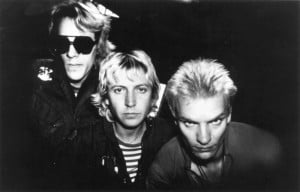
The Police
The Police
Nominally, the Police were punk rock, but that's only in the loosest sense of the term. The trio's nervous, reggae-injected pop/rock was punky, but it wasn't necessarily punk. All three members were considerably more technically proficient than the average punk or new wave band. Andy Summers had a precise guitar attack that created dense, interlocking waves of sounds and effects. Stewart Copeland could play polyrhythms effortlessly. And Sting, with his high, keening voice, was capable of constructing infectiously catchy pop songs. While they weren't punk, the Police certainly demonstrated that the punk spirit could have a future in pop music. As their career progressed, the Police grew considerably more adventurous, experimenting with jazz and various world musics. All the while, the band's tight delivery and mastery of the pop single kept their audience increasing, and by 1983, they were the most popular rock & roll band in the world. Though they were at the height of their fame, internal tensions caused the band to splinter apart in 1984, with Sting picking up the majority of the band's audience to become an international superstar. Stewart Copeland and Sting (born Gordon Sumner) formed the Police in 1977. Prior to the band's formation, Copeland, the son of a CIA agent, had attended college in California, before he moved to England and joined the progressive rock band Curved Air. Sting was a teacher and a ditch digger who played in jazz-rock bands, including Last Exit, on the side. The two musicians met at a local jazz club and decided to form a progressive pop band with guitarist Henri Padovani. For the first few months, the group played local London pubs. Soon, they were hired to appear as a bleached-blonde punk band in a chewing gum commercial. While the commercial provided exposure, it drew the scorn of genuine punkers. Late in 1977, the band released its first single, "Fall Out," on IRS, an independent label Stewart Copeland founded with his brother Miles, who was also the manager of the Police. The single was a sizable hit for an independent release, selling about 70,000 copies. Padovani was replaced by Andy Summers, a veteran of the British Invasion, following the release of "Fall Out." Summers had previous played with Eric Burdon's second lineup of the Animals, the Zoot Money's Big Roll Band, the Kevin Ayers Band, and Neil Sedaka. The Police signed with A&M by the spring of 1978, committing to a contract that gave the group a higher royalty rate in lieu of a large advance. A&M released "Roxanne" in the spring of 1978, but it failed to chart. The Police set out on a tour of America in the summer of 1978 without any record to support, traveling across the country in a rented van and playing with rented equipment. Released in the fall of 1978, Outlandos d'Amour began a slow climb into the British Top Ten and American Top 30. Immediately after its release, the group began a U.K. tour supporting Alberto y los Trios Paranoias and released the "So Lonely" single. By the spring of 1979, the re-released "Roxanne" had climbed to number 12 on the U.K. charts, taking Outlandos d'Amour to number six. In the summer of 1979, Sting appeared in Quadrophenia, a British film based on the Who album of the same name; later that year, he acted in Radio On. Preceded by the number one British single "Message in a Bottle," Reggatta de Blanc (fall 1979) established the group as stars in England and Europe, topping the U.K. charts for four weeks. Following its release, Miles Copeland had the band tour several countries that rarely received concerts from foreign performers, including Thailand, India, Mexico, Greece, and Egypt. Zenyatta Mondatta, released in the fall of 1980, became the Police's North American breakthrough, reaching the Top Ten in the U.S. and Canada; in England, the album spent four weeks at number one. "Don't Stand So Close to Me," the album's first single, became the group's second number one single in the U.K.; in America, the single became their second Top Ten hit in the spring of 1981, following the number ten placing of "De Do Do Do, De Da Da Da" in the winter. By the beginning of 1981, the Police were able to sell out Madison Square Garden. Capitalizing on their success, the band returned to the studio in the summer of 1981 to record their fourth album with producer Hugh Padgham. The sessions, which were filmed for a BBC documentary hosted by Jools Holland, were completed within a couple months, and the album, Ghost in the Machine, appeared in the fall of 1981. Ghost in the Machine became an instant hit, reaching number one in the U.K. and number two in the U.S. as "Every Little Thing She Does Is Magic" became their biggest hit to date. Following their whirlwind success of 1980 and 1981, in which they were named the Best British Group at the first Brit Awards and won three Grammys, the band took a break in 1982. Though they played their first arena concerts and headlined the U.S. Festival, each member pursued side projects during the course of the year. Sting acted in Brimstone and Treacle, releasing a solo single, "Spread a Little Happiness," from the soundtrack; the song became a British hit. Copeland scored Francis Ford Coppola's Rumble Fish, as well as the San Francisco Ballet's King Lear, and released an album under the name Klark Kent; he also played on several sessions for Peter Gabriel. Summers recorded an instrumental album, I Advance Masked, with Robert Fripp. The Police returned in the summer of 1983 with Synchronicity, which entered the U.K. charts at number one and quickly climbed to the same position in the U.S., where it would stay for 17 weeks. Synchronicity became a blockbuster success on the strength of the ballad "Every Breath You Take." Spending eight weeks at the top of the U.S. charts, "Every Breath You Take" became one of the biggest American hits of all time; it spent four weeks at the top of the U.K. charts. "King of Pain" and "Wrapped Around Your Finger" became hits over the course of 1983, sending Synchronicity to multi-platinum status in America and Britain. The Police supported the album with a blockbuster, record-breaking world tour that set precedents for tours for the remainder of the '80s. Once the tour was completed, the band announced they were going on "sabbatical" in order to pursue outside interests. The Police never returned from sabbatical. During the Synchronicity tour, personal and creative tensions between the bandmembers had escalated greatly, and they had no desire to work together for a while. Sting began working on a jazz-tinged solo project immediately, releasing The Dream of the Blue Turtles in 1985. The album became an international hit, establishing him as a commercial force outside of the band. Copeland and Summers demonstrated no inclination to follow their bandmate's path. Copeland recorded the worldbeat exploration The Rhythmatist in 1985, and continued to compose scores for film and television; he later formed the prog rock band Animal Logic. With his solo career -- which didn't officially begin until the release of 1987's XYZ -- Summers continued his art rock and jazz fusion experiments; he also occasionally collaborated Fripp and John Etheridge. During 1986, the Police made a few attempts to reunite, playing an Amnesty International concert and attempting to record a handful of new tracks for a greatest-hits album in the summer. As the studio session unraveled, it became apparent that Sting had no intention of giving the band his new songs to record, so the group re-recorded a couple of old songs, but even those were thrown off track after Copeland suffered a polo injury. Featuring a new version of "Don't Stand So Close to Me," the compilation Every Breath You Take: The Singles was released for the 1986 Christmas season, becoming the group's fifth straight British number one and their fourth American Top Ten. A few more quiet years passed, but 1992 found Summers taking the helm as musical director for Dennis Miller's late-night show and Sting taking his vows with Trudie Styler. At the wedding, the three Policemen hopped on-stage for a very impromptu set, then, just as quickly, dismissed any rumors of an official Police reunion in the future. That same year a Greatest Hits album was released in the U.K., and in 1994 the box set Message in a Box: The Complete Recordings was released, followed in 1995 by the double album Live. Things again went quite on the Police front as the millennium rolled around. Then, in 2003, the Rock and Roll Hall of Fame inducted the group into its pantheon. The band did reorganize enough to perform three tunes at the induction ceremony, but again, it looked as if that single show was going to be the extent of their collaboration. There was a brief reunion of sorts with original Police guitarist Henri Padovani, on his 2004 album A Croire Que C'Etait Pour la Vie, where Copeland and Sting appeared on one track together -- but still no signs of a full-blown reunion. Sting released his autobiography, Broken Music, in 2003, and by 2006 Copeland's documentary, Everyone Stares: The Police Inside Out, and Summers' autobiography, One Train Later, had joined the ranks. Odd side projects and collaborations with other musicians continued, but the real Police news came in conjunction with another seemingly one-off reunion gig -- this time for the 49th Annual Grammy Awards. Amid the hoopla, it was announced that the Police would indeed be embarking on a world tour, beginning on May 28, 2007, in Vancouver. ~ Stephen Thomas Erlewine
Black Sabbath
Black Sabbath
A metal institution whose influence cannot be overstated, Black Sabbath pioneered the genre as they constructed the framework for subsequent subgenres within metal, with entire movements rising from blueprints laid out in single Sabbath songs. From the end of the '60s and throughout the entirety of the '70s, the band became legendary for the doomy chemistry between its players: <a href="spotify:artist:6ZLTlhejhndI4Rh53vYhrY">Ozzy Osbourne</a>'s primal vocals, <a href="spotify:artist:7iA7uWUkWLpapsaaqmzRQV">Tony Iommi</a>'s seismic riffing, <a href="spotify:artist:5auXJ86A1atk0EyHgSl1zs">Bill Ward</a>'s bluntly powerful drumming, and <a href="spotify:artist:3Ezdddx6OeiOX7xLtfG48W">Geezer Butler</a>'s thunderous basslines all congealed into a sinister breed of hard rock and occult-fixated songcraft the world had never heard before. This untouchable original lineup was responsible for metal masterpieces like 1970's Paranoid, but when they splintered in 1979, Black Sabbath soldiered on with a cast of various, different singers while <a href="spotify:artist:6ZLTlhejhndI4Rh53vYhrY">Osbourne</a> applied his prince of darkness persona to a successful solo career that would span decades. There were various reunions and partial re-formations of the first Black Sabbath lineup, aiming to recapture some of their early evil energy on later period outings like 2013's 13. The band formed in 1968 under the ill-fitting name the Polka Tulk Blues Band -- <a href="spotify:artist:7iA7uWUkWLpapsaaqmzRQV">Iommi</a> and <a href="spotify:artist:5auXJ86A1atk0EyHgSl1zs">Ward</a>, who had just left the pub-blues outfit Mythology, were looking to take the genre in a more robust direction. They enlisted the services of <a href="spotify:artist:3Ezdddx6OeiOX7xLtfG48W">Butler</a> and <a href="spotify:artist:6ZLTlhejhndI4Rh53vYhrY">Osbourne</a>, both of whom had played together in a group called Rare Breed, and by the end of the year they were operating under the moniker Earth. The transition from Earth to Black Sabbath took place the following year, after <a href="spotify:artist:6ZLTlhejhndI4Rh53vYhrY">Osbourne</a> and <a href="spotify:artist:3Ezdddx6OeiOX7xLtfG48W">Butler</a> penned a song that was inspired by the 1963 <a href="spotify:artist:1W9sjfsJp3TqWFgvScMZdG">Boris Karloff</a> horror film of the same name. The resulting "Black Sabbath," a funereal slab of blast furnace-forged dread built around the augmented fourth/tritonic interval, better known as the devil's interval, would serve as the opening volley on their explosive eponymous 1970 debut. Released on <a href="spotify:search:label%3A%22Vertigo+Records%22">Vertigo Records</a>, the more progressive subsidiary of <a href="spotify:search:label%3A%22Philips%2FPhonogram%22">Philips/Phonogram</a>, the bulk of the Rodger Bain-produced LP was recorded in a single day. Only a handful of guitar overdubs -- <a href="spotify:artist:7iA7uWUkWLpapsaaqmzRQV">Iommi</a>'s signature sound was lent considerable gravitas by the fact that he tuned his guitar a half-step down to provide some slack for a pair of fingers that saw their tips removed in a factory accident -- along with the rain, thunder, and tolling bells that so effectively introduced the group to the world, would be added later. The record was released on Friday the 13th, which helped kick-start the band's reputation for populating the fertile crime scene that is history with plenty of blood spatter. Flush with eventual genre classics like "The Wizard," "N.I.B.," and the aforementioned title cut, Black Sabbath was initially dismissed by critics -- retrospective reviews were far more reverent -- but it managed to reach the U.K. Top Ten and hold court for over a year on the U.S. Top 40, eventually going certified platinum. With the surprise success of Black Sabbath, the band wasted little time in getting back into the studio. Released just seven months after their debut, Paranoid, the very antithesis of the sophomore slump, would spawn two of their biggest singles in "Iron Man" and the nervy, hard-hitting title track, the latter of which would be the band's only Top Ten hit -- the LP went straight to the top of the U.K. charts and sold over four-million copies in the U.S. Deeper yet no less immediate cuts like the air-raid siren-led, politically charged "War Pigs" and the trippy, mellow doom anthem "Planet Caravan" revealed a group that had far more creative gas in the tank than its detractors would have cared to admit. Paranoid also afforded Sabbath their first measure of controversy after an inquest was made regarding an American nurse who committed suicide while listening to the LP; for many, the name Black Sabbath would become synonymous with Satanism throughout the '70s and '80s. Sabbath continued to blow the unholy horn of plenty with albums three and four. Released in 1971, the brutish Master of Reality was certified double-platinum on the strength of fan favorites like "Sweet Leaf," "Children of the Grave," and "Into the Void," the latter two of which saw <a href="spotify:artist:7iA7uWUkWLpapsaaqmzRQV">Iommi</a> downtune three semitones in order to release even more string tension -- <a href="spotify:artist:3Ezdddx6OeiOX7xLtfG48W">Butler</a> followed suit, and the deep earth pummeling that followed has been widely cited as the auger of sludge, doom, and stoner metal. The LP also featured the <a href="spotify:artist:7iA7uWUkWLpapsaaqmzRQV">Iommi</a>-composed/<a href="spotify:artist:3Ezdddx6OeiOX7xLtfG48W">Butler</a>-penned "After Forever" which, much to the confusion of some of the band's more zealous critics, reflected the bass player's deep Catholic faith. Vol. 4, recorded in Los Angeles, arrived the following year and was the first Sabbath outing without Rodger Bain handling production duties -- <a href="spotify:artist:7iA7uWUkWLpapsaaqmzRQV">Iommi</a> and then-manager Patrick Meehan would co-produce the album. Certainly the group's most ambitious outing to date, Vol. 4 also represented Black Sabbath at their most chemically dependent -- the album's working title was Snowblind -- shipping in speaker boxes filled with cocaine, and turning their rented Bel Air house into a boozy black cauldron of rock star excess. Nevertheless, they managed to stay just-in-control long enough to piece together a dark, introspective gem of a record that didn't spawn any hits -- the caustic riff-gasm that is "Supernaut" must have charted in some other more forgiving dimension -- but still topped the album charts. Vol. 4 dutifully reflected Sabbath's debauched collective headspace at the time, but retained enough of the blue-collar might that fueled their early works to connect. Arriving in 1973, Sabbath Bloody Sabbath was another success, doubling down on the more progressive elements of Vol. 4, even going so far as to tap <a href="spotify:artist:0mkcYaXUbJUs5mJointuzB">Rick Wakeman</a> from <a href="spotify:artist:7AC976RDJzL2asmZuz7qil">Yes</a> to contribute keyboards to the track "Sabbra Cadabra." Bolstered by the now-iconic title cut as well as the punishing "Killing Yourself to Live," the LP not only resonated with fans, but elicited positive comments from mainstream critics as well, becoming Sabbath's fifth platinum album in the U.S. and earning their first silver certification in the U.K. Sabotage, released in 1975, saw the band returning to the bottom-heavy, molten-metal attack of their debut, for the most part dialing back on the orchestral flourishes and studio trickery of their last two outings. It also arrived in the midst of contentious litigation between the band and its now-former manager Meehan. Between the bruising "Hole in the Sky," the angst-fueled "Symptom of the Universe," and the nearly nine-minute epic "The Writ," the band sounded both reinvigorated and wrecked, like a bloodied beast, filled with bullets, standing on the corpse of its captor. Fans and critics were kind, but the musical climate was changing both at home and abroad, and Black Sabbath were beginning to feel the chill. By 1976 the band was undergoing an internal struggle as well, having to contend with an increasingly frustrated and chemically dependent frontman who was looking to strike out on his own. Technical Ecstasy (1976) and Never Say Die! (1978), despite going gold, suffered beneath the weight of both the band's substance abuse issues and its increasingly diminished position in popular music. Bands like <a href="spotify:artist:3RGLhK1IP9jnYFH4BRFJBS">the Clash</a> and <a href="spotify:artist:1u7kkVrr14iBvrpYnZILJR">the Sex Pistols</a> were on the rise, and Sabbath's brand of stalwart heavy blues-rock was losing favor. During the recording of Never Say Die!, <a href="spotify:artist:6ZLTlhejhndI4Rh53vYhrY">Osbourne</a> quit, eventually making his way back into the fold during the final sessions, but in 1979, after touring in support of the album, he was fired from the group for good. <a href="spotify:artist:6ZLTlhejhndI4Rh53vYhrY">Osbourne</a>'s departure and successful solo career may have signaled the end of an era for the group, but Black Sabbath weren't about to go gently into that good night. At the suggestion of the band's new manager's daughter Sharon Arden (later to become Sharon Osbourne), <a href="spotify:artist:7iA7uWUkWLpapsaaqmzRQV">Iommi</a>, <a href="spotify:artist:3Ezdddx6OeiOX7xLtfG48W">Butler</a>, and <a href="spotify:artist:5auXJ86A1atk0EyHgSl1zs">Ward</a> brought in ex-<a href="spotify:artist:6SLAMfhOi7UJI0fMztaK0m">Rainbow</a> frontman <a href="spotify:artist:4M3c7tg4BzLQ5pIOupZL65">Ronnie James Dio</a> to take over vocal duties. <a href="spotify:artist:4CYeVo5iZbtYGBN4Isc3n6">Dio</a>'s powerful voice, as idiosyncratic and iconic as <a href="spotify:artist:6ZLTlhejhndI4Rh53vYhrY">Osbourne</a>'s but with a far more wholesale appeal, proved the perfect fit for Black Sabbath 2.0. Released in 1980, Heaven and Hell was a critical and commercial success, becoming their third-highest-selling LP after Paranoid and Master of Reality. That same year, while on tour, <a href="spotify:artist:5auXJ86A1atk0EyHgSl1zs">Ward</a> had reached the apex of his alcoholism and announced that he too was leaving the group. <a href="spotify:artist:2yz2Hp6i6oqcHlzSez1P5y">Vinny Appice</a>, the younger brother of legendary <a href="spotify:artist:0vIMq3W8V63uR4Ymgm2pF1">Vanilla Fudge</a> drummer <a href="spotify:artist:0kjCvirhAHq3JMex6bqEBZ">Carmine Appice</a>, was brought in to replace him, and would appear on the group's tenth studio outing, 1981's Mob Rules. The album received mixed reviews, but still managed to go gold in the U.S. and crack the U.K. Top 40 on the strength of the fiery title track, which also appeared -- in a different version -- in the cult animated, adult-fantasy film Heavy Metal. The band's first-ever concert album, Live Evil, was released in 1983. Recorded during the group's 1982 tour in support of Mob Rules, it presented an audio snapshot of the band at the peak of its technical powers, but failed to capture the internal tensions that were bubbling beneath all of the pick slides and pyrotechnics. Citing an irreconcilable falling out with <a href="spotify:artist:7iA7uWUkWLpapsaaqmzRQV">Iommi</a> and <a href="spotify:artist:3Ezdddx6OeiOX7xLtfG48W">Butler</a>, <a href="spotify:artist:4CYeVo5iZbtYGBN4Isc3n6">Dio</a> and <a href="spotify:artist:2yz2Hp6i6oqcHlzSez1P5y">Appice</a> left the group in the middle of mixing the album and formed their own band. With the newly minted <a href="spotify:artist:4CYeVo5iZbtYGBN4Isc3n6">Dio</a> issuing Holy Diver and <a href="spotify:artist:6ZLTlhejhndI4Rh53vYhrY">Osbourne</a> dropping his third chart-topping solo LP, Bark at the Moon, Black Sabbath were at a definite crossroads. Undeterred, <a href="spotify:artist:7iA7uWUkWLpapsaaqmzRQV">Iommi</a> and <a href="spotify:artist:3Ezdddx6OeiOX7xLtfG48W">Butler</a> immediately began looking for new members with whom to start up the old machinery, eventually settling on <a href="spotify:artist:568ZhdwyaiCyOGJRtNYhWf">Deep Purple</a>'s <a href="spotify:artist:4QCflfSOonkybNw5D7GqGk">Ian Gillan</a> on vocals and a freshly sober <a href="spotify:artist:5auXJ86A1atk0EyHgSl1zs">Bill Ward</a> behind the kit. While it sold well initially, the resulting Born Again was a critical failure, a tone-deaf collection of subpar Sabbath tropes that would ultimately leave <a href="spotify:artist:7iA7uWUkWLpapsaaqmzRQV">Iommi</a> the last man standing. Even the tour in support of the album was a disaster, with <a href="spotify:artist:5auXJ86A1atk0EyHgSl1zs">Ward</a>, who relapsed during recording, being replaced by <a href="spotify:artist:2BLpGstUHxDc6vHfBEiaXm">Move</a>/<a href="spotify:artist:7jefIIksOi1EazgRTfW2Pk">ELO</a> drummer Bev Bevan, and a cringe-inducing prop malfunction providing the inspiration for the 1984 mockumentary This Is Spinal Tap's now-classic Stonehenge sequence. After the tour Bevan left, <a href="spotify:artist:4QCflfSOonkybNw5D7GqGk">Gillan</a> rejoined <a href="spotify:artist:568ZhdwyaiCyOGJRtNYhWf">Deep Purple</a>, and <a href="spotify:artist:3Ezdddx6OeiOX7xLtfG48W">Butler</a> went solo, leaving <a href="spotify:artist:7iA7uWUkWLpapsaaqmzRQV">Iommi</a> no choice but to put the band on hiatus. What followed was a long period of near-constant personnel changes, with <a href="spotify:artist:7iA7uWUkWLpapsaaqmzRQV">Iommi</a> remaining the sole original member. Issued in 1986, the bluesy Seventh Star was, for all intents and purposes, an <a href="spotify:artist:7iA7uWUkWLpapsaaqmzRQV">Iommi</a> solo album -- record company pressure forced him to add the Black Sabbath moniker to the front cover -- and 1987's Eternal Idol was the first to feature new semi-permanent vocalist <a href="spotify:artist:0i9DZzWDuQ7SvAgp3zoawd">Tony Martin</a>. Hard rock heavyweight drummer <a href="spotify:artist:6jJkOaQBQsEBBqvavgdHQT">Cozy Powell</a> joined <a href="spotify:artist:7iA7uWUkWLpapsaaqmzRQV">Iommi</a> and <a href="spotify:artist:0i9DZzWDuQ7SvAgp3zoawd">Martin</a> on 1989's Headless Cross and 1990's Viking-themed concept album Tyr, but none of the initial post-Born Again LPs had much of an impact critically or commercially. Once again, the musical paradigm was shifting away from the hard rock/heavy metal genre, and Sabbath were just trying to stay afloat. The generally well-received Dehumanizer, a Heaven and Hell/Mob Rules-era reunion with <a href="spotify:artist:3Ezdddx6OeiOX7xLtfG48W">Butler</a>, <a href="spotify:artist:4CYeVo5iZbtYGBN4Isc3n6">Dio</a>, and <a href="spotify:artist:2yz2Hp6i6oqcHlzSez1P5y">Vinny Appice</a>, provided the Black Sabbath name with a much-needed shot in the arm in 1992, and managed to sneak them back into the Top 40 both at home and overseas, but it would prove to be a one-off affair. Arriving in 1994, Cross Purposes kept <a href="spotify:artist:3Ezdddx6OeiOX7xLtfG48W">Butler</a> on board and brought back <a href="spotify:artist:0i9DZzWDuQ7SvAgp3zoawd">Martin</a> on vocals, but it failed to capitalize on any momentum left over from Dehumanizer's success, and the following year's disappointing Forbidden, the band's 18th studio LP, would be the last outing for <a href="spotify:artist:0i9DZzWDuQ7SvAgp3zoawd">Martin</a>, as well as the last studio album from the band for nearly 18 years. <a href="spotify:artist:7iA7uWUkWLpapsaaqmzRQV">Iommi</a>, <a href="spotify:artist:3Ezdddx6OeiOX7xLtfG48W">Butler</a>, <a href="spotify:artist:5auXJ86A1atk0EyHgSl1zs">Ward</a>, and <a href="spotify:artist:6ZLTlhejhndI4Rh53vYhrY">Osbourne</a> would eventually make their way back under the stage lights in 1997, culminating in the release of the Best Metal Performance Grammy Award-winning double-live LP Reunion, but it would be 16 years -- and a whole lot of <a href="spotify:artist:6ZLTlhejhndI4Rh53vYhrY">Ozzy</a>, who was eventually given his own reality television show -- before the band would bring the dark arts back to the recording studio. Released in 2013, the <a href="spotify:artist:1EpmQFTiJbcxzwbLpuUL8L">Rick Rubin</a>-produced 13, which also brought home a Grammy, this time for the single "God Is Dead?," would be Black Sabbath's final album, and in 2015, <a href="spotify:artist:6ZLTlhejhndI4Rh53vYhrY">Osbourne</a>, <a href="spotify:artist:7iA7uWUkWLpapsaaqmzRQV">Iommi</a>, and <a href="spotify:artist:3Ezdddx6OeiOX7xLtfG48W">Butler</a> (<a href="spotify:artist:5auXJ86A1atk0EyHgSl1zs">Ward</a> refused to participate) announced that their upcoming world tour would be their last. The aptly named The End Tour, which concluded in their hometown of Birmingham, saw Black Sabbath closing the coffin lid on a nearly 50-year career and cementing their legacy as the unheralded harbingers of heavy, sludge, stoner, and doom metal. A concert LP/film of the performance was released in 2017. ~ James Christopher Monger & Fred Thomas, Rovi
Charlie Brown Jr.
Charlie Brown Jr.
Formed in 1992 in Santos Beach (SãoPaulo), the name Charlie Brown came up when Chorão was driving home thinking of a name for his band and ended up running over a coconut water stand with a Peanuts Charlie Brown draw. Chorão, had an insight and believed that situation was a sign of the Universe and that embarrassed character from the Snoopy cartoon would be a cool name for the band. The Jr. (Junior) was added a little later, in the words of Chorão, "because we are children of rock", inspired by rock musicians such as Red Hot, Nirvana, Suicidal Tendencies, Raimundos, Planet Hemp, O Rappa, among others. With songs that flows some musical genres such as hardcore, skatepunk, reggae, alternative rock, rap, hiphop, and others. The CBJR appeared in 1997 with the CD Transpiração Contínua Prolongada. The album sold over 535K copies and had the hits "Proibida Pra Mim"and "Tudo Que Ela Gosta de Escutar". From this point several awards and hits were conquered and Chorão's band became the biggest Brazilian rock band and Chorão, one of the greatest rock stars in Brazil, and very much for his “straight talk”, with the fans, which he used to call “FAMILY”. In 2020, CBJR was the only Brazilian band on the top 10 last decade most played in BR, also the #1 on Spotify and Deezer and "Confisco" became the official track on Tony Hawk Pro Skate 1+2, the #1 Sports Game at #TheGameAwards. 2021 the show "Chegou Quem Faltava", recorded in 2011 was launched and celebrated by millions of brazilians.
Iron Maiden
Iron Maiden
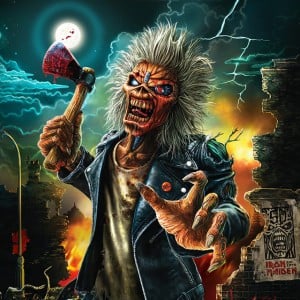
Iron Maiden are an institution. Over 50 years they’ve come to embody a spirit of fearless creative independence, spectacular live shows, ferocious dedication to their fans, and a cheerful indifference to their critics that’s won them a colossal worldwide following. Their epic discography includes the studio albums ‘Iron Maiden, ‘Killers’, ‘The Number Of The Beast’, ‘Piece Of Mind’, ‘Powerslave, ‘Somewhere In Time’, and ‘Seventh Son Of A Seventh Son’ right up to their 17th outing – ‘Senjutsu.’ That celebrated catalogue has inspired many classic such as ‘The Trooper’, ‘Wasted Years’, ‘Hallowed Be Thy Name’, ‘The Number Of The Beast’, ‘Wasting Love’, ‘Run To The Hills’, ‘Aces High’, ‘Rime Of The Ancient Mariner’ and ‘2 Minutes to Midnight’. 2024 sees the conclusion of their The Future Past world tour ahead of their newly announced Run For Your Lives tour in 2025/26, celebrating the group’s 50th anniversary. It will include some of the largest venues the band has ever played.
AC/DC
AC/DC
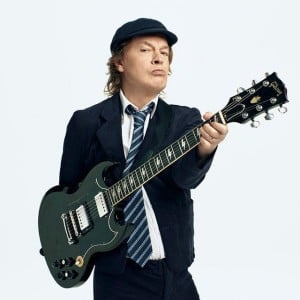
With a limitless supply of dirty riffs, snarling vocals, and timelessly catchy, anthemic choruses, AC/DC is one of the most important and most lasting forces in hard rock. Founded in the early '70s by Scottish-born brothers <a href="spotify:artist:635QWlHZJK2tyDEadZc6TF">Malcolm</a> and <a href="spotify:artist:6pGWDT5CTFv5uhYFPGhjmy">Angus Young</a>, the Aussie band exploded onto the international stage in 1979 with the release of their multi-platinum-selling sixth album, Highway to Hell. The death of charismatic frontman <a href="spotify:artist:62OSqVRTfWPbv9EovmbH4l">Bon Scott</a> in 1980 threatened to derail the group, but AC/DC powered through. They recruited <a href="spotify:artist:0IzJYdxaNLwrC7diSCu0iY">Geordie</a> vocalist <a href="spotify:artist:0TJOVQKoS7sbGVn8RkkvPI">Brian Johnson</a> and unleashed their most successful effort to date, Back in Black, which has become the second best-selling album in history. The band continued to help define the sound of hard rock and metal throughout the '80s, '90s, and beyond, spawning countless imitators and enjoying steady, consistent commercial success. They also became one of the best examples of arena rock, playing to enormous crowds as the years went on, and rocking as hard as ever on studio albums like 1990's pop-glinted The Razor's Edge and 2020's Power Up, both of which reached the upper tiers of multiple charts. AC/DC were formed in 1973 in Australia by guitarist <a href="spotify:artist:635QWlHZJK2tyDEadZc6TF">Malcolm Young</a> after his previous band, the Velvet Underground, collapsed (no relation to the seminal American group). With his younger brother Angus serving as lead guitarist, the band played some gigs around Sydney. Angus was only 18 at the time, and his sister suggested that he wear his school uniform on-stage; the look became the band's visual trademark. While still in Sydney, the original lineup featuring singer Dave Evans cut a single called "Can I Sit Next to You," with ex-<a href="spotify:artist:1pJEZXU2hJApJW3rM7LmMu">Easybeats</a> Harry Vanda and George Young (<a href="spotify:artist:635QWlHZJK2tyDEadZc6TF">Malcolm</a> and Angus' older brother) producing. The band moved to Melbourne the following year, where drummer <a href="spotify:artist:5XcpgxdFA6sz6lvUvzmygg">Phil Rudd</a> (formerly of <a href="spotify:artist:6MtPZrbhMjrrvDqlgPVBPU">the Coloured Balls</a>) and bassist Mark Evans joined the lineup. The band's chauffeur, <a href="spotify:artist:62OSqVRTfWPbv9EovmbH4l">Bon Scott</a>, became the lead vocalist when singer Dave Evans refused to go on-stage. Previously, <a href="spotify:artist:62OSqVRTfWPbv9EovmbH4l">Scott</a> had been vocalist for the Australian prog rock bands <a href="spotify:artist:5ni5xInnnn7IRxv2rjM91W">Fraternity</a> and <a href="spotify:artist:6gO9O0Iss2ipZuskVnmA9a">the Valentines</a>. More importantly, he helped cement the group's image as brutes -- he had several convictions for minor criminal offenses and was rejected by the Australian Army for being "socially maladjusted." AC/DC were socially maladjusted. Throughout their career they favored crude double entendres and violent imagery, all spiked with a mischievous sense of fun. The group released two albums -- High Voltage and T.N.T. -- in Australia in 1974 and 1975. Material from the two records comprised the 1976 release High Voltage in the U.S. and U.K.; the group also toured both countries. Dirty Deeds Done Dirt Cheap followed at the end of the year. In the fall of 1977, AC/DC released Let There Be Rock, which became their first album to chart in the U.S. Mark Evans left the band soon after, with <a href="spotify:artist:6DdTBSwbXwaEFZxDBXFhoO">Cliff Williams</a> taking his place. Powerage, released in spring of 1978, expanded their audience even further, thanks in no small part to their dynamic live shows (which were captured on 1978's live If You Want Blood You've Got It). What really broke the doors down for the band was the following year's Highway to Hell, which hit number 17 in the U.S. and number eight in the U.K., becoming the group's first million-seller. AC/DC's train was derailed when <a href="spotify:artist:62OSqVRTfWPbv9EovmbH4l">Bon Scott</a> died on February 19, 1980. The official coroner's report stated he had "drunk himself to death." In March, the band replaced <a href="spotify:artist:62OSqVRTfWPbv9EovmbH4l">Scott</a> with <a href="spotify:artist:0TJOVQKoS7sbGVn8RkkvPI">Brian Johnson</a>. The following month, they recorded Back in Black, which would prove to be their biggest album, selling over ten million copies in the U.S. alone. For the next few years, they were one of the largest rock bands in the world, with For Those About to Rock We Salute You topping the charts in the U.S. In 1983, <a href="spotify:artist:5XcpgxdFA6sz6lvUvzmygg">Rudd</a> left after the recording of Flick of the Switch; he was replaced by Simon Wright. With Flick of the Switch, AC/DC's commercial standing began to slip, and they weren't able to reverse their slide until 1990's The Razor's Edge, which spawned the hit "Thunderstruck." While not the commercial powerhouse they were during the late '70s and early '80s, the '90s saw AC/DC maintain their status as a top international concert draw. In the fall of 1995, their 16th album, Ballbreaker, was released. Produced by <a href="spotify:artist:1EpmQFTiJbcxzwbLpuUL8L">Rick Rubin</a>, the album received some of the most positive reviews of AC/DC's career; it also entered the American charts at number four and sold over a million copies in its first six months of release. Stiff Upper Lip followed in early 2000 with similar results. AC/DC signed a multi-album deal with <a href="spotify:search:label%3A%22Sony%22">Sony</a> in 2001 that resulted in a slew of reissues and DVDs, and they returned to the studio in 2008 for Black Ice, an all-new collection of songs that topped charts in numerous countries (including Australia, the U.S., and the U.K.) and was followed by the group's first world tour since 2001. Two years later, the band's music was featured heavily in the action movie Iron Man 2, and a compilation was released in conjunction with the film under the title Iron Man 2. As AC/DC began work on a new album with producer <a href="spotify:artist:0BG5aq4J5LuJV8kQcGJ336">Brendan O'Brien</a> in 2014, they announced that <a href="spotify:artist:635QWlHZJK2tyDEadZc6TF">Malcolm Young</a> was suffering from dementia and had left the band; his nephew <a href="spotify:artist:6IGnhji6bgknxTTpyGzK1v">Stevie Young</a> took his place at recording sessions and the accompanying 40th anniversary tour, and subsequently joined the group full-time. Just prior to the December release of Rock or Bust, drummer <a href="spotify:artist:5XcpgxdFA6sz6lvUvzmygg">Phil Rudd</a> was arrested under charges of attempting to procure a murder, threatening to kill, and possession of cannabis and methamphetamine. Although the arranged murder charges were dropped, the others remained and the drummer's future with the band was uncertain. Nevertheless, AC/DC marched forward with the release of Rock or Bust and plans for a tour in 2015. In 2017, <a href="spotify:artist:635QWlHZJK2tyDEadZc6TF">Malcolm Young</a> died in November at the age of 64. Following a two-year hiatus, the band reunited with producer <a href="spotify:artist:0BG5aq4J5LuJV8kQcGJ336">Brendan O'Brien</a> for their 17th studio album, Power Up, which became their third consecutive number one album in Australia and their third chart-topper in the U.S. ~ Stephen Thomas Erlewine, Rovi
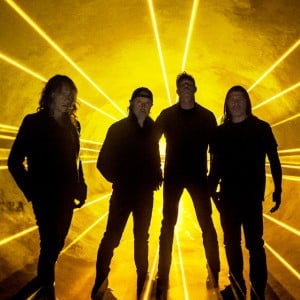
Metallica
Metallica
Metallica formed in 1981 by drummer Lars Ulrich and guitarist and vocalist James Hetfield and has become one of the most influential and commercially successful rock bands in history, having sold 120 million albums worldwide and generating more than 15 billion streams while playing to millions of fans on literally all seven continents. They have scored several multi-platinum albums, including 1991’s Metallica (commonly referred to as The Black Album), with sales of nearly 18 million copies in the United States alone, making it the best-selling album in the history of Soundscan. Metallica has also garnered numerous awards and accolades, including nine Grammy Awards, two American Music Awards, and multiple MTV Video Music Awards, and were inducted into the Rock and Roll Hall of Fame and Museum in 2009. In December 2013, Metallica made history when they performed a rare concert in Antarctica, becoming the first act to ever play all seven continents all within a year, and earning themselves a spot in the Guinness Book of World Records. Metallica’s twelfth studio album <a href="spotify:album:70uejEPPRPSLBrTRdfghP5" data-name="72 Seasons">72 Seasons</a> was released on April 14, 2023 on Metallica’s own Blackened Recordings record label, and the band is currently on the M72 Tour—a 2-year, continent spanning tour with two nights in each market and no repeat sets.
Guns N’ Roses
Guns N’ Roses
Guns N' Roses are the bridge separating 1980s and 1990s hard rock, the band responsible for ushering in an era of grim, gritty rock & roll. Where such peers as <a href="spotify:artist:0cc6vw3VN8YlIcvr1v7tBL">Mötley Crüe</a> reveled in the decadence of Sunset Strip sleaze, Guns N' Roses focused on the grimy underbelly of the urban jungle, with guitarists <a href="spotify:artist:4Cqia9vrAbm7ANXbJGXsTE">Slash</a> and <a href="spotify:artist:6EZFa5zhajrKobEc3uePtM">Izzy Stradlin</a> cranking out mean riffs that matched the dark fantasies of <a href="spotify:artist:6lig3yUbu7r6VhnB8YGSlF">Axl Rose</a>, the vocalist who led GNR with a serpentine charm. <a href="spotify:artist:6lig3yUbu7r6VhnB8YGSlF">Rose</a> countered his nasty tendencies with a romantic side, one that flourished on "Sweet Child O' Mine," the soaring ballad that went to number one in 1988, turning the band into superstars in the process. Over the next few years, GNR's 1987 debut album, Appetite for Destruction, sold in monstrous numbers, with "Welcome to the Jungle" and "Paradise City" both reaching Billboard's Top Ten and "Patience," from the 1989 EP GNR Lies, also reaching that exalted position. During this peak, Guns N' Roses were lightning rods for controversy, so they avoided trouble by whiling away in the studio crafting their sequel to Appetite for Destruction, the sprawling twin albums Use Your Illusion I and Use Your Illusion II. Released simultaneously in September 1991, the Illusions still were rooted in hard rock, but <a href="spotify:artist:6lig3yUbu7r6VhnB8YGSlF">Rose</a> also pursued majestic, melodramatic balladry, a trait that reached its apotheosis in "November Rain," a ballad that became their last Top Ten hit in 1992. By that point, Guns N' Roses were no longer the paragons of grubby hard rock, not after <a href="spotify:artist:6olE6TJLqED3rqDCT0FyPh">Nirvana</a> ushered in the grunge revolution of the early '90s. The rise of alternative rock coincided with the erosion of the original GNR lineup, a slow attrition that left <a href="spotify:artist:6lig3yUbu7r6VhnB8YGSlF">Axl Rose</a> as the lone remaining founding member by the end of the '90s. He spent much of the 2000s working on his magnum opus Chinese Democracy, which he delivered in 2008, by which point the group were so out of the mainstream that they weren't even considered retro-hip. The situation would eventually change. By 2015, <a href="spotify:artist:4Cqia9vrAbm7ANXbJGXsTE">Slash</a> and bassist <a href="spotify:artist:3KEe5d2p5jKihMMvuXVhr1">Duff McKagan</a> rejoined Guns N Roses, providing the band with a core of original members that would help this be a stable lineup into the 2020s, when the group showed signs of returning to active recording status via the 2022 EP Hard Skool. Guns N' Roses released their first EP in 1986, which led to a contract with <a href="spotify:search:label%3A%22Geffen%22">Geffen</a>; the following year, the band released their debut album, Appetite for Destruction. They started to build a following with their numerous live shows, but the album didn't start selling until almost a year later, when MTV began playing "Sweet Child O' Mine." Soon, both the album and single shot to number one, and Guns N' Roses became one of the biggest bands in the world. Their debut single, "Welcome to the Jungle," was re-released and shot into the Top Ten, and "Paradise City" followed in its footsteps. By the end of 1988, they released G N' R Lies, which paired four new, acoustic-based songs (including the Top Five hit "Patience") with their first EP. G N' R Lies' inflammatory closer, "One in a Million," sparked intense controversy, as <a href="spotify:artist:6lig3yUbu7r6VhnB8YGSlF">Rose</a> slipped into misogyny, bigotry, and pure violence; essentially, he somehow managed to distill every form of prejudice and hatred into one five-minute tune. Guns N' Roses began work on the long-awaited follow-up to Appetite for Destruction at the end of 1990. In October of that year, the band fired <a href="spotify:artist:1bqTpELuDurfcMOGKvJXzl">Adler</a>, claiming that his drug dependency caused him to play poorly; he was replaced by <a href="spotify:artist:1icjlI6iYtR1JjXTJLf4gG">Matt Sorum</a> from <a href="spotify:artist:49DW3KvkyjHO35mK1JnSyS">the Cult</a>. During recording, the band added Dizzy Reed on keyboards. By the time the sessions were finished, the new album had become two new albums. After being delayed for nearly a year, the albums Use Your Illusion I and Use Your Illusion II were released in September 1991. Messy but fascinating, the records showcased a more ambitious band; while there were still a fair number of full-throttle guitar rockers, there were stabs at <a href="spotify:artist:3PhoLpVuITZKcymswpck5b">Elton John</a>-style balladry, acoustic blues, horn sections, female backup singers, ten-minute art rock epics with several different sections, and a good number of introspective, soul-searching lyrics. In short, Guns N' Roses were now making art; amazingly, they were successful at it. The albums sold very well initially, but while they had seemed destined to set the pace for the decade to come, that turned out not to be the case at all. <a href="spotify:artist:6olE6TJLqED3rqDCT0FyPh">Nirvana</a>'s Nevermind hit number one in early 1992, suddenly making Guns N' Roses -- with all of their pretensions, impressionistic videos, models, and rock star excesses -- seem very uncool. <a href="spotify:artist:6lig3yUbu7r6VhnB8YGSlF">Rose</a> handled the change by becoming a dictator, or at least a petty tyrant; his in-concert temper tantrums became legendary, even going so far as to incite a riot in Montreal. <a href="spotify:artist:6EZFa5zhajrKobEc3uePtM">Stradlin</a> left by the end of 1991, and with his departure the band lost their best songwriter; he was replaced by ex-<a href="spotify:artist:2kKd8kwqemHlbIWZ3eTgf5">Kills for Thrills</a> guitarist <a href="spotify:artist:6Ya7kAthUWvVuSQBX0oIMx">Gilby Clarke</a>. GNR didn't fully grasp the shift in hard rock until 1993, when they released an album of punk covers, The Spaghetti Incident?; it received some good reviews, but the band failed to capture the reckless spirit of not only the original versions but their own Appetite for Destruction. By the middle of 1994, there were rumors flying that GNR were about to break up, since <a href="spotify:artist:6lig3yUbu7r6VhnB8YGSlF">Rose</a> wanted to pursue a new, more industrial direction and <a href="spotify:artist:4Cqia9vrAbm7ANXbJGXsTE">Slash</a> wanted to stick with their blues-inflected hard rock. The band remained in limbo for several more years, and <a href="spotify:artist:4Cqia9vrAbm7ANXbJGXsTE">Slash</a> resurfaced in 1995 with the side project <a href="spotify:artist:4Ros83hWMCi68biw25Xyxg">Slash's Snakepit</a> and an LP, It's Five O'Clock Somewhere. <a href="spotify:artist:6lig3yUbu7r6VhnB8YGSlF">Rose</a> remained out of the spotlight, becoming a virtual recluse and doing nothing but tinkering in the studio; he also recruited various musicians -- including <a href="spotify:artist:3JTMBiL0Bmrxv41WJ8V8cu">Dave Navarro</a>, <a href="spotify:artist:0o1eC2L6gOIyKwkAtxVAWH">Tommy Stinson</a>, and ex-<a href="spotify:artist:0X380XXQSNBYuleKzav5UO">Nine Inch Nails</a> guitarist Robin Finck -- for informal jam sessions. Remaining members were infuriated by <a href="spotify:artist:6lig3yUbu7r6VhnB8YGSlF">Rose</a>'s inclusion of childhood friend Paul Huge in the new sessions when both <a href="spotify:artist:6EZFa5zhajrKobEc3uePtM">Stradlin</a> and <a href="spotify:artist:6Ya7kAthUWvVuSQBX0oIMx">Clarke</a> were excluded from rejoining the band. And a remake of <a href="spotify:artist:22bE4uQ6baNwSHPVcDxLCe">the Rolling Stones</a>' "Sympathy for the Devil" was essentially the straw that broke the camel's back, as <a href="spotify:artist:6lig3yUbu7r6VhnB8YGSlF">Rose</a> cut out some of the other members' contributions and pasted Huge over the song without consulting anyone else. By 1996, <a href="spotify:artist:4Cqia9vrAbm7ANXbJGXsTE">Slash</a> was officially out of Guns N' Roses, leaving <a href="spotify:artist:6lig3yUbu7r6VhnB8YGSlF">Rose</a> the lone remaining survivor from the group's heyday; rumors continued to swirl, and still no new material was forthcoming, though <a href="spotify:artist:6lig3yUbu7r6VhnB8YGSlF">Rose</a> did re-record Appetite for Destruction with a new lineup for rehearsal purposes. The first new original GNR song in eight years, the industrial metal track "Oh My God" finally appeared on the soundtrack to the 1999 Arnold Schwarzenegger film End of Days. Soon after, <a href="spotify:search:label%3A%22Geffen%22">Geffen</a> issued the two-disc Live Era: '87-'93. The year 2000 brought the addition of guitarists Robin Finck (of <a href="spotify:artist:0X380XXQSNBYuleKzav5UO">Nine Inch Nails</a>) and <a href="spotify:artist:0fDF0jjmdouCIeWhNnblwV">Buckethead</a>, and 2001 was greeted with Guns N' Roses' first live dates in nearly seven years, as the band (which consisted of <a href="spotify:artist:6lig3yUbu7r6VhnB8YGSlF">Rose</a> plus guitarists Finck and <a href="spotify:artist:0fDF0jjmdouCIeWhNnblwV">Buckethead</a>, bassist <a href="spotify:artist:0o1eC2L6gOIyKwkAtxVAWH">Stinson</a>, former <a href="spotify:artist:64mPnRMMeudAet0E62ypkx">Primus</a> drummer Brian "Brain" Mantia, childhood friend and guitarist Paul Huge, and longtime GNR keyboardist Dizzy Reed) played a show on New Year's Eve 2000 in Las Vegas; they also performed at the mammoth Rock in Rio festival the following month. On New Year's Eve 2001, the band played almost the exact same set as the year before. An appearance at MTV's 2002 Video Music Awards helped garner interest in the new lineup, but a rusty performance from <a href="spotify:artist:6lig3yUbu7r6VhnB8YGSlF">Rose</a> and an interview where he said his new album wasn't coming out anytime soon didn't do much to further their cause. That summer, GNR started on their first tour in almost eight years, and they managed to fulfill all of their commitments in Europe and Asia. Sadly, they caused a violent and destructive riot in Vancouver when <a href="spotify:artist:6lig3yUbu7r6VhnB8YGSlF">Rose</a> failed to show up for the first date of their North American tour. While he was up to his old shenanigans with the retooled lineup, former <a href="spotify:artist:2UazAtjfzqBF0Nho2awK4z">Stone Temple Pilots</a> vocalist <a href="spotify:artist:0RMOWaq3zw0fdgvaGRMcdA">Scott Weiland</a>, <a href="spotify:artist:4Cqia9vrAbm7ANXbJGXsTE">Slash</a>, <a href="spotify:artist:1icjlI6iYtR1JjXTJLf4gG">Sorum</a>, and <a href="spotify:artist:3KEe5d2p5jKihMMvuXVhr1">McKagan</a> formed the successful <a href="spotify:artist:7CHilrn81OdYjkh4uSVnYM">Velvet Revolver</a> in spring 2002. And so years passed and still no new GNR album, to the point where it became one joke too many. The album was long billed as Chinese Democracy, and occasionally session recordings would leak and make their way onto Internet file-sharing networks. A fascinating article written by Jeff Leeds for The New York Times, published in March 2005, revealed how tangled and costly the making of the album had become. According to the article, titled "The Most Expensive Album Never Released," <a href="spotify:artist:6lig3yUbu7r6VhnB8YGSlF">Rose</a> began work on the album in 1994 and racked up production costs of at least 13 million dollars. Producers involved with the album at one time or another included <a href="spotify:artist:71qdlkRTIt3NCSzshqqL4W">Mike Clink</a>, <a href="spotify:artist:1zf3mY5ZJ69hlt5W24EvYq">Youth</a>, Sean Beavan, and even <a href="spotify:artist:5UnZl2Izl86NC6yfVwG0CT">Roy Thomas Baker</a>. (Curiously, <a href="spotify:artist:3OsRAKCvk37zwYcnzRf5XF">Moby</a> claimed to have been offered the job as well.) <a href="spotify:artist:7yAPsqNhqqsTGsuOSZJg0i">Marco Beltrami</a> and <a href="spotify:artist:3SwPvWceyvNGebkPe2yPKD">Paul Buckmaster</a> were allegedly brought in for orchestral arrangements, and there was a revolving door of guitarists; <a href="spotify:artist:0fDF0jjmdouCIeWhNnblwV">Buckethead</a> left the band in 2004, and <a href="spotify:artist:1pfObbpsH1DmojbIUv2qfs">Ron "Bumblefoot" Thal</a> eventually took his place. In 2006, the record seemed closer to release, as <a href="spotify:artist:6lig3yUbu7r6VhnB8YGSlF">Rose</a> began surfacing in public and even took his band on the road for some shows. The music industry's biggest boondoggle finally bore fruit in 2008, when <a href="spotify:artist:6lig3yUbu7r6VhnB8YGSlF">Axl</a> unveiled an album that was well over a decade in the making. While Chinese Democracy received many rave reviews, and the critical response was positive overall, the record underperformed (its almost impossible) expectations, debuting at number three on the Billboard 200 when it came out in November. A worldwide tour followed. Guitarist <a href="spotify:artist:0eJ47F21cSoOL7T8yieuHh">DJ Ashba</a> of <a href="spotify:artist:3886aFez2HDLkio5tUzmP6">Sixx:A.M.</a> joined Guns N' Roses in 2009, and the band continued working on new material and playing shows, with some of the group's former members occasionally dropping in for guest appearances. In 2012, GNR's classic lineup was inducted into the Rock & Roll Hall of Fame, and <a href="spotify:artist:4Cqia9vrAbm7ANXbJGXsTE">Slash</a>, <a href="spotify:artist:3KEe5d2p5jKihMMvuXVhr1">McKagan</a>, <a href="spotify:artist:6Ya7kAthUWvVuSQBX0oIMx">Clarke</a>, <a href="spotify:artist:1bqTpELuDurfcMOGKvJXzl">Adler</a>, and <a href="spotify:artist:1icjlI6iYtR1JjXTJLf4gG">Sorum</a> reunited and performed a few Appetite-era songs with vocalist <a href="spotify:artist:2YZOQlBE1v44RxPEAVSdVR">Myles Kennedy</a> replacing <a href="spotify:artist:6lig3yUbu7r6VhnB8YGSlF">Rose</a>, who had declined to participate. <a href="spotify:artist:1KGFAcP7ovMYuoQuloDhOj">Bumblefoot</a> left the group in 2014, and in July 2015, <a href="spotify:artist:0eJ47F21cSoOL7T8yieuHh">Ashba</a> announced that he had departed from the band as well. In 2016, GNR embarked on the Not in This Lifetime... Tour, which featured <a href="spotify:artist:6lig3yUbu7r6VhnB8YGSlF">Rose</a> alongside a reunited lineup with guitarist <a href="spotify:artist:4Cqia9vrAbm7ANXbJGXsTE">Slash</a>, bassist <a href="spotify:artist:3KEe5d2p5jKihMMvuXVhr1">Duff McKagan</a>, and several longtime touring members. The tour, whose title was a reference to a quote <a href="spotify:artist:6lig3yUbu7r6VhnB8YGSlF">Rose</a> gave in 2012, also found original drummer <a href="spotify:artist:1bqTpELuDurfcMOGKvJXzl">Steven Adler</a> joining the band for several stops. A remastered version of Appetite for Destruction arrived in 2018 and included a previously unreleased single, "Shadow of Your Love," recorded by the original lineup. The group continued to tour throughout 2020 and 2021, debuting several songs, including "Absurd" and "Hard Skool," the latter of which worked as the title track to the 2022 EP Hard Skool. Another GNR single, "Perhaps," appeared a year later in August 2023. ~ Stephen Thomas Erlewine, Rovi
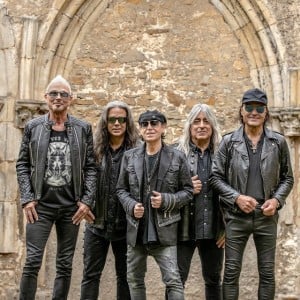
Scorpions
Scorpions
Known best for their 1984 anthem "Rock You Like a Hurricane" & the 1990 ballad "Wind of Change," German rockers Scorpions have sold over 100 million records, making them one of the most successful rock bands to ever come out of Europe. In over 50years, they have become Continental Europe’s most successful rock band, the living proof that not only VW, Mercedes or BMW are able to compete internationally, but classic rock music made in Germany as well. Countless bands, including the Smashing Pumpkins as well as Green Day, Korn, System Of A Down or Queensryche have covered their songs throughout the years. However, countless silver, gold and platinum awards are only one side of the Scorpions’ history. Another is their unabated desire to travel. No other rock band of their caliber after so many years takes to the stage as often as the Hannover natives. They have played thousands of concerts in all corners of the planet: in Rio, Tokyo, Moscow, Washington, Dubai, Paris or Berlin. In 1988, they were the first Western rock band to play soldout shows 5 days in a row in the then still Soviet Leningrad. Pioneering achievements elsewhere as well: through very early concerts in China and Southeast Asia, they have opened doors for many other Western bands. There were many magic live moments; some of them are captured on live albums, others on film & video recordings. These are the moments, which have cemented the Scorpions’ reputation as one of the rare bands rising far above the crowd!
artists
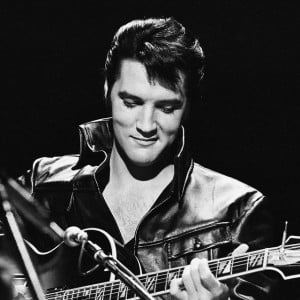
Elvis Presley
Elvis Presley
In 1992, the U.S. Postal Service conducted a nationwide vote on a crucial subject: Should their upcoming stamp feature Young Elvis or Older Elvis? More than 75 percent of the million-plus ballots voted for Young Elvis, but the fact that the question was asked at all speaks to the difficulty of pinning down just who the man was and how he should be remembered: Boundary-breaking R&B singer or Hollywood crooner? Rock pioneer or Vegas showman? An artist who legitimized blues for white audiences or appropriated it from black performers?<br> In truth, Elvis Presley was all these things and more, a prism through which just about every myth we have about race, pop culture, and the American dream can be refracted. Born in 1935 in Tupelo, Mississippi, in a two-room shotgun house built by his father, Presley moved to Memphis as a teenager, recording his first sides for Sun Records a couple of months after he finished high school. He liked country, but also blues; he liked ballads, but played with an irrepressible energy that helped shape the feel of rock and roll. (His breakthrough, an uptempo cover of the blues singer Arthur Crudup’s “That’s All Right,” reportedly started as a goof Presley was killing time with between takes of something more subdued.)<br> In addition to becoming one of the first artists to successfully make R&B for white audiences, Presley was also one of the first performers whose fame (good and bad) came in large part from television—you can’t see hips move in the newspaper. (The <i>New York Times</i>, reporting on Presley’s <i>Milton Berle Show</i> performance in June 1956: “His one specialty is an accented movement of the body that heretofore has been primarily identified with the repertoire of the blonde bombshells of the burlesque runway.”)<br> Presley parlayed his screen appeal into a successful movie career, spending most of the '60s in Hollywood. (A handful of his most indelible songs—including “Can’t Help Falling in Love” and “Return to Sender”—started life on soundtracks to movies in which he also starred.) In 1968, he ventured to recapture the jolt of his early years, staging a television special (<i>Elvis</i>, a.k.a. the ’68 Comeback Special) that constituted his first live performance since 1961. The following year, he released <i>From Elvis in Memphis</i>, an album that found him suddenly, effortlessly, in step with contemporary pop and soul.<br> Though Presley toured almost relentlessly until his death from a heart attack in 1977, he became increasingly cloistered, at one point giving up recording studios in favor of using a mobile studio RCA Records sent to his Memphis mansion, Graceland. A car aficionado with no shortage of spending money, he was known to occasionally approach strangers outside Cadillac showrooms and ask which model and color they liked best before offering—out of the blue—to pick up the bill. Nearly 80,000 people were estimated to have attended the procession for his funeral, where he was buried next to his mother.
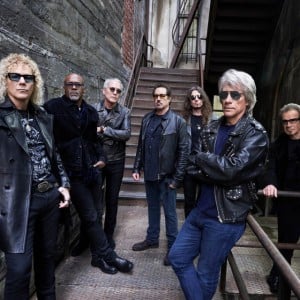
Bon Jovi
Bon Jovi
After ushering in the era of pop-metal with their 1986 blockbuster Slippery When Wet and its hit singles "You Give Love a Bad Name," "Wanted Dead or Alive," and "Living on a Prayer," Bon Jovi wound up transcending the big-haired '80s, withstanding changes in style and sound to become one of the biggest American rock bands of their time. Unlike a lot of their big-haired pop-metal peers, Bon Jovi's appeal wasn't limited to the States. Slippery When Wet, its 1988 sequel New Jersey, and 1992's Keep the Faith were all international smashes, each selling over ten million copies worldwide. Another way they differed from other MTV favorites of the late '80s lies in how Bon Jovi cannily and subtly changed their sound to fit the time. First, the group slowly lessened their reliance on arena rock guitars, emphasizing melody and ballads without rejecting hard rock. They incorporated elements of soft rock and country, moves that helped the band sustain their popularity into the 21st century. Bon Jovi took their name from lead singer <a href="spotify:artist:6h2bWHWTJL38N8dqocVaif">Jon Bon Jovi</a> (born Jon Bongiovi), who spent his adolescence playing in local Jersey bands with <a href="spotify:artist:5HTLcXvGX66kbvCeLn6NPB">David Bryan</a> (born David Rashbaum). <a href="spotify:artist:6h2bWHWTJL38N8dqocVaif">Jon</a>'s cousin Tony Bongiovi owned the celebrated New York recording studio the Power Station and <a href="spotify:artist:6h2bWHWTJL38N8dqocVaif">Jon</a> spent many hours there, working as a janitor and recording demos after hours, sometimes supported by members of <a href="spotify:artist:6Gt8nwunKGTUYQq5UqiDR2">the E Street Band</a> or <a href="spotify:artist:3jtTd1E9mBxYYU987s32Fm">Aldo Nova</a>. One of those demos, "Runaway," became a hit on local New Jersey radio and led to the formation of Bon Jovi the band: <a href="spotify:artist:6h2bWHWTJL38N8dqocVaif">Jon</a> and <a href="spotify:artist:5HTLcXvGX66kbvCeLn6NPB">Bryan</a> were supported by guitarist Dave Sabo, bassist Alec John Such, and drummer Tico Torres. "Runaway" spurred a major-label bidding war, leading to a contract with <a href="spotify:search:label%3A%22Polygram%22">Polygram</a>/<a href="spotify:search:label%3A%22Mercury%22">Mercury</a> in 1983. Before the group entered the studio, though, Bon Jovi replaced Sabo with <a href="spotify:artist:6uNjT2PKDfR7t48JKhajkh">Richie Sambora</a>, a working guitarist with a long résumé, including a stint as a member of Message. Bon Jovi released their eponymous debut album in 1984, generating a Top 40 hit with the original version of "Runaway." The following year, 7800° Fahrenheit was released and went gold, all serving as a prelude to the band's 1986 breakthrough, Slippery When Wet. <a href="spotify:artist:5W0GCoUUwU3SF6qpJanlug">Paul Stanley</a> had given <a href="spotify:artist:6h2bWHWTJL38N8dqocVaif">Jon</a> and <a href="spotify:artist:6uNjT2PKDfR7t48JKhajkh">Richie</a> the phone number of professional songwriter <a href="spotify:artist:7KgW65389e5w4xWzaVOuCg">Desmond Child</a>, and together they wrote two of the album's biggest hits in <a href="spotify:artist:6uNjT2PKDfR7t48JKhajkh">Richie</a>'s parents' basement. The trio composed 30 songs in total and auditioned them for local New Jersey and New York teenagers, basing the album's running order on their opinions. Supported by several appealing, straightforward videos that received heavy rotation on MTV, the record took off on the strength of "You Give Love a Bad Name," followed quickly by "Livin' on a Prayer" and "Wanted Dead or Alive." Those three Top Ten Hits helped propel Slippery When Wet to sales of nine million in the U.S. alone, establishing Bon Jovi as superstars in their home country. Their fame was not limited to the U.S., though, as the album also turned into a significant hit in Europe, Canada, Japan, and Australia. Bon Jovi built upon Slippery When Wet's formula with 1988's New Jersey, which shot to number one upon its release. New Jersey was only slightly less successful than its predecessor, selling five-million copies and generating two number one singles, "Bad Medicine" and "I'll Be There for You," as well as the Top Ten hits "Born to Be My Baby," "Lay Your Hands on Me," and "Living in Sin." Following the completion of an 18-month international tour, the band went on hiatus. During the time off, <a href="spotify:artist:6h2bWHWTJL38N8dqocVaif">Jon Bon Jovi</a> wrote the soundtrack for Young Guns II, which was released in 1990 as the Blaze of Glory album. The record produced two hit singles -- the number one title track and the number 12 "Miracle" -- and earned several Grammy and Oscar nominations. The following year, Bon Jovi reunited to record their fifth album, Keep the Faith, which was released in the fall of 1992. While the album didn't match the blockbuster status of its predecessors, it did produce a hit with "Bed of Roses," an adult contemporary-styled ballad that helped sustain the band's popularity. A greatest-hits album called Cross Road appeared in 1994 and yielded another Top Ten ballad, "Always." Around the same time, bassist Alec John Such left the group; Hugh McDonald, who appeared on Bon Jovi recordings stretching back as far as "Runaway," became his unofficial replacement and was featured prominently on the band's next album. Released in the fall of 1995, These Days turned into another U.S. Top Ten, as well as a popular European hit. After appearing in the 1996 film Moonlight and Valentino, <a href="spotify:artist:6h2bWHWTJL38N8dqocVaif">Jon Bon Jovi</a> released his first official solo album, Destination Anywhere, in the summer of 1997. During the tail-end of the '90s, the members of Bon Jovi engaged in different projects -- <a href="spotify:artist:6uNjT2PKDfR7t48JKhajkh">Sambora</a> released a sophomore solo set called Undiscovered Soul in 1998 -- before easing back into work in 1999 with a song for EDtv, then beginning work on a full-length record. The resulting album, Crush, appeared in 2000 and constituted something of a comeback in America thanks to the smash single "It's My Life," a cross-platform hit single with long legs. "Thank You for Loving Me" also turned into a hit, helping Crush go double platinum in the U.S. and selling eight-million copies worldwide. Bon Jovi quickly followed Crush with their eighth studio effort, Bounce, which appeared in the fall of 2002, and supported the record with another international tour. In 2003, the band re-recorded many of their most well-known songs for the acoustic-based release This Left Feels Right, which also saw an accompanying DVD in 2004. The ambitious outtakes and rarities box set 100,000,000 Bon Jovi Fans Can't Be Wrong arrived in November of that year, followed by the all-new Have a Nice Day -- the first of several albums produced by John Shanks. That record's success was aided in part by the single "Who Says You Can't Go Home," featuring guest vocals from <a href="spotify:artist:0hYxQe3AK5jBPCr5MumLHD">Sugarland</a>'s <a href="spotify:artist:2WV4xLQooFalR2cit0XSKp">Jennifer Nettles</a>, which eventually won the Grammy Award for Best Country Collaboration with Vocals -- as well as topping the charts in Japan, Australia, Europe, and Canada. The group spent the following year in the studio, putting the finishing touches on a collection of pop-infused heartland country anthems. The resulting Lost Highway, which featured duets with <a href="spotify:artist:2d3VHzlOEwXvmBdS4pzOPL">LeAnn Rimes</a> and <a href="spotify:artist:0oBEeN6BCxEgMogzThqrPf">Big & Rich</a>, arrived in the summer of 2007 and grabbed the band a healthy new country music fan base in the process. Lost Highway's cross-genre formula proved to be quite potent, securing Bon Jovi their third number one album in the U.S. The group returned to rock shortly thereafter, though, with the release in 2009 of a somber, searching album titled The Circle. One year later, Greatest Hits: The Ultimate Collection offered plenty of hits along with two new tracks, "No Apologies" and "What Do You Got?" In the first years of the 2010s, the members of Bon Jovi pursued solo projects, the most notable being <a href="spotify:artist:6uNjT2PKDfR7t48JKhajkh">Sambora</a>'s 2012 solo album Aftermath of the Lowdown. In November 2012, two months after <a href="spotify:artist:6uNjT2PKDfR7t48JKhajkh">Sambora</a>'s album, the band issued Inside Out, a live album for video, recorded at London's O2 Arena, New Jersey's MetLife Stadium, and New York's Madison Square Garden. In March 2013, Bon Jovi returned with What About Now, their first studio album in four years. In similar thematic and musical company as The Circle, it reached number one on the Billboard Top 200, along with topping the charts in Australia and Canada and reaching number two in the U.K. Despite its high debut, What About Now was their first album not to achieve gold certification in the U.S. Soon after the release of What About Now, there was evident turmoil in the Bon Jovi camp. <a href="spotify:artist:6uNjT2PKDfR7t48JKhajkh">Sambora</a> left the supporting tour in 2013, citing "personal reasons" -- he was replaced by guitarist Phil X (Phil Xenidis) -- and then Tico Torres had to undergo gallbladder surgery. Torres returned to the fold, but <a href="spotify:artist:6uNjT2PKDfR7t48JKhajkh">Sambora</a> did not. In November 2014, the guitarist and band announced they had parted ways; Phil X became his unofficial permanent replacement. Next up for Bon Jovi came 2015's Burning Bridges, a record that was dubbed a "fan album," meaning it was a collection of odds and ends intended as a stopgap as the group completed their first full-fledged post-<a href="spotify:artist:6uNjT2PKDfR7t48JKhajkh">Sambora</a> album. That record, titled This House Is Not for Sale, appeared on <a href="spotify:search:label%3A%22Island%22">Island</a> in November of 2016, and debuted at number one on the Billboard Top 200. Four years later, Bon Jovi returned with the aptly named full-length Bon Jovi 2020. Released in October 2020, the album was direct and politically charged, qualities crystalized on the pre-release singles "American Reckoning" and "Do What You Can." Alec John Such, the group's original bass player, died on June 5, 2022 at the age of 70. ~ Stephen Thomas Erlewine, Rovi
Pitty
Pitty
Com mais de 20 anos de carreira, Pitty é uma das grandes roqueiras do Brasil. Cantora, compositora, produtora e apresentadora, a inquieta e plural artista utiliza múltiplas plataformas para a produção e a divulgação de seu trabalho. Em 2003 lançou seu primeiro álbum solo, "Admirável Chip Novo". O disco é um sucesso e tem a produção de Rafael Ramos - com quem trabalha hoje. São 5 discos de estúdio, além de registros ao vivo e grandes parcerias com artistas como Elza Soares e Emicida. Seus hits inesquecíveis e atemporais, como "Me Adora", "Equalize" e "Na Sua Estante" estão sempre presentes nos shows. As turnês são intensas e atraem público diverso em gênero e idade. Sucesso de bilheteria, as apresentações têm set list extenso e bem pensado. A longa e feliz parceria com o guitarrista Martin Mendonça rendeu o projeto "AGRIDOCE" (2011). Indicada 4 vezes ao Grammy Latino, Pitty já levou 7 Prêmios Multishow de Música Brasileira e é a maior vencedora de VMBs na história da MTV Brasil. Engajada em causas feministas e LGBTQI+, a cantora já se apresentou e foi premiada 3 vezes no WME - Women's Music Awards.
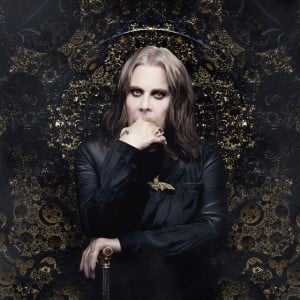
Ozzy Osbourne
Ozzy Osbourne
If you need to read a bio to learn about who Ozzy Osbourne is, what rock have you been living under?