TBR

Items in this hypelist
To Read

Agua viva
Clarice Lispector · 2020
<p>Agua viva se nos desliza entre los dedos siempre dispuestos a buscar encuadres y clasificaciones. Sin embargo, y quizá de forma paradójica, al mismo tiempo que esta escritura desafía los límites de la literatura solo la literatura puede contenerla."Clarice Lispector realiza lo que llamo literatura o escritura pensante, aquella que permite pensar lo impensado y hasta lo impensable en las culturas occidentales, yendo mucho más allá del pensamiento humano en sentido vulgar: Estoy detrás de lo que permanece atrás del pensamiento. Y lo que permanece atrás del pensamiento son las sensaciones (es una sensación atrás del pensamiento), que no se oponen simplemente al razonamiento humano relacionado al lenguaje verbal, sino que lo anteceden, estableciendo con este más de una relación. De allí la necesidad de desplegar una poética y una estética de las sensaciones.Es en Agua viva que los planos humanos, animales y vegetales se mezclan inapelablemente. Esa obra configura un no libro, un libro que se asemeja más a las plantas, animales y cosas sensitivas que al objeto-libro tradicional: Esto no es un libro porque así no se escribe. Se trata de un volumen desbordante, lleno de múltiples ramificaciones, un poco como la propia forma que el agua viva permite percibir. Ese no libro no tiene, propiamente, una historia, transcribe solo las impresiones y reflexiones de una artista que escribe, sin que se configure una trama. Es un volumen sin duda experimental, entre los más potentes que se han escrito en el siglo XX." Evando Nascimento<br></p>

Erotism: Death and Sensuality
Georges Bataille · 1986
Taboo and sacrifice, transgression and language, death and sensuality—Georges Bataille pursues these themes with an original, often startling perspective.<br/>Bataille challenges any single discourse on the erotic. The scope of his inquiry ranges from Emily Bronte to Sade,from St. Therese to Claude Levi-Strauss and Dr. Kinsey. The subjects he covers include prostitution, mythical ecstasy, cruelty, and organized war. Investigating desire prior to and extending beyond the realm of sexuality, he argues that eroticism is "a psychological quest not alien to death."<br/>" . . . one of the most original and unsettling of those thinkers who, in the wake of Sade and Nietzsche, have confronted the possibility of thought in a world that has lost its myth of transcendence."—Peter Brooks, New York Times Book Review<br/>"Bataille is one of the most important writers of the century."—Michel Foucault<br/>"[An] urgent, thrusting book about love, sex, death and spirituality by Georges Bataille."—Mark Price, Philosophy Now<br/>"A philosopher, essayist, novelist, pornographer and fervent Catholic who came to regard the brothels of Paris as his true 'churches', Georges Bataille ranks among the boldest and most disturbing of twentieth-century thinkers. In this influential study he links the underlying sexual basis of religion to death, offering a dazzling array of insights into incest, prostitution, marriage, murder, sadism, sacrifice and violence, as well as including comments on Freud, Sade and Saint Theresa. Everywhere, Eroticism argues, sex is surrounded by taboos, which we must continually transgress in order to overcome the sense of isolation that faces us all."—The Book Depository<br/>Georges Bataille (1897-1962) was a French intellectual and literary icon who wrote essays, novels, and poems exploring philosophical and sociological subjects such as eroticism and surrealism. City Lights published more of Bataille's works including The Impossible, The Tears of Eros, and Story of the Eye.

The Interface Effect
Alexander R. Galloway · 2012
Between Two Fires
Christopher Buehlman · 2012
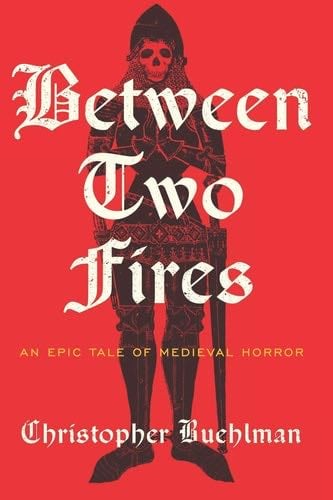
His extraordinary debut, Those Across the River, was hailed as “genre-bending Southern horror” (California Literary Review), “graceful [and] horrific” (Patricia Briggs). Now Christopher Buehlman invites readers into an even darker age—one of temptation and corruption, of war in heaven, and of hell on earth… And Lucifer said: “Let us rise against Him now in all our numbers, and pull the walls of heaven down…” The year is 1348. Thomas, a disgraced knight, has found a young girl alone in a dead Norman village. An orphan of the Black Death, and an almost unnerving picture of innocence, she tells Thomas that plague is only part of a larger cataclysm—that the fallen angels under Lucifer are rising in a second war on heaven, and that the world of men has fallen behind the lines of conflict. Is it delirium or is it faith? She believes she has seen the angels of God. She believes the righteous dead speak to her in dreams. And now she has convinced the faithless Thomas to shepherd her across a depraved landscape to Avignon. There, she tells Thomas, she will fulfill her mission: to confront the evil that has devastated the earth, and to restore to this betrayed, murderous knight the nobility and hope of salvation he long abandoned. As hell unleashes its wrath, and as the true nature of the girl is revealed, Thomas will find himself on a macabre battleground of angels and demons, saints, and the risen dead, and in the midst of a desperate struggle for nothing less than the soul of man.
Pursuits of Wisdom: Six Ways of Life in Ancient Philosophy from Socrates to Plotinus
John M. Cooper · 2013

The Theological Origins of Modernity
Michael Allen Gillespie · 2008

The World, the Flesh and the Subject: Continental Themes in Philosophy of Mind and Body
Paul Gilbert, Kathleen Lennon · 2005
Passio
Pirkko Saisio
On the Trinity
St. Augustine · 2014

Holy Feast and Holy Fast: The Religious Significance of Food to Medieval Women (New Historicism)
Caroline Walker Bynum · 1987

The Book of the City of Ladies (Penguin Classics)
Christine de Pizan, Rosalind Brown-Grant · 2000
A fascinating insight into the debates and controversies about the position of women in medieval culture, written by France's first professional woman of letters<br/><br/>The pioneering Book of the City of Ladies begins when, feeling frustrated and miserable after reading a male writer's tirade against women, Christine de Pizan has a dreamlike vision where three virtues—Reason, Rectitude and Justice—appear to correct this view. They instruct her to build an allegorical city in which womankind can be defended against slander, its walls and towers constructed from examples of female achievement both from her own day and the past: ranging from warriors, inventors and scholars to prophetesses, artists and saints. Christine de Pizan's spirited defence of her sex was unique for its direct confrontation of the misogyny of her day, and offers a telling insight into the position of women in medieval culture. The Book of the City of Ladies provides positive images of women, ranging from warriors and inventors, scholars to prophetesses, and artists to saints.<br/><br/>For more than seventy years, Penguin has been the leading publisher of classic literature in the English-speaking world. With more than 1,700 titles, Penguin Classics represents a global bookshelf of the best works throughout history and across genres and disciplines. Readers trust the series to provide authoritative texts enhanced by introductions and notes by distinguished scholars and contemporary authors, as well as up-to-date translations by award-winning translators.

Medieval Bodies: Life and Death in the Middle Ages
Jack Hartnell · 2019

The Wisdom of the Beguines: The Forgotten Story of a Medieval Women's Movement
Laura Swan · 2016
Why Can the Dead Do Such Great Things?: Saints and Worshippers from the Martyrs to the Reformation
Robert Bartlett · 2015

From Virile Woman to WomanChrist
Barbara Newman · 2011
Holy Anorexia
Rudolph M. Bell · 1987
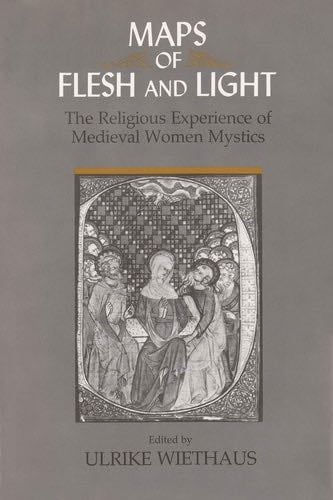
Maps of Flesh and Light: The Religious Experience of Medieval Women Mystics
· 1993
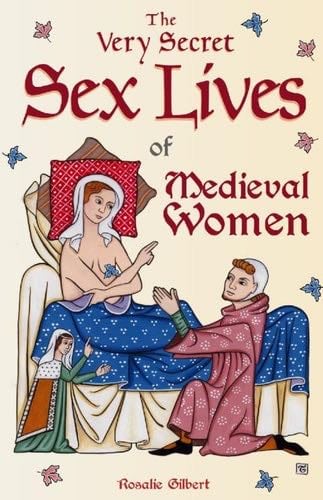
The Very Secret Sex Lives of Medieval Women
Rosalie Gilbert · 2020

The Female Mystic
Andrea Janelle Dickens · 2009

The Practice of Not Thinking
Ryunosuke Koike · 2021
THE INTERNATIONAL BESTSELLER<br/><br/>What if we could learn to look instead of see, listen instead of hear, feel instead of touch? Former monk Ryunosuke Koike shows how, by incorporating simple Zen practices into our daily lives, we can reconnect with our five senses and live in a more peaceful, positive way.<br/><br/>When we focus on our senses and learn to re-train our brains and our bodies, we start to eliminate the distracting noise of our minds and the negative thoughts that create anxiety. By following Ryunosuke Koike's practical steps on how to breathe, listen, speak, laugh, love and even sleep in a new way, we can improve our interactions with others, feel less stressed at work and make every day calmer. Only by thinking less, can we appreciate more.

On Photography
Susan Sontag · 2001
Winner of the National Book Critics' Circle Award for Criticism.<br/><br/>One of the most highly regarded books of its kind, Susan Sontag's On Photography first appeared in 1977 and is described by its author as "a progress of essays about the meaning and career of photographs." It begins with the famous "In Plato's Cave"essay, then offers five other prose meditations on this topic, and concludes with a fascinating and far-reaching "Brief Anthology of Quotations."
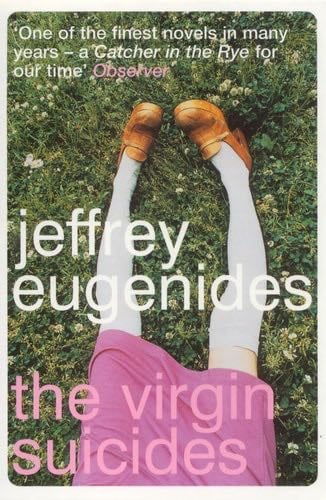
The Virgin Suicides
Jeffrey Eugenides · 2002
The shocking thing about the girls was how nearly normal they seemed when their mother let them out for the one and only date of their lives. Twenty years on, their enigmatic personalities are embalmed in the memories of the boys who worshipped them and who now recall their shared adolescence: the brassiere draped over a crucifix belonging to the promiscuous Lux; the sisters' breathtaking appearance on the night of the dance; and the sultry, sleepy street across which they watched a family disintegrate and fragile lives disappear.

Bonjour tristesse
Françoise Sagan · 2021
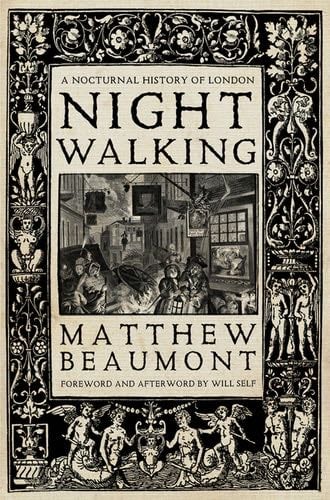
Nightwalking
Matthew Beaumont · 2015

A Philosophy of Walking
Frédéric Gros · 2023
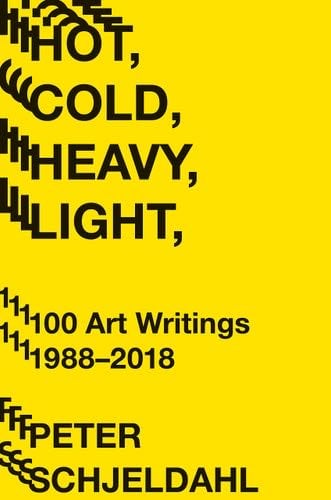
Hot, Cold, Heavy, Light, 100 Art Writings 1988-2018
Peter Schjeldahl · 2019

The Tower of Swallows (The Witcher, 6)
Andrzej Sapkowski · 2022
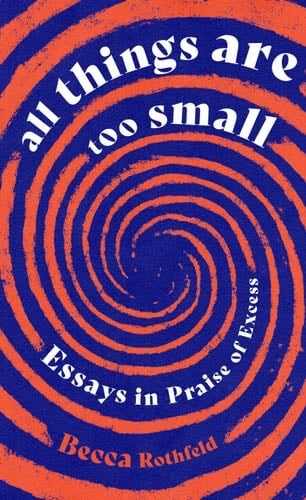
All Things Are Too Small: Essays in Praise of Excess
Becca Rothfeld · 2024

Caliban and the Witch: Women, the Body and Primitive Accumulation
Silvia Federici · 2004
Literary Nonfiction. CALIBAN AND THE WITCH is a history of the body in the transition to capitalism. Moving from the peasant revolts of the late Middle Ages to the witch-hunts and the rise of mechanical philosophy, Federici investigates the capitalist rationalization of social reproduction. She shows how the battle against the rebel body and the conflict between body and mind are essential conditions for the development of labor power and self-ownership, two central principles of modern social organization.<br/><br/>"It is both a passionate work of memory recovered and a hammer of humanity's agenda."—Peter Linebaugh, author of The London Hanged
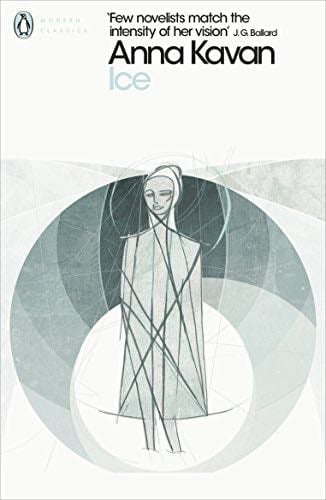
Ice
Anna Kavan · 2017
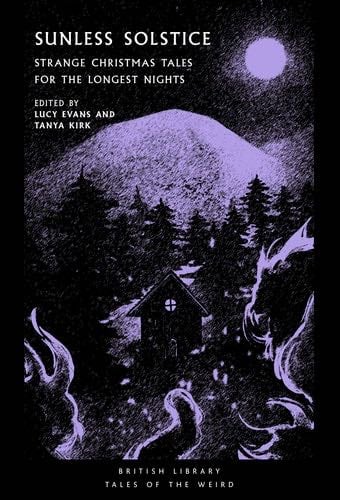
Sunless Solstice: Strange Christmas Tales for the Longest Nights (Tales of the Weird)
Library British · 2022
Another festive edition to the Tales of the Weird series, following on from Spirits of the Season and Chill Tidings.<br/><br/>A unique selection ranging from the spooky haunted houses of Victorian Christmastime to experimental twentieth-century horrors. It offers a truly international scope of stories, from the pine forests of Canada to the peaks of the Alps.<br/>Like any other boy I expected ghost stories at Christmas, that was the time for them. What I had not expected, and now feared, was that such things should actually become real.<br/>Strange things happen on the dark wintry nights of December. Welcome to a new collection of haunting Christmas tales, ranging from traditional Victorian chillers to weird and uncanny episodes by twentieth-century horror masters including Daphne du Maurier and Robert Aickman.<br/>Lurking in the blizzard are menacing cat spirits, vengeful trees, malignant forces on the mountainside and a skater skirting the line between the mortal and spiritual realms. Wrap up warm – and prepare for the longest nights of all.
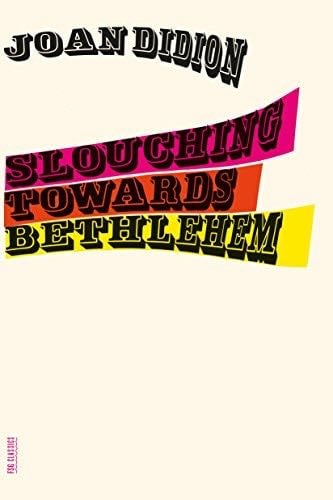
Slouching Towards Bethlehem: Essays (FSG Classics)
Joan Didion · 2008
Celebrated, iconic, and indispensable, Joan Didion’s first work of nonfiction, Slouching Towards Bethlehem, is considered a watershed moment in American writing. First published in 1968, the collection was critically praised as one of the “best prose written in this country.”<br/><br/>More than perhaps any other book, this collection by one of the most distinctive prose stylists of our era captures the unique time and place of Joan Didion’s focus, exploring subjects such as John Wayne and Howard Hughes, growing up in California and the nature of good and evil in a Death Valley motel room, and, especially, the essence of San Francisco’s Haight-Ashbury, the heart of the counterculture. As Joyce Carol Oates remarked: “[Didion] has been an articulate witness to the most stubborn and intractable truths of our time, a memorable voice, partly eulogistic, partly despairing; always in control.”
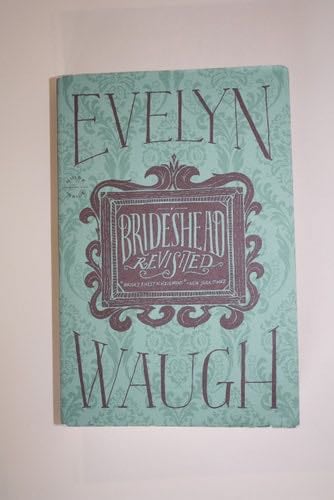
Brideshead Revisited
Evelyn Waugh · 2012
Selected by Modern Library as one of the 100 best novels of the century and called "Evelyn Waugh's finest achievement" by the New York Times, Brideshead Revisited is a stunning exploration of desire, duty, and memory.<br/><br/>The wellsprings of desire and the impediments to love come brilliantly into focus in Evelyn Waugh's masterpiece -- a novel that immerses us in the glittering and seductive world of English aristocracy in the waning days of the empire.<br/><br/>Through the story of Charles Ryder's entanglement with the Flytes, a great Catholic family, Evelyn Waugh charts the passing of the privileged world he knew in his own youth and vividly recalls the sensuous pleasures denied him by wartime austerities. At once romantic, sensuous, comic, and somber, Brideshead Revisited transcends Waugh's early satiric explorations and reveals him to be an elegiac, lyrical novelist of the utmost feeling and lucidity.<br/><br/>"A genuine literary masterpiece." --Time<br/><br/>"Heartbreakingly beautiful...The twentieth century's finest English novel." --Los Angeles Times

A Brief History of Curating
Hans Ulrich Obrist · 2009

Filterworld
Kyle Chayka · 2025

The Crucible: A Play in Four Acts
Arthur Miller · 2003
<b>A haunting examination of groupthink and mass hysteria in a rural community<br><br>A Penguin Classic</b><br> <br> "I believe that the reader will discover here the essential nature of one of the strangest and most awful chapters in human history," Arthur Miller wrote in an introduction to <i>The Crucible</i>, his classic play about the witch-hunts and trials in seventeenth-century Salem, Massachusetts. Based on historical people and real events, Miller's drama is a searing portrait of a community engulfed by hysteria.<br> <br> In the rigid theocracy of Salem, rumors that women are practicing witchcraft galvanize the town's most basic fears and suspicions; and when a young girl accuses Elizabeth Proctor of being a witch, self-righteous church leaders and townspeople insist that Elizabeth be brought to trial. The ruthlessness of the prosecutors and the eagerness of neighbor to testify against neighbor brilliantly illuminate the destructive power of socially sanctioned violence.<br> <br> Written in 1953, <i>The Crucible</i> is a mirror Miller uses to reflect the anti-communist hysteria inspired by Senator Joseph McCarthy's "witch-hunts" in the United States. Within the text itself, Miller contemplates the parallels, writing: "Political opposition...is given an inhumane overlay, which then justifies the abrogation of all normally applied customs of civilized behavior. A political policy is equated with moral right, and opposition to it with diabolical malevolence."<br><br> For more than seventy years, Penguin has been the leading publisher of classic literature in the English-speaking world. With more than 1,700 titles, Penguin Classics represents a global bookshelf of the best works throughout history and across genres and disciplines. Readers trust the series to provide authoritative texts enhanced by introductions and notes by distinguished scholars and contemporary authors, as well as up-to-date translations by award-winning translators.

Gluck: Art and Identity
Amy de la Haye, Martin Pel · 2017
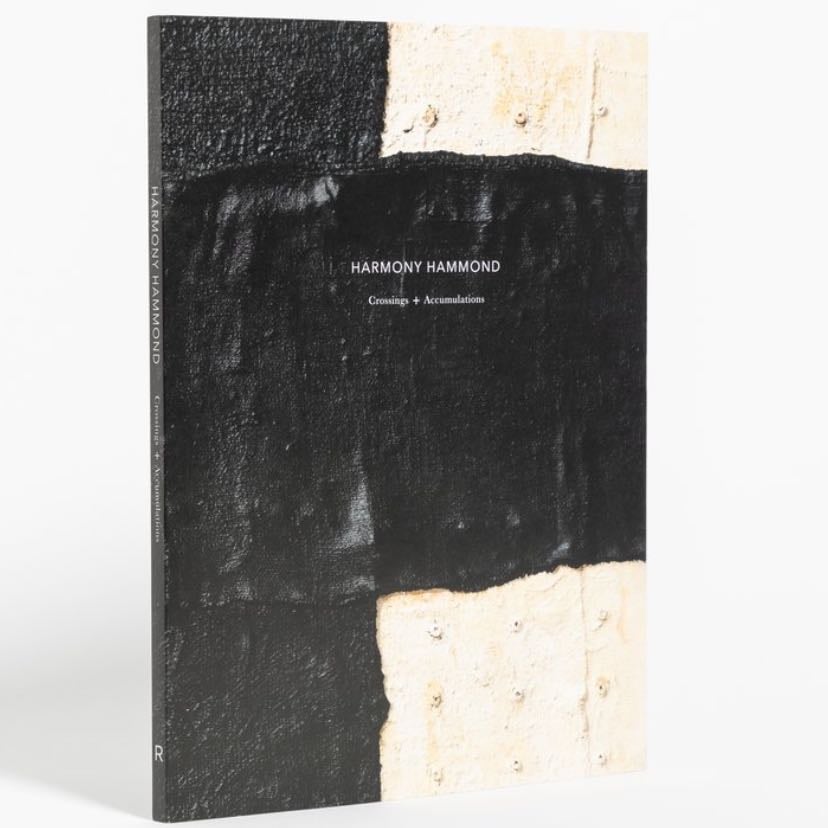
Crossings + Acummulations
by Harmony Hammond
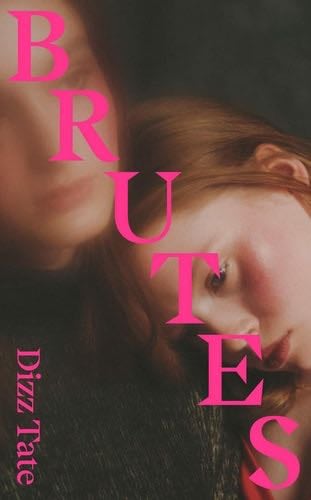
Brutes
Dizz Tate · 2023
The Virgin Suicides meets The Florida Project in this wildly original debut-a coming-of-age story about the crucible of girlhood, from a writer of rare and startling talent. We would not be born out of sweetness, we were born out of rage, we felt it in our bones. In Falls Landing, Florida-a place built of theme parks, swampy lakes, and scorched bougainvillea flowers-something sinister lurks in the deep. A gang of thirteen-year-old girls obsessively orbit around the local preacher's daughter, Sammy. She is mesmerizing, older, and in love with Eddie. But suddenly, Sammy goes missing. Where is she? Watching from a distance, they edge ever closer to discovering a dark secret about their fame-hungry town and the cruel cost of a ticket out. What they uncover will continue to haunt them for the rest of their lives. Through a darkly beautiful and brutally compelling lens, Dizz Tate captures the violence, horrors, and manic joys of girlhood. Brutes is a novel about the seemingly unbreakable bonds in the 'we' of young friendship, and the moment it is broken forever.
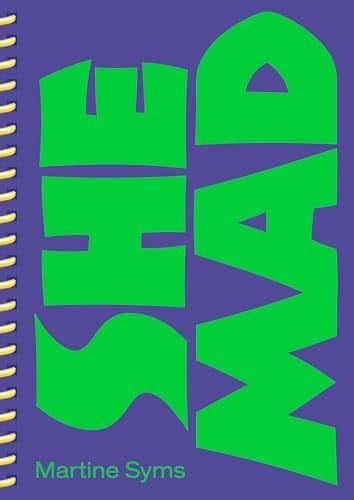
Martine Syms: She Mad
Martine Syms · 2024
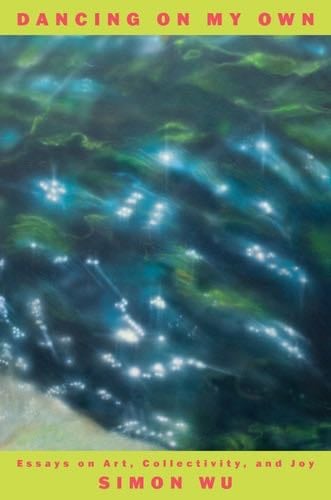
Dancing on My Own
Simon Wu · 2024

The Name of the Rose
Umberto Eco · 2023

The Book of Margery Kempe (Penguin Classics)
Margery Kempe · 2000