to read: all

Items in this hypelist
Books

I Who Have Never Known Men
Jacqueline Harpman · 2019
<p><b>SISTERHOOD. SECRETS. SURVIVAL.</b><br> <br> <b>Discover the haunting, heart-breaking post-apocalyptic TikTok sensation.</b><br> <br> Deep underground, thirty-nine women are kept in isolation in a cage. Above ground, a world awaits. Has it been abandoned? Devastated by a virus?<br> <br> Watched over by guards, the women have no memory of how they got there, no notion of time, and only vague recollection of their lives before. But, as the burn of electric light merges day into night and numberless years pass, a young girl - the fortieth prisoner - sits alone an outcast in the corner.<br> <br> Soon she will show herself to be the key to the others' escape and survival in the strange world that awaits them above ground. The woman who will never know men.<br> <br> <b>WITH A NEW INTRODUCTION BY SOPHIE MACKINTOSH, BOOKER PRIZE-LONGLISTED AUTHOR OF THE <i>WATER CURE</i><br> <br> **<i>Orlanda</i>, the next sensation from Jacquline Harpman, is available now**</b></p>
Books
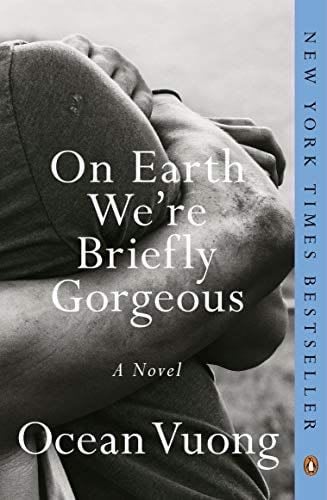
On Earth We''re Briefly Gorgeous
Ocean Vuong · 2021
A New York Times bestseller • Nominated for the National Book Award for Fiction • Ocean Vuong’s debut novel is a shattering portrait of a family, a first love, and the redemptive power of storytelling New York Times Readers Pick: 100 Best Books of the 21st Century “A lyrical work of self-discovery that’s shockingly intimate and insistently universal…Not so much briefly gorgeous as permanently stunning.” —Ron Charles, The Washington Post “This is one of the best novels I’ve ever read...Ocean Vuong is a master. This book a masterpiece.”—Tommy Orange, author of There There and Wandering Stars On Earth We’re Briefly Gorgeous is a letter from a son to a mother who cannot read. Written when the speaker, Little Dog, is in his late twenties, the letter unearths a family’s history that began before he was born — a history whose epicenter is rooted in Vietnam — and serves as a doorway into parts of his life his mother has never known, all of it leading to an unforgettable revelation. At once a witness to the fraught yet undeniable love between a single mother and her son, it is also a brutally honest exploration of race, class, and masculinity. Asking questions central to our American moment, immersed as we are in addiction, violence, and trauma, but undergirded by compassion and tenderness, On Earth We’re Briefly Gorgeous is as much about the power of telling one’s own story as it is about the obliterating silence of not being heard. With stunning urgency and grace, Ocean Vuong writes of people caught between disparate worlds, and asks how we heal and rescue one another without forsaking who we are. The question of how to survive, and how to make of it a kind of joy, powers the most important debut novel of many years. Named a Best Book of the Year by: GQ, Kirkus Reviews, Booklist, Library Journal, TIME, Esquire, The Washington Post, Apple, Good Housekeeping, The New Yorker, The New York Public Library, Elle.com, The Guardian, The A.V. Club, NPR, Lithub, Entertainment Weekly, Vogue.com, The San Francisco Chronicle, Mother Jones, Vanity Fair, The Wall Street Journal Magazine, and more!
books

The Bell Jar
Sylvia Plath · 2005
<p><i>The Bell Jar</i> chronicles the crack-up of Esther Greenwood: brilliant, beautiful, enormously talented, and successful, but slowly going under -- maybe for the last time. Sylvia Plath masterfully draws the reader into Esther's breakdown with such intensity that Esther's insanity becomes completely real and even rational, as probable and accessible an experience as going to the movies. Such deep penetration into the dark and harrowing corners of the psyche is an extraordinary accomplishment and has made <i>The Bell Jar</i> a haunting American classic.</p> <p>This P.S. edition features an extra 16 pages of insights into the book, including author interviews, recommended reading, and more.</p>
Franny and Zooey
J. D. Salinger · 1961
Uncategorized
The Goldfinch: Rec. by Bias
Donna Tartt · 2015
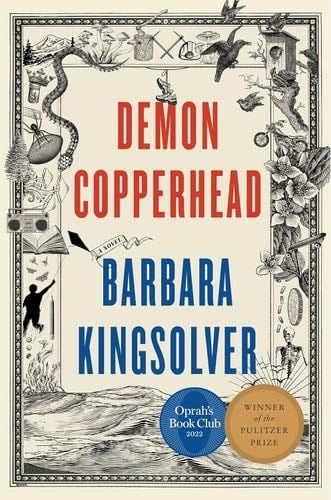
Demon Copperhead: Recc. by Bias
Barbara Kingsolver · 2022
WINNER OF THE PULITZER PRIZE • WINNER OF THE WOMEN'S PRIZE FOR FICTION<br/>A New York Times "Ten Best Books of the Year" • An Oprah’s Book Club Selection • An Instant New York Times Bestseller • An Instant Wall Street Journal Bestseller • A #1 Washington Post Bestseller<br/>"Demon is a voice for the ages—akin to Huck Finn or Holden Caulfield—only even more resilient.” —Beth Macy, author of Dopesick<br/>"May be the best novel of [the year]. . . . Equal parts hilarious and heartbreaking, this is the story of an irrepressible boy nobody wants, but readers will love.” (Ron Charles, Washington Post)<br/>From the acclaimed author of The Poisonwood Bible and The Bean Trees, a brilliant novel that enthralls, compels, and captures the heart as it evokes a young hero’s unforgettable journey to maturity<br/>Set in the mountains of southern Appalachia, Demon Copperhead is the story of a boy born to a teenaged single mother in a single-wide trailer, with no assets beyond his dead father’s good looks and copper-colored hair, a caustic wit, and a fierce talent for survival. Relayed in his own unsparing voice, Demon braves the modern perils of foster care, child labor, derelict schools, athletic success, addiction, disastrous loves, and crushing losses. Through all of it, he reckons with his own invisibility in a popular culture where even the superheroes have abandoned rural people in favor of cities.<br/>Many generations ago, Charles Dickens wrote David Copperfield from his experience as a survivor of institutional poverty and its damages to children in his society. Those problems have yet to be solved in ours. Dickens is not a prerequisite for readers of this novel, but he provided its inspiration. In transposing a Victorian epic novel to the contemporary American South, Barbara Kingsolver enlists Dickens’ anger and compassion, and above all, his faith in the transformative powers of a good story. Demon Copperhead speaks for a new generation of lost boys, and all those born into beautiful, cursed places they can’t imagine leaving behind.

Frankenstein: The 1818 Text
Mary Shelley
<b>Mary Shelley’s classic novel, presented in its original 1818 text, with an introduction from National Book Critics Circle award-winner Charlotte Gordon</b><br> <br> <b>Nominated as one of America’s best-loved novels by PBS’s <i>The Great American Read</i></b><br> <br>The original 1818 text of <i>Frankenstein</i> preserves the hard-hitting and politically-charged aspects of Shelley’s original writing, as well as her unflinching wit and strong female voice. This edition also emphasizes Shelley’s relationship with her mother—trailblazing feminist Mary Wollstonecraft, who penned <i>A Vindication of the Rights of Woman</i>—and demonstrates her commitment to carrying forward her mother’s ideals, placing her in the context of a feminist legacy rather than the sole female in the company of male poets, including Percy Shelley and Lord Byron.<br> <br> This edition includes a new introduction and suggestions for further reading by National Book Critics Circle award-winner and Shelley expert Charlotte Gordon, literary excerpts and reviews selected by Gordon, and a chronology and essay by preeminent Shelley scholar Charles E. Robinson. <br> <br>Penguin Classics is the leading publisher of classic literature in the English-speaking world, representing a global bookshelf of the best works throughout history and across genres and disciplines. Readers trust the series to provide authoritative texts enhanced by introductions and notes by distinguished scholars and contemporary authors, as well as up-to-date translations by award-winning translators.

Jane Eyre
Charlotte Brontë
Charlotte Brontë characterized the eponymous heroine of her 1847 novel as being "as poor and plain as myself." Presenting a heroine with neither great beauty nor entrancing charm was an unprecendented maneuver, but Brontë's instincts proved correct, for readers of her era and ever after have taken Jane Eyre into their hearts. The author drew upon her own experience to depict Jane's struggles at Lowood, an oppressive boarding school, and her troubled career as a governess. Unlike Jane, Brontë had the advantage of a warm family circle that shared and encouraged her literary pursuits. She found immediate success with this saga of an orphan girl forced to make her way alone in the world, from Lowood School to Thornfield, the estate of the majestically moody Mr. Rochester, and beyond. A selection of the Common Core State Standards Initiative.
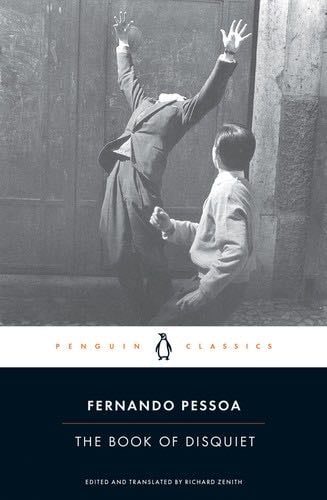
The Book of Disquiet
Fernando Pessoa
The prizewinning, complete and unabridged translation—“the best English-language version we are likely to see for a long time, if ever” (The Guardian)—of a work of unclassifiable genius: the crowning achievement of Portugal’s modern master<br/><br/>Edited, Translated, and with an Introduction by Richard Zenith, the author of the Pulitzer Prize finalist Pessoa: A Biography<br/><br/>Winner of the Calouste Gulbenkian Translation Prize for Portuguese Translation<br/><br/>A Penguin Classic<br/><br/>Fernando Pessoa was many writers in one. He attributed his prolific writings to a wide range of alternate selves, each of which had a distinct biography, ideology, and horoscope. When he died in 1935, Pessoa left behind a trunk filled with unfinished and unpublished writings, among which were the remarkable pages that make up his posthumous masterpiece, The Book of Disquiet, an astonishing work that, in George Steiner's words, "gives to Lisbon the haunting spell of Joyce's Dublin or Kafka's Prague."<br/><br/>Published for the first time some fifty years after his death, this unique collection of short, aphoristic paragraphs comprises the "autobiography" of Bernardo Soares, one of Pessoa's alternate selves. Part intimate diary, part prose poetry, part descriptive narrative, captivatingly translated by Richard Zenith, The Book of Disquiet is one of the greatest works of the twentieth century.<br/><br/>“Pessoa is a genius.” —André Aciman
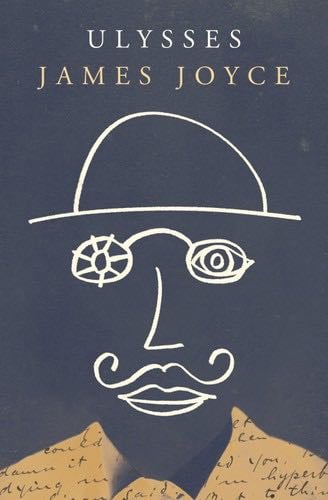
Ulysses
James Joyce
This iconic work of experimental modernism “comes nearer to being the perfect revelation of a personality than any book in existence” (The New York Times). Taking place on June 16, 1904, Ulysses follows the itinerant journeys of Leopold Bloom and Stephen Dedalus as they make their way through an ordinary day in Dublin. With stream-of-conscious narration, Joyce weaves a sprawling yet incisive portrait of his characters, the nature of desire, and Dublin itself. First published in Paris in 1922, Joyce’s masterwork was once banned for obscenity in the United States and Britain. Hailed as a work of genius by Ezra Pound, Ernest Hemingway, and many others, Ulysses remains one of the most significant works in English literature.
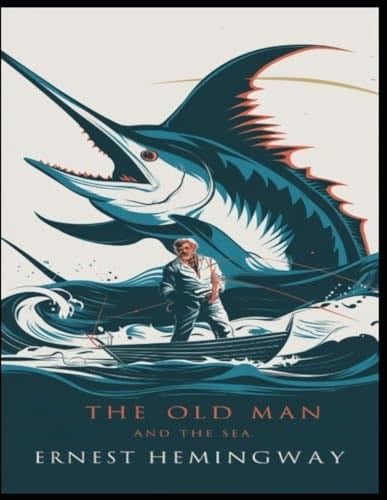
The Old Man and the Sea
Ernest Hemingway
On the eighty-fifth day of no catches, old Cuban fisherman Santiago sets out past the shallows of his usual fishing grounds to break his streak of bad luck. Without his younger apprentice Manolin to help him, Santiago struggles to reel in the biggest catch of his life—a giant marlin that pulls his boat along for three days and three nights. Once his prey is captured, Santiago must fight off other dangers to make his way home again.
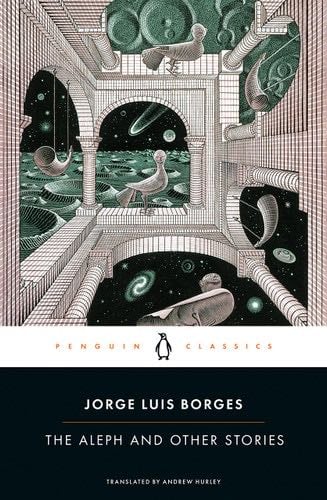
The Aleph and Other Stories
Jorge Luis Borges
Full of philosophical puzzles and supernatural surprises, these stories contain some of Borges’s most fully realized human characters. With uncanny insight he takes us inside the minds of an unrepentant Nazi, an imprisoned Mayan priest, fanatical Christian theologians, a woman plotting vengeance on her father’s “killer,” and a man awaiting his assassin in a Buenos Aires guest house. This volume also contains the hauntingly brief vignettes about literary imagination and personal identity collected in The Maker, which Borges wrote as failing eyesight and public fame began to undermine his sense of self.<br/><br/>For more than seventy years, Penguin has been the leading publisher of classic literature in the English-speaking world. With more than 1,700 titles, Penguin Classics represents a global bookshelf of the best works throughout history and across genres and disciplines. Readers trust the series to provide authoritative texts enhanced by introductions and notes by distinguished scholars and contemporary authors, as well as up-to-date translations by award-winning translators.

A Little Life
Hanya Yanagihara • 2016
<b><i>NEW YORK TIMES</i> BESTSELLER • A stunning “portrait of the enduring grace of friendship” (<i>NPR</i>) about the families we are born into, and those that we make for ourselves. A masterful depiction of love in the twenty-first century.<br></b><br><b><b><b><b><b><b><b>NATIONAL BOOK AWARD FINALIST <b><b><b>•</b></b></b></b> MAN BOOKER PRIZE FINALIST <b>• <b><b><b><b><b> WINNER OF THE KIRKUS PRIZE</b></b></b></b></b></b></b></b></b></b></b></b><br><br><i>A Little Life</i> follows four college classmates—broke, adrift, and buoyed only by their friendship and ambition—as they move to New York in search of fame and fortune. While their relationships, which are tinged by addiction, success, and pride, deepen over the decades, the men are held together by their devotion to the brilliant, enigmatic Jude, a man scarred by an unspeakable childhood trauma. A hymn to brotherly bonds and a masterful depiction of love in the twenty-first century, Hanya Yanagihara’s stunning novel is about the families we are born into, and those that we make for ourselves.
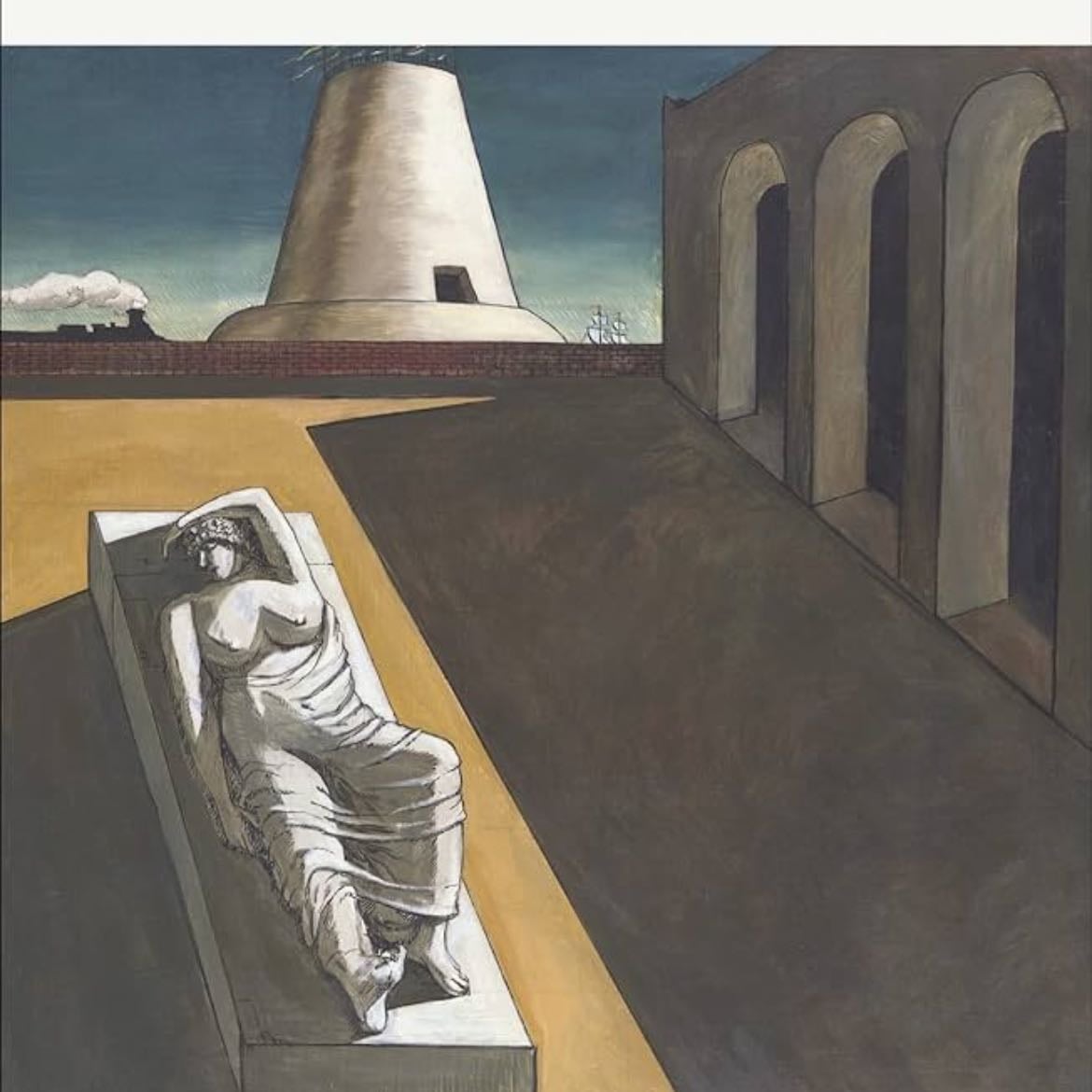
Near to the Wild Heart (Ndp; 1225)
Clarice Lispector
This new translation of Clarice Lispector's sensational first book tells the story of a middle class woman's life from childhood through an unhappy marriage and its dissolution to transcendence.<br/>Near to the Wild Heart, published in Rio de Janeiro in 1943, introduced Brazil to what one writer called “Hurricane Clarice”: a twenty-three-year-old girl who wrote her first book in a tiny rented room and then baptized it with a title taken from Joyce: “He was alone, unheeded, near to the wild heart of life.”<br/>The book was an unprecedented sensation ― the discovery of a genius. Narrative epiphanies and interior monologue frame the life of Joana, from her middle-class childhood through her unhappy marriage and its dissolution to transcendence, when she proclaims: “I shall arise as strong and comely as a young colt.”
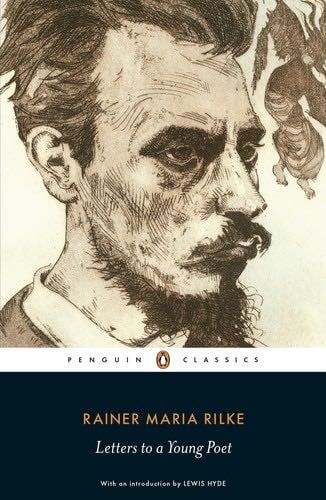
Letters to a Young Poet (Penguin Classics)
Rainer Maria Rilke
Rainer Maria Rilke’s powerfully touching letters to an aspiring young poet.<br/><br/>At the start of the twentieth century, Rainer Maria Rilke wrote a series of letters to a young officer cadet, advising him on writing, love, sex, suffering, and the nature of advice itself. These profound and lyrical letters have since become hugely influential for generations of writers and artists of all kinds, including Lady Gaga and Patti Smith. With honesty, elegance, and a deep understanding of the loneliness that often comes with being an artist, Rilke’s letters are an endless source of inspiration and comfort. Lewis Hyde’s new introduction explores the context in which these letters were written and how the author embraced his isolation as a creative force. This edition also includes Rilke’s later work The Letter from the Young Worker.<br/><br/>For more than 80 years, Penguin has been the leading publisher of classic literature in the English-speaking world. With more than 1,700 titles, Penguin Classics represents a global bookshelf of the best works throughout history and across genres and disciplines. Readers trust the series to provide authoritative texts enhanced by introductions and notes by distinguished scholars and contemporary authors, as well as up-to-date translations by award-winning translators.
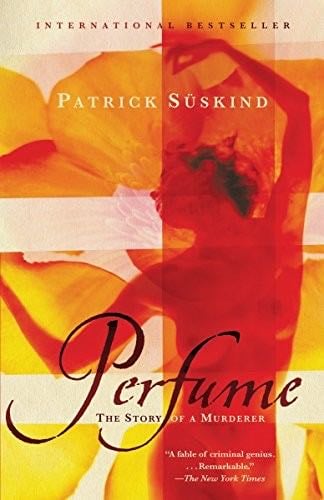
Perfume: The Story of a Murderer
Patrick Suskind · 2001
INTERNATIONAL BESTSELLER • Set in eighteenth-century France, the classic novel that provokes a terrifying examination of what happens when one man’s indulgence in his greatest passion—his sense of smell—leads to murder.<br/><br/>In the slums of eighteenth-century France, the infant Jean-Baptiste Grenouille is born with one sublime gift—an absolute sense of smell. As a boy, he lives to decipher the odors of Paris, and apprentices himself to a prominent perfumer who teaches him the ancient art of mixing precious oils and herbs. But Grenouille’s genius is such that he is not satisfied to stop there, and he becomes obsessed with capturing the smells of objects such as brass doorknobs and fresh-cut wood. Then one day he catches a hint of a scent that will drive him on an ever-more-terrifying quest to create the “ultimate perfume”—the scent of a beautiful young virgin. Told with dazzling narrative brilliance, Perfume is a hauntingly powerful tale of murder and sensual depravity.<br/><br/>Translated from the German by John E. Woods.

The Right to Sex
Amia Srinivasan
Thrilling, sharp, and deeply humane, philosopher Amia Srinivasan's The Right to Sex: Feminism in the Twenty-First Century upends the way we discuss—or avoid discussing—the problems and politics of sex.<br/><br/>How should we think about sex? It is a thing we have and also a thing we do; a supposedly private act laden with public meaning; a personal preference shaped by outside forces; a place where pleasure and ethics can pull wildly apart.<br/><br/>How should we talk about sex? Since #MeToo many have fixed on consent as the key framework for achieving sexual justice. Yet consent is a blunt tool. To grasp sex in all its complexity—its deep ambivalences, its relationship to gender, class, race and power—we need to move beyond yes and no, wanted and unwanted.<br/><br/>We do not know the future of sex—but perhaps we could imagine it. Amia Srinivasan’s stunning debut helps us do just that. She traces the meaning of sex in our world, animated by the hope of a different world. She reaches back into an older feminist tradition that was unafraid to think of sex as a political phenomenon. She discusses a range of fraught relationships—between discrimination and preference, pornography and freedom, rape and racial injustice, punishment and accountability, students and teachers, pleasure and power, capitalism and liberation.<br/><br/>The Right to Sex: Feminism in the Twenty-First Century is a provocation and a promise, transforming many of our most urgent political debates and asking what it might mean to be free.