
top 15 bands

Items in this hypelist
Music
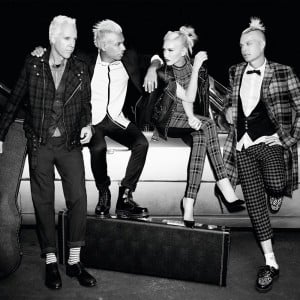
No Doubt
Artist
With the return of the punks in the mid-'90s came a resurgence of their slightly more commercial rivals, new wave bands. No Doubt found a niche as a new wave/ska act, on the strength of vocalist <a href="spotify:artist:4yiQZ8tQPux8cPriYMWUFP">Gwen Stefani</a>'s persona -- alternately an embrace of little-girl-lost innocence and riot grrrl feminism -- exemplified on the band's break-out single, "Just a Girl." Formed in 1986 as a ska band inspired by <a href="spotify:artist:4AYkFtEBnNnGuoo8HaHErd">Madness</a>, the lineup of No Doubt initially comprised John Spence, <a href="spotify:artist:4yiQZ8tQPux8cPriYMWUFP">Gwen Stefani</a>, and her brother, Eric. While playing the party-band circuit around Anaheim, the trio picked up bassist Tony Kanal, born in India but raised in Great Britain and the U.S. Hardened by the suicide of Spence in December 1987, No Doubt nevertheless continued; <a href="spotify:artist:4yiQZ8tQPux8cPriYMWUFP">Gwen</a> became the lone vocalist and the group added guitarist Tom Dumont and drummer Adrian Young. No Doubt's live act began to attract regional interest, and <a href="spotify:search:label%3A%22Interscope+Records%22">Interscope Records</a> signed them in 1991. The band's self-titled debut a year later, an odd fusion of '80s pop and ska, sank without a trace in the wake of the grunge movement. As a result, <a href="spotify:search:label%3A%22Interscope%22">Interscope</a> refused to support No Doubt's tour or further recordings. The band responded by recording on their own during 1993 and 1994; the result was the self-released Beacon Street Collection, much rawer and more punk-inspired than the debut. Eric Stefani left just after its release, later working as an animator for The Simpsons. By late 1994, <a href="spotify:search:label%3A%22Interscope%22">Interscope</a> allowed recordings to resume, and Tragic Kingdom was released in October 1995. The album served as a document of the breakup of <a href="spotify:artist:4yiQZ8tQPux8cPriYMWUFP">Gwen Stefani</a> and Kanal, whose relationship had lasted seven years. Thanks to constant touring and the appearance of "Just a Girl" and "Spiderwebs" on MTV's Buzz Bin, the album hit the Top Ten in 1996. <a href="spotify:artist:4yiQZ8tQPux8cPriYMWUFP">Stefani</a>, who has made no secret of her pop ambitions, became a centerpiece of attention as an alternative to the crop of tough girls prevalent on the charts. By the end of the year, Tragic Kingdom hit number one on the album charts, almost a year after its first release; the record's third single, the ballad "Don't Speak," was the band's biggest hit to date. No Doubt's much-anticipated follow-up, The Return of Saturn, was released in the spring of 2000, and "Simple Kind of Life" and "Ex-Girlfriend" were both critically successful at the mainstream and college levels. A year later, <a href="spotify:artist:4yiQZ8tQPux8cPriYMWUFP">Stefani</a> also hooked up with rap chanteuse <a href="spotify:artist:4d3yvTptO48nOYTPBcPFZC">Eve</a> for the single "Let Me Blow Your Mind" (it went on to earn a Grammy for Best Rap/Sung Collaboration in 2002); however, <a href="spotify:artist:4yiQZ8tQPux8cPriYMWUFP">Stefani</a> also joined her band for the release of their fifth album. The ska revival and new wave sounds of Rock Steady were issued hot on the heels of lead single "Hey Baby" in December 2001. The album generated several major hits -- the heavy synths of "Hella Good" and the seductive reggae of "Underneath It All" being the biggest -- and the group continued touring the record over the next couple of years, all leading to the release of the hits collection The Singles 1992-2003 in 2003. The following year, the band took a hiatus of undetermined length as <a href="spotify:artist:4yiQZ8tQPux8cPriYMWUFP">Stefani</a> launched a solo career with 2004's Love.Angel.Music.Baby. This hiatus wound up lasting the better part of a decade, during which <a href="spotify:artist:4yiQZ8tQPux8cPriYMWUFP">Stefani</a> stayed in the spotlight via two hit solo albums (the second, The Sweet Escape, arriving in 2006), while the other bandmembers pursued other projects, the most prominent being Tony Kanal's collaborations with <a href="spotify:artist:1KCSPY1glIKqW2TotWuXOR">P!nk</a> in 2008. No Doubt eased back into action in 2009 with a reunion tour accompanied by the announcement of an impending new album. That record took a while to complete, but it was finally finished in 2012 and released as Push and Shove that fall. It was preceded by the single "Settle Down" and debuted at number three on the Billboard charts. In 2016, as <a href="spotify:artist:4yiQZ8tQPux8cPriYMWUFP">Stefani</a> was in the midst of mounting a comeback with her third solo effort, This Is What the Truth Feels Like, Dumont, Kanal, and Young formed a new band named <a href="spotify:artist:4a4ZqWAUWjDNAnBTfxhJFn">DREAMCAR</a> with <a href="spotify:artist:19I4tYiChJoxEO5EuviXpz">AFI</a> frontman <a href="spotify:artist:1Q1ItjYrk6Si5q4tQtRbx8">Davey Havok</a>. ~ John Bush, Rovi

Radiohead
Artist
Mother Mother
Artist

Hole
Artist

boygenius
Artist

The 1975
Artist

Queen
Artist
Carolina Durante
Artist

One Direction
Artist
ABBA
Artist

Fleetwood Mac
Artist

Blondie
Artist
Embracing a broad range of pop music that encompassed British Invasion rock, garage rock, disco, reggae, Latin rhythms, and hip-hop, Blondie was the most commercially successful band to emerge from the New York punk/new wave community of the late '70s. The group was formed in New York City in August 1974 by singer Deborah Harry (b. July 1, 1945, Miami, Florida), formerly of the folk-pop group Wind in the Willows, and guitarist Chris Stein (b. January 5, 1950, Brooklyn, New York) out of the remnants of Harry's previous group, the Stilettos. The lineup fluctuated over the next year; drummer Clement Burke (b. November 24, 1955, New York) joined in May 1975, and bassist Gary Valentine signed on in August, while keyboard player James Destri (b. April 13, 1954) came on board in October, completing the initial permanent lineup. One of the first bands on the CBGB scene to score a record deal, Blondie released their first album, Blondie, on Private Stock Records in December 1976. In July 1977, Valentine was replaced by Frank Infante. In August 1977, Chrysalis Records bought Blondie's contract from Private Stock and in October released their second album, Plastic Letters. (Chrysalis also reissued the debut LP.) Blondie expanded to a sextet in November with the addition of bassist Nigel Harrison (born in Princes Risborough, Buckinghamshire, England), as Infante switched to guitar. Blondie broke commercially in the U.K. in March 1978, when their cover of Randy & the Rainbows' 1963 hit "Denise," renamed "Denis," became a Top Ten hit, as did Plastic Letters, followed by a second U.K. Top Ten, "(I'm Always Touched by Your) Presence, Dear." Blondie turned to U.K. producer/songwriter Mike Chapman for their third album, Parallel Lines, which was released in September 1978 and eventually broke them worldwide. "Picture This" became a U.K. Top 40 hit, and "Hanging on the Telephone" made the U.K. Top Ten, but it was the album's third single, the disco-influenced "Heart of Glass," that took Blondie to number one in both the U.K. and the U.S. "Sunday Girl" hit number one in the U.K. in May, and "One Way or Another" hit the U.S. Top 40 in August. Blondie followed with their fourth album, Eat to the Beat, in October. Its first single, "Dreaming," went Top Ten in the U.K., Top 40 in the U.S. The second U.K. single, "Union City Blue," went Top 40. In March 1980, the third U.K. single from Eat to the Beat, "Atomic," became the group's third British number one. (It later made the U.S. Top 40.) Meanwhile, Harry was collaborating with German disco producer Giorgio Moroder on "Call Me," the theme from the movie American Gigolo. It became Blondie's second transatlantic chart-topper. Blondie's fifth album, Autoamerican, was released in November 1980, and its first single was the reggae-ish tune "The Tide Is High," which went to number one in the U.S. and U.K. The second single was the rap-oriented "Rapture," which topped the U.S. pop charts and went Top Ten in the U.K. But the band's eclectic style reflected a diminished participation by its members: Infante sued, charging that he wasn't being used on the records, though he settled and stayed in the lineup. In 1981, the members of Blondie worked on individual projects, notably Harry's gold-selling solo album, KooKoo. The Best of Blondie was released in the fall of the year. The Hunter, Blondie's sixth album, was released in May 1982, preceded by the single "Island of Lost Souls," a Top 40 hit in the U.S. and U.K. "War Child" also became a Top 40 hit in the U.K., but The Hunter was a commercial disappointment, as was the concert tour that followed. By the time The Hunter was completed, Stein became seriously ill with the genetic disease pemphigus. As a result, Blondie quietly broke up in October 1982, with Debbie Harry launching a part-time solo career while caring for Stein, who eventually recovered. In 1998, a new Blondie lineup anchored by Harry, Stein, Destri, and Burke united to tour Europe, their first series of dates in 16 years; a new LP, No Exit, followed early the next year. After more touring, another studio set, The Curse of Blondie, followed in 2003, and a DVD of the Live by Request program from A&E was released in 2004. In 2006, Blondie celebrated their 30th anniversary with their induction into the Rock & Roll Hall of Fame and the release of Greatest Hits: Sound & Vision, a best-of collection that contained all their classic videos as well. Blondie got back to work on original material in October 2009, decamping to upstate New York to start recording a new studio album. Additional sessions were held in Hoboken, and the resulting Panic of Girls was released in July 2011. In 2013, Blondie set out on a concert tour with another iconic female-fronted band, X, and returned to the recording studio to work on a new studio set, which was released in 2014 as Ghosts of Download. Three years later, Blondie teamed with producer John Congleton for Pollinator, which featured songs and cameos from the likes of Charli XCX, Nick Valensi of the Strokes, Sia Fuller, Blood Orange, Dave Sitek, and Johnny Marr. ~ William Ruhlmann
