bangers
Items in this hypelist
dreaming
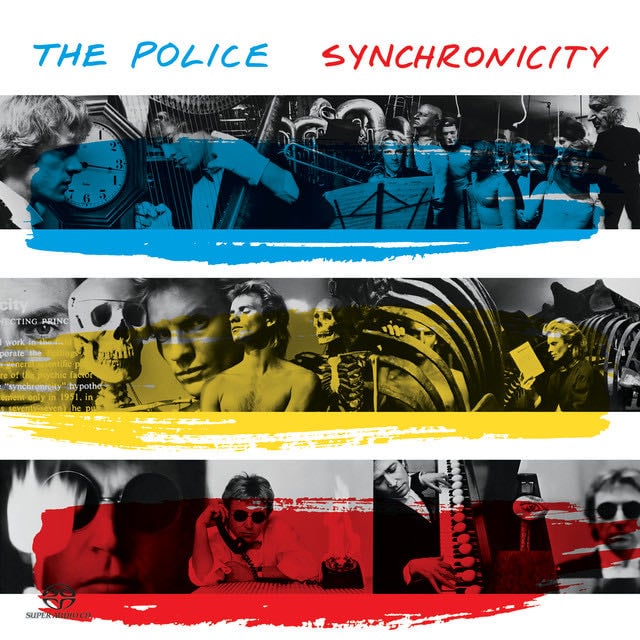
Every Breath You Take
Song · The Police
fav
Mötley Crüe
Artist
Nirvana
Nirvana
Nothing was ever quite the same after Nirvana. The band's second album, 1991's Nevermind, revolutionized popular music by bringing alternative rock above ground, introducing mainstream audiences to sounds and concepts that had previously existed only in shadowy record store corners and on low-frequency college radio airwaves. Nevermind's noisy, dissonant guitar rock, mumbled or howled surrealistic lyrics, and generally angsty punk attitudes were unlikely candidates for chart success, but the band undercut their grungy songs with enough pop melodicism to create a sound unlike anything average listeners had ever heard before, striking at the exact right moment to become an unprecedented success. Since Nirvana were rooted in an indie aesthetic but loved pop music, they fought their stardom while courting it, becoming some of the most notorious anti-rock stars in history. They consciously attempted to shed their audience with 1993's abrasive, <a href="spotify:artist:52ZFTGbQ9miWMX8JYBvtOO">Steve Albini</a>-produced third album In Utero, but vocalist/guitarist/songwriter <a href="spotify:artist:6pAuTi6FXi6qFQJ1dzMXQs">Kurt Cobain</a>'s growing mental health and substance abuse issues led to his death by suicide in 1994. Though Nirvana's story was cut tragically short, their legacy stands as one of the most influential in rock & roll history. <a href="spotify:artist:6pAuTi6FXi6qFQJ1dzMXQs">Kurt Cobain</a> (vocals, guitar) met <a href="spotify:artist:4BZKfXia2RPZnzCgQ2fG8M">Chris Novoselic</a> (born <a href="spotify:artist:4BZKfXia2RPZnzCgQ2fG8M">Krist Novoselic</a>) (bass) in 1985 in Aberdeen, Washington, a small logging town 100 miles away from Seattle. While <a href="spotify:artist:4BZKfXia2RPZnzCgQ2fG8M">Novoselic</a> came from a relatively stable background, <a href="spotify:artist:6pAuTi6FXi6qFQJ1dzMXQs">Cobain</a>'s childhood had been thrown into turmoil when his parents divorced when he was eight. Following the divorce, he lived at the homes of various relatives, developing a love for <a href="spotify:artist:3WrFJ7ztbogyGnTHbHJFl2">the Beatles</a> and then heavy metal in the process. Eventually, American hardcore punk worked its way into dominating his listening habits and he met <a href="spotify:artist:6aVjo0xHSiuW5hkasoYSR3">the Melvins</a>, an Olympia-based underground heavy punk band. <a href="spotify:artist:6pAuTi6FXi6qFQJ1dzMXQs">Cobain</a> began playing in punk bands like Fecal Matter, often with <a href="spotify:artist:6aVjo0xHSiuW5hkasoYSR3">the Melvins</a>' bassist <a href="spotify:artist:4IRzt4Zde0xpbbc2BtsRGm">Dale Crover</a>. Through <a href="spotify:artist:6aVjo0xHSiuW5hkasoYSR3">the Melvins</a>' leader, Buzz Osborne, <a href="spotify:artist:6pAuTi6FXi6qFQJ1dzMXQs">Cobain</a> met <a href="spotify:artist:4BZKfXia2RPZnzCgQ2fG8M">Novoselic</a>, who also had an intense interest in punk, which meant that he, like <a href="spotify:artist:6pAuTi6FXi6qFQJ1dzMXQs">Cobain</a>, felt alienated from the macho, redneck population of Aberdeen. The duo decided to form a band called the Stiff Woodies, with <a href="spotify:artist:6pAuTi6FXi6qFQJ1dzMXQs">Cobain</a> on drums, <a href="spotify:artist:4BZKfXia2RPZnzCgQ2fG8M">Novoselic</a> on bass, and a rotating cast of guitarists and vocalists. The group went through name changes as quickly as guitarists, before deciding that <a href="spotify:artist:6pAuTi6FXi6qFQJ1dzMXQs">Cobain</a> would play guitar and sing. Renamed <a href="spotify:artist:4opTS86dN9uO313J9CE8xg">Skid Row</a>, the new trio featured drummer Aaron Burkhart, who left the band by the end of 1986 and was replaced by Chad Channing. By 1987, the band was called Nirvana. Nirvana began playing parties in Olympia, gaining a cult following. Around 1987, the band made ten demos with producer <a href="spotify:artist:5WPz1DmtxRJBajeTYGiftU">Jack Endino</a>, who played the recordings to Jonathan Poneman, one of the founders of the Seattle-based indie label <a href="spotify:search:label%3A%22Sub+Pop%22">Sub Pop</a>. Poneman signed Nirvana, and in December of 1988, the band released its first single, a cover of <a href="spotify:artist:5WimOFbBnCU5wI6t5PPpEk">Shocking Blue</a>'s "Love Buzz." <a href="spotify:search:label%3A%22Sub+Pop%22">Sub Pop</a> orchestrated an effective marketing scheme, which painted the band as backwoods, logging-town hicks, which irritated <a href="spotify:artist:6pAuTi6FXi6qFQJ1dzMXQs">Cobain</a> and <a href="spotify:artist:4BZKfXia2RPZnzCgQ2fG8M">Novoselic</a>. While "Love Buzz" was fairly well-received, the band's debut album, Bleach, was what got the ball rolling. Recorded for just over $600 and released in June 1989, Bleach slowly became a hit on college radio, due to the group's consistent touring. Though Jason Everman was credited as a second guitarist on the sleeve of Bleach, he didn't appear on the record; he only toured in support of the album before leaving the band at the end of the year to join <a href="spotify:artist:5xUf6j4upBrXZPg6AI4MRK">Soundgarden</a> and then Mindfunk. Bleach sold 35,000 copies and Nirvana became favorites of college radio, the British weekly music press, and <a href="spotify:artist:5UqTO8smerMvxHYA5xsXb6">Sonic Youth</a>, <a href="spotify:artist:7LuYiSXiWs86rwWJjEEgB9">Mudhoney</a>, and <a href="spotify:artist:267VY6GX5LyU5c9M85ECZQ">Dinosaur Jr.</a>, which was enough to attract the attention of major labels. In July 1990, Nirvana recorded "Sliver"/"Dive" with <a href="spotify:artist:7LuYiSXiWs86rwWJjEEgB9">Mudhoney</a> drummer Dan Peters on drums and producer <a href="spotify:artist:0gTi2zsOHn6wtlkx66uxXM">Butch Vig</a>. The band also made a six-song demo with <a href="spotify:artist:0gTi2zsOHn6wtlkx66uxXM">Vig</a>, which was shopped to major labels, who soon began competing to sign the group. In August, they hit the road with <a href="spotify:artist:5UqTO8smerMvxHYA5xsXb6">Sonic Youth</a>'s Goo tour (including <a href="spotify:artist:4IRzt4Zde0xpbbc2BtsRGm">Crover</a> on drums). That September, <a href="spotify:artist:7mRVAzlt1fAAR9Cut6Rq8c">Dave Grohl</a>, formerly of the D.C.-based hardcore band <a href="spotify:artist:0wIhCBrT02x0GG5bKqcSAh">Scream</a>, became Nirvana's drummer and the band signed with <a href="spotify:search:label%3A%22DGC%22">DGC</a> for $287,000. Nirvana recorded their second album with <a href="spotify:artist:0gTi2zsOHn6wtlkx66uxXM">Vig</a>, completing the record in June of 1991. Nevermind was released in September, supported by a quick American tour. While <a href="spotify:search:label%3A%22DGC%22">DGC</a> was expecting a moderately successful release, in the neighborhood of 100,000 copies, Nevermind immediately became a smash hit, quickly selling out its initial shipment of 50,000 copies and creating a shortage across America. What helped the record become a success was "Smells Like Teen Spirit," a blistering four-chord rocker that was accompanied by a video that shot into heavy MTV rotation. By the beginning of 1992, "Smells Like Teen Spirit" had climbed into the American Top Ten and Nevermind bumped <a href="spotify:artist:3fMbdgg4jU18AjLCKBhRSm">Michael Jackson</a>'s much-touted comeback album Dangerous off the top of the album charts; it reached the British Top Ten shortly afterward. By February, the album had been certified triple platinum. Nirvana's success took the music industry by surprise, Nirvana included. From the moment Nirvana were met with mainstream visibility, <a href="spotify:artist:6pAuTi6FXi6qFQJ1dzMXQs">Cobain</a> used his newfound fame to relentlessly push his favorite independent artists as if their music was more important than his own. This took the form of bringing Japanese alt-pop trio <a href="spotify:artist:4ukJlDdlvuQOHZdD2NVsFD">Shonen Knife</a> on tour, covering lesser-known but formative artists like <a href="spotify:artist:0sTTw3dw3EA0c7NaZnrJd2">the Wipers</a>, <a href="spotify:artist:4wWQkHhmUNlXvhbHRUSqZW">the Vaselines</a>, and <a href="spotify:artist:2h9yQhKyqOMex3QFMVeq7F">Meat Puppets</a>, or wearing a homemade <a href="spotify:artist:1jeYbk5eqo6wgsQPjLeU5w">Daniel Johnston</a> t-shirt during television appearances and high-profile concerts. <a href="spotify:artist:6pAuTi6FXi6qFQJ1dzMXQs">Cobain</a>'s enthusiastic fandom introduced untold numbers of Nirvana fans to artists they most likely wouldn't have known to seek out on their own, and in the process, energized those artists' careers. It soon became apparent that Nirvana wasn't quite sure how to handle its success. Around the time of Nevermind's release, <a href="spotify:artist:6pAuTi6FXi6qFQJ1dzMXQs">Cobain</a> appeared on MTV's Headbangers Ball in drag; the group mocked the tradition of miming on the BBC's Top of the Pops, with <a href="spotify:artist:4BZKfXia2RPZnzCgQ2fG8M">Novoselic</a> constantly throwing his bass into the air and <a href="spotify:artist:6pAuTi6FXi6qFQJ1dzMXQs">Cobain</a> singing his live vocals in the style of Ian Curtis; and their traditional live destruction of instruments was immortalized on a Saturday Night Live performance that ended with <a href="spotify:artist:4BZKfXia2RPZnzCgQ2fG8M">Novoselic</a> and <a href="spotify:artist:7mRVAzlt1fAAR9Cut6Rq8c">Grohl</a> sharing a kiss. By early 1992, questions began to arise about the band's stability. <a href="spotify:artist:6pAuTi6FXi6qFQJ1dzMXQs">Cobain</a> married <a href="spotify:artist:4vI0xGbQl2cMnMiagUEBOj">Courtney Love</a>, the leader of the indie rock/foxcore band <a href="spotify:artist:5SHQUMAmEK5KmuSb0aDvsn">Hole</a>, in February of 1992, announcing that the couple was expecting a child. A few months later, Nirvana canceled several concerts and refused to mount a full-scale American tour during the summer. <a href="spotify:artist:6pAuTi6FXi6qFQJ1dzMXQs">Cobain</a> complained that he was suffering from chronic stomach troubles, which seemed to be confirmed when he was admitted to a Belfast hospital after a June concert. While he went through these problems,<a href="spotify:search:label%3A%22DGC%22">DGC</a> released the odds-and-ends compilation Incesticide late in 1992; the album reached number 39 U.S. and number 14 U.K. As Nirvana prepared to make their third album, they released "Oh, the Guilt" as a split single with <a href="spotify:artist:6r26MaDr8bqNALjXgYPXMa">the Jesus Lizard</a> on <a href="spotify:search:label%3A%22Touch+%26+Go+Records%22">Touch & Go Records</a>. Choosing <a href="spotify:artist:52ZFTGbQ9miWMX8JYBvtOO">Steve Albini</a> (<a href="spotify:artist:6zvul52xwTWzilBZl6BUbT">Pixies</a>, <a href="spotify:artist:1xgFexIwrf2QjbU0buCNnp">the Breeders</a>, <a href="spotify:artist:5EYkvHZuGM3pwU3DZUrrZ3">Big Black</a>, <a href="spotify:artist:6r26MaDr8bqNALjXgYPXMa">the Jesus Lizard</a>) as their producer, they recorded In Utero, in two weeks during. Februrary 1993. Later in the year, reports, including an article in Newsweek, circulated that DGC was unhappy with the forthcoming album, and making accusations that Nirvana deliberately made an uncommercial record. Both the band and the label denied such allegations. Deciding that <a href="spotify:artist:52ZFTGbQ9miWMX8JYBvtOO">Albini</a>'s production was too flat, Nirvana decided to remaster the album with <a href="spotify:artist:4KWTAlx2RvbpseOGMEmROg">R.E.M.</a> producer <a href="spotify:artist:1jBYxrGP7Ev7Qs0X5qJdDM">Scott Litt</a>, who also remixed the singles "Heart Shaped Box" and "All Apologies." In Utero was released in September of 1993 to positive reviews and strong initial sales, debuting at the top of the U.S. and U.K. charts. Nirvana supported it with an American tour, hiring former <a href="spotify:artist:39zgKjGWsiZzJ9h6gbrPFY">Germs</a> member <a href="spotify:artist:36AOO7vOYRSjm2nVgvu63E">Pat Smear</a> as an auxiliary guitarist. While the album and the tour were both successful, sales weren't quite as strong as expected, with several shows not selling out until the week of the concert. As a result, the group agreed to play MTV's acoustic Unplugged show at the end of the year, and sales of In Utero picked up after its December airing. After wrapping up their U.S. tour on January 8, 1994 with a show at Center Arena in Seattle, Nirvana embarked on a European tour in February. Following a concert in Munich on February 29, <a href="spotify:artist:6pAuTi6FXi6qFQJ1dzMXQs">Cobain</a> stayed in Rome to vacation with <a href="spotify:artist:4vI0xGbQl2cMnMiagUEBOj">Love</a>. On March 4, she awakened to find that <a href="spotify:artist:6pAuTi6FXi6qFQJ1dzMXQs">Cobain</a> had attempted suicide. When he returned to Seattle, his mental illness grew worse. <a href="spotify:artist:4vI0xGbQl2cMnMiagUEBOj">Love</a> and Nirvana's management organized an intervention program that resulted in <a href="spotify:artist:6pAuTi6FXi6qFQJ1dzMXQs">Cobain</a>'s admission to the Exodus Recovery Center in L.A. on March 30, but he left the clinic on April 1, returning to Seattle. His mother filed a missing persons report on April 4. On April 5, <a href="spotify:artist:6pAuTi6FXi6qFQJ1dzMXQs">Cobain</a> died by suicide at his Seattle home.After his death, <a href="spotify:artist:6pAuTi6FXi6qFQJ1dzMXQs">Kurt Cobain</a> was quickly anointed as a spokesman for Generation X, as well as a symbol of its tortured angst. <a href="spotify:artist:4BZKfXia2RPZnzCgQ2fG8M">Novoselic</a> and <a href="spotify:artist:7mRVAzlt1fAAR9Cut6Rq8c">Grohl</a> planned to release a double-disc live album at the end of 1994, but sorting through the tapes proved to be too painful, so MTV Unplugged in New York appeared in its place. The album debuted at the top of the British and American charts, as a home video comprised of live performances and interviews from the band's Nevermind era, titled Live! Tonight! Sold Out!, was issued at the same time (the project began prior to <a href="spotify:artist:6pAuTi6FXi6qFQJ1dzMXQs">Cobain</a>'s passing and was completed by surviving bandmembers). In 1996, MTV Unplugged in New York's electric counterpart, From the Muddy Banks of the Wishkah, was released, debuting at the top of the U.S. charts. Following <a href="spotify:artist:6pAuTi6FXi6qFQJ1dzMXQs">Cobain</a>'s death, <a href="spotify:artist:7mRVAzlt1fAAR9Cut6Rq8c">Grohl</a> formed <a href="spotify:artist:7jy3rLJdDQY21OgRLCZ9sD">the Foo Fighters</a>, releasing their self-titled debut album in 1995, followed by The Colour and the Shape in 1997 and There Is Nothing Left to Lose in 1999. <a href="spotify:artist:4BZKfXia2RPZnzCgQ2fG8M">Novoselic</a> formed the trio Sweet 75, releasing their debut in the spring of 1997, and also appeared along with former <a href="spotify:artist:30U8fYtiNpeA5KH6H87QUV">Dead Kennedys</a> frontman <a href="spotify:artist:1ddbFlSqbqp2vuJd5CuRcE">Jello Biafra</a> and former <a href="spotify:artist:5xUf6j4upBrXZPg6AI4MRK">Soundgarden</a> guitarist Kim Thayil on the 2000 live set Live from the Battle in Seattle under the name <a href="spotify:artist:0l6DIGXp0GGVDEieOA0D0P">the No W.T.O. Combo</a>. By the late '90s, <a href="spotify:artist:4BZKfXia2RPZnzCgQ2fG8M">Novoselic</a> began research for a proposed box set of previously unreleased songs from throughout Nirvana's career. The project was supposed to surface in the fall of 2001 (to coincide with the tenth anniversary release of Nevermind), but legal issues delayed its release. Finally, the Nirvana LLC partnership -- which included <a href="spotify:artist:7mRVAzlt1fAAR9Cut6Rq8c">Grohl</a>, <a href="spotify:artist:4BZKfXia2RPZnzCgQ2fG8M">Novoselic</a>, and <a href="spotify:artist:4vI0xGbQl2cMnMiagUEBOj">Love</a> -- came to an agreement and the album-length compilation Nirvana was released in October of 2002. Although that release included only one unreleased song, the long-awaited box set, titled With the Lights Out, appeared in late 2004, including three discs of rare and unreleased material plus a live DVD that featured material filmed as early as 1988. The band's 1992 set at the Reading Festival was released in 2009 as Live at Reading. The same year, <a href="spotify:search:label%3A%22Sub+Pop%22">Sub Pop</a> began a Nirvana studio album reissue campaign with Bleach; special 20th-anniversary editions of Nevermind and In Utero followed in 2011 and 2013, respectively. In 2014, Nirvana was inducted into the Rock & Roll Hall of Fame by <a href="spotify:artist:4KWTAlx2RvbpseOGMEmROg">R.E.M.</a>'s <a href="spotify:artist:2G1Lyk7bWbBBrtwyl3obNB">Michael Stipe</a>. <a href="spotify:artist:6pAuTi6FXi6qFQJ1dzMXQs">Cobain</a>'s place in the induction performance was taken by several vocalists, including Joan Jett and <a href="spotify:artist:3n8qeKQViV1waeCzZmS4Tx">Kim Gordon</a>. ~ Stephen Thomas Erlewine & Greg Prato, Rovi
Pearl Jam
Pearl Jam
Though they made their initial mark as frontrunners of the grunge movement of the early '90s, Pearl Jam began -- and have remained -- more emotionally curious and stylistically adventurous than many of their flannel-clad peers of that era, expanding past the angst and dissonance often associated with grunge to become one of the most popular and enduring rock & roll bands of their time. Their 1991 debut Ten stood out in an age defined by irony, offering loud, guitar-forward anthems that were unflaggingly sincere. Much of this earnestness stemmed from <a href="spotify:artist:0mXTJETA4XUa12MmmXxZJh">Eddie Vedder</a>, a lead singer of uncommon charisma and passion who helped the group's arena rock moves seem intimate. <a href="spotify:artist:0mXTJETA4XUa12MmmXxZJh">Vedder</a>'s emotional acuity remained a touchstone for Pearl Jam throughout the years, giving the band's unpredictable business moves -- such as their mid-'90s battle with Ticketmaster -- and embrace of controversial causes genuine heft. Pearl Jam arrived at the nexus point of the '90s where alternative ideas and mainstream success briefly met, but they continued creating long after the trends that brought them overnight fame changed. Their passionate performance style and willingness to wander made them a consistent live draw year after year, with fans trading recordings of concerts on a level usually reserved for jam band culture. On album, Pearl Jam harnessed the energy of their stage show while also exploring sophisticated songwriting, evolving their heady brew of roots rock, punk snarl, supernatural playing chemistry, and introspective moods, and reconnecting with their '90s sound on 2024's Dark Matter. Pearl Jam emerged after the end of Seattle hard rock band <a href="spotify:artist:3XR64HmFo4OvexUUNW7TP0">Mother Love Bone</a>. After <a href="spotify:artist:3XR64HmFo4OvexUUNW7TP0">Mother Love Bone</a>'s vocalist, Andrew Wood, overdosed on heroin in 1990, guitarist <a href="spotify:artist:6AaWik9LKRViQFnIK2PSI9">Stone Gossard</a> and bassist <a href="spotify:artist:3WQx0LWkYh95zn8McSjbJh">Jeff Ament</a> assembled a new band, bringing in <a href="spotify:artist:7njqqUBXHc5fpyXmUlfOUL">Mike McCready</a> on lead guitar and recording a demo with <a href="spotify:artist:5xUf6j4upBrXZPg6AI4MRK">Soundgarden</a>'s <a href="spotify:artist:4NfvOU2TMtQhyBOW0erSDf">Matt Cameron</a> on drums. Thanks to future Pearl Jam drummer <a href="spotify:artist:6q06p4F3Kh9N8IztbE7ibk">Jack Irons</a>, the demo found its way to a 25-year-old San Diego surfer named <a href="spotify:artist:0mXTJETA4XUa12MmmXxZJh">Eddie Vedder</a>, who overdubbed vocals and original lyrics and was subsequently invited to join the group (then christened Mookie Blaylock after the NBA player). Dave Krusen was hired as the full-time drummer shortly thereafter, completing the original lineup. Renaming themselves Pearl Jam, the band recorded their debut album, Ten, in the beginning of 1991, although it wasn't released until August; in the meantime, the majority of the group appeared on the Andrew Wood tribute project <a href="spotify:artist:0iHb0mCbqZTYeb4y9Pirrd">Temple of the Dog</a>. Krusen left the band shortly after the release of Ten; he was replaced by Dave Abbruzzese. Ten didn't begin selling in significant numbers until early 1992, after <a href="spotify:artist:6olE6TJLqED3rqDCT0FyPh">Nirvana</a> made mainstream rock radio receptive to alternative rock acts. Soon, Pearl Jam outsold <a href="spotify:artist:6olE6TJLqED3rqDCT0FyPh">Nirvana</a>, which wasn't surprising. After all, Pearl Jam fused the riff-heavy stadium rock of the '70s with the grit and anger of '80s post-punk, without ever neglecting hooks and choruses; "Jeremy," "Evenflow," and "Alive" fit perfectly onto album rock radio stations looking for new blood. Pearl Jam's audience continued to grow during 1992, thanks to a series of radio and MTV hits, as well as successful appearances on the second Lollapalooza tour and the Singles soundtrack. Meanwhile, <a href="spotify:artist:0iHb0mCbqZTYeb4y9Pirrd">Temple of the Dog</a>'s self-titled album became a platinum-selling hit, thanks to renewed interest in the project (which, in addition to Pearl Jam, featured grunge heavyweight <a href="spotify:artist:0XHiH53dHrvbwfjYM7en7I">Chris Cornell</a>) and strong radio support for the single "Hunger Strike." <a href="spotify:artist:6AaWik9LKRViQFnIK2PSI9">Stone Gossard</a> also embarked on a side project called <a href="spotify:artist:0aYY5NNI8EKnvLckbACC8x">Brad</a>, which released the album Shame in early 1993. Despite their status as rock & roll superstars, Pearl Jam refused to succumb to the accepted conventions of the music industry. The group refused to release any videos or singles from their second album, 1993's Vs. Nevertheless, it was another multi-platinum success, debuting at number one and selling nearly a million copies in its first week of release. On their spring 1994 American tour, the band decided not to play the conventional stadiums, choosing to play smaller arenas, including several shows on college campuses. Pearl Jam canceled their 1994 summer tour, claiming they couldn't keep ticket prices below 20 dollars because Ticketmaster was pressuring promoters to charge a higher price. The band took Ticketmaster to the Justice Department for unfair business practices; while fighting Ticketmaster, they recorded a new album during the spring and summer of 1994. After the record was completed, the group fired Dave Abbruzzese, replacing him with former <a href="spotify:artist:0L8ExT028jH3ddEcZwqJJ5">Red Hot Chili Peppers</a> and <a href="spotify:artist:2je6GFLTZmAbrnjokRtWfU">Eleven</a> drummer <a href="spotify:artist:6q06p4F3Kh9N8IztbE7ibk">Jack Irons</a>. Vitalogy, the band's third long-player, appeared at the end of 1994. For the first two weeks, the album was only available as a limited vinyl release, but the record charted in the Top 60. Once Vitalogy was available on CD and cassette, the album shot to the top of the charts and quickly went multi-platinum. Pearl Jam continued to battle Ticketmaster in 1995, but the Justice Department eventually ruled in favor of the ticket agency. In early 1995, the band recorded an album with <a href="spotify:artist:6v8FB84lnmJs434UJf2Mrm">Neil Young</a>. Meanwhile, <a href="spotify:artist:0mXTJETA4XUa12MmmXxZJh">Vedder</a> toured with his wife Beth's experimental band <a href="spotify:artist:1DLVE5Zn39Mmuh057Pe1aB">Hovercraft</a> in the spring of 1994 and <a href="spotify:artist:6AaWik9LKRViQFnIK2PSI9">Stone Gossard</a> founded an independent record company. <a href="spotify:artist:0T7JQxpy1Li93vLNirbv0Z">Mad Season</a>, <a href="spotify:artist:7njqqUBXHc5fpyXmUlfOUL">Mike McCready</a>'s side project with <a href="spotify:artist:4j1D2HVigkZ77JDPO2EPha">Layne Staley</a> of <a href="spotify:artist:64tNsm6TnZe2zpcMVMOoHL">Alice in Chains</a>, released their first album, Above, in the spring of 1995. Comprised entirely of <a href="spotify:artist:6v8FB84lnmJs434UJf2Mrm">Neil Young</a> songs, Mirror Ball appeared in the summer under <a href="spotify:artist:6v8FB84lnmJs434UJf2Mrm">Young</a>'s name; although the individual members of the band were credited, the name Pearl Jam did not appear on the cover due to legal complications. Pearl Jam released a single culled from the sessions titled Merkinball, featuring the songs "I Got ID" and "Long Road," during the fall of 1995. In late summer of 1996, Pearl Jam released their fourth album, No Code. Although the record was greeted with fairly positive reviews and debuted at number one, its weird amalgam of rock, worldbeat, and experimentalism dissatisfied a large portion of their fan base, and it quickly fell down the charts. The album's performance was also hurt by Pearl Jam's inability to launch a full-scale tour, due both to their battle with Ticketmaster and a reluctance to spend months on the road. The band spent most of 1997 out of the spotlight, working on new material; <a href="spotify:artist:6AaWik9LKRViQFnIK2PSI9">Gossard</a> also released a second album with his side project <a href="spotify:artist:0aYY5NNI8EKnvLckbACC8x">Brad</a>, titled Interiors. By the end of the year, Pearl Jam had completed a new, harder-rocking record entitled Yield. The album was greeted with enthusiastic reviews upon its February 1998 release, but its commercial fortunes weren't quite as clear-cut. While their sizable cult embraced the album, sending it to number two in its first week of release, Yield quickly slipped down the charts. Pearl Jam supported the record with a full-scale arena tour in the summer of 1998, issuing the concert LP Live on Two Legs at the end of the year; <a href="spotify:artist:6q06p4F3Kh9N8IztbE7ibk">Jack Irons</a> did not participate due to poor health, prompting the band to bring ex-<a href="spotify:artist:5xUf6j4upBrXZPg6AI4MRK">Soundgarden</a> drummer <a href="spotify:artist:4NfvOU2TMtQhyBOW0erSDf">Matt Cameron</a> back into the fold. In 1999, Pearl Jam scored an unlikely pop radio smash with their cover of the J. Frank Wilson oldie "Last Kiss," originally released as the seventh in a series of fan club-only singles that had also featured several incongruous covers in the past. Demand from fans and radio programmers resulted in the nationwide release of "Last Kiss," and it eventually became the group's highest-charting pop hit to date, peaking at number two and going gold. The band returned in 2000 with the <a href="spotify:artist:0CL5kQ3kBjgge3GQtIJAyp">Tchad Blake</a>-produced Binaural. In order to circumvent bootleggers, their subsequent European and American tours were recorded in full and released in an unprecedented series of double-CD sets, with each of the 72 volumes featuring a complete concert. Riot Act, a muscular -- and critically lauded -- collection of new songs that found the group dabbling in experimental art rock, was released in 2002. Two anthologies arrived in 2003 and 2004, Lost Dogs: Rarities and B Sides and Rearviewmirror: Greatest Hits 1991-2003. They were followed in 2006 by the eponymous (and all-new) Pearl Jam, a number two hit on the album charts. As the band's 20th anniversary loomed on the horizon, Pearl Jam launched a series of album reissues, beginning with a deluxe version of Ten in 2009. That same year also saw the release of their ninth studio album, Backspacer, which doubled as the group's first independently released project, initially appearing exclusively in Target stores in the U.S. The band supported the album with an extensive 2010 tour. Live on Ten Legs, a collection of concert highlights from 2003-2010, appeared in January 2011. Later that year, <a href="spotify:artist:0mXTJETA4XUa12MmmXxZJh">Vedder</a> released a solo album of standards accompanied only by ukulele, and the band celebrated their two-decade anniversary by launching a two-day festival in Wisconsin, commissioning <a href="spotify:artist:4PRXUi2nNCs5ReLSVsY6BS">Cameron Crowe</a> to produce a music documentary named PJ20, and releasing a soundtrack of rare songs from the film. Shortly thereafter, Pearl Jam went back into the studio with <a href="spotify:artist:0BG5aq4J5LuJV8kQcGJ336">Brendan O'Brien</a> to start work on the follow-up to Backspacer. The resulting album, Lightning Bolt, was announced in July 2013 with the release of the raw single "Mind Your Manners." A darker album with longer songs than its short, sharp predecessor, and bearing the influence of both <a href="spotify:artist:0k17h0D3J5VfsdmQ1iZtE9">Pink Floyd</a> and punk, Lightning Bolt appeared in October 2013. Tours of Latin and North America followed over the next few years and in April 2017, Pearl Jam was inducted into the Rock & Roll Hall of Fame by comedian David Letterman. In September of that year, a live double album and DVD set called Let's Play Two was released, chronicling a pair of shows recorded at Chicago's historic Wrigley Field. 2019 saw an archival release pulled from the vaults, as Pearl Jam's 1992 MTV Unplugged concert received its first proper release, appearing on vinyl from the <a href="spotify:search:label%3A%22Legacy%22">Legacy</a> label. January 2020 brought "Dance of the Clairvoyants," the first single from the band's 11th album, Gigaton. Released in March, Gigaton found Pearl Jam tackling climate change and other politically charged issues, all with the assistance of co-producer <a href="spotify:artist:0edfnkObW5rdLA4bPzvkVY">Josh Evans</a>. Pearl Jam toured Gigaton into 2022, then returned to the studio with <a href="spotify:artist:4olE3I5QU0dvSR7LIpqTXc">Andrew Watt</a> -- the producer of <a href="spotify:artist:0mXTJETA4XUa12MmmXxZJh">Eddie Vedder</a>'s 2022 solo album Earthling -- to cut Dark Matter, a sleek, streamlined evocation of their '90s heyday. ~ Stephen Thomas Erlewine, Rovi
Guns N'' Roses
Artist