
Best of french classic lit

Items in this hypelist
Finished
The Little Prince
Antoine de Saint-Exupéry · 2000
<p>This beloved, world-famous allegorical classic about a young prince on a quest for knowledge is an essential read for every home library.</p> <p>Combining Richard Howard's translation with restored original full-color art, this definitive English-language edition of The Little Prince will capture the hearts of readers of all ages.</p> <p>Few stories are as widely read and as universally cherished by children and adults alike as The Little Prince. When a pilot crashes in the Sahara Desert, he meets a little boy who asks him to draw a sheep. Gradually the Little Prince reveals more about himself: He comes from a small asteroid, where he lived alone until a rose grew there.</p> <p>But the rose grew demanding, and he was confused by his feelings about her. The story unfolds further from one planet to the next in a thoughtful philosophical exploration of love and the ephemeral.</p>
The Three Musketeers
Alexandre Dumas · 2004
A timeless tale of adventure, romance, intrigue, and revenge, "The Three Musketeers" is the captivating story of d'Artagnan, a young man of Gascony, who is determined to become a Musketeer of the Guard. Through his wit and skill with a sword, he befriends Athos, Porthos, and Aramis and begins on the path toward his dream. They must foil the nefarious plotting of Cardinal Richelieu against the King and Queen, despite his appearance as an ally. D'Artagnan and the three Musketeers must also overcome the villainous machinations of Milady de Winter, whose lethal criminality threatens those in political power and the love of d'Artgnan for Constance Bonacieux. Dumas' classic story, first serialized in 1844, has enthralled readers with its fast-paced plot, endearing characters, and romantic ideals, immortalized by the motto "one for all, all for one."
Les Miserables (Signet Classics)
Victor Hugo · 2013
NOW A SIX-PART MINISERIES ON MASTERPIECE ON PBS<br/><br/>The only completely unabridged paperback edition of Victor Hugo’s masterpiece—a sweeping tale of love, loss, valor, and passion.<br/><br/>Introducing one of the most famous characters in literature, Jean Valjean—the noble peasant imprisoned for stealing a loaf of bread—Les Misérables ranks among the greatest novels of all time. In it, Victor Hugo takes readers deep into the Parisian underworld, immerses them in a battle between good and evil, and carries them to the barricades during the uprising of 1832 with a breathtaking realism that is unsurpassed in modern prose.<br/><br/>Within his dramatic story are themes that capture the intellect and the emotions: crime and punishment, the relentless persecution of Valjean by Inspector Javert, the desperation of the prostitute Fantine, the amorality of the rogue Thénardier, and the universal desire to escape the prisons of our own minds. Les Misérables gave Victor Hugo a canvas upon which he portrayed his criticism of the French political and judicial systems, but the portrait that resulted is larger than life, epic in scope—an extravagant spectacle that dazzles the senses even as it touches the heart.<br/><br/>Translated by Lee Fahnestock and Norman Macafee, based on the classic nineteenth-century Charles E. Wilbour translation<br/><br/>Inlcudes an Introduction by Lee Fahnestock<br/>and an Afterword by Chris Bohjalian

The Count of Monte Cristo (Penguin Classics)
Alexandre Dumas père · 2003
Alexandre Dumas’s epic tale of suffering and retribution, inspired by a real-life case of wrongful imprisonment—nominated as one of America’s best-loved novels by PBS’s The Great American Read<br/><br/>Thrown in prison for a crime he has not committed, Edmond Dantes is confined to the grim fortress of If. There he learns of a great hoard of treasure hidden on the Isle of Monte Cristo, and he becomes determined not only to escape, but also to unearth the treasure and use it to plot the destruction of the three men responsible for his incarceration.<br/><br/>Robin Buss’s lively translation is complete and unabridged, and remains faithful to the style of Dumas’s original. This edition includes an introduction, explanatory notes, and suggestions for further reading.<br/><br/>Penguin Classics is the leading publisher of classic literature in the English-speaking world, representing a global bookshelf of the best works throughout history and across genres and disciplines. Readers trust the series to provide authoritative texts enhanced by introductions and notes by distinguished scholars and contemporary authors, as well as up-to-date translations by award-winning translators.
Reading
Waterloo (Penguin Little Black Classics)
Victor Hugo · 2016
'brave Frenchmen, Will You Not Surrender?' Cambronne Answered, 'merde!' A Tense, Dramatic Account Of The Battle Of Waterloo - And How A Rain Shower Changed History - From Victor Hugo's Epic Novel Les Misérables. One Of 46 New Books In The Bestselling Little Black Classics Series, To Celebrate The First Ever Penguin Classic In 1946. Each Book Gives Readers A Taste Of The Classics' Huge Range And Diversity, With Works From Around The World And Across The Centuries - Including Fables, Decadence, Heartbreak, Tall Tales, Satire, Ghosts, Battles And Elephants.
Madame Bovary
Gustave Flaubert · 2014
Madame Bovary (1856) is the French writer Gustave Flaubert's debut novel. The story focuses on a doctor's wife, Emma Bovary, who has adulterous affairs and lives beyond her means in order to escape the banalities and emptiness of provincial life. Though the basic plot is rather simple, even archetypal, the novel's true art lies in its details and hidden patterns. Flaubert was a notorious perfectionist and claimed always to be searching for le mot juste ("the precise word"). When it was first serialized in La Revue de Paris between 1 October 1856 and 15 December 1856, the novel was attacked for obscenity by public prosecutors. The resulting trial, held in January 1857, made the story notorious. After Flaubert's acquittal on 7 February 1857, Madame Bovary became a bestseller when it was published as a single volume in April 1857. The novel is now considered Flaubert's masterpiece, as well as a seminal work of realism and one of the most influential novels ever written. In fact, the notable British-American critic James Wood writes in How Fiction Works: "Flaubert established for good or ill, what most readers think of as modern realist narration, and his influence is almost too familiar to be visible".
The Hunchback of Notre Dame
Victor Hugo · 2004
To Read

The Nutcracker
Alexandre Dumas · 2012

The Man In The Iron Mask
Alexandre Dumas · 2014
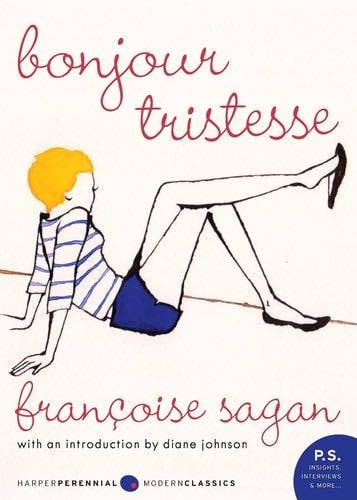
Bonjour Tristesse: A Novel
Francoise Sagan · 2008
A sensational 1954 French novel that has become a contemporary classic<br/>Set against the translucent beauty of France in summer, Bonjour Tristesse is a bittersweet tale narrated by Cecile, a seventeen-year-old girl on the brink of womanhood, whose meddling in her father's love life leads to tragic consequences.<br/>Endearing, self-absorbed, seventeen-year-old Cécile is the very essence of untroubled amorality. Freed from the stifling constraints of boarding school, she joins her father—a handsome, still-young widower with a wandering eye—for a carefree, two-month summer vacation in a beautiful villa outside of Paris with his latest mistress. Cécile cherishes the free-spirited moments she and her father share, while plotting her own sexual adventures with a "tall and almost beautiful" law student. But the arrival of her late mother's best friend intrudes upon a young girl's pleasures. And when a relationship begins to develop between the adults, Cécile and her lover set in motion a plan to keep them apart...with tragic, unexpected consequences.<br/>The internationally beloved story of a precocious teenager's attempts to understand and control the world around her, Françoise Sagan's Bonjour Tristesse is a beautifully composed, wonderfully ambiguous celebration of sexual liberation, at once sympathetic and powerfully unsparing.<br/>This special Harper Perennial Modern Classics edition includes an introduction by Diane Johnson and a P.S. section with additional insights about the book and author.

Alexandre Dumas Fils: The Lady Of The Camellias
Fils, Alexandre Dumas · 2016
The Lady of the Camellias By Alexandre Dumas, first published in 1848, and subsequently adapted for the stage. The Lady of the Camellias premiered at the Théâtre du Vaudeville in Paris, France on February 2, 1852. The play was an instant success, and Giuseppe Verdi immediately set about putting the story to music. His work became the 1853 opera La Traviata, with the female protagonist, Marguerite Gautier, renamed Violetta Valéry. The lead heroine is Marguerite Gautier, a young beautiful courtesan who is a "kept woman" by counts and dukes -- men of "Fashionable Society". She meets a young middle class lover Armand Duval who does the unpardonable thing of falling jealously in love with her and breaking all convention of what's expected between a courtesan and her admirers. He, of course, has no way of sustaining the standard of living which she is accustom. Marguerite, despite her past is rendered virtuous by her love for Armand, and the suffering of the two lovers is rendered touchingly.

The Stranger
Albert Camus · 1989
With the intrigue of a psychological thriller, The Stranger—Camus's masterpiece—gives us the story of an ordinary man unwittingly drawn into a senseless murder on an Algerian beach. With an Introduction by Peter Dunwoodie; translated by Matthew Ward.<br/><br/>Behind the subterfuge, Camus explores what he termed "the nakedness of man faced with the absurd" and describes the condition of reckless alienation and spiritual exhaustion that characterized so much of twentieth-century life.<br/><br/>“The Stranger is a strikingly modern text and Matthew Ward’s translation will enable readers to appreciate why Camus’s stoical anti-hero and devious narrator remains one of the key expressions of a postwar Western malaise, and one of the cleverest exponents of a literature of ambiguity.” —from the Introduction by Peter Dunwoodie<br/><br/>First published in 1946; now in translation by Matthew Ward.