Classic Books

Items in this hypelist
Franz Kafka

La Metamorphose
Franz Kafka · 1989
Here is Franz Kafka's terrifying but bizarrely comic story in a theatrically explosive new version. The ordinary, unremarkable life of the Samsas is turned into a six-legged nightmare when their son Gregor emerges one morning transformed into a monstrous insect. As revulsion turns to resentment, strange things start to happen to the Samsa family.

LETTRE AU PERE
Franz KAFKA · 1998
About the Author<br/><br/><br/>Franz Kafka was born to Jewish parents in Bohemia in 1883. Kafka s father was a luxury goods retailer who worked long hours and as a result never became close with his son. Kafka s relationship with his father greatly influenced his later writing and directly informed his Brief an den Vater (Letter to His Father). Kafka had a thorough education and was fluent in both German and Czech. As a young man, he was hired to work at an insurance company where he was quickly promoted despite his desire to devote his time to writing rather than insurance. Over the course of his life, Kafka wrote a great number of stories, letters, and essays, but burned the majority of his work before his death and requested that his friend Max Brod burn the rest. Brod, however, did not fulfill this request and published many of the works in the years following Kafka s death of tuberculosis in 1924. Thus, most of Kafka s works were published posthumously, and he did not live to see them recognized as some of the most important examples of literature of the twentieth century. Kafka s works are considered among the most significant pieces of existentialist writing, and he is remembered for his poignant depictions of internal conflicts with alienation and oppression. Some of Kafka s most famous works include The Metamorphosis, The Trial and The Castle.

Le Chateau
Franz Kafka · 1972

Letters to Milena
Franz Kafka · 2013

America
Franz Kafka · 1927

Le Verdict
Franz Kafka · 1913

Kafka Journal
Kafka, Franz • 1948

Le Terrier
Franz Kafka · 2024
Fyodor Dostoevsky

White Nights
Fyodor Dostoevsky · 1848
White Nights is a delicate exploration of human emotions, dreams, and disillusionments, set against the melancholic backdrop of Saint Petersburg. Fyodor Dostoevsky crafts an introspective narrative that reveals the yearnings of a young dreamer whose solitary life takes on new meaning upon meeting Nastenka, a young woman equally shaped by hope and sorrow. The work reflects on the transient nature of encounters and the impact of dreams when confronted with reality. Since its publication, White Nights has been recognized for its lyrical sensitivity and profound psychological insight. Through a simple storyline, Dostoevsky delves into universal themes such as idealized love, loneliness, and the desire for connection, making the novella a timeless portrait of the human condition. The first-person narrative, with its confessional tone, deepens the bond between the protagonist and the reader, lending unique authenticity to the emotions expressed. The enduring relevance of the work lies in its ability to capture the nuances of human relationships and the emotional dilemmas that arise at the threshold between dream and reality. By portraying the fleeting but transformative impact of an encounter, White Nights invites readers to reflect on the ephemerality of happiness and the resilience of hope, even in the face of life's inevitable disappointments.

Crime and Punishment
Fyodor Dostoevsky · 1867
Crime and Punishment: Large Printby Fyodor DostoyevskyFrom the Russian master of psychological characterizations, this novel portrays the carefully planned murder of a miserly, aged pawnbroker by a destitute Saint Petersburg student named Raskolnikov, followed by the emotional, mental, and physical effects of that action. Translated by Constance Garnett.
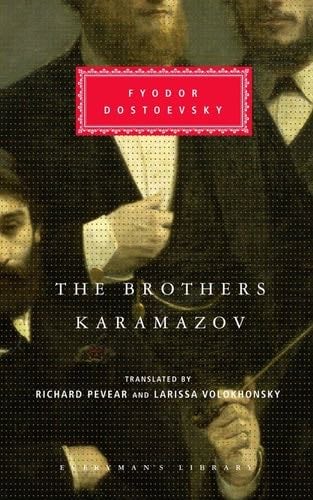
The Brothers Karamazov
Fyodor Dostoevsky · 1992
Dostoevsky’s greatest novel is a story of murder told with hair-raising intellectual clarity and a feeling for the human condition unsurpassed in world literature.<br/><br/>Fyodor Dostoevsky’s final novel, published just before his death in 1881, chronicles the bitter love-hate struggle between a larger-than-life father and his three very different sons. The author's towering reputation as one of the handful of thinkers who forged the modern sensibility has sometimes obscured the purely novelistic virtues—brilliant characterizations, flair for suspense and melodrama, instinctive theatricality—that made his work so immensely popular in nineteenth-century Russia.<br/><br/>This award-winning translation by Richard Pevear and Larissa Volokhonsky—the definitive version in English—magnificently captures the rich and subtle energies of Dostoevsky’s masterpiece."<br/><br/>Everyman's Library pursues the highest production standards, printing on acid-free cream-colored paper, with full-cloth cases with two-color foil stamping, decorative endpapers, silk ribbon markers, European-style half-round spines, and a full-color illustrated jacket. Everyman’s Library Classics include an introduction, a select bibliography, and a chronology of the author's life and times.

Demons
Fyodor Dostoyevsky · 1872

Les Carnets du Sous-Sol
Fyodor Dostoevsky • 1864

Le Joueur
Fyodor Dostoevsky · 1866

les pauvres gens
Fyodor Dostoevsky • 1846

Le Double
Fyodor Dostoevsky • 1846

Souvenirs de La Maison Des Morts
Fyodor Mikhailovich Dostoevsky • 1862

L’adolescent
Fyodor Dostoevsky • 1875

La Douce
Fyodor Dostoevsky • 1876

Le Rêve D’un Homme Ridicule
Fyodor Dostoevsky • 1877
Osamu dazai

Osamu Dazai No Longer Human
oSAMU DAZAİ · 1948

Soleil Couchant
Dazai Osamu · 1947
Seigneur et maitre de la creation : l'homme pretend fierement a ce titre, mais au fond, il semble que rien ne le differencie des autres vivants, n'est-ce pas ? Pourtant, Mere, il y a bien une chose, une seule. Vous ne la voyez peut-etre pas. Une chose qui manque absolument aux animaux et qui n'existe que chez les hommes. C'est ce qu'on appelle le secret.

Tsugaru
Osamu Dazai · 1998

Schoolgirl
Osamu Dazai · 1939
Victor Hugo
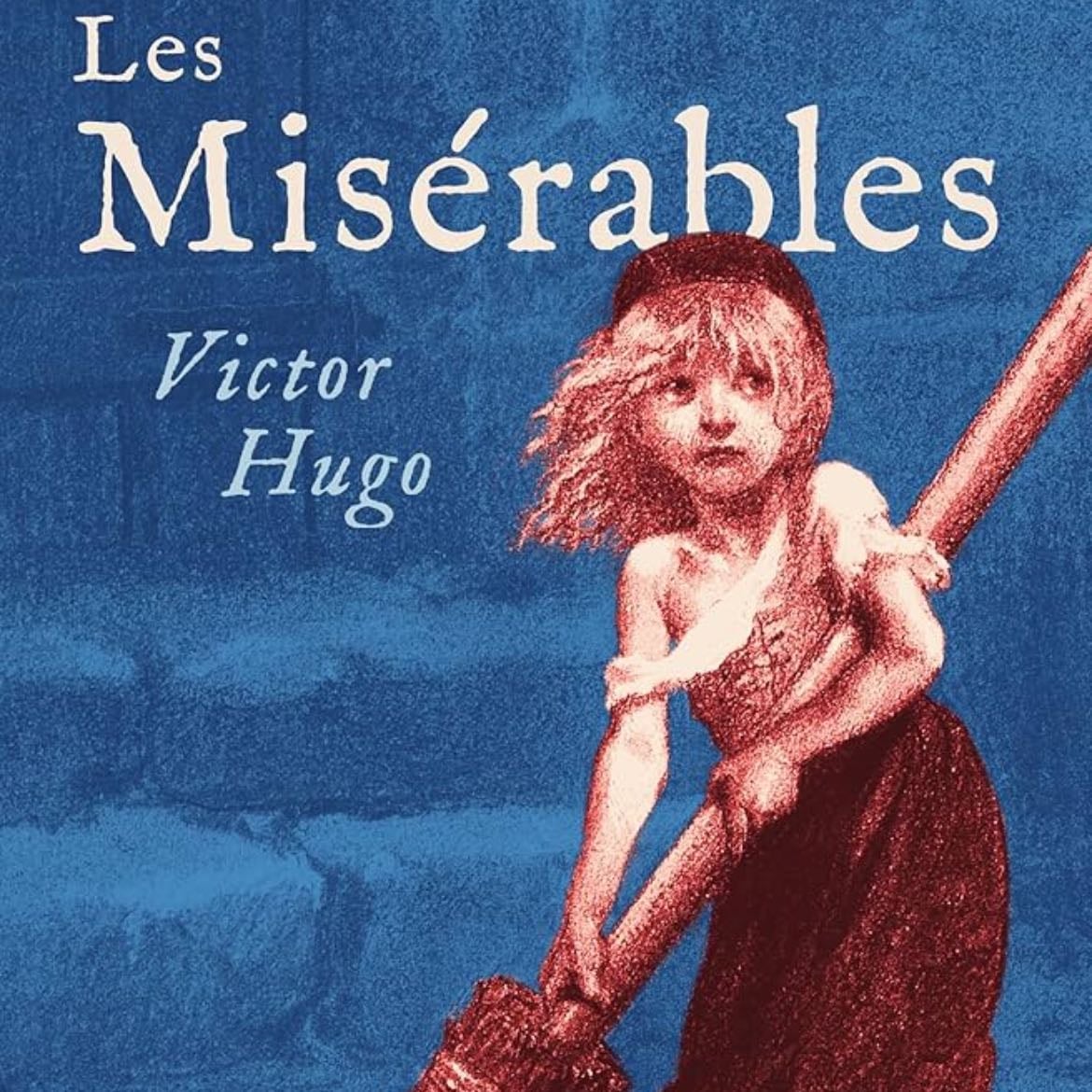
Les Miserables
Victor Hugo • 1862

Notre-Dame de Paris
Victor hugo • 1831

Le dernier jour d’un condamné
Victor Hugo · 1829

Les Contemplations
Victor Hugo · 1856
Demain, dès l'aube, à l'heure où blanchit la campagne, Je partirai. Vois-tu, je sais que ni m'attends. J'irai par la foret, j'irai par la montagne. Je ne puis demeurer loin de toi plus longtemps. Je marcherai les yeux fixés sur mes pensées, Sans rien voir au dehors, sans entendre aucun bruit, Seul, inconnu, le dos courbé, les mains croisées, Triste, et le jour pour moi sera comme la nuit. Je ne regarderai ni l'or du soir qui tombe, Ni les voiles au loin descendant vers Harfleur, Et quand j'arriverai, je mettrai sur ta tombe, Un bouquet de houx vert et de bruyère en fleur. -- 4ème de couverture.
Albert Camus

The Stranger by Albert Camus
Albert Camus · 2023

La Chute
Albert Camus · 2004

La Peste
Albert Camus · 1967
Antoine de Saint-Exupéry

Le Petit Prince
Antoine de Saint-Exupéry · 2024
Voltaire

Candide
Voltaire voltaire · 1996
Stendhal

The Red and the Black
Stendhal
Alexandre Dumas

Le comte de Monte-Cristo I
Alexandre Dumas · 2015

Le comte de Monte-Cristo II
Alexandre Dumas · 2015

Le comte de Monte-Cristo III
Alexandre Dumas · 2015

Le comte de Monte-Cristo IV
Alexandre Dumas · 2015

Le comte de Monte-Cristo V
Alexandre Dumas · 2015

les trois mousquetaires
Alexandre Dumas