⏤﹙ 𝓓 𝒆𝒔𝒊𝒈𝒏 вσσкѕ ﹚⟢

Items in this hypelist
Art

El diseño de las cosas cotidianas
Don Norman
Have you ever wondered why that 13-digit number on the back of a book costs $125 in the United States but is completely free in Canada and India? This book, The Global ISBN Handbook, is your 2025 guide to the International Standard Book Number. It explains everything about this global "fingerprint" for books. The ISBN is the most important cornerstone of the publishing industry. It started as a simple warehouse tool in the 1960s. Now, it is a complex digital identifier used in over 200 countries. This handbook deconstructs the entire system. It uses 15 distinct national case studies to do this. You will learn how the old 10-digit system changed to the new 13-digit one. We break down the five parts of the ISBN, from the "Bookland" prefix to the final check digit. The book explores the global governance framework, starting with the International ISBN Agency. Then, it dives deep into how different countries run their systems. You'll see the privatized, high-cost model in the United States. You'll compare it to Canada's free, government-run system. We explore the industry-led models in Brazil and Germany. We look at government-run systems in Mexico and India. We even cover the unique case of China, where the ISBN is not a simple identifier but a state-controlled publication license. The book also examines the systems in the UK , France , Russia , Japan , Australia , South Africa , Nigeria , and Egypt. Many books and websites can tell you how to get an ISBN. This handbook is the only resource that explains why the process is so different everywhere you look. It moves beyond a simple "how-to" and provides a true global analysis. It directly compares the privatized, for-profit models in the US and UK against the free, public-good systems in Canada and South Africa. You won't just learn the price; you will understand the cultural policies, market structures, and legal philosophies that shape that price. This book shows how the ISBN is a "global mirror". It reveals how a simple number can be a commercial product in one nation , a tool of cultural policy in another , and an instrument of state control in a third. This comparative insight is the missing piece for any author, publisher, or researcher trying to navigate the complex international publishing market. Disclaimer: This handbook is an independently produced resource for commentary and analysis. The author has no affiliation with the International ISBN Agency, R.R. Bowker, Library and Archives Canada, the National Press and Publication Administration, or any other national ISBN agency. This work is independently produced under the principle of nominative fair use.

El diseño como storytelling
Ellen Lupton, Álvaro Marcos Lantero · 2019

Fundamentos del Diseño Industrial
Álvaro Javier Míguez • 2017
Cuando se habla de Diseño Industrial se presupone la existencia de modos de producción mecanizada y una preocupación por las formas basadas en dicha tecnología. Sin embargo, muchos de los conceptos o acciones que forjaron la Revolución Industrial –las ideas de tipo y modelo, la necesidad de la organización laboral para la optimización de la producción, la invención y construcción de máquinas que ayuden al hombre en sus tareas–se remontan a varios siglos atrás. Fundamentos del Diseño Industrial traza una serie de urdimbres temáticas que recorren la historia, desde la Antigüedad hasta el siglo XX, con el propósito de explicar las complejas motivaciones que permitieron a los hombres construir el mundo de la máquina y crear el vasto universo del Diseño Industrial.

¿Cómo nacen los objetos?
Bruno Munari • 2016

Industrial desing A-Z
Desing
Have you ever wondered why that 13-digit number on the back of a book costs $125 in the United States but is completely free in Canada and India? This book, The Global ISBN Handbook, is your 2025 guide to the International Standard Book Number. It explains everything about this global "fingerprint" for books. The ISBN is the most important cornerstone of the publishing industry. It started as a simple warehouse tool in the 1960s. Now, it is a complex digital identifier used in over 200 countries. This handbook deconstructs the entire system. It uses 15 distinct national case studies to do this. You will learn how the old 10-digit system changed to the new 13-digit one. We break down the five parts of the ISBN, from the "Bookland" prefix to the final check digit. The book explores the global governance framework, starting with the International ISBN Agency. Then, it dives deep into how different countries run their systems. You'll see the privatized, high-cost model in the United States. You'll compare it to Canada's free, government-run system. We explore the industry-led models in Brazil and Germany. We look at government-run systems in Mexico and India. We even cover the unique case of China, where the ISBN is not a simple identifier but a state-controlled publication license. The book also examines the systems in the UK , France , Russia , Japan , Australia , South Africa , Nigeria , and Egypt. Many books and websites can tell you how to get an ISBN. This handbook is the only resource that explains why the process is so different everywhere you look. It moves beyond a simple "how-to" and provides a true global analysis. It directly compares the privatized, for-profit models in the US and UK against the free, public-good systems in Canada and South Africa. You won't just learn the price; you will understand the cultural policies, market structures, and legal philosophies that shape that price. This book shows how the ISBN is a "global mirror". It reveals how a simple number can be a commercial product in one nation , a tool of cultural policy in another , and an instrument of state control in a third. This comparative insight is the missing piece for any author, publisher, or researcher trying to navigate the complex international publishing market. Disclaimer: This handbook is an independently produced resource for commentary and analysis. The author has no affiliation with the International ISBN Agency, R.R. Bowker, Library and Archives Canada, the National Press and Publication Administration, or any other national ISBN agency. This work is independently produced under the principle of nominative fair use.

The Design Of Everyday Things
Don Norman • 2013

Sobre lo espiritual en el arte (Rescates) (Spanish Edition)
Vassily Kandisky • 2008

Psicología del color: Cómo actúan los colores sobre los sentimientos y la razón (Spanish Edition)
Eva Heller • 2015
Este libro aborda la relación de los colores con nuestros sentimientos y demuestra cómo ambos no se combinan de manera accidental, pues sus asociaciones no son meras cuestiones de gusto, sino experiencias universales que están profundamente enraizadas en nuestro lenguaje y en nuestro pensamiento. Organizado en 13 capítulos que corresponden a 13 colores distintos, el volumen poporciona una gran cantidad y variedad de información sobre los colores: desde dichos y saberes populares, hasta su utilización en el diseño de productos, los diferentes tests que se basan en colores, la curación por medio de ellos, la manipulación de las personas, los nombres y apellidos relacionados con colores, etc. La diversidad de este enfoque convierte a la obra de Eva Heller en una herramienta fundamental para todas aquellas personas que trabajan con colores: artistas, terapeutas, diseñadores gráficos e industriales, interioristas, arquitectos, diseñadores de moda, publicistas, entre otros.
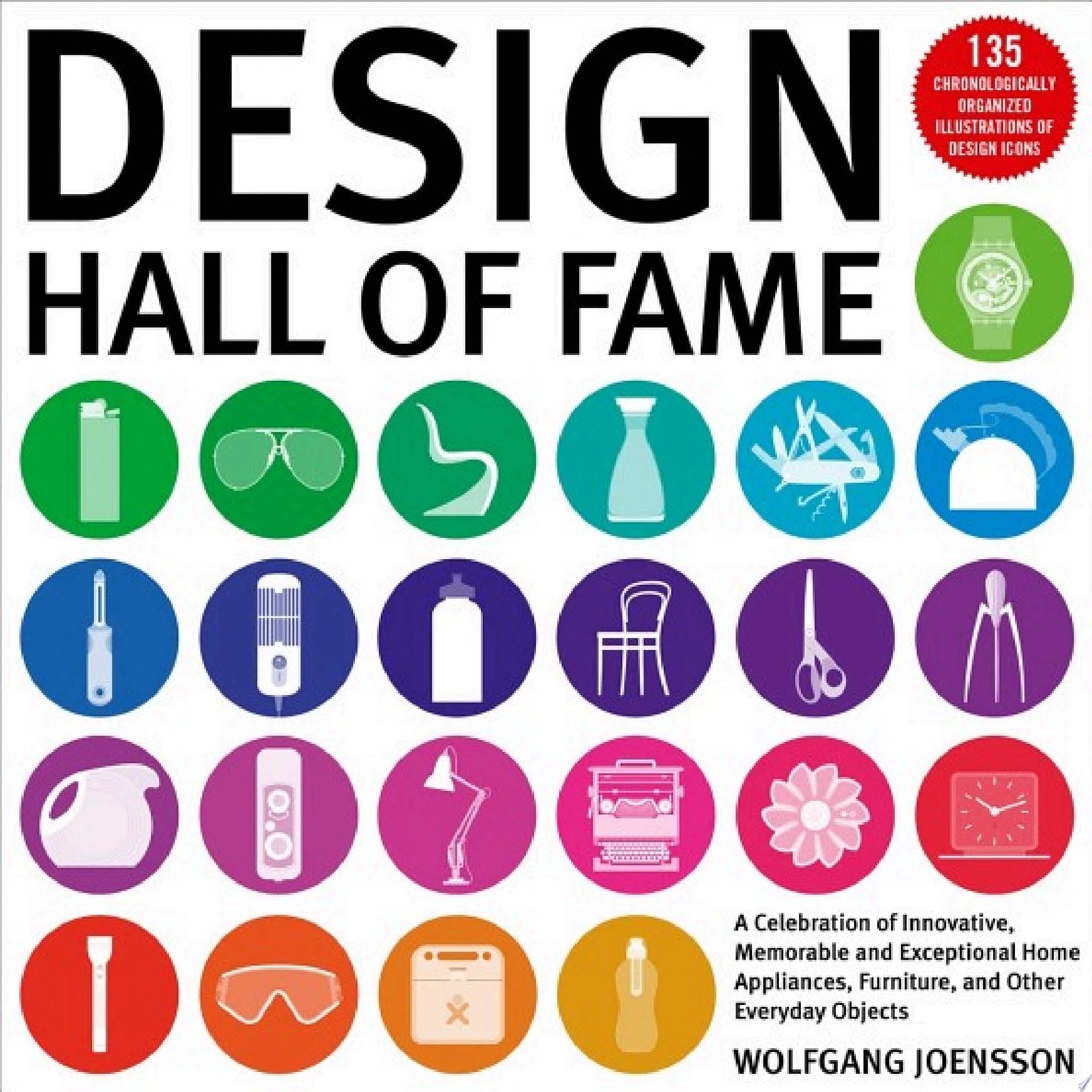
Iconic Product Design
Wolfgang Joensson · 2020

How to Live with Objects
Monica Khemsurov, Jill Singer · 2022

Japanese Design Since 1945
Naomi Pollock · 2020

1000 Design Classics
Phaidon Editors · 2022
<p><b>As featured in <i>Wall Street Journal</i></b></p><p><b>The most innovative, iconic, and influential products ever designed - from 1663 to the present day </b></p><p>Originating from the highly acclaimed and groundbreaking three-volume <i>Phaidon Design Classics</i>, this new book presents 1,000 of the world's greatest objects in one large-format volume - from everyday items by anonymous creators to lauded pieces by the likes of Charles and Ray Eames, Charlotte Perriand, Dieter Rams, Richard Sapper, Hans J. Wegner, and Florence Knoll. </p><p>Carefully revised to bring every detail up to date, and with the addition of 100 new items that highlight designers from a diverse variety of backgrounds (including a greater number of female designers) and products from the last 15 years, this collection of the world's greatest product design is more comprehensive, compelling - and relevant - than ever before. </p><p>The book showcases celebrated names alongside the new stars of modern design, including Le Corbusier, Alvar and Aino Aalto, Isamu Noguchi, Ronan and Erwan Bouroullec, Lani Adeoye, Faye Toogood, and Lindsey Adelman. Each entry is accompanied by beautiful imagery and a detailed description that offers a rich insight into the product, its history, and its maker, from the renowned Tulip Chair by Eero Saarinen to the much-loved Bird Zero e-scooter. </p><p>This handsome book is the perfect reference guide for design enthusiasts, industry professionals, and all those interested in the creative process. </p>

Trademarks & Symbols of the World
Yasaburō Kuwayama · 1987
Logo Modernism
Jens Müller, R. Roger Remington · 2015

Design of the 20th Century
Charlotte Fiell, Peter Fiell · 2012