Books I want (non-fictiom, research, fashion, biographies, culture etc)

Items in this hypelist
Books
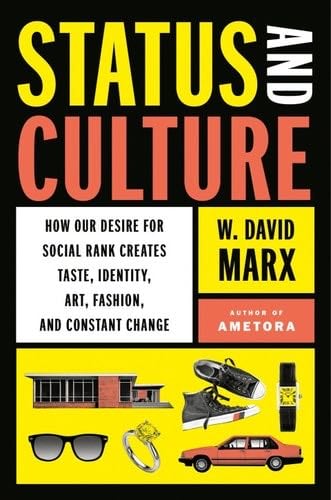
Status and Culture
W. David Marx · 2022
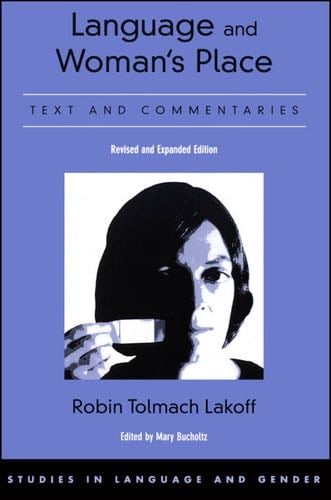
Language and Woman's Place
Robin Tolmach Lakoff · 2004
The 1975 publication of Robin Tolmach Lakoff's Language and Woman's Place, is widely recognized as having inaugurated feminist research on the relationship between language and gender, touching off a remarkable response among language scholars, feminists, and general readers. For the past thirty years, scholars of language and gender have been debating and developing Lakoff's initial observations. Arguing that language is fundamental to gender inequality, Lakoff pointed to two areas in which inequalities can be found: Language used about women, such as the asymmetries between seemingly parallel terms like master and mistress, and language used by women, which places women in a double bind between being appropriately feminine and being fully human. Lakoff's central argument that "women's language" expresses powerlessness triggered a controversy that continues to this day. The revised and expanded edition presents the full text of the original first edition, along with an introduction and annotations by Lakoff in which she reflects on the text a quarter century later and expands on some of the most widely discussed issues it raises. The volume also brings together commentaries from twenty-six leading scholars of language, gender, and sexuality, within linguistics, anthropology, modern languages, education, information sciences, and other disciplines. The commentaries discuss the book's contribution to feminist research on language and explore its ongoing relevance for scholarship in the field. This new edition of Language and Woman's Place not only makes available once again the pioneering text of feminist linguistics; just as important, it places the text in the context of contemporary feminist and gender theory for a new generation of readers.

The Persistent Desire: A Femme-Butch Reader
Joan Nestle · 1992
Surveys a decade of the attempt to reconstruct and understand the meaning and value of butch-femme relations for the contemporary lesbian, drawing on oral history, fiction, poetry, and fantasy
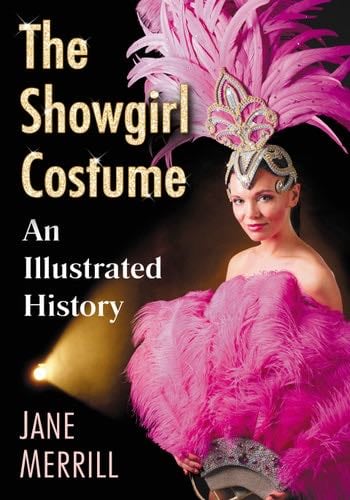
The Showgirl Costume
Jane Merrill · 20181130
Fashion is synonymous with change yet the iconic showgirl costume--feathers, sparkle and revealing clothes--has remained largely unchanged since the early 20th century. Beginning in the 1800s, a couture of the risque evolved from Paris nightclubs to Las Vegas casinos. The concept of glamour itself was based on what Parisian courtesans and burlesque performers wore. A tall pretty girl with headdress, nude core with spangles, high heels and dramatic makeup became a Gallic symbol and later the trademark of Hollywood musicals. France exported costumes and millinery--as well as whole productions from the Moulin Rouge, the Lido and Folies Bergere --to the U.S. and the world. More recently, cabaret styling has translated into today's day, sport and evening clothes.
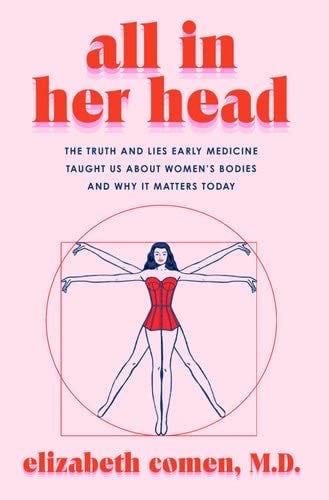
All in Her Head
Elizabeth Comen · 2024
Finalist for the 2025 PEN/E.O. Wilson Literary Science Writing Award USA Today Bestseller “All in Her Head accomplishes a remarkable feat of storytelling. By combining essential medical histories about women’s bodies with all the narrative propulsion of a medical thriller, Comen has written a must-read, compelling, and important book.”—Siddhartha Mukherjee, Pulitzer Prize–winning author of The Emperor of All Maladies and The Song of the Cell “Wow! This book will upend everything you thought you knew about your body while empowering you to make better decisions moving forward. Through storytelling, extensive research, and easy recommendations, Dr. Elizabeth Comen has given us all a priceless road map to reclaim our agency.”—Eve Rodsky, author of Fair Play A surprising, groundbreaking, and fiercely entertaining medical history that is both a collective narrative of women’s bodies and a call to action for a new conversation around women’s health. For as long as medicine has been a practice, women's bodies have been treated like objects to be practiced on: examined and ignored, idealized and sexualized, shamed, subjugated, mutilated, and dismissed. The history of women’s healthcare is a story in which women themselves have too often been voiceless—a narrative instead written from the perspective of men who styled themselves as authorities on the female of the species, yet uninformed by women’s own voices, thoughts, fears, pain and experiences. The result is a cultural and societal legacy that continues to shape the (mis)treatment and care of women. While the modern age has seen significant advancements in the medical field, the notion that female bodies are flawed inversions of the male ideal lingers on—as do the pervasive societal stigmas and lingering ignorance that shape women’s health and relationships with their own bodies. Memorial Sloan Kettering oncologist and medical historian Dr. Elizabeth Comen draws back the curtain on the collective medical history of women to reintroduce us to our whole bodies—how they work, the actual doctors and patients whose perspectives and experiences laid the foundation for today’s medical thought, and the many oversights that still remain unaddressed. With a physician’s knowledge and empathy, Dr. Comen follows the road map of the eleven organ systems to share unique and untold stories, drawing upon medical texts and journals, interviews with expert physicians, as well as her own experience treating thousands of women. Empowering women to better understand ourselves and advocate for care that prioritizes healthy and joyful lives— for us and generations to come—All in Her Head is written with humor, wisdom, and deep scientific and cultural insight. Eye-opening, sometimes enraging, yet always captivating, this shared memoir of women’s medical history is an essential contribution to a holistic understanding and much-needed reclaiming of women’s history and bodies.
The Omnivores Dilemma
Michael Pollan · 2007

Food Power: The Rise and Fall of the Postwar American Food System
Bryan L. McDonald · 2016
Flawless: Lessons in Looks and Culture from the K-Beauty Capital
Elise Hu · 2023
One of Porchlight's Business Books of the Year | One of Vox's Best Books of 2023 | An NPR Book of the Day | Required Reading from New York Post | One of Nylon's 13 May Books to Add to Your Reading List | One of PureWow's 14 Books to Read for AAPI Heritage Month | One of W Magazine's 14 Books to Dive Into This Summer | One of Betches' Best Summer Reads of 2023<br/><br/>An audacious journalistic exploration of the present and future of beauty through the lens of South Korea's booming "K-beauty" industry and the culture it promotes, by Elise Hu, NPR host-at-large and the host of TED Talks Daily<br/><br/>K-beauty has captured imaginations worldwide by promising a kind of mesmerizing perfection. Its skincare and makeup products—creams packaged to look like milkshakes or pandas, and snail mucus face masks, to name a few—work together to fascinate us, champion consumerism, and invite us to indulge. In the four years Elise spent in Seoul as NPR’s bureau chief, the global K-beauty industry quadrupled. Today it's worth $10 billion and is only getting bigger as it rides the Hallyu wave around the globe.<br/><br/>And fun as self-care consumerism may be, Elise turns her veteran eye to the darker questions lurking beneath the surface of this story. When technology makes it easy to quantify and optimize ourselves—from banishing blemishes, to whittling our waistlines, even to shaving down our jaws—where do we draw the line? What are the dangers for a society where a flawless face and body are promoted and possible? What are the real financial, physical, and emotional costs of beauty work in a culture that valorizes endless self-improvement and codes it as empowerment?<br/><br/>With rich historical context and deep reporting, including hours of interviews with South Korean women, this is a complex, provocative look at the ways hustle culture has reached into the sinews of our bodies. It raises complicated questions about gender disparity, consumerism, the beauty imperative of an appearance obsessed society, and the undeniable political, economic, and social capital of good looks worldwide. And it points the way toward an alternative vision, one that's more affirming and inclusive than a beauty culture led by industry.

Female View
Nadine Barth, Diana Weis, Eugenie Shinkle · 2022
Female View puts the focus on women fashion photography. Although this medium has been shaped by female photographers for decades, a large number of publications or exhibitions have focused primarily on the male gaze of the female body. Numerous female fashion photographers worked for influential magazines such as Harper's Bazaar or Vogue, thus shaping the style of their time. Using exemplary positions, this book traces the transformation of the photographic image from the 1930s to the present day: from the fashion magazine to the showroom and the coffee table book to videos and digital self-staging in social media today. On display will be works by: Lillian Bassman, Sibylle Bergemann, Petra F. Collins, Corinne Day, Cass Bird, Madame d'Ora, Charlotte March, Ute Mahler, Sarah Moon, Amber Pinkerton, Regina Relang, Alice Springs (June Newton), Bettina Rheims, Ellen von Unwerth, and Yva.

Fur Nation: From the Beaver to Brigitte Bardot
Chantal Nadeau · 2005
Star Gazing: Hollywood Cinema and Female Spectatorship
Jackie Stacey · 1993
The Femme Fatale
Virginia M. Allen · 1983
This book explores the origins of the femme fatale, women who seduce men to their downfall. This exploration includes the image of the femme fatale in history, literature, art, and feminism.

Facing Beauty: Painted Women and Cosmetic Art
Aileen Ribeiro · 2011
This wide-ranging survey, spanning four centuries, illuminates shifting perceptions of female beauty through works of art and the evolution of cosmetics<br/><br/>Throughout the history of the Western world, countless attempts have been made to define beauty in art and life, especially with regard to women's bodies and faces. Facing Beauty examines concepts of female beauty in terms of the ideal and the real, investigating paradigms of beauty as represented in art and literature and how beauty has been enhanced by cosmetics and hairstyles.<br/>This thought-provoking book discusses the shifting perceptions of female beauty, concentrating on the period from about 1540 to 1940. It begins with the Renaissance, when a renewed emphasis on the individual was reflected in the celebration of beauty in the portraits of the day. The fluid, sensual lines of the Baroque period initiated a shift toward a more "natural" look, giving way in the 18th century to a more stylized and artificial face, a mask of ideal beauty. By the late 19th century, commercial beauty preparations had become more readily available, leading to new technological developments within the beauty industry in the early 20th century. Beauty salons and the wider availability of cosmetics revolutionized the way women saw themselves.<br/>Ravishing images of some of the most beautiful women in history, both real and ideal, accompanied by illustrations from costume books, fashion plates, advertisements, caricatures, and cosmetics, bring the evolving story of beauty to life.
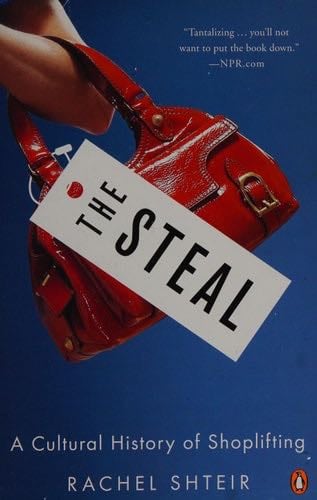
The Steal: A Cultural History of Shoplifting
Rachel Shteir · 2012
Rachel Shteir’s The Steal is the first serious study of shoplifting, looking to history to reveal the roots of our modern dilemma. Dismissed by academia and the mainstream media and largely misunderstood, shoplifting has become the territory of moralists, mischievous teenagers, tabloid television, and self-help gurus. But shoplifting incurs remarkable real-life costs for retailers and consumers. The “crime tax”—the amount every American family loses to shoplifting-related price inflation—is more than $400 a year. Shoplifting cost American retailers $11.7 billion in 2009. The theft of one $5.00 item from Whole Foods can require sales of hundreds of dollars to break even.<br/>The Steal begins when shoplifting entered the modern record as urbanization and consumerism made London into Europe’s busiest mercantile capital. Crossing the channel to nineteenth-century Paris, Shteir tracks the rise of the department store and the pathologizing of shoplifting as kleptomania. In 1960s America, shoplifting becomes a<br/>symbol of resistance when the publication of Abbie Hoffman’s Steal This Book popularizes shoplifting as an antiestablishment act. Some contemporary analysts see our current epidemic as a response to a culture of hyper-consumerism; others question<br/>whether its upticks can be tied to economic downturns at all. Few provide convincing theories about why it goes up or down.<br/>Just as experts can’t agree on why people shoplift, they can’t agree on how to stop it. Shoplifting has been punished by death, discouraged by shame tactics, and protected against by high-tech surveillance. Shoplifters have been treated by psychoanalysis, medicated with pharmaceuticals, and enforced by law to attend rehabilitation<br/>groups. While a few individuals have abandoned their sticky-fingered habits, shoplifting shows no signs of slowing.<br/>In The Steal, Shteir guides us through a remarkable tour of all things shoplifting—we visit the Woodbury Commons Outlet Mall, where boosters run rampant, watch the surveillance footage from Winona Ryder’s famed shopping trip, and learn the history of antitheft technology. A groundbreaking study, The Steal shows us that shoplifting in<br/>its many guises—crime, disease, protest—is best understood as a reflection of our society, ourselves.
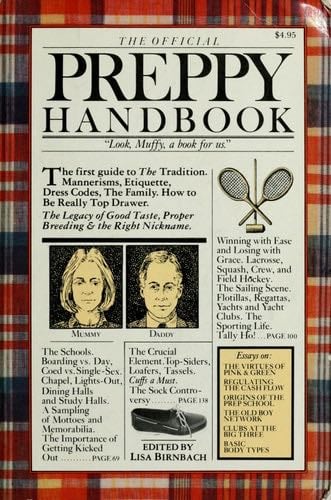
The Official Preppy Handbook
Lisa Birnbach · 2022
Rights Of The Birthright : The Years At Home -- The Root Of All Prep : The Years At School -- The Best Years Of Your Life : The College Years -- Dressing The Part : The Basic Look -- The Real World : The Young Executive Years -- You're All Grown Up Now : The Country Club Years -- Prep Spoken Here. Edited By Lisa Birnbach ; Concept Jonathan Robert ; Writers, Lisa Birnbach ... [et Al.] ; Photography, Robin Holland, Ill., Oliver Williams.
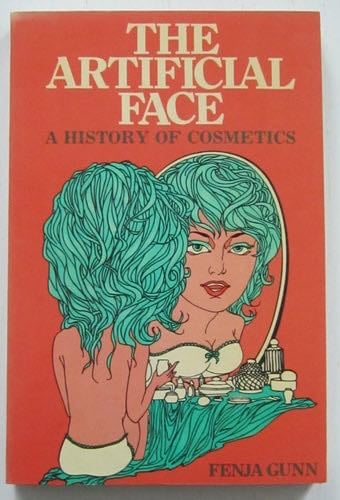
The Artificial Face
Fenja Gunn · 1983
Book by Fenja Gunn
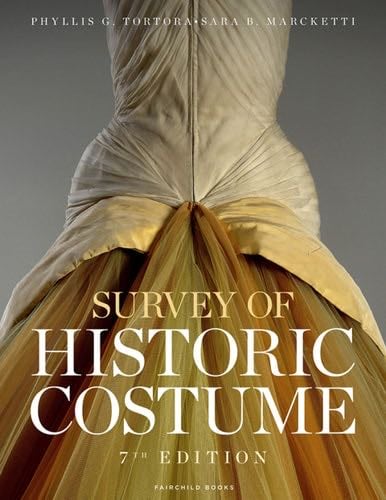
Survey of Historic Costume
Phyllis G. Tortora, Sara B. Marcketti · 2021
Learn about Western dress from the ancient world to today. Each chapter establishes the social, cross-cultural, environmental, geographic, and artistic influences on what people wore, providing important context to understand the role of dress from a diverse, global perspective. More than 600 images help you to recognize recurring themes, and box features throughout highlight contemporary voices and the impact the fashions of the time had on the generations that followed. The book covers each decade, from the 1920s to the present, in separate chapters that follow the gradual changes in modern fashion. Instructor Resources -Instructor's Guide provides suggestions for planning the course and using the text in the classroom, supplemental assignments, and lecture notes -Test Bank includes sample test questions for each chapter -PowerPoint® presentations include images from the book and provide a framework for lecture and discussion Survey of Historic Costume STUDIO -Study smarter with self-quizzes featuring scored results and personalized study tips -Review concepts with flashcards of essential vocabulary