filosof ía

Items in this hypelist
Books
The Fundamentals of Ethics
Russ Shafer Landau
Man's Search for Meaning
Viktor E. Frankl

The Brothers Karamazov
Fyodor Dostoyevsky
Fyodor Dostoyevsky's final novel, considered to be the culmination of his life's work, "The Brothers Karamazov" is the story of the murder of Father Karamazov, whose four sons are all to some degree complicit in the crime. Within the context of this crime story evolves a brilliant philosophical debate of religion, reason, liberty, and the nature of guilt in society. Considered by Sigmund Freud as "The most magnificent novel ever written", the excellent translation of Constance Garnett is presented here in this edition of "The Brothers Karamazov".
Siddharta
Herman Hesse
Siddhartha is a novel by Hermann Hesse that deals with the spiritual journey of self-discovery of a man named Siddhartha during the time of the Gautama Buddha.

Cartas a Milena
Franz Kafka
The passionate but doomed epistolary love affair between a Czech translator and one of the greatest writers of the twentieth century, the author of The Metamorphosis and The Trial.<br/><br/>"Extraordinary…touching, horrifying, brilliant, sickly, [and] heartbreaking…. The most significant key we have for a reading of the author's novels and short stories." —The New York Times<br/><br/>In no other work does Franz Kafka reveal himself as in Letters to Milena, which begins as a business correspondence but soon develops into an epistolary love affair. Kafka's Czech translator, Milena Jesenská, was a gifted and charismatic twenty-three-year-old who was uniquely able to recognize Kafka's complex genius and his even more complex character. For thirty-six-year-old Kafka, she was "a living fire, such as I have never seen." It was to Milena that he revealed his most intimate self and, eventually, entrusted his diaries for safekeeping.

The Fundamentals of Ethics
Russ Shafer Landau

A Happy Death
Albert Camus
The first novel from the Nobel Prize-winning author lays the foundation for The Stranger, telling the story of an Algerian clerk who kills a man in cold blood.<br/><br/>In A Happy Death, written when Albert Camus was in his early twenties and retrieved from his private papers following his death in 1960, revealed himself to an extent that he never would in his later fiction. For if A Happy Death is the study of a rule-bound being shattering the fetters of his existence, it is also a remarkably candid portrait of its author as a young man.<br/><br/>As the novel follows the protagonist, Patrice Mersault, to his victim's house -- and then, fleeing, in a journey that takes him through stages of exile, hedonism, privation, and death -it gives us a glimpse into the imagination of one of the great writers of the twentieth century. For here is the young Camus himself, in love with the sea and sun, enraptured by women yet disdainful of romantic love, and already formulating the philosophy of action and moral responsibility that would make him central to the thought of our time.<br/><br/>Translated from the French by Richard Howard
Beyond Good and Evil
Friedrich Nietzsche

Letters To Milena
Franz Kafka
Franz Kafka's letters to his one-time muse, Milena Jesenska - an intimate window into the desires and hopes of the twentieth-century's most prophetic and important writer Kafka first made the acquaintance of Milena Jesenska in 1920 when she was translating his early short prose into Czech, and their relationship quickly developed into a deep attachment. Such was his feeling for her that Kafka showed her his diaries and, in doing so, laid bare his heart and his conscience. While at times Milena's 'genius for living' gave Kafka new life, it ultimately exhausted him, and their relationship was to last little over two years. In 1924 Kafka died in a sanatorium near Vienna, and Milena died in 1944 at the hands of the Nazis, leaving these letters as a moving record of their relationship.
Of Human Freedom
Epictetus
In this personal and practical guide to moral self-improvement and living a good life, the second-century philosopher Epictetus tackles questions of freedom and imprisonment, stubbornness and fear, family, friendship and love, and leaves an intriguing document of daily life in the classical world. GREAT IDEAS. Throughout history, some books have changed the world. They have transformed the way we see ourselves - and each other. They have inspired debate, dissent, war and revolution. They have enlightened, outraged, provoked and comforted. They have enriched lives - and destroyed them. Now Penguin brings you the works of the great thinkers, pioneers, radicals and visionaries whose ideas shook civilization and helped make us who we are.

The Dream of a Ridiculous Man
Fyodor Dostoevsky
This volume contains Fyodor Dostoyevsky's 1877 short story "The Dream of a Ridiculous Man". It begins with a man walking St. Petersburg's streets while musing upon how ridiculous his life is, as well as its distinct lack of meaning or purpose. This train of thought leads him to the idea of suicide, which he resolves to commit using a previously-acquired gun. However, a chance encounter with a distressed little girl in the street derails his drastic plans. Fyodor Mikhailovich Dostoevsky (1821 – 1881) was a Russian novelist, essayist, short story writer, journalist, and philosopher. His literature examines human psychology during the turbulent social, spiritual and political atmosphere of 19th-century Russia, and he is considered one of the greatest psychologists in world literature. A prolific writer, Dostoevsky produced 11 novels, three novellas, 17 short stories and numerous other works. Many vintage books such as this are increasingly scarce and expensive. Other notable works by this author include: “Crime and Punishment” (1866), “Notes from the Underground” (1864), and “The Idiot” (1869). We are republishing this volume now in an affordable, modern, high-quality edition complete with a specially-commissioned new biography of the author.
The Myth of Sisyphus And Other Essays
Albert Camus
One of the most influential works of this century, The Myth of Sisyphus and Other Essays is a crucial exposition of existentialist thought. Influenced by works such as Don Juan and the novels of Kafka, these essays begin with a meditation on suicide; the question of living or not living in a universe devoid of order or meaning. With lyric eloquence, Albert Camus brilliantly posits a way out of despair, reaffirming the value of personal existence, and the possibility of life lived with dignity and authenticity.

Existentialism Is a Humanism
Jean Paul Sartre
<DIV><B>A new translation of two seminal works of existentialism</B><BR /><BR /> It was to correct common misconceptions about his thought that Jean-Paul Sartre, the most dominent European intellectual of the post-World War II decades, accepted an invitation to speak on October 29, 1945, at the Club Maintenant in Paris. The unstated objective of his lecture (“Existentialism Is a Humanism”) was to expound his philosophy as a form of “existentialism,” a term much bandied about at the time. Sartre asserted that existentialism was essentially a doctrine for philosophers, though, ironically, he was about to make it accessible to a general audience. The published text of his lecture quickly became one of the bibles of existentialism and made Sartre an international celebrity.<BR /><BR /> The idea of freedom occupies the center of Sartre’s doctrine. Man, born into an empty, godless universe, is nothing to begin with. He creates his essence—his self, his being—through the choices he freely makes (“existence precedes essence”). Were it not for the contingency of his death, he would never end. Choosing to be this or that is to affirm the value of what we choose. In choosing, therefore, we commit not only ourselves but all of mankind. This book presents a new English translation of Sartre’s 1945 lecture and his analysis of Camus’s <I>The Stranger</I>, along with a discussion of these works by acclaimed Sartre biographer Annie Cohen-Solal. This edition is a translation of the 1996 French edition, which includes Arlette Elkaïm-Sartre’s introduction and a Q&A with Sartre about his lecture.</DIV>

Being and Time
Heidegger
"What is the meaning of being?" This is the central question of Martin Heidegger's profoundly important work, in which the great philosopher seeks to explain the basic problems of existence. A central influence on later philosophy, literature, art, and criticism—as well as existentialism and much of postmodern thought—Being and Time forever changed the intellectual map of the modern world. As Richard Rorty wrote in the New York Times Book Review, "You cannot read most of the important thinkers of recent times without taking Heidegger's thought into account." This first paperback edition of John Macquarrie and Edward Robinson's definitive translation also features a new foreword by Heidegger scholar Taylor Carman.

A Very Easy Death
Simone De Beauvoir
A Very Easy Death has long been considered one of Simone de Beauvoir’s masterpieces. The profoundly moving, day-by-day recounting of her mother’s death “shows the power of compassion when it is allied with acute intelligence” (The Sunday Telegraph). Powerful, touching, and sometimes shocking, this is an end-of-life account that no reader is likely to forget.<br/><br/>Translated by Patrick O'Brian
The Problems of Philosophy
Bertrand Russel
Complete and unabridged edition.<br/>The Problems of Philosophy is a 1912 book by Bertrand Russell, in which Russell attempts to create a brief and accessible guide to the problems of philosophy. Focusing on problems he believes will provoke positive and constructive discussion, Russell concentrates on knowledge rather than metaphysics: If it is uncertain that external objects exist, how can we then have knowledge of them but by probability. There is no reason to doubt the existence of external objects simply because of sense data.<br/>Source: Wikipedia.
Meditations on First Philosophy
René Descartes
The Meditations, one of the key texts of Western philosophy, is the most widely studied of all Descartes' writings. This authoritative translation by John Cottingham, taken from the much acclaimed three-volume Cambridge edition of the Philosophical Writings of Descartes, is based upon the best available texts and presents Descartes' central metaphysical writings in clear, readable modern English. As well as the complete text of the Meditations, the reader will find a thematic abridgement of the Objections and Replies (which were originally published with the Meditations) containing Descartes' replies to his critics. These extracts, specially selected for the present volume, indicate the main philosophical difficulties which occurred to Descartes' contemporaries and show how Descartes developed and clarified his arguments in response. This edition contains a new comprehensive introduction to Descartes' philosophy by John Cottingham and the classic introductory essay on the Meditations by Bernard Williams.

Meditations
Marcus Aurelius
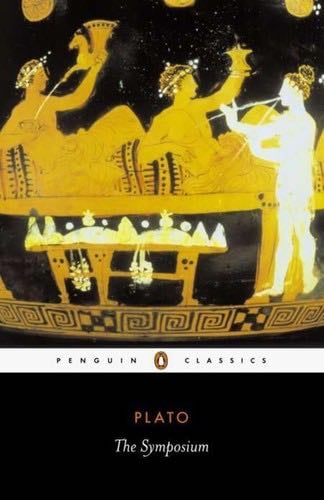
The Symposium
Plato
A fascinating discussion on sex, gender, and human instincts, as relevant today as ever<br/><br/>In the course of a lively drinking party, a group of Athenian intellectuals exchange views on eros, or desire. From their conversation emerges a series of subtle reflections on gender roles, sex in society and the sublimation of basic human instincts. The discussion culminates in a radical challenge to conventional views by Plato's mentor, Socrates, who advocates transcendence through spiritual love. The Symposium is a deft interweaving of different viewpoints and ideas about the nature of love—as a response to beauty, a cosmic force, a motive for social action and as a means of ethical education.<br/><br/>For more than seventy years, Penguin has been the leading publisher of classic literature in the English-speaking world. With more than 1,700 titles, Penguin Classics represents a global bookshelf of the best works throughout history and across genres and disciplines. Readers trust the series to provide authoritative texts enhanced by introductions and notes by distinguished scholars and contemporary authors, as well as up-to-date translations by award-winning translators.
What Is Existentialism?
Simone De Beauvoir
The groundbreaking writings on the philosophy of the individual by iconic feminist and social thinker, Simone de Beauvoir<br/><br/>How should we think and act in the world? These writings on the human condition by one of the twentieth century's great philosophers explore the absurdity of our notions of good and evil, and show instead how we make our own destiny simply by being.<br/><br/>Throughout history, some books have changed the world. They have transformed the way we see ourselves - and each other. They have inspired debate, dissent, war and revolution. They have enlightened, outraged, provoked and comforted. They have enriched lives--and upended them. Now Penguin brings you a new set of the acclaimed Great Ideas, a curated library of selections from the works of the great thinkers, pioneers, radicals and visionaries whose ideas shook civilization and helped make us who we are.
The Plague
Albert Camus
“Its relevance lashes you across the face.” —Stephen Metcalf, The Los Angeles Times • “A redemptive book, one that wills the reader to believe, even in a time of despair.” —Roger Lowenstein, The Washington Post A haunting tale of human resilience and hope in the face of unrelieved horror, Albert Camus' iconic novel about an epidemic ravaging the people of a North African coastal town is a classic of twentieth-century literature. The townspeople of Oran are in the grip of a deadly plague, which condemns its victims to a swift and horrifying death. Fear, isolation and claustrophobia follow as they are forced into quarantine. Each person responds in their own way to the lethal disease: some resign themselves to fate, some seek blame, and a few, like Dr. Rieux, resist the terror. An immediate triumph when it was published in 1947, The Plague is in part an allegory of France's suffering under the Nazi occupation, and a timeless story of bravery and determination against the precariousness of human existence.

Nausea
Jean Paul Sartre
The diary of Antoine Roquentin follows his thoughts as he gradually sinks into a metaphysical crisis of despair, in this the first novel by the leader of French Existentialism

Resurrección
Lev N. Tolstói
En la Rusia zarista, marcada por tremendas desigualdades sociales, una joven de humildísima extracción seducida en su día por el príncipe Nejliudov, señorito rico y ocioso, y luego arrojada a la prostitución, se enfrenta a un juicio por robo y asesinato. Entre los miembros del jurado se halla su antiguo seductor, quien, conmovido por las consecuencias de su pasado capricho, se propone redimirla. Marcada por la espiritualidad propia de la última etapa de Lev Tolstói (1828-1910), Resurrección (1899) no es sólo su última gran novela, sino también una de las más sugerentes e inolvidables. Traducción de Irene y Laura Andresco

Guerra y Paz
Liev N. Tolstói
Guerra y paz se publicó entre los años 1865 y 1869. A lo largo de sus centenares de páginas, Tolstói nos cuenta el relato épico de cinco familias rusas durante la invasión napoleónica. Obra monumental, que incluye a más de quinientos personajes históricos y de ficción, Guerra y paz alterna en su magnífica trama historias familiares con las vicisitudes del ejército napoleónico, la vida en la corte de Alejandro y las batallas de Austerlitz y Borodinó. Como ya advirtió Isaiah Berlin, «nadie ha superado nunca a Tolstói en la expresión del sabor específico, la calidad precisa de un sentimiento, la amplitud de su "oscilación". Nadie ha superado su manera de describir la estructura de una situación determinada en todo un período, pasajes ininterrumpidos de la vida de individuos, familias, comunidades, naciones enteras». Guerra y paz, un clásico de la literatura universal, se ha traducido varias veces al español pero la edición que presentamos aquí está basada en la única versión completa y autorizada por Tolstói, en una traducción magistral y totalmente fiable al español por Lydia Kúper.

Anna Karenina
Lev N. Tolstói
At its simplest, Anna Karenina is a love story. It is a portrait of a beautiful and intelligent woman whose passionate love for a handsome officer sweeps aside all other ties - to her marriage and to the network of relationships and moral values that bind the society around her. The love affair of Anna and Vronsky is played out alongside the developing romance of Kitty and Levin, and in the character of Levin, closely based on Tolstoy himself, the search for happiness takes on a deeper philosophical significance.<br/><br/>One of the greatest novels ever written, Anna Karenina combines penetrating psychological insight with an encyclopedic depiction of Russian life in the 1870s. The novel takes us from high society St Petersburg to the threshing fields on Levin's estate, with unforgettable scenes at a Moscow ballroom, the skating rink, a race course, a railway station. It creates an intricate labyrinth of connections that is profoundly satisfying, and deeply moving.<br/><br/>Rosamund Bartlett's translation conveys Tolstoy's precision of meaning and emotional accuracy in an English version that is highly readable and stylistically faithful. Like her acclaimed biography of Tolstoy, it is vivid, nuanced, and compelling.

Demian
Hermann Hesse

The Voice
Jaime Sabines

People and Meaning
Viktor Frankl
White Nights
Fyodor Dostoevsky
Discover the timeless elegance of "White Nights", Fyodor Dostoevsky's poignant exploration of solitude, dreams, and fleeting connections· This slender volume offers a profound glimpse into the essence of human loneliness and the ephemeral nature of our deepest desires·<br/><br/>In the ethereal twilight of St· Petersburg's famed white nights, a tale of unrequited love and unrealized dreams unfolds· Through the eyes of a solitary dreamer, we encounter the delicate soul of Nastenka, setting the stage for a narrative rich in emotional depth and psychological insight· The dialogues between these two souls—a mesmerizing blend of realism and poetic beauty—reveal the complexity of human emotions and the universal quest for companionship·<br/><br/>Embark on a journey through the captivating streets of St· Petersburg and into the heart of a narrative that weaves loneliness, love, and the fleeting moments that define our human experience· "White Nights" is not merely a book but a passage to the soul's most hidden corners, promising to move, inspire, and transform· Allow yourself to be ensnared by the beauty of Dostoevsky's prose and the universality of his themes· Discover why this novella continues to touch hearts and provoke thought, generation after generation·<br/><br/>"White Nights" delves into the poignant depths of loneliness and fleeting love, illuminating the human yearning for connection in the brief, luminous nights of St· Petersburg·<br/><br/>Translated by Constance Garnette.
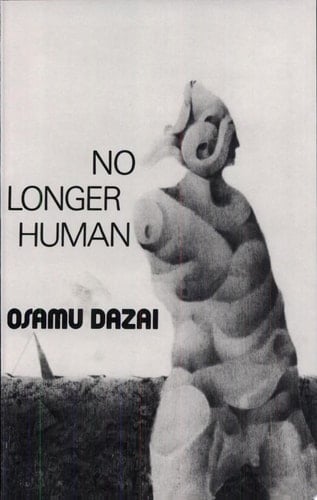
No longer Human
Osamu Dazai
<p> Mine has been a life of much shame. I can't even guess myself what it must be to live the life of a human being. </p><p>Portraying himself as a failure, the protagonist of Osamu Dazai's No Longer Human narrates a seemingly normal life even while he feels himself incapable of understanding human beings. His attempts to reconcile himself to the world around him begin in early childhood, continue through high school, where he becomes a "clown" to mask his alienation, and eventually lead to a failed suicide attempt as an adult. Without sentimentality, he records the casual cruelties of life and its fleeting moments of human connection and tenderness.</p><p>Still one of the ten bestselling books in Japan, No Longer Human is an important and unforgettable modern classic: "The struggle of the individual to fit into a normalizing society remains just as relevant today as it was at the time of writing." (The Japan Times)</p>
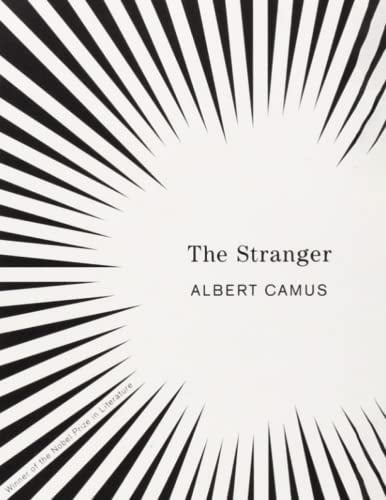
El Extranjero
Albert Camus
With the intrigue of a psychological thriller, The Stranger—Camus's masterpiece—gives us the story of an ordinary man unwittingly drawn into a senseless murder on an Algerian beach. With an Introduction by Peter Dunwoodie; translated by Matthew Ward.<br/><br/>Behind the subterfuge, Camus explores what he termed "the nakedness of man faced with the absurd" and describes the condition of reckless alienation and spiritual exhaustion that characterized so much of twentieth-century life.<br/><br/>“The Stranger is a strikingly modern text and Matthew Ward’s translation will enable readers to appreciate why Camus’s stoical anti-hero and devious narrator remains one of the key expressions of a postwar Western malaise, and one of the cleverest exponents of a literature of ambiguity.” –from the Introduction by Peter Dunwoodie<br/><br/>First published in 1946; now in translation by Matthew Ward.

Notes from Underground
Fyodor Dostoevsky
<b>Award-winning translators Richard Pevear and Larissa Volokhonsky give us a brilliantly faithful rendition of this classic novel, in all its tragedy and tormented comedy. In this second edition, they have updated their translation in honor of the 200th anniversary of Dostoevsky’s birth.</b> <br><br>One of the most remarkable characters in literature, the unnamed narrator of Dostoevsky's most revolutionary novel is a former official who has defiantly withdrawn into an underground existence. In full retreat from society, he scrawls a passionate, obsessive, self-contradictory narrative that serves as a devastating attack on social utopianism and an assertion of man’s essentially irrational nature.

The Trial and Death of Socrates
Plato, John M. Cooper
This third edition of <i>The Trial and Death of Socrates </i>presents G. M. A. Grube's distinguished translations, as revised by John Cooper for 'Plato, Complete Works'. A number of new or expanded footnotes are also included along with a Select Bibliography. John M. Cooper is Stuart Professor of Philosophy, Princeton University.

Crime and Punishment
Fyodor Dostoevsky
<b>Hailed by <i>Washington Post Book World</i> as “the best [translation] currently available" when it was first published, this second edition of <i>Crime and Punishment </i>has been updated in honor of the 200th anniversary of Dostoevsky’s birth. • <b>ONE OF <i>TIME MAGAZINE</i>'S 100 BEST MYSTERY AND THRILLER BOOKS OF ALL TIME</b></b><br><br>With the same suppleness, energy, and range of voices that won their translation of <i>The Brothers Karamazov</i> the PEN/Book-of-the-Month Club Prize, Richard Pevear and Larissa Volokhonsky offer a brilliant translation of <i>Crime and Punishment, </i>Dostoevsky's astounding pyschological thriller, newly revised for his bicentenniel. <br><br>In <i>Crime and Punishment</i>, when Raskolnikov, an impoverished student living in the St. Petersburg of the tsars, commits an act of murder and theft, he sets into motion a story that is almost unequalled in world literature for its excruciating suspense, its atmospheric vividness, and its depth of characterization and vision. Dostoevsky’s drama of sin, guilt, and redemption transforms the sordid story of an old woman’s murder into the nineteenth century’s profoundest and most compelling philosophical novel.
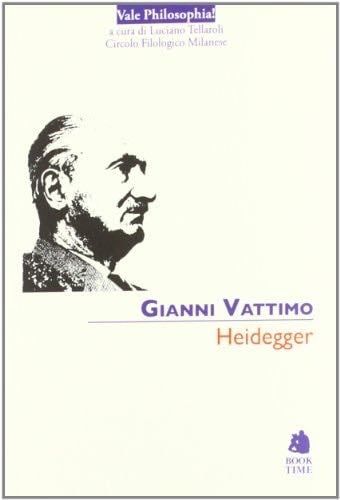
Heidegger
Gianni Vattimo
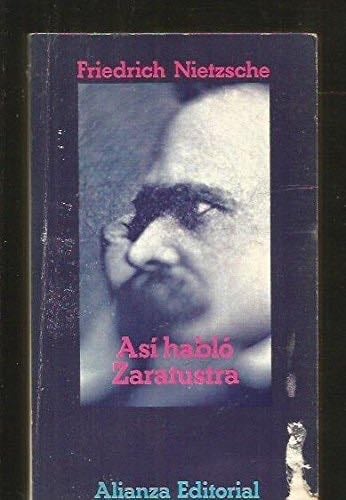
Así habló Zaratustra
Friedrich Nietzsche

Faith and Knowledge
Hegel
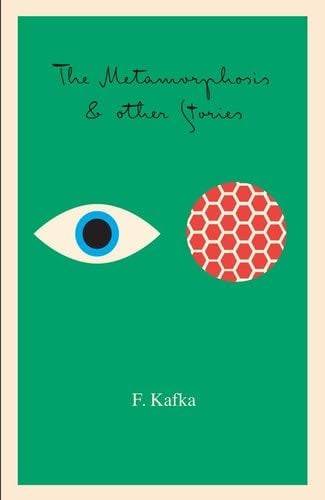
The Metamorphosis: And Other Stories
Franz Kafka
From one of the greatest writers of the twentieth century, the author of The Metamorphosis and The Trial: A collection that brings together the stories he allowed to be published during his lifetime, including his best-known tale of a man who wakes up transformed into an insect.<br/><br/>To Max Brod, his literary executor, Kafka wrote: “Of all my writings the only books that can stand are these.”<br/><br/>“Kafka’s survey of the insectile situation of young Jews in inner Bohemia can hardly be improved upon: ‘With their posterior legs they were still glued to their father’s Jewishness and with their wavering anterior legs they found no new ground.’ There is a sense in which Kafka’s Jewish question (‘What have I in common with Jews?’) has become everybody’s question, Jewish alienation the template for all our doubts. What is Muslimness? What is femaleness? What is Polishness? These days we all find our anterior legs flailing before us. We’re all insects, all Ungeziefer, now.” —Zadie Smith, bestselling author of White Teeth and On Beauty