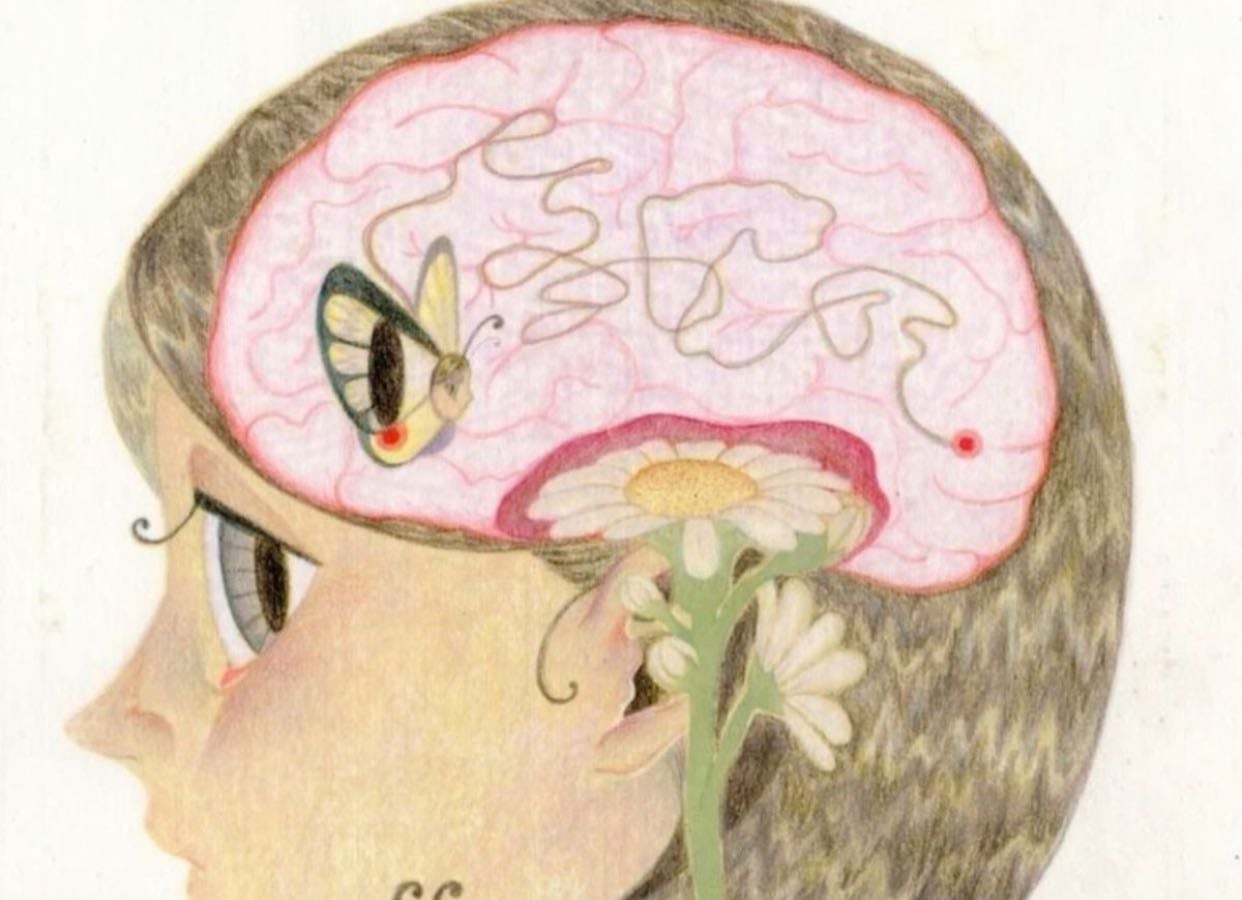
philosophy focused

consciousness is power
Items in this hypelist
general
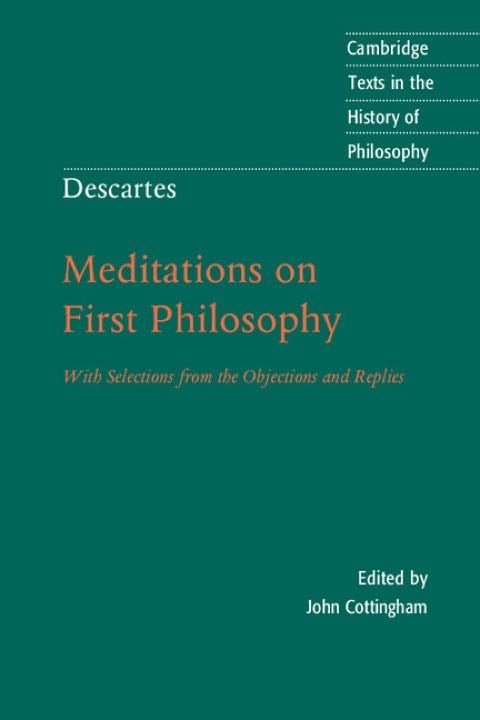
Meditations on First Philosophy
René Descartes · 19960418
The Meditations, one of the key texts of Western philosophy, is the most widely studied of all Descartes' writings. This authoritative translation by John Cottingham, taken from the much acclaimed three-volume Cambridge edition of the Philosophical Writings of Descartes, is based upon the best available texts and presents Descartes' central metaphysical writings in clear, readable modern English. As well as the complete text of the Meditations, the reader will find a thematic abridgement of the Objections and Replies (which were originally published with the Meditations) containing Descartes' replies to his critics. These extracts, specially selected for the present volume, indicate the main philosophical difficulties which occurred to Descartes' contemporaries and show how Descartes developed and clarified his arguments in response. This edition contains a new comprehensive introduction to Descartes' philosophy by John Cottingham and the classic introductory essay on the Meditations by Bernard Williams.

What Is Existentialism?
Simone de Beauvoir · 2020
'It is possible for man to snatch the world from the darkness of absurdity' How should we think and act in the world? These writings on the human condition by one of the twentieth century's great philosophers explore the absurdity of our notions of good and evil, and show instead how we make our own destiny simply by being. One of twenty new books in the bestselling Penguin Great Ideas series. This new selection showcases a diverse list of thinkers who have helped shape our world today, from anarchists to stoics, feminists to prophets, satirists to Zen Buddhists.
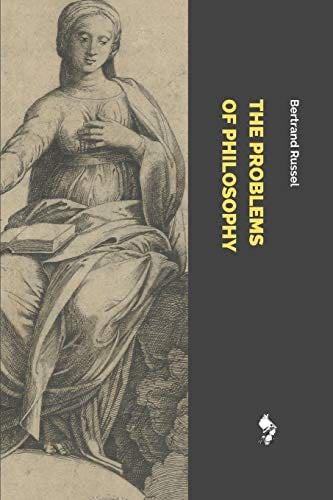
The Problems of Philosophy
Bertrand Russel · 2018
Complete and unabridged edition.<br/>The Problems of Philosophy is a 1912 book by Bertrand Russell, in which Russell attempts to create a brief and accessible guide to the problems of philosophy. Focusing on problems he believes will provoke positive and constructive discussion, Russell concentrates on knowledge rather than metaphysics: If it is uncertain that external objects exist, how can we then have knowledge of them but by probability. There is no reason to doubt the existence of external objects simply because of sense data.<br/>Source: Wikipedia.

The Consolations of Philosophy
Alain De Botton · 2001
From the internationally heralded author of How Proust Can Change Your Life comes a remarkable book that presents the wisdom of some of the greatest thinkers of the ages as advice for our day to day struggles.<br/><br/>"A fine introduction the world of philosophy." —Newsweek<br/><br/>Solace for the broken heart can be found in the words of Schopenhauer. The ancient Greek Epicurus has the wisest, and most affordable, solution to cash flow problems. A remedy for impotence lies in Montaigne. Seneca offers advice upon losing a job. And Nietzsche has shrewd counsel for everything from loneliness to illness. The Consolations of Philosophy is a book as accessibly erudite as it is useful and entertaining.
stoicism

Letters from a Stoic (Penguin Classics)
Lucius Annaeus Seneca · 1969
"It is philosophy that has the duty of protecting us...without it no one can lead a life free of fear or worry."<br/><br/>For several years of his turbulent life, Seneca was the guiding hand of the Roman Empire. His inspired reasoning derived mainly from the Stoic principles, which had originally been developed some centuries earlier in Athens. This selection of Seneca's letters shows him upholding the austere ethical ideals of Stoicism—the wisdom of the self-possessed person immune to overmastering emotions and life’s setbacks—while valuing friendship and the courage of ordinary men, and criticizing the harsh treatment of slaves and the cruelties in the gladiatorial arena. The humanity and wit revealed in Seneca’s interpretation of Stoicism is a moving and inspiring declaration of the dignity of the individual mind.<br/><br/>For more than seventy years, Penguin has been the leading publisher of classic literature in the English-speaking world. With more than 1,700 titles, Penguin Classics represents a global bookshelf of the best works throughout history and across genres and disciplines. Readers trust the series to provide authoritative texts enhanced by introductions and notes by distinguished scholars and contemporary authors, as well as up-to-date translations by award-winning translators.
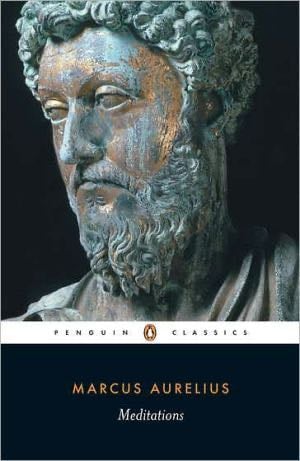
Meditations (Penguin Classics)
Marcus Aurelius · 2006
A clear and eloquent leading translation of the Roman emperor’s reflections of human life and death, timeless Stoic philosophy that inspires countless others including The Daily Stoic author Ryan Holiday to use philosophy as a tool for self-improvement and resilience to live a better life<br/><br/>Written in Greek by an intellectual Roman emperor without any intention of publication, the Meditations of Marcus Aurelius offer a wide range of fascinating spiritual reflections and exercises developed as the leader struggled to understand himself and make sense of the universe. Spanning from doubt and despair to conviction and exaltation, they cover such diverse topics as the question of virtue, human rationality, the nature of the gods and the values of leadership. But while the Meditations were composed to provide personal consolation, in developing his beliefs Marcus also created one of the greatest of all works of philosophy: a series of wise and practical aphorisms that have been consulted and admired by statesmen, thinkers and ordinary readers for almost two thousand years.<br/><br/>To provide a full understanding of Aurelius's seminal work, this edition includes explanatory notes, a general index, an index of quotations, an index of names, and an introduction by Diskin Clay putting the work in its biographical, historical, and literary context, a chronology of Marcus Aurelius's life and career.<br/><br/>Penguin Classics is the leading publisher of classic literature in the English-speaking world, representing a global bookshelf of the best works throughout history and across genres and disciplines. Readers trust the series to provide authoritative texts enhanced by introductions and notes by distinguished scholars and contemporary authors, as well as up-to-date translations by award-winning translators.
Of Human Freedom
Epictetus · 2010
In this personal and practical guide to moral self-improvement and living a good life, the second-century philosopher Epictetus tackles questions of freedom and imprisonment, stubbornness and fear, family, friendship and love, and leaves an intriguing document of daily life in the classical world. GREAT IDEAS. Throughout history, some books have changed the world. They have transformed the way we see ourselves - and each other. They have inspired debate, dissent, war and revolution. They have enlightened, outraged, provoked and comforted. They have enriched lives - and destroyed them. Now Penguin brings you the works of the great thinkers, pioneers, radicals and visionaries whose ideas shook civilization and helped make us who we are.
Discourses and Selected Writings (Penguin Classics)
Epictetus • 2008
A new translation of the influential teachings of the great Stoic philosopher<br/><br/>Despite being born into slavery, Greco-Roman philosopher Epictetus became one of the most influential thinkers of his time. Discourses and Selected Writings is a transcribed collection of informal lectures given by the philosopher around AD 108. A gateway into the life and mind of a great intellectual, it is also an important example of the usage of Koine or “common” Greek, an ancestor to Standard Modern Greek.
nihilism

A Short History of Decay
E. M. Cioran • 2012
In the fact of being born there is such an absence of necessity thatwhen you think about it a little more than usual you are left . . . with afoolish...
The Conspiracy against the Human Race: A Contrivance of Horror
Thomas Ligotti • 2018
In Thomas Ligotti's first nonfiction outing, an examination of the meaning (or meaninglessness) of life through an insightful, unsparing argument that proves the greatest horrors are not the products of our imagination but instead are found in reality.<br/><br/>"There is a signature motif discernible in both works of philosophical pessimism and supernatural horror. It may be stated thus: Behind the scenes of life lurks something pernicious that makes a nightmare of our world."<br/><br/>His fiction is known to be some of the most terrifying in the genre of supernatural horror, but Thomas Ligotti's first nonfiction book may be even scarier. Drawing on philosophy, literature, neuroscience, and other fields of study, Ligotti takes the penetrating lens of his imagination and turns it on his audience, causing them to grapple with the brutal reality that they are living a meaningless nightmare, and anyone who feels otherwise is simply acting out an optimistic fallacy. At once a guidebook to pessimistic thought and a relentless critique of humanity's employment of self-deception to cope with the pervasive suffering of their existence, The Conspiracy against the Human Race may just convince readers that there is more than a measure of truth in the despairing yet unexpectedly liberating negativity that is widely considered a hallmark of Ligotti's work.
On the Suffering of the World
Arthur Schopenhauer • 2020
On the Suffering of the World is a collection of the later aphoristic writings of Arthur Schopenhauer, known for their incisive, aphoristic style and dark, pessimistic view of human existence. Edited and with an introduction by Eugene Thacker, On the Suffering of the World comprises a core selection of Schopenhauer's later writings, gathered together for the first time in print. These texts, produced during the last decades of Schopenhauer's long life, reveal a unique kind of philosophy, expressed in a singular style. Eschewing the tradition of dry, totalizing, academic philosophy prevalent during the time, Schopenhauer's later writings mark a shift towards a philosophy of aphorisms, fragments, anecdotes and observations, written in a literary style that is by turns antagonistic, resigned, confessional, and filled with all the fragile contours of an intellectual memoir. Here Schopenhauer allows himself to pose challenging questions regarding the fate of the human species, the role of suffering in the world, and the rift between self and world that increasingly has come to define human existence, to this day. It is these writings of Schopenhauer that later generations of artists, poets, musicians, and philosophers would identify as exemplifying the pessimism of their era, and perhaps of our own as well. On the Suffering of the Worldis presented with an introduction that places Schopenhauer's thought in its intellectual context, while also connecting it to contemporary concerns over climate change, the anthropocene, and the spectre of human extinction. The book also includes a bibliography and chronology of Schopenhauer's life.
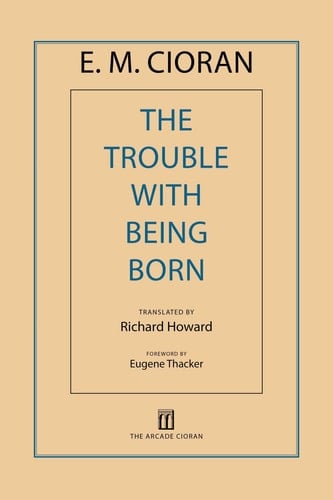
The Trouble with Being Born
E. M. Cioran • 2013
“A love of Cioran creates an urge to press his writing into someone’s hand, and is followed by an equal urge to pull it away as poison.”—The New Yorker<br/><br/>In this volume, which reaffirms the uncompromising brilliance of his mind, Cioran strips the human condition down to its most basic components, birth and death, suggesting that disaster lies not in the prospect of death but in the fact of birth, "that laughable accident." In the lucid, aphoristic style that characterizes his work, Cioran writes of time and death, God and religion, suicide and suffering, and the temptation to silence. Through sharp observation and patient contemplation, Cioran cuts to the heart of the human experience.<br/><br/>“In the company of Nietzsche and Kierkegaard."—Publishers Weekly<br/><br/>"No modern writer twists the knife with Cioran's dexterity. . . . His writing . . . is informed with the bitterness of genuine compassion."—Boston Phoenix
poetic
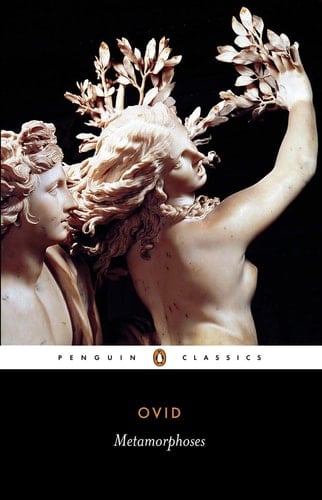
Metamorphoses (Penguin Classics)
Ovid • 2004
Ovid’s sensuous and witty poem, in an accessible translation by David Raeburn In Metamophoses, Ovid brings together a dazzling array of mythological tales, ingeniously linked by the idea of transformation—often as a result of love or lust—where men and women find themselves magically changed into new and sometimes extraordinary beings. Beginning with the creation of the world and ending with the deification of Augustus, Ovid interweaves many of the best-known myths and legends of ancient Greece and Rome, including Daedalus and Icarus, Pyramus and Thisbe, Pygmalion, Perseus and Andromeda, and the fall of Troy. Erudite but light-hearted, dramatic and yet playful, Metamorphoses has influenced writers and artists throughout the centuries from Shakespeare and Titian to Picasso and Ted Hughes. For more than seventy years, Penguin has been the leading publisher of classic literature in the English-speaking world. With more than 1,700 titles, Penguin Classics represents a global bookshelf of the best works throughout history and across genres and disciplines. Readers trust the series to provide authoritative texts enhanced by introductions and notes by distinguished scholars and contemporary authors, as well as up-to-date translations by award-winning translators.
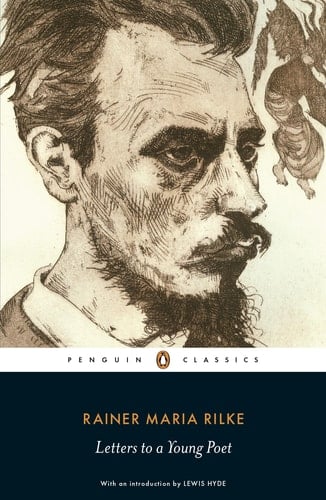
Letters to a Young Poet (Penguin Classics)
Rainer Maria Rilke • 2014
Rainer Maria Rilke’s powerfully touching letters to an aspiring young poet.<br/><br/>At the start of the twentieth century, Rainer Maria Rilke wrote a series of letters to a young officer cadet, advising him on writing, love, sex, suffering, and the nature of advice itself. These profound and lyrical letters have since become hugely influential for generations of writers and artists of all kinds, including Lady Gaga and Patti Smith. With honesty, elegance, and a deep understanding of the loneliness that often comes with being an artist, Rilke’s letters are an endless source of inspiration and comfort. Lewis Hyde’s new introduction explores the context in which these letters were written and how the author embraced his isolation as a creative force. This edition also includes Rilke’s later work The Letter from the Young Worker.<br/><br/>For more than 80 years, Penguin has been the leading publisher of classic literature in the English-speaking world. With more than 1,700 titles, Penguin Classics represents a global bookshelf of the best works throughout history and across genres and disciplines. Readers trust the series to provide authoritative texts enhanced by introductions and notes by distinguished scholars and contemporary authors, as well as up-to-date translations by award-winning translators.
plato/socrates

The Trial and Death of Socrates
Plato, John M. Cooper
This third edition of <i>The Trial and Death of Socrates </i>presents G. M. A. Grube's distinguished translations, as revised by John Cooper for 'Plato, Complete Works'. A number of new or expanded footnotes are also included along with a Select Bibliography. John M. Cooper is Stuart Professor of Philosophy, Princeton University.

Plato: Five Dialogues: Euthyphro, Apology, Crito, Meno, Phaedo
Plato · 2002
The second edition of Five Dialogues presents G. M. A. Grube's distinguished translations, as revised by John Cooper for Plato, Complete Works. A number of new or expanded footnotes are also included along with an updated bibliography.
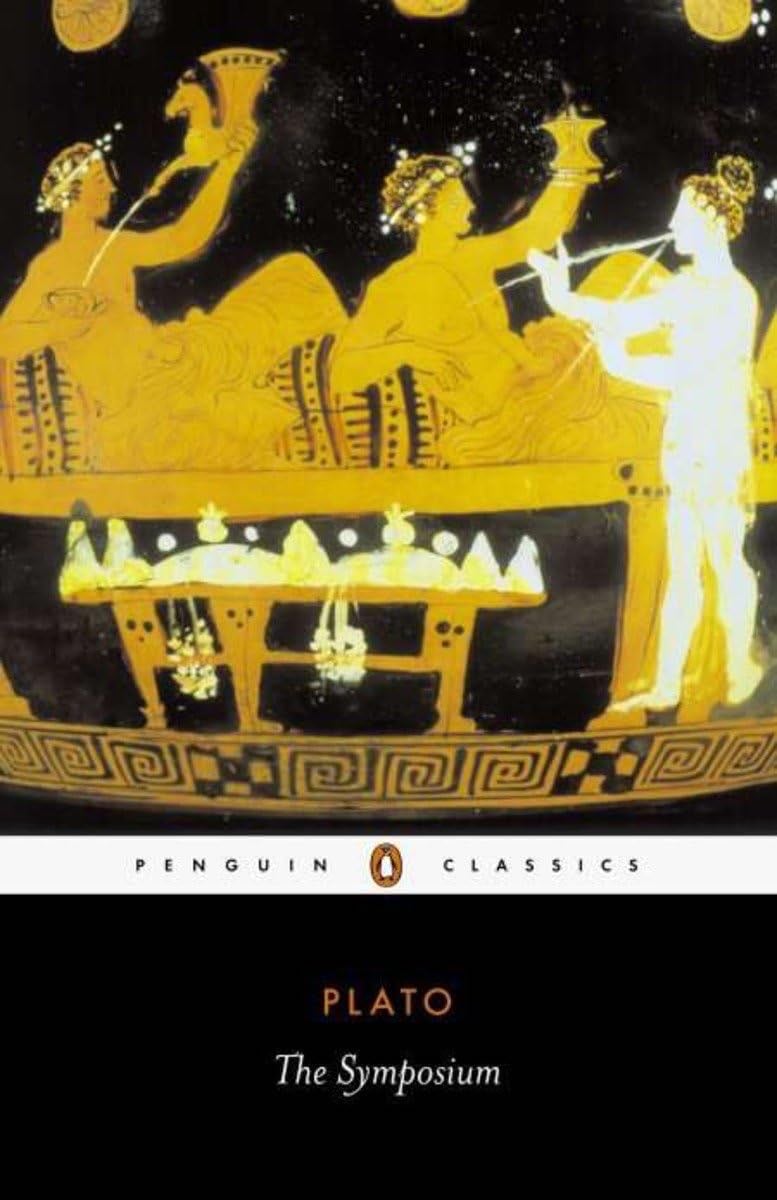
The Symposium (Penguin Classics)
Plato · 2003
A fascinating discussion on sex, gender, and human instincts, as relevant today as ever<br/><br/>In the course of a lively drinking party, a group of Athenian intellectuals exchange views on eros, or desire. From their conversation emerges a series of subtle reflections on gender roles, sex in society and the sublimation of basic human instincts. The discussion culminates in a radical challenge to conventional views by Plato's mentor, Socrates, who advocates transcendence through spiritual love. The Symposium is a deft interweaving of different viewpoints and ideas about the nature of love—as a response to beauty, a cosmic force, a motive for social action and as a means of ethical education.<br/><br/>For more than seventy years, Penguin has been the leading publisher of classic literature in the English-speaking world. With more than 1,700 titles, Penguin Classics represents a global bookshelf of the best works throughout history and across genres and disciplines. Readers trust the series to provide authoritative texts enhanced by introductions and notes by distinguished scholars and contemporary authors, as well as up-to-date translations by award-winning translators.
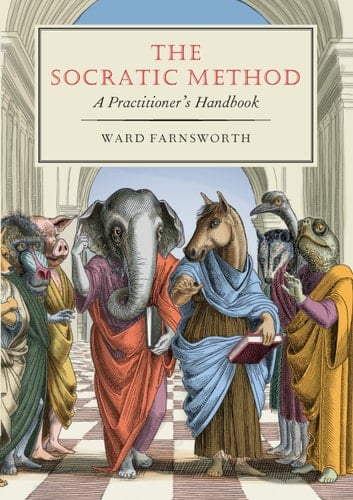
The Socratic Method: A Practitioner’s Handbook
Ward Farnsworth • 2021
A thinking person’s guide to a better life. Ward Farnsworth explains what the Socratic method is, how it works, and why it matters more than ever in our time. Easy to grasp yet challenging to master, the method will change the way you think about life’s big questions. “A wonderful book.”―Rebecca Goldstein, author of Plato at the Googleplex.<br/><br/>About 2,500 years ago, Plato wrote a set of dialogues that depict Socrates in conversation. The way Socrates asks questions, and the reasons why, amount to a whole way of thinking. This is the Socratic method―one of humanity’s great achievements. More than a technique, the method is an ethic of patience, inquiry, humility, and doubt. It is an aid to better thinking, and a remedy for bad habits of mind, whether in law, politics, the classroom, or tackling life’s big questions at the kitchen table.<br/><br/>Drawing on hundreds of quotations, this book explains what the Socratic method is and how to use it. Chapters include Socratic Ethics, Ignorance, Testing Principles, and Socrates and the Stoics. Socratic philosophy is still startling after all these years because it is an approach to asking hard questions and chasing after them. It is a route to wisdom and a way of thinking about wisdom. With Farnsworth as your guide, the ideas of Socrates are easier to understand than ever and accessible to anyone.<br/><br/>As Farnsworth achieved with The Practicing Stoic and the Farnsworth’s Classical English series, ideas of old are made new and vital again. This book is for those coming to philosophy the way Socrates did―as the everyday activity of making sense out of life and how to live it―and for anyone who wants to know what he said about doing that better.

Plato: The Republic (Penguin Books for Philosophy)
Plato • 1955
Plato's "Republic" is widely acknowledged as the cornerstone of Western philosophy. Presented in the form of a dialogue between Socrates and three different interlocutors, it is an enquiry into the notion of a perfect community and the ideal individual within it. During the conversation other questions are raised: what is goodness; what is reality; what is knowledge? "The Republic" also addresses the purpose of education and the role of both women and men as 'guardians' of the people. With remarkable lucidity and deft use of allegory, Plato arrives at a depiction of a state bound by harmony and ruled by 'philosopher kings'.
The Apology of Socrates
Plato Πλάτων • 2019
kafka

Letters To Milena
Franz Kafka's letters to his one-time muse, Milena Jesenska - an intimate window into the desires and hopes of the twentieth-century's most prophetic and important writer Kafka first made the acquaintance of Milena Jesenska in 1920 when she was translating his early short prose into Czech, and their relationship quickly developed into a deep attachment. Such was his feeling for her that Kafka showed her his diaries and, in doing so, laid bare his heart and his conscience. While at times Milena's 'genius for living' gave Kafka new life, it ultimately exhausted him, and their relationship was to last little over two years. In 1924 Kafka died in a sanatorium near Vienna, and Milena died in 1944 at the hands of the Nazis, leaving these letters as a moving record of their relationship.
Metamorphosis
Franz Kafka • 2008
A brilliant new translation of Kafka’s best-known work, published for the 125th anniversary of his birth<br/><br/>This collection of new translations brings together the small proportion of Kafka’s works that he thought worthy of publication. It includes Metamorphosis, his most famous work, an exploration of horrific transformation and alienation; Meditation, a collection of his earlier studies; The Judgement, written in a single night of frenzied creativity; The Stoker, the first chapter of a novel set in America and a fascinating occasional piece, The Aeroplanes at Brescia, Kafka’s eyewitness account of an air display in 1909. Together, these stories reveal the breadth of Kafka’s literary vision and the extraordinary imaginative depth of his thought.
The Trial (Franz Kafka)
Franz Kafka • 2014
The TrialFranz KafkaThe Trial, original German title: Der Process, is a novel written by Franz Kafka in 1914 and 1915 but not published until 1925. One of Kafka's best-known works, it tells the story of a man arrested and prosecuted by a remote, inaccessible authority, with the nature of his crime revealed to neither him nor the reader.Like Kafka's other novels, The Trial was never completed, although it does include a chapter which brings the story to an end. Because of this, there are some inconsistencies and discontinuities in narration within the novel, such as disparities in timing.After Kafka's death in 1924 his friend and literary executor Max Brod edited the text for publication by Verlag Die Schmiede. The original manuscript is held at the Museum of Modern Literature, Marbach am Neckar, Germany. In 1999, the book was listed in Le Monde's 100 Books of the Century and as No. 2 of the Best German Novels of the Twentieth Century.
camus
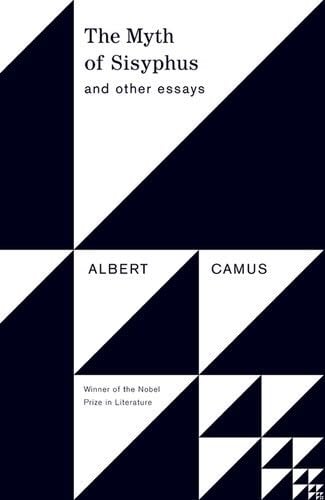
The Myth of Sisyphus And Other Essays
Albert Camus · 2012
One of the most influential works of this century, The Myth of Sisyphus and Other Essays is a crucial exposition of existentialist thought. Influenced by works such as Don Juan and the novels of Kafka, these essays begin with a meditation on suicide; the question of living or not living in a universe devoid of order or meaning. With lyric eloquence, Albert Camus brilliantly posits a way out of despair, reaffirming the value of personal existence, and the possibility of life lived with dignity and authenticity.
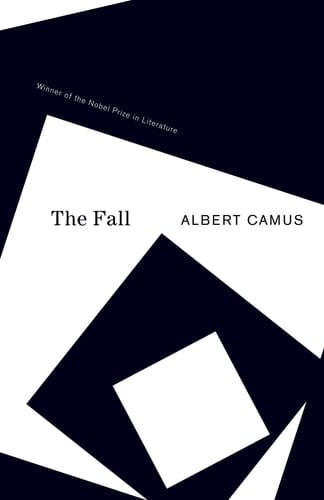
The Fall
Albert Camus • 1991
NOBEL PRIZE-WINNING AUTHOR • One of the most widely read novels of all time—from one of the best-known writers of all time—about a lawyer from Paris who brilliantly illuminates the human condition.<br/><br/>Elegantly styled, Camus' profoundly disturbing novel of a Parisian lawyer's confessions is a searing study of modern amorality.
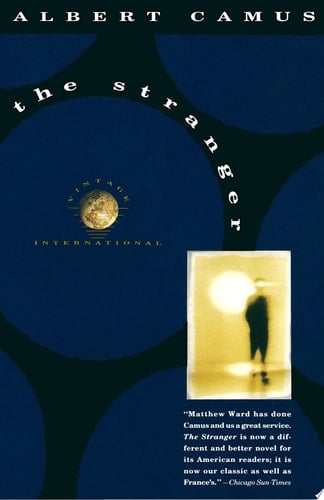
The Stranger
Albert Camus • 1989
With the intrigue of a psychological thriller, The Stranger—Camus's masterpiece—gives us the story of an ordinary man unwittingly drawn into a senseless murder on an Algerian beach. With an Introduction by Peter Dunwoodie; translated by Matthew Ward.<br/><br/>Behind the subterfuge, Camus explores what he termed "the nakedness of man faced with the absurd" and describes the condition of reckless alienation and spiritual exhaustion that characterized so much of twentieth-century life.<br/><br/>“The Stranger is a strikingly modern text and Matthew Ward’s translation will enable readers to appreciate why Camus’s stoical anti-hero and devious narrator remains one of the key expressions of a postwar Western malaise, and one of the cleverest exponents of a literature of ambiguity.” —from the Introduction by Peter Dunwoodie<br/><br/>First published in 1946; now in translation by Matthew Ward.
dostoyevsky
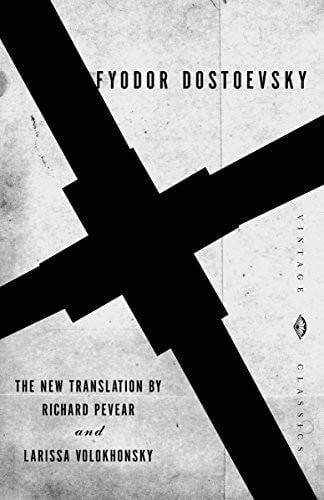
The Idiot (Vintage Classics)
Fyodor Dostoevsky · 2003
<p>Richard Pevear and Larissa Volokhonsky’s masterful translation of <b>The Idiot</b> is destined to stand with their versions of <b>Crime and Punishment, The Brothers Karamazov</b><i>, </i>and <b>Demons</b> as the definitive Dostoevsky in English.<br><br>After his great portrayal of a guilty man in <b>Crime and Punishment</b><i>,</i> Dostoevsky set out in <b>The Idiot</b> to portray a man of pure innocence. The twenty-six-year-old Prince Myshkin, following a stay of several years in a Swiss sanatorium, returns to Russia to collect an inheritance and “be among people.” Even before he reaches home he meets the dark Rogozhin, a rich merchant’s son whose obsession with the beautiful Nastasya Filippovna eventually draws all three of them into a tragic denouement. In Petersburg the prince finds himself a stranger in a society obsessed with money, power, and manipulation. Scandal escalates to murder as Dostoevsky traces the surprising effect of this “positively beautiful man” on the people around him, leading to a final scene that is one of the most powerful in all of world literature.</p>
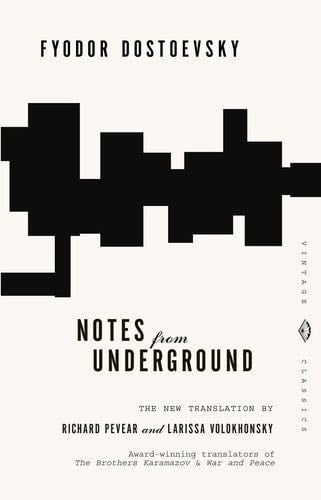
Notes from Underground (Vintage Classics)
Fyodor Dostoevsky · 1994
<b>Award-winning translators Richard Pevear and Larissa Volokhonsky give us a brilliantly faithful rendition of this classic novel, in all its tragedy and tormented comedy. In this second edition, they have updated their translation in honor of the 200th anniversary of Dostoevsky’s birth.</b> <br><br>One of the most remarkable characters in literature, the unnamed narrator of Dostoevsky's most revolutionary novel is a former official who has defiantly withdrawn into an underground existence. In full retreat from society, he scrawls a passionate, obsessive, self-contradictory narrative that serves as a devastating attack on social utopianism and an assertion of man’s essentially irrational nature.
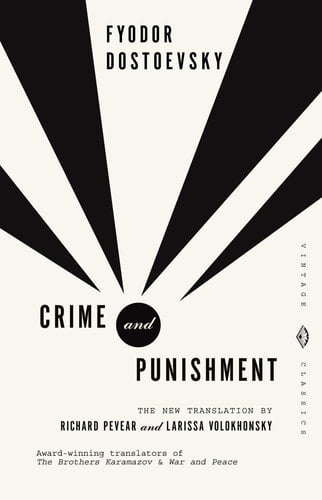
Crime and Punishment (Vintage Classics)
Fyodor Dostoevsky • 1993
<b>Hailed by <i>Washington Post Book World</i> as “the best [translation] currently available" when it was first published, this second edition of <i>Crime and Punishment </i>has been updated in honor of the 200th anniversary of Dostoevsky’s birth. • <b>ONE OF <i>TIME MAGAZINE</i>'S 100 BEST MYSTERY AND THRILLER BOOKS OF ALL TIME</b></b><br><br>With the same suppleness, energy, and range of voices that won their translation of <i>The Brothers Karamazov</i> the PEN/Book-of-the-Month Club Prize, Richard Pevear and Larissa Volokhonsky offer a brilliant translation of <i>Crime and Punishment, </i>Dostoevsky's astounding pyschological thriller, newly revised for his bicentenniel. <br><br>In <i>Crime and Punishment</i>, when Raskolnikov, an impoverished student living in the St. Petersburg of the tsars, commits an act of murder and theft, he sets into motion a story that is almost unequalled in world literature for its excruciating suspense, its atmospheric vividness, and its depth of characterization and vision. Dostoevsky’s drama of sin, guilt, and redemption transforms the sordid story of an old woman’s murder into the nineteenth century’s profoundest and most compelling philosophical novel.

Demons
Fyodor Dostoyevsky • 2018
Demons Is An Anti-nihilistic Novel By Fyodor Dostoyevsky. It Is The Third Of The Four Great Novels Written By Dostoyevsky After His Return From Siberian Exile, The Others Being Crime And Punishment, The Idiot And The Brothers Karamazov. Demons Is A Social And Political Satire, A Psychological Drama, And Large Scale Tragedy.
The Brothers Karamazov: A Novel in Four Parts and an Epilogue
Fyodor Dostoyevsky • 2003
Fyodor Dostoyevsky's powerful meditation on faith, meaning and morality, The Brothers Karamazov is translated with an introduction and notes by David McDuff in Penguin Classics.<br/><br/>When brutal landowner Fyodor Karamazov is murdered, the lives of his sons are changed irrevocably: Mitya, the sensualist, whose bitter rivalry with his father immediately places him under suspicion for parricide; Ivan, the intellectual, whose mental tortures drive him to breakdown; the spiritual Alyosha, who tries to heal the family's rifts; and the shadowy figure of their bastard half-brother Smerdyakov. As the ensuing investigation and trial reveal the true identity of the murderer, Dostoyevsky's dark masterpiece evokes a world where the lines between innocence and corruption, good and evil, blur and everyone's faith in humanity is tested.<br/><br/>This powerful translation of The Brothers Karamazov features and introduction highlighting Dostoyevsky's recurrent themes of guilt and salvation, with a new chronology and further reading.<br/><br/>“There is no writer who better demonstrates the contradictions and fluctuations of the creative mind than Dostoyevsky, and nowhere more astonishingly than in The Brothers Karamazov.”—Joyce Carol Oates<br/><br/>“Dostoyevsky was the only psychologist from whom I had anything to learn: he belongs to the happiest windfalls of my life.”—Friedrich Nietzsche<br/><br/>“The most magnificent novel ever written.”—Sigmund Freud

The Dream of a Ridiculous Man
Fyodor Dostoevsky • 2018
This volume contains Fyodor Dostoyevsky's 1877 short story "The Dream of a Ridiculous Man". It begins with a man walking St. Petersburg's streets while musing upon how ridiculous his life is, as well as its distinct lack of meaning or purpose. This train of thought leads him to the idea of suicide, which he resolves to commit using a previously-acquired gun. However, a chance encounter with a distressed little girl in the street derails his drastic plans. Fyodor Mikhailovich Dostoevsky (1821 – 1881) was a Russian novelist, essayist, short story writer, journalist, and philosopher. His literature examines human psychology during the turbulent social, spiritual and political atmosphere of 19th-century Russia, and he is considered one of the greatest psychologists in world literature. A prolific writer, Dostoevsky produced 11 novels, three novellas, 17 short stories and numerous other works. Many vintage books such as this are increasingly scarce and expensive. Other notable works by this author include: “Crime and Punishment” (1866), “Notes from the Underground” (1864), and “The Idiot” (1869). We are republishing this volume now in an affordable, modern, high-quality edition complete with a specially-commissioned new biography of the author.
lispector
The Passion According to G.H.
Clarice Lispector • 2012
Lispector’s most shocking novel. The Passion According to G.H., Clarice Lispector’s mystical novel of 1964, concerns a well-to-do Rio sculptress, G.H., who enters her maid’s room, sees a cockroach crawling out of the wardrobe, and, panicking, slams the door—crushing the cockroach—and then watches it die. At the end of the novel, at the height of a spiritual crisis, comes the most famous and most genuinely shocking scene in Brazilian literature… Lispector wrote that of all her works this novel was the one that “best corresponded to her demands as a writer.”
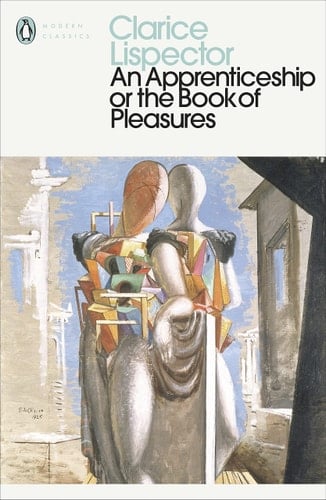
An Apprenticeship or The Book of Pleasures: Clarice Lispector (Penguin Modern Classics)
Clarice Lispector • 2021
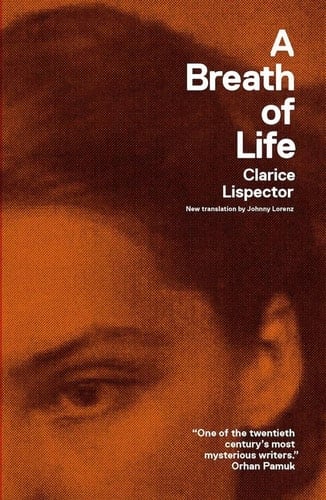
A Breath of Life (New Directions Paperbook)
Clarice Lispector • 2012
A mystical dialogue between a male author and his creation, this posthumous work has never before been translated, and is a book of particular beauty and strangeness.<br/>A mystical dialogue between a male author (a thinly disguised Clarice Lispector) and his/her creation, a woman named Angela, this posthumous work has never before been translated. Lispector did not even live to see it published.<br/>At her death, a mountain of fragments remained to be “structured” by Olga Borelli. These fragments form a dialogue between a god-like author who infuses the breath of life into his creation: the speaking, breathing, dying creation herself, Angela Pralini. The work’s almost occult appeal arises from the perception that if Angela dies, Clarice will have to die as well. And she did.

Agua Viva (Penguin Modern Classics)
Clarice Lispector • 2022
In Água Viva Clarice Lispector aims to 'capture the present'. Her direct, confessional and unfiltered meditations on everything from life and time to perfume and sleep are strange and hypnotic in their emotional power and have been a huge influence on many artists and writers, including one Brazilian musician who read it one hundred and eleven times. Despite its apparent spontaneity, this is a masterly work of art, which rearranges language and plays in the gaps between reality and fiction.
Near to the Wild Heart
Clarice Lispector • 2012
This new translation of Clarice Lispector's sensational first book tells the story of a middle class woman's life from childhood through an unhappy marriage and its dissolution to transcendence. Near to the Wild Heart, published in Rio de Janeiro in 1943, introduced Brazil to what one writer called “Hurricane Clarice”: a twenty-three-year-old girl who wrote her first book in a tiny rented room and then baptized it with a title taken from Joyce: “He was alone, unheeded, near to the wild heart of life.” The book was an unprecedented sensation — the discovery of a genius. Narrative epiphanies and interior monologue frame the life of Joana, from her middle-class childhood through her unhappy marriage and its dissolution to transcendence, when she proclaims: “I shall arise as strong and comely as a young colt.”
sartre

Existentialism Is a Humanism
Jean-Paul Sartre · 2007
<DIV><B>A new translation of two seminal works of existentialism</B><BR /><BR /> It was to correct common misconceptions about his thought that Jean-Paul Sartre, the most dominent European intellectual of the post-World War II decades, accepted an invitation to speak on October 29, 1945, at the Club Maintenant in Paris. The unstated objective of his lecture (“Existentialism Is a Humanism”) was to expound his philosophy as a form of “existentialism,” a term much bandied about at the time. Sartre asserted that existentialism was essentially a doctrine for philosophers, though, ironically, he was about to make it accessible to a general audience. The published text of his lecture quickly became one of the bibles of existentialism and made Sartre an international celebrity.<BR /><BR /> The idea of freedom occupies the center of Sartre’s doctrine. Man, born into an empty, godless universe, is nothing to begin with. He creates his essence—his self, his being—through the choices he freely makes (“existence precedes essence”). Were it not for the contingency of his death, he would never end. Choosing to be this or that is to affirm the value of what we choose. In choosing, therefore, we commit not only ourselves but all of mankind. This book presents a new English translation of Sartre’s 1945 lecture and his analysis of Camus’s <I>The Stranger</I>, along with a discussion of these works by acclaimed Sartre biographer Annie Cohen-Solal. This edition is a translation of the 1996 French edition, which includes Arlette Elkaïm-Sartre’s introduction and a Q&A with Sartre about his lecture.</DIV>
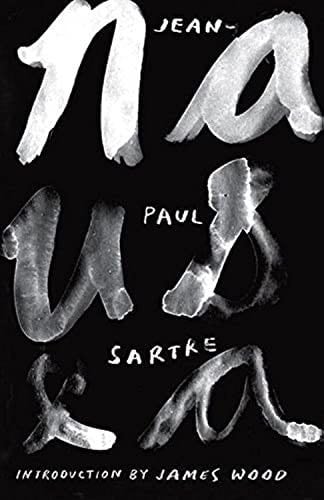
Nausea (New Directions Paperbook)
Jean-Paul Sartre · 2013
Sartre's greatest novel ― and existentialism's key text ― now introduced by James Wood.<br/>Nausea is the story of Antoine Roquentin, a French writer who is horrified at his own existence. In impressionistic, diary form he ruthlessly catalogs his every feeling and sensation. His thoughts culminate in a pervasive, overpowering feeling of nausea which “spreads at the bottom of the viscous puddle, at the bottom of our time ― the time of purple suspenders and broken chair seats; it is made of wide, soft instants, spreading at the edge, like an oil stain.”<br/>Winner of the 1964 Nobel Prize in Literature (though he declined to accept it), Jean-Paul Sartre ― philosopher, critic, novelist, and dramatist ― holds a position of singular eminence in the world of French letters. La Nausée, his first and best novel, is a landmark in Existential fiction and a key work of the twentieth century.
beauvior
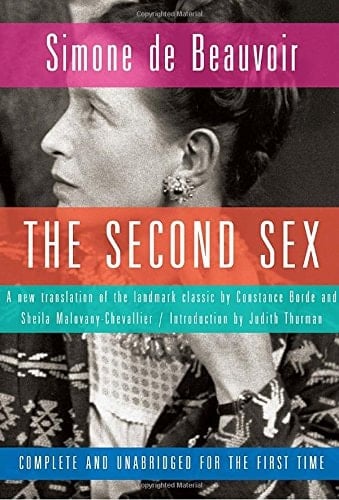
The Second Sex
Simone de Beauvoir • 2010
Newly translated and unabridged in English for the first time, and brilliantly introduced by Judith Thurman, Simone de Beauvoir’s masterpiece weaves together history, philosophy, economics, biology, and a host of other disciplines to analyze the Western notion of “woman” and to explore the power of sexuality.<br/><br/>Sixty years after its initial publication, The Second Sex is still as eye-opening and pertinent as ever. This triumphant and genuinely revolutionary book began as an exceptional woman’s attempt to find out who and what she was. Drawing on extensive interviews with women of every age and station of life, masterfully synthesizing research about women’s bodies and psyches as well as their historic and economic roles, The Second Sex is an encyclopedic and cogently argued document about inequality and enforced “otherness.”<br/><br/>This long-awaited new translation pays particular attention to the existentialist terms and French nuances that may have been misconstrued in the first English edition; restores Beauvoir’s phrasing, rhythms, and tone; and reinstates significant portions of the “Myths” and “History” chapters that were originally cut due to length, including accounts of more than seventy female figures.<br/><br/>A vital and life-changing work that has dramatically revised the way women talk and think about themselves, Beauvoir’s magisterial treatise continues to provoke and inspire.
Memoirs of a Dutiful Daughter
Simone de Beauvoir • 2016
“A book that will leave no one indifferent, and no one affected in quite the same way.” —New York Times A superb autobiography by one of the great literary figures of the twentieth century Simone de Beauvoir's Memoirs of a Dutiful Daughter offers an intimate picture of growing up in a bourgeois French family, rebelling as an adolescent against the conventional expectations of her class, and striking out on her own with an intellectual and existential ambition exceedingly rare in a young woman in the 1920s. Beauvoir vividly evokes her friendships, love interests, mentors, and the early days of the most important relationship of her life, with fellow student Jean-Paul Sartre, against the backdrop of a turbulent political time.
The Ethics of Ambiguity
Simone de Beauvoir • 2018
From the groundbreaking author of The Second Sex comes a radical argument for ethical responsibility and freedom. In this classic introduction to existentialist thought, French philosopher Simone de Beauvoir’s The Ethics of Ambiguity simultaneously pays homage to and grapples with her French contemporaries, philosophers Jean-Paul Sartre and Maurice Merleau-Ponty, by arguing that the freedoms in existentialism carry with them certain ethical responsibilities. De Beauvoir outlines a series of “ways of being” (the adventurer, the passionate person, the lover, the artist, and the intellectual), each of which overcomes the former’s deficiencies, and therefore can live up to the responsibilities of freedom. Ultimately, de Beauvoir argues that in order to achieve true freedom, one must battle against the choices and activities of those who suppress it. The Ethics of Ambiguity is the book that launched Simone de Beauvoir’s feminist and existential philosophy. It remains a concise yet thorough examination of existence and what it means to be human.
nietzche

Aphorisms on Love and Hate
Friedrich Nietzsche • 2015
'We must learn to love, learn to be kind, and this from our earliest youth ... Likewise, hatred must be learned and nurtured, if one wishes to become a proficient hater' This volume contains a selection of Nietzsche's brilliant and challenging aphorisms, examining the pleasures of revenge, the falsity of pity, and the incompatibility of marriage with the philosophical life. Introducing Little Black Classics: 80 books for Penguin's 80th birthday. Little Black Classics celebrate the huge range and diversity of Penguin Classics, with books from around the world and across many centuries. They take us from a balloon ride over Victorian London to a garden of blossom in Japan, from Tierra del Fuego to 16th-century California and the Russian steppe. Here are stories lyrical and savage; poems epic and intimate; essays satirical and inspirational; and ideas that have shaped the lives of millions. Friedrich Nietzsche (1844-1900). Nietzsche's works available in Penguin Classics are A Nietzsche Reader, Beyond Good and Evil, Ecce Homo, Human, All Too Human, On the Genealogy of Morals, The Birth of Tragedy, The Portable Nietzsche, Thus Spoke Zarathustra, Twilight of Idols and Anti-Christ.
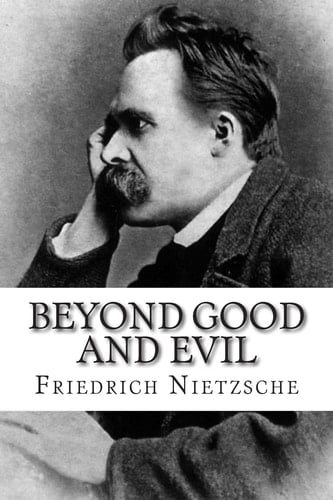
Beyond Good and Evil
Friedrich Nietzsche • 2018
Friedrich Nietzsche''s exploration of morality, culture, and philosophy, challenging traditional notions of good and evil.
others
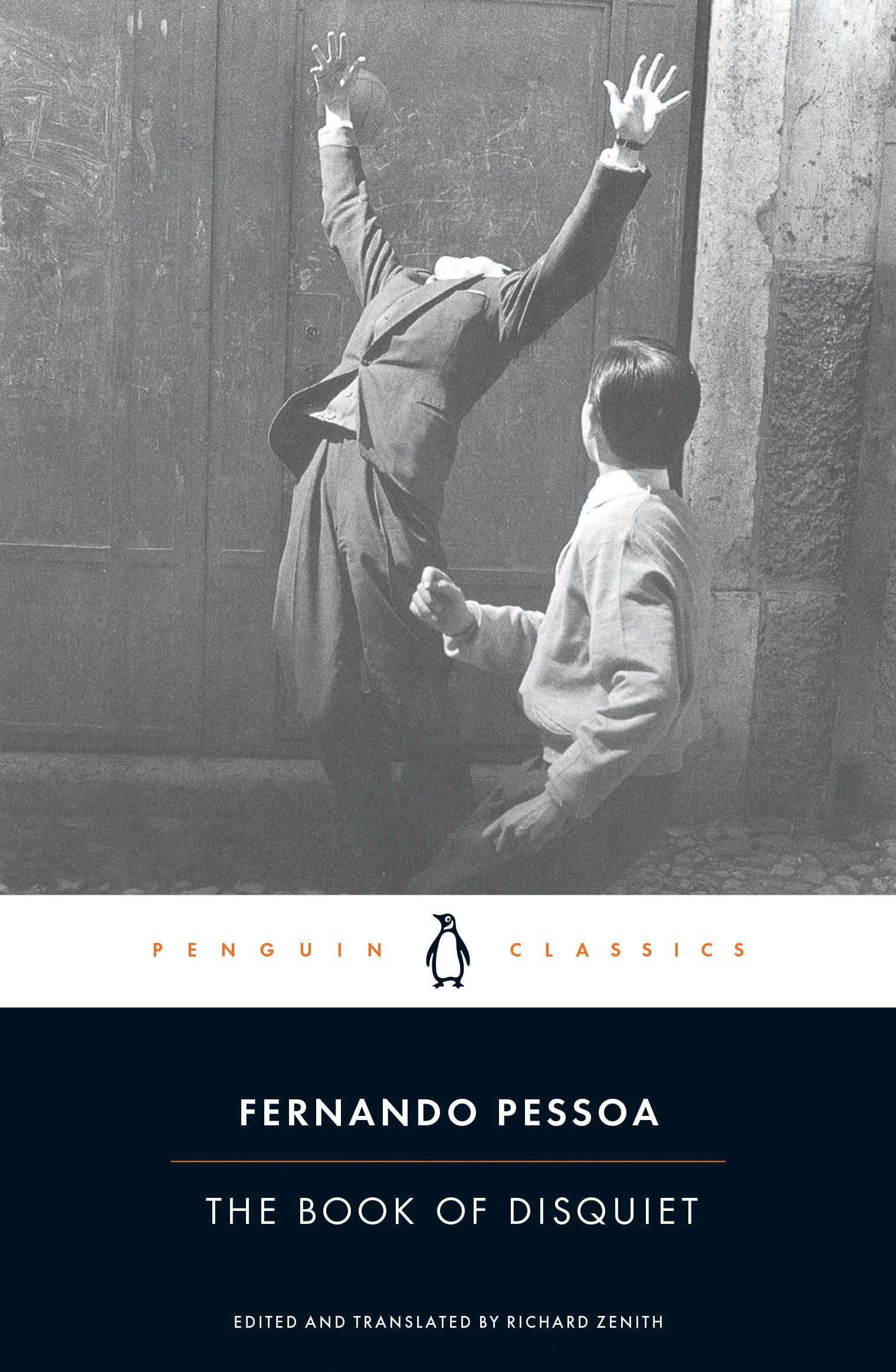
The Book of Disquiet
Fernando Pessoa · 2002
The prizewinning, complete and unabridged translation—“the best English-language version we are likely to see for a long time, if ever” (The Guardian)—of a work of unclassifiable genius: the crowning achievement of Portugal’s modern master<br/><br/>Edited, Translated, and with an Introduction by Richard Zenith, the author of the Pulitzer Prize finalist Pessoa: A Biography<br/><br/>Winner of the Calouste Gulbenkian Translation Prize for Portuguese Translation<br/><br/>A Penguin Classic<br/><br/>Fernando Pessoa was many writers in one. He attributed his prolific writings to a wide range of alternate selves, each of which had a distinct biography, ideology, and horoscope. When he died in 1935, Pessoa left behind a trunk filled with unfinished and unpublished writings, among which were the remarkable pages that make up his posthumous masterpiece, The Book of Disquiet, an astonishing work that, in George Steiner's words, "gives to Lisbon the haunting spell of Joyce's Dublin or Kafka's Prague."<br/><br/>Published for the first time some fifty years after his death, this unique collection of short, aphoristic paragraphs comprises the "autobiography" of Bernardo Soares, one of Pessoa's alternate selves. Part intimate diary, part prose poetry, part descriptive narrative, captivatingly translated by Richard Zenith, The Book of Disquiet is one of the greatest works of the twentieth century.<br/><br/>“Pessoa is a genius.” —André Aciman
Discourse on Method and Meditations
René Descartes • 1968
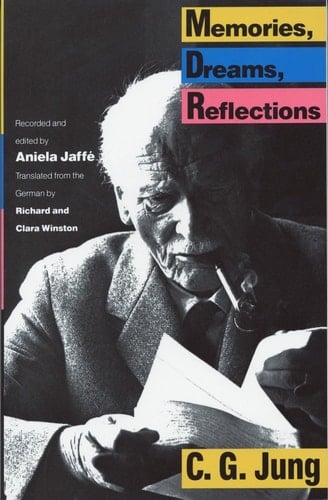
Memories, Dreams, Reflections
Carl G. Jung • 1989
An eye-opening biography of one of the most influential psychiatrists of the modern age, drawing from his lectures, conversations, and own writings.<br/><br/>"An important, firsthand document for readers who wish to understand this seminal writer and thinker." —Booklist<br/><br/>In the spring of 1957, when he was eighty-one years old, Carl Gustav Jung undertook the telling of his life story. Memories, Dreams, Reflections is that book, composed of conversations with his colleague and friend Aniela Jaffé, as well as chapters written in his own hand, and other materials. Jung continued to work on the final stages of the manuscript until shortly before his death on June 6, 1961, making this a uniquely comprehensive reflection on a remarkable life. Fully corrected, this edition also includes Jung's VII Sermones ad Mortuos.