Gothic Books for Goths

Items in this hypelist
Classics
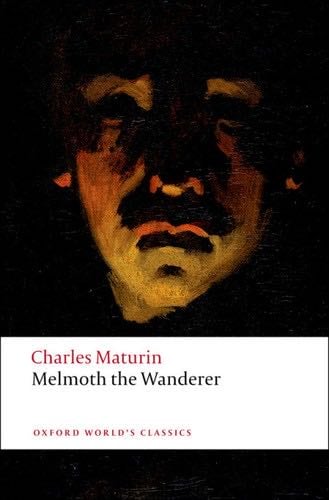
Melmoth the Wanderer
Charles Maturin

The Castle of Otranto
Horace Walpole
This annotated edition of "The Castle of Otranto" includes: Explanations of historical context Literary comments and analyses The Castle of Otranto (ART STORIA Literary Classics Annotated Edition) is a novel by Horace Walpole. First published in 1764, it is generally regarded as the first gothic novel. In the second edition, Walpole applied the word 'Gothic' to the novel in the subtitle – A Gothic Story. The Castle of Otranto is purported to be a translation of an Italian story of the time of the crusades. In it Walpole attempted, as he declared in the Preface to the Second Edition, "to blend the two kinds of romance: the ancient and the modern." Crammed with invention, entertainment, terror, and pathos, the novel was an immediate success and Walpole's own favorite among his numerous works.<br/><br/>In a faraway medieval realm, Manfred, an arrogant and evil prince, rules with an iron fist. Banishing his wife to the castle dungeon, he confines — and plans to wed — the lovely Isabella, fiancée of his recently deceased son. The prince's plans are foiled, however, when a well-meaning peasant helps the young woman escape through the castle's underground passages. Grisly, supernatural events further aid in fulfilling a prophecy that spells doom for the prince and justice for Isabella's rescuer and rightful heir to the throne.

The Turn Of The Screw
Henry James
The Turn of the Screw is an 1898 horror novella by Henry James which first appeared in serial format in Collier's Weekly (January 27 – April 16, 1898). In October 1898, it was collected in The Two Magics, published by Macmillan in New York City and Heinemann in London. The novella follows a governess who, caring for two children at a remote estate, becomes convinced that the grounds are haunted. The Turn of the Screw is considered a work of both Gothic and horror fiction.<br/>In the century following its publication, critical analysis of the novella has undergone several major transformations. Initial reviews regarded it only as a frightening ghost story, but, in the 1930s, some critics suggested that the supernatural elements were figments of the governess' imagination. In the early 1970s, the influence of structuralism resulted in an acknowledgement that the text's ambiguity was its key feature. Later approaches incorporated Marxist and feminist thinking.
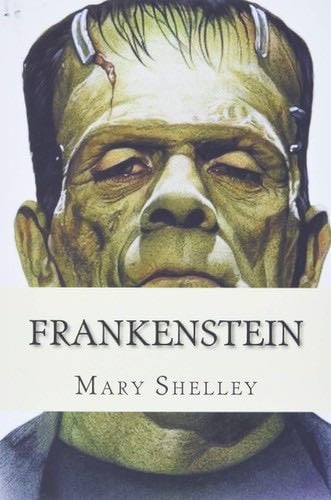
Frankenstein
Mary Shelley
Frankenstein; or, The Modern Prometheus, is a novel written by English author Mary Shelley about the young student of science Victor Frankenstein, who creates a grotesque but sentient creature in an unorthodox scientific experiment. Shelley started writing the story when she was eighteen, and the novel was published when she was twenty. The first edition was published anonymously in London in 1818. Shelley's name appears on the second edition, published in France in 1823.Shelley had travelled through Europe in 1814, journeying along the river Rhine in Germany with a stop in Gernsheim which is just 17 km (10 mi) away from Frankenstein Castle, where two centuries before an alchemist was engaged in experiments. Later, she travelled in the region of Geneva (Switzerland)—where much of the story takes place—and the topics of galvanism and other similar occult ideas were themes of conversation among her companions, particularly her lover and future husband, Percy Shelley. Mary, Percy, Lord Byron, and John Polidori decided to have a competition to see who could write the best horror story. After thinking for days, Shelley dreamt about a scientist who created life and was horrified by what he had made; her dream later evolved into the story within the novel.
Vampires 🩸

Dracula
Bram Stoker
When Jonathan Harker visits Transylvania to help Count Dracula with the purchase of a London house, he makes horrifying discoveries about his client and his castle. Soon afterwards, a number of disturbing incidents unfold in England: an unmanned ship is wrecked at Whitby; strange puncture marks appear on a young woman's neck; and the inmate of a lunatic asylum raves about the imminent arrival of his 'Master'. In the ensuing battle of wits between the sinister Count Dracula and a determined group of adversaries, Bram Stoker created a masterpiece of the horror genre, probing deeply into questions of human identity and sanity, and illuminating dark corners of Victorian sexuality and desire.

The Vampyre
John William Polidori
Delve into the thrilling narrative of 'The Vampyre,' an iconic novella by John William Polidori that continues to captivate readers with its gripping exploration of darkness, desire, and the supernatural. Originally published in 1819, The Vampyre is considered to be the first work of vampire fiction, predating Bram Stoker's Dracula for nearly 80 years.This edition of Polidori's seminal work, often acknowledged as the progenitor of the romantic vampire genre, is a must-read for all enthusiasts of gothic literature and vampire lore.<br/><br/>'The Vampire' unfolds the chilling tale of Lord Ruthven, a suave, mysterious nobleman with a sinister secret. As the story spirals into the macabre, Polidori masterfully explores themes of horror, transgression, and the darker sides of human nature.<br/><br/>John William Polidori, known not only as a writer but also as Lord Byron's personal physician, penned 'The Vampire' following that fateful summer in 1816 known as the 'Year Without a Summer.' His chilling narrative continues to influence modern vampire literature, making it an essential part of any horror or gothic literature collection.<br/><br/>Whether you're a fan of classic gothic literature, studying the origins of the vampire genre, or looking for a thrilling read, 'The Vampire' by John William Polidori remains a timeless masterpiece.

Interview with the Vampire
Anne Rice
40th ANNIVERSARY EDITION • From the #1 New York Times bestselling author, "a magnificent, compulsively readable thriller...Rice begins where Bram Stoker and the Hollywood versions leave off and penetrates directly to the true fascination of the myth—the education of the vampire” (Chicago Tribune). • The inspiration for the hit television series<br/><br/>The time is now.<br/><br/>We are in a small room with the vampire, face to face, as he speaks--as he pours out the hypnotic, shocking, moving, and erotically charged confessions of his first two hundred years as one of the living dead. . .<br/><br/>He speaks quietly, plainly, even gently . . . carrying us back to the night when he departed human existence as heir--young, romantic, cultivated--to a great Louisiana plantation, and was inducted by the radiant and sinister Lestat into the other, the "endless," life . . . learning first to sustain himself on the blood of cocks and rats caught in the raffish streets of New Orleans, then on the blood of human beings . . . to the years when, moving away from his final human ties under the tutelage of the hated yet necessary Lestat, he gradually embraces the habits, hungers, feelings of vampirism: the detachment, the hardened will, the "superior" sensual pleasures.<br/><br/>He carries us back to the crucial moment in a dark New Orleans street when he finds the exquisite lost young child Claudia, wanting not to hurt but to comfort her, struggling against the last residue of human feeling within him . . .<br/><br/>We see how Claudia in turn is made a vampire--all her passion and intelligence trapped forever in the body of a small child--and how they arrive at their passionate and dangerous alliance, their French Quarter life of opulence: delicate Grecian statues, Chinese vases, crystal chandeliers, a butler, a maid, a stone nymph in the hidden garden court . . . night curving into night with their vampire senses heightened to the beauty of the world, thirsting for the beauty of death--a constant stream of vulnerable strangers awaiting them below . . .<br/><br/>We see them joined against the envious, dangerous Lestat, embarking on a perilous search across Europe for others like themselves, desperate to discover the world they belong to, the ways of survival, to know what they are and why, where they came from, what their future can be . . .<br/><br/>We follow them across Austria and Transylvania, encountering their kind in forms beyond their wildest imagining . . . to Paris, where footsteps behind them, in exact rhythm with their own, steer them to the doors of the Théâtre des Vampires--the beautiful, lewd, and febrile mime theatre whose posters of penny-dreadful vampires at once mask and reveal the horror within . . . to their meeting with the eerily magnetic Armand, who brings them, at last, into intimacy with a whole brilliant and decadent society of vampires, an intimacy that becomes sudden terror when they are compelled to confront what they have feared and fled . . .<br/><br/>In its unceasing flow of spellbinding storytelling, of danger and flight, of loyalty and treachery, Interview with the Vampire bears witness of a literary imagination of the first order.
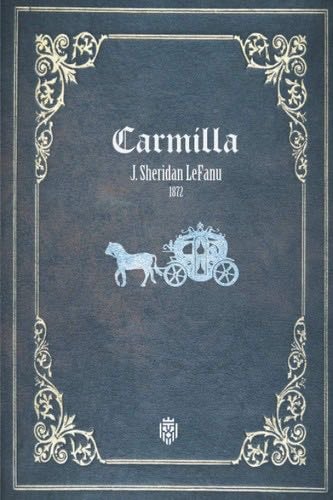
Carmilla
J. Sheridan LeFanu
The Novel predating Bram Stoker's Dracula. Complete edition<br/>Carmilla is an 1872 Gothic novella by Irish author Joseph Sheridan Le Fanu and one of the early works of vampire fiction, predating Bram Stoker's Dracula (1897) by 26 years. First published as a serial in The Dark Blue (1871–72), the story is narrated by a young woman preyed upon by a female vampire named Carmilla. The character is a prototypical example of the lesbian vampire, expressing romantic desires toward the protagonist. The novella notably never acknowledges homosexuality as an antagonistic trait, leaving it subtle and relatively unmentioned. The story is often anthologized and has been adapted many times in film and other media.
“Romance”

Northanger Abbey
Jane Austen
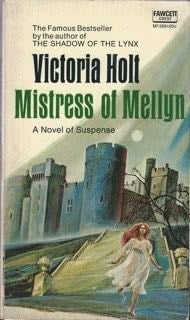
Mistress of Mellyn
VICTORIA HOLT

Wuthering Heights
Emily Brontë