Gothic Literature
Items in this hypelist
Books
Edgar Allan Poe Classic Tales of Horror
Edgar Allan Poe • 2024
Edgar Allan Poe: Classic Tales of Horror is a journey into the shadowed corners of the human psyche, where fear and madness intertwine. This collection unveils the haunting brilliance of Poe's most chilling stories, each a masterpiece of Gothic terror. From the macabre whispers of "The Tell-Tale Heart" to the grim elegance of "The Fall of the House of Usher," these tales invite readers into a world where the ordinary is twisted into the extraordinary, and the line between reality and nightmare dissolves into a chilling mist. Poe's prose, dark and lyrical, beckons you to confront the unsettling mysteries that lie beneath the surface of everyday life, promising a reading experience as eerie as it is unforgettable.
Gulyabani
Hüseyin Rahmi Gürpinar • 1913
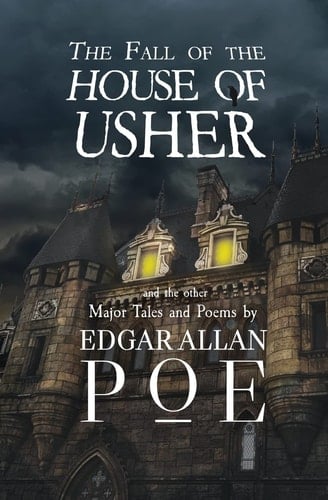
The Fall of the House of Usher
Edgar Allan Poe • 1839
I had been passing alone, on horseback, through a singularly dreary tract of country; and at length found myself, as the shades of the evening drew on, within view of the melancholy House of Usher.<br/><br/>At the request of his good friend Roderick Usher, a visitor travels to the House of Usher where Roderick and his sister Madeline live. From the time the traveler first steps foot onto the Usher property, a mysterious and foreboding presence fills the air. Almost as if the house itself is alive.<br/><br/>Born in 1809, Edgar Allan Poe was an American writer and poet best known for his tales of mystery and macabre. His short stories have long been entrenched in American pop culture, and he is regarded as one of the greatest inspirations to the modern horror and mystery genres. His fictional C. Auguste Dupin stories, all included in this collection, are widely considered the first modern detective story, and these stories would become a foundational influence to Arthur Conan Doyle’s famous detective Sherlock Holmes. Poe's notable works include The Fall of the House of Usher (1839), The Tell-Tale Heart (1843), The Black Cat (1843), and The Raven (1845), among many others. He died in 1849.<br/><br/>The following 13 tales and 13 poems are included:<br/><br/>Tales The Fall of the House of Usher The Tell-Tale Heart the Black Cat The Cask of Amontillado The Pit and the Pendulum The Masque of the Red Death The Oval Portrait The premature burial A Descent into the Maelström Ligeia The C. Auguste Dupin Mysteries The Murders in the Rue Morgue The Mystery of Marie Rogêt The Purloined Letter Poems The Raven Annabel Lee Alone A Dream Within a Dream Dream-Land Eldorado The Sleeper Lenore The City in the Sea To Helen The Bells The Valley of Unrest To One in Paradise
Carmilla
J. Sheridan LeFanu • 1872
Rebecca
Daphne du Maurier • 1938
Jane Eyre
Charlotte Bronte • 1847
Wuthering Heights
Emily Brontë • 1847
<b>Coming soon to the big screen is Emerald Fennell’s feature film “<i>Wuthering Heights</i>,” which captures the spirit of this epic love story and stars Margot Robbie and Jacob Elordi as Catherine and Heathcliff.<br></b><br>Emily Brontë's only novel endures as a work of tremendous and far-reaching influence. The Penguin Classics edition is the definitive version of the text, edited with an introduction by Pauline Nestor.<br><br>Lockwood, the new tenant of Thrushcross Grange, situated on the bleak Yorkshire moors, is forced to seek shelter one night at Wuthering Heights, the home of his landlord. There he discovers the history of the tempestuous events that took place years before. What unfolds is the tale of the intense love between the gypsy foundling Heathcliff and Catherine Earnshaw. Catherine, forced to choose between passionate, tortured Heathcliff and gentle, well-bred Edgar Linton, surrendered to the expectations of her class. As Heathcliff's bitterness and vengeance at his betrayal is visited upon the next generation, their innocent heirs must struggle to escape the legacy of the past. <br><br>In this edition, a new preface by Lucasta Miller, author of <i>The Brontë Myth</i>, looks at the ways in which the novel has been interpreted, from Charlotte Brontë onwards. This complements Pauline Nestor's introduction, which discusses changing critical receptions of the novel, as well as Emily Brontë's influences and background.
The Strange Case of Dr. Jekyll and Mr. Hyde
Robert Louis Stevenson • 1886
The Monk
Matthew Lewis • 1796
The Castle of Otranto
Horace Walpole • 1764
Dracula
Bram Stoker • 1897
Frankenstein
Mary Shelley • 1818