libros que quiero leer

Items in this hypelist
Books

Los ojos son la mejor parte
Monika Kim · 2025

Diez días en la casa de los locos
Nellie Bly · 2023
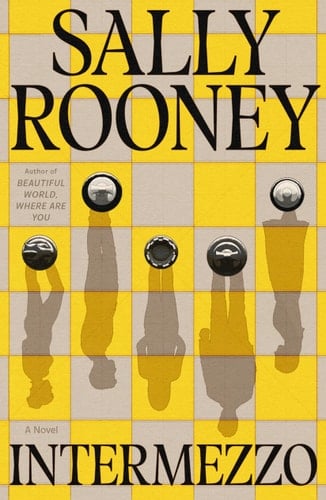
Intermezzo: A Novel
Sally Rooney · 2024
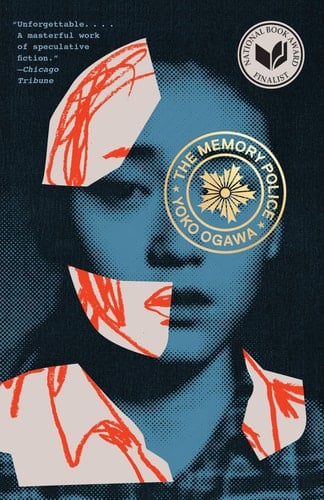
The Memory Police: A Novel
Yoko Ogawa · 2020

Casas vacías
Brenda Navarro · 2020
Mujer que sabe latín… (Letras Mexicanans) (Spanish Edition)
Rosario Castellanos · 2012

El mar está lleno de medusas / The Sea Is Full of Jellyfish (Spanish Edition)
Paola Carola · 2024
Susan Sontag
LELAND POAGUE, KATHY A. PARSONS · 2021
Kokomo
Victoria Hannan · 2020

Cleopatra y Frankenstein
Coco Mellors · 2023

Lagartija
Banana Yoshimoto · 2014

Kokoro
Natsume Soseki · 1996

El síndrome de la chica buena
marta martinez novoa · 2024
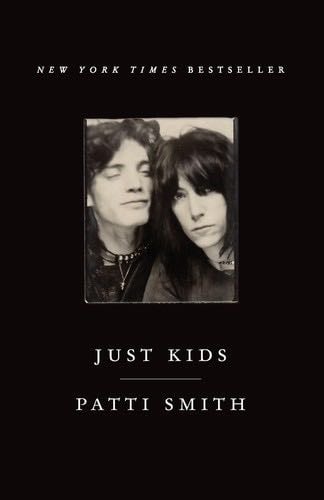
Just Kids: A National Book Award Winner
Patti Smith · 2010
<p> It was the summer Coltrane died, the summer of love and riots, and the summer when a chance encounter in Brooklyn led two young people on a path of art, devotion, and initiation. </p> <p> Patti Smith would evolve as a poet and performer, and Robert Mapplethorpe would direct his highly provocative style toward photography. Bound in innocence and enthusiasm, they traversed the city from Coney Island to Forty-second Street, and eventually to the celebrated round table of Max's Kansas City, where the Andy Warhol contingent held court. In 1969, the pair set up camp at the Hotel Chelsea and soon entered a community of the famous and infamous—the influential artists of the day and the colorful fringe. It was a time of heightened awareness, when the worlds of poetry, rock and roll, art, and sexual politics were colliding and exploding. In this milieu, two kids made a pact to take care of each other. Scrappy, romantic, committed to create, and fueled by their mutual dreams and drives, they would prod and provide for one another during the hungry years. </p> <p> <i>Just Kids</i> begins as a love story and ends as an elegy. It serves as a salute to New York City during the late sixties and seventies and to its rich and poor, its hustlers and hellions. A true fable, it is a portrait of two young artists' ascent, a prelude to fame. </p>

The Catcher in the Rye
J. D. Salinger · 2001

To the Lighthouse
Virginia Woolf · 2008

Bunny: A Novel
Mona Awad · 2020
NATIONAL BESTSELLER<br/><br/>Soon to be a major motion picture<br/><br/>"Jon Swift + Witches of Eastwick + Kelly 'Get In Trouble' Link + Mean Girls + Creative Writing Degree Hell! No punches pulled, no hilarities dodged, no meme unmangled! O Bunny you are sooo genius!" —Margaret Atwood, via Twitter<br/><br/>"A wild, audacious and ultimately unforgettable novel." —Michael Schaub, Los Angeles Times<br/><br/>"Awad is a stone-cold genius." —Ann Bauer, The Washington Post<br/><br/>The Vegetarian meets Heathers in this darkly funny, seductively strange novel from the acclaimed author of 13 Ways of Looking at a Fat Girl and Rouge<br/><br/>"We were just these innocent girls in the night trying to make something beautiful. We nearly died. We very nearly did, didn't we?"<br/><br/>Samantha Heather Mackey couldn't be more of an outsider in her small, highly selective MFA program at New England's Warren University. A scholarship student who prefers the company of her dark imagination to that of most people, she is utterly repelled by the rest of her fiction writing cohort--a clique of unbearably twee rich girls who call each other "Bunny," and seem to move and speak as one.<br/><br/>But everything changes when Samantha receives an invitation to the Bunnies' fabled "Smut Salon," and finds herself inexplicably drawn to their front door--ditching her only friend, Ava, in the process. As Samantha plunges deeper and deeper into the Bunnies' sinister yet saccharine world, beginning to take part in the ritualistic off-campus "Workshop" where they conjure their monstrous creations, the edges of reality begin to blur. Soon, her friendships with Ava and the Bunnies will be brought into deadly collision.<br/><br/>The spellbinding new novel from one of our most fearless chroniclers of the female experience, Bunny is a down-the-rabbit-hole tale of loneliness and belonging, friendship and desire, and the fantastic and terrible power of the imagination.<br/><br/>Named a Best Book of 2019 by TIME, Vogue, Electric Literature, and The New York Public Library
The Year of Magical Thinking
Joan Didion · 2005
<b><i>NEW YORK TIMES</i> BESTSELLER • NATIONAL BOOK AWARD WINNER • A landmark work about grief, love, and survival from one of America’s most iconic writers<br></b><br><b>One of <i>The New York Times</i>’s 100 Best Books of the 21st Century • One of <i>The Guardian</i>’s 100 Best Books of the 21st Century<br></b><br>Joan Didion delivers a searing portrait of a marriage and a life – in good times and bad – that will speak to anyone who has ever loved and lost a husband or wife or child. In a work of electric honesty and passion, Didion explores how we all, somehow, will ourselves to survive. “An utterly shattering portrait of loss and grief.” <i>–The New York Times</i><b><i><br><br></i></b><i>S</i>everal days before Christmas 2003, John Gregory Dunne and Joan Didion saw their only daughter, Quintana Roo, fall ill with septic shock. She was put into an induced coma and placed on life support. Days later, the Dunnes were sitting down to dinner after visiting their daughter in the hospital when John suffered a fatal heart attack. In that one moment, their partnership of forty years came to an end. <br><br>This powerful narrative is Didion's “attempt to make sense of the weeks and then months that cut loose any fixed idea I ever had about death, about illness…about marriage and children and memory…about the shallowness of sanity, about life itself.”<br><br><b>“Didion has transformed grief into literature.” <i>—The Guardian</i></b>

Mal de Amores
Angeles Mastretta · 2001
Ensayo sobre la ceguera
José Saramago · 2010
2022: AÑO SARAMAGO Una novela y un autor que nos alertan sobre «la responsabilidad de tener ojos cuando otros los perdieron». «Dentro de nosotros hay algo que no tiene nombre, esa cosa es lo que somos». Un hombre parado ante un semáforo en rojo se queda ciego súbitamente. Es el primer caso de una «ceguera blanca» que se expande de manera fulminante. Internados en cuarentena o perdidos en la ciudad, los ciegos tendrán que enfrentarse con lo más primitivo en la naturaleza humana: la voluntad de sobrevivir a cualquier precio. Ensayo sobre la ceguera es la ficción de un autor que nos alerta sobre «la responsabilidad de tener ojos cuando otros los perdieron». José Saramago traza en este libro una imagen aterradora y conmovedora de los tiempos que estamos viviendo. En un mundo así, ¿cabrá alguna esperanza? El lector conocerá una experiencia imaginativa única. En un punto donde se cruzan literatura y sabiduría, José Saramago nos obliga a parar, cerrar los ojos y ver. Recuperar la lucidez y rescatar el afecto son dos propuestas fundamentales de una novela que es, también, una reflexión sobre la ética del amor y la solidaridad. La crítica ha dicho: «Una metáfora que, cuando se publicó, lo mismo podía valer para el sida que para el abandono de los mayores. En esta novela, la ceguera llega sin avisar y produce un deslumbramiento blanco permanente. De nuevo, desfilan lo mejor y lo peor de la especie. Como en las guerras». Tereixa Constenla, El País «Saramago siempre ha demostrado una imaginación audaz como novelista. Ésta es su obra más sorprendente e inquietante». Harold Bloom «No hay cinismo ni moraleja, sólo un reconocimiento lúcido y compasivo de las cosas tal como son, una cualidad que sólo puede calificarse honestamente como sabiduría». The New York Times «Hay novelas, como ésta, que después de leídas continuarán iluminando túneles en la conciencia, abriendo puertas de habitaciones a las que no nos habíamos asomado pese a estar dentro de nosotros». Juan José Millás «Saramago vuelve comprensible una realidad huidiza, con parábolas sostenidas por la imaginación, la compasión y la ironía». Comité Nobel «Un hombre con una sensibilidad y una capacidad de ver y de entender que están muy por encima de lo que en general vemos y entendemos los comunes mortales». Héctor Abad Faciolince «Saramago es un ejemplo, un estilo dignísimo de vida y literatura, que demuestra la posibilidad de navegar a contracorriente [...]. Su palabra tiene el valor de un anticongelante, de un remedio personal contra los vendavales de cinismo que nos envuelven». Luis García Montero «Yo no sé, ni quiero saberlo, de dónde ha sacado Saramago ese diabólico tono narrativo, duro y piadoso a un tiempo, [...] que le permite contar tan cerca del corazón y a la vez tan cerca de la historia». Luis Landero «Saramago escribe novelas sobre los mitos para desmitificarlos, [...] siempre para abordar la realidad que le rodea, para tratar de los problemas actuales que son de todos, y para que todo quede claro desde el principio». Rafael Conte, Babelia «Como Günter Grass o Cees Nooteboom, Saramago aspira a enlazar con un público que desborde límites nacionales». El País
La mujer invisible: Descubre cómo los datos configuran un mundo hecho por y para los hombres
Caroline Criado Perez · 2020
Ya has oído hablar de la brecha salarial. Ahora vamos a hablar de la brecha de datos que separa a hombres y mujeres.<br/>¿Te imaginas cómo sería vivir en un mundo en el que tu teléfono móvil es demasiado grande para tu mano? ¿En el que tienes un 47 % más de probabilidades de morir que tu pareja en caso de sufrir un accidente? ¿En el que un fármaco prescrito por el médico produce efectos secundarios en tu organismo? Si estás familiarizada con estas situaciones, con toda probabilidad eres una mujer.<br/>Este libro saca a la luz el alto precio que las mujeres deben pagar por vivir en una sociedad construida a medida de los hombres, en muchas ocasiones a costa de su salud y bienestar. «Ésta es la historia de lo que sucede cuando nos olvidamos de hablar de la mitad de la humanidad. Y es también una llamada al cambio», resume en sus páginas Caroline Criado Perez.<br/>Galardonado con Premio de la Royal Society al mejor libro de ciencia del año, La mujer invisible es un ensayo único y riguroso que expone, a través de estadísticas e historias personales recogidas por todo el mundo, cómo los datos que conforman la sociedad, lejos de ser objetivos, también están marcados por un sesgo masculino. «Este libro es un grito de guerra que debería impulsar a las mujeres a la acción y ser una lectura obligatoria para los hombres» (The Sunday Times).
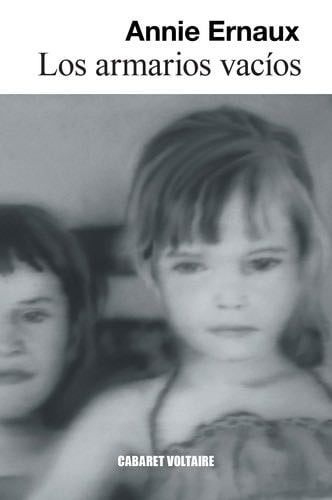
Los armarios vacíos
Annie Ernaux · 2022

La Ridicula Idea De No Volver A Verte
RosaMontero · 2013
Title: La Ridicula Idea de No Volver A Verte = The Ridiculous Idea of Not Seeing You Again Binding: Paperback Author: RosaMontero Publisher: EditorialSeixBarral
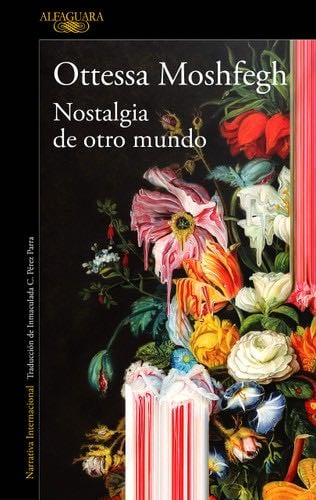
Nostalgia de otro mundo / Homesick For Another World: Stories (Spanish Edition)
Ottessa Moshfegh · 2022
Los premiados relatos de la autora de Mi año de descanso y relajación, ganadora del Premio PEN/ Hemingway entre otros.<br/><br/>«Un cruce de los mejores cuentos que jamás escribirán Haruki Murakami y Lorrie Moore firmados por la mejor escritora norteamericana de su generación» —Rodrigo Fresán.<br/><br/>«Las historias de Ottessa Moshfegh son como pequeñas joyas podridas, que brillan y traumatizan por igual, como solo puede hacerlo la mejor literatura. Moshfegh explora con macabro deleite todas las facetas oscuras y ridículas del ser humano, convenciéndonos con gran destreza de que son merecedoras de nuestra fascinación.» —Virginia Feito, autora de La señora March<br/><br/>«Probar sus frases es como entrar en contacto con una alambrada ligeramente electrificada, [...] como ver a alguien sonreír con la boca llena de sangre». —Dwight Garner, The New York Times<br/><br/>Hay algo siniestro y desconcertante que atraviesa los relatos de Ottessa Moshfegh, algo peligroso, fascinante y a veces irresistiblemente divertido. Sus personajes son seres inestables: anhelan un gesto de ternura y desean, a su manera, convertirse en mejores personas; aun así, todos parecen moverse guiados por los impulsos más primarios. Débiles, retorcidos, a menudo estúpidos y crueles consigo mismos y con los demás: de esta extraña materia prima Moshfegh consigue extirpar una belleza oscura y eléctrica y que, en ella, lo que veamos sea en realidad nuestro propio reflejo.<br/><br/>Nostalgia de otro mundo reúne sus mejores relatos, ganadores de los premios Pushcart, O. Henry o Plimpton Discovery Prize, con los que ha entrado a formar parte del universo literario de Flannery O’Connor o Angela Carter.<br/><br/>ENGLISH DESCRIPTION<br/><br/>A New York Times Book Review Notable Book of 2017<br/><br/>An electrifying first collection from one of the most exciting short story writers of our time<br/><br/>"I can’t recall the last time I laughed this hard at a book. Simultaneously, I’m shocked and scandalized. She’s brilliant, this young woman."—David Sedaris<br/><br/>Ottessa Moshfegh's debut novel Eileen was one of the literary events of 2015. Garlanded with critical acclaim, it was named a book of the year by The Washington Post and The San Francisco Chronicle, nominated for a National Book Critics Circle Award, short-listed for the Man Booker Prize, and won the PEN/Hemingway Award for debut fiction. But as many critics noted, Moshfegh is particularly held in awe for her short stories. Homesick for Another World is the rare case where an author's short story collection is if anything more anticipated than her novel.<br/><br/>And for good reason. There's something eerily unsettling about Ottessa Moshfegh's stories, something almost dangerous, while also being delightful, and even laugh-out-loud funny. Her characters are all unsteady on their feet in one way or another; they all yearn for connection and betterment, though each in very different ways, but they are often tripped up by their own baser impulses and existential insecurities.<br/><br/>Homesick for Another World is a master class in the varieties of self-deception across the gamut of individuals representing the human condition. But part of the unique quality of her voice, the echt Moshfeghian experience, is the way the grotesque and the outrageous are infused with tenderness and compassion.<br/><br/>Moshfegh is our Flannery O'Connor, and Homesick for Another World is her Everything That Rises Must Converge or A Good Man is Hard to Find. The flesh is weak; the timber is crooked; people are cruel to each other, and stupid, and hurtful. But beauty comes from strange sources. And the dark energy surging through these stories is powerfully invigorating. We're in the hands of an author with a big mind, a big heart, blazing chops, and a political acuity that is needle-sharp. The needle hits the vein before we even feel the prick.
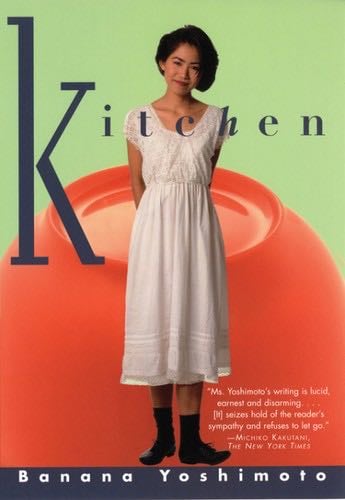
Kitchen
Banana Yoshimoto · 2015
<p>The acclaimed debut of Japan's "master storyteller" ( Chicago Tribune ). With the publication of Kitchen, the dazzling English-language debut that is still her best-loved book, the literary world realized that Banana Yoshimoto was a young writer of enduring talent whose work has quickly earned a place among the best of contemporary Japanese literature. Kitchen is an enchantingly original book that juxtaposes two tales about mothers, love, tragedy, and the power of the kitchen and home in the lives of a pair of free-spirited young women in contemporary Japan. Mikage, the heroine, is an orphan raised by her grandmother, who has passed away. Grieving, Mikage is taken in by her friend Yoichi and his mother (who is really his cross-dressing father) Eriko. As the three of them form an improvised family that soon weathers its own tragic losses, Yoshimoto spins a lovely, evocative tale with the kitchen and the comforts of home at its heart. In a whimsical style that recalls the early Marguerite Duras, Kitchen and its companion story, Moonlight Shadow, are elegant tales whose seeming simplicity is the ruse of a very special writer whose voice echoes in the mind and the soul. "Lucid, earnest and disarming... [It] seizes hold of the reader's sympathy and refuses to let go." —Michiko Kakutani, The New York Times<br></p>

Elena sabe (Spanish Edition)
Claudia Piñeiro · 2015

El maestro y Margarita
Mikhail Afanasievitx Bulgakov · 2008
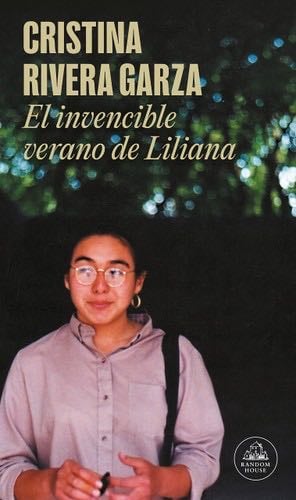
El invencible verano de Liliana
Cristina Rivera Garza · 2021
*Premio Pulitzer de Memorias 2024*<br/><br/>*Finalista al National Book Award de No ficción 2023*<br/><br/>*Premio Rodolfo Walsh 2022*<br/><br/>*Premio Mazatlán de Literatura 2022*<br/><br/>*Premio Xavier Villaurrutia de Escritores para Escritores 2021*<br/><br/>*Premio Nuevo León Alfonso Reyes 2021*<br/><br/>*Premio Iberoamericano de Letras José Donoso 2021*<br/><br/>El 16 de julio de 1990, Liliana Rivera Garza fue víctima de feminicidio. La asesinó su pareja con 20 años. Esta es su historia, contada en voz de su hermana. Una novela que rescata memorias y busca justicia para ella y para todas.<br/>El 16 de julio de 1990, Liliana Rivera Garza, mi hermana, fue víctima de un feminicidio. Era una muchacha de 20 años, estudiante de arquitectura. Tenía años tratando de terminar su relación con un novio de la preparatoria que insistía en no dejarla ir. Unas cuantassemanas antes de la tragedia, Liliana por fin tomó una decisión definitiva: en lo más profundo del invierno había descubierto que en ella, como bien lo había dicho Albert Camus, había un invencible verano. Lo dejaría atrás. Empezaría una nueva vida. Haría una maestría y después un doctorado; viajaría a Londres. La decisión de él fue que ella no tendría una vida sin él.<br/>Hace apenas un año decidí abrir las cajas donde depositamos las pertenencias de mi hermana. Su voz atravesó el tiempo y, como la de tantas mujeres desaparecidas y ultrajadas en México, demandó justicia.<br/>El invencible verano de Liliana es una excavación en la vida de una mujer brillante y audaz que careció, como nosotros mismos, como todos los demás, del lenguaje necesario para identificar, denunciar y luchar contra la violencia sexista y el terrorismo de pareja que caracteriza a tantas relaciones patriarcales. Este libroes para celebrar su paso por la tierra y para decirle que, claro que sí, lo vamos a tirar. Al patriarcado lo vamos a tirar.<br/>Cristina Rivera Garza<br/>Reseñas:<br/>«Un amoroso homenaje, un libro abierto y en movimiento, una acción política desde la gran literatura.»<br/>Gabriela Wiener<br/>«Este libro puede salvar vidas.»<br/>Edurne Portela, El Correo<br/>«Un libro-ritualque convoca a la víctima y la restaura, que oficia una ceremonia de amor y memoria.»<br/>Nadal Suau, El Cultural<br/>Sobre la autora:<br/>«Advertencia: Cristina Rivera Garza es una escritora explosiva. Una diestra creadora de atmósferas, con un estilo poderoso, una lengua evocativa e indomable.»<br/>Lina Meruane<br/>«Una auténtica revelación en las letras hispánicas.»<br/>Carlos Fuentes<br/>Sobre La cresta de Ilión:<br/>«El lenguaje no es asunto fácil. Rivera Garza da forma a su inquietud vital e intelectual con su urdimbre de gusano de seda y nos invita a entrever la luz que se atisba entre las fibras. A romper la crisálida y asistir a la metamorfosis. Tengo la impresión de que este libro, posiblemente queer, va de eso: metamorfosis.»<br/>Marta Sanz, Babelia<br/>SobreHabía mucha neblina o humo o no sé qué:<br/>« Había mucha neblina o humo o no sé qué de Cristina Rivera Garza, una obra tan buena como su título, que se hace preguntas oportunísimas sobre Rulfo y les da respuestas complejas, literarias, múltiples.»<br/>Nadal Suau, El Cultural<br/>Sobre Autobiografía de algodón:<br/>«"Migrar es también borrar", leemos en este extraordinario ejercicio de investigación, reescritura y restitución.»<br/>Jorge Carrión, The New York Times

Las inseparables / Inseparable (Spanish Edition)
Simone de Beauvoir · 2021
Una novela inédita, muy íntima, de la gran autora francesa ganadora del Premio Goncourt e icono del feminismo<br/><br/>Escrita en 1954, cinco años después de la publicación de El segundo sexo, Las inseparables narra la amistad apasionada que une a Sylvie y a Andrée -alter ego de la propia Simone de Beauvoir y de Élisabeth Lacoin (Zaza)- desde que con nueve años se conocen en la escuela. Andrée es alegre, inteligente y atrevida, y Sylvie, una niña formal que se siente irremediablemente atraída por su personalidad arrolladora. Juntas aprenderán a librarse de las convenciones y las expectativas asfixiantes de su entorno, ignorantes del trágico precio que tienen la libertad y la ambición intelectual y existencial. Una historia catártica para la autora, tal vez demasiado reveladora para publicarla en vida, cuya recuperación -junto con algunas fotografías y cartas que sirven de testimonio- constituye un acontecimiento literario.<br/><br/>ENGLISH DESCRIPTION<br/><br/>An unpublished, very intimate novel by the great French author, an icon for feminism, and winner of the Prix Goncourt .<br/><br/>Written in 1954, five years after the publication of The Second Sex, Las inseparables / The Inseparables narrates the passionate friendship between Sylvie and Andrée -alter egos of Simone de Beauvoir herself and Élisabeth Lacoin (Zaza) -starting when they met at school at nine years old. Andrée is cheerful, intelligent, and daring, and Sylvie, a formal girl who is irremediably attracted by Andrée’s overwhelming personality. Together they will learn to rid themselves of society’s stifling conventions and expectations, naïve about the tragic price that freedom and intellectual and existential ambition have. A cathartic story for the author, perhaps too revealing to publish during her lifetime. The recovery of this manuscript -along with some photographs and letters that serve as testimony- represents a great literary event.
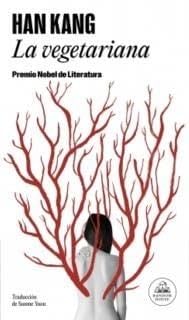
La vegetariana
Han Kang · 2024

Casas vacías
Brenda Navarro · 2020
La maternidad, que casi siempre asociamos con la felicidad, también puede ser una pesadilla: la de una mujer cuyo hijo desaparece en el parque donde estaba jugando, y la de aquella otra mujer que se lo lleva para criarlo como propio. Ubicada en un contexto de profunda precariedad física y emocional, la historia de estas dos mujeres, madres del mismo niño –un niño que primero se llama Daniel y que después será rebautizado como Leonel– y madres, además, de un mismo vacío, nos confronta con las ideas preconcebidas que tenemos de la intimidad, las violencias familiares, la desigualdad social, la soledad, el acompañamiento, el cuidado, la culpa y el amor. Brenda Navarro ha conseguido un prodigio: caminar siempre, sin caerse nunca, sobre la delgada línea que separa –pero también une– el olvido y la memoria, la esperanza y la depresión, la vida privada y la vida pública, la pérdida y el encuentro, los cuerpos de las mujeres y el acto político. Casas vacías estremece de forma tan devastadora como ilumina: brillante y extrañamente esperanzadora.