MANGAS
Items in this hypelist
Josei
Piece of cake
Have you ever wondered why that 13-digit number on the back of a book costs $125 in the United States but is completely free in Canada and India? This book, The Global ISBN Handbook, is your 2025 guide to the International Standard Book Number. It explains everything about this global "fingerprint" for books. The ISBN is the most important cornerstone of the publishing industry. It started as a simple warehouse tool in the 1960s. Now, it is a complex digital identifier used in over 200 countries. This handbook deconstructs the entire system. It uses 15 distinct national case studies to do this. You will learn how the old 10-digit system changed to the new 13-digit one. We break down the five parts of the ISBN, from the "Bookland" prefix to the final check digit. The book explores the global governance framework, starting with the International ISBN Agency. Then, it dives deep into how different countries run their systems. You'll see the privatized, high-cost model in the United States. You'll compare it to Canada's free, government-run system. We explore the industry-led models in Brazil and Germany. We look at government-run systems in Mexico and India. We even cover the unique case of China, where the ISBN is not a simple identifier but a state-controlled publication license. The book also examines the systems in the UK , France , Russia , Japan , Australia , South Africa , Nigeria , and Egypt. Many books and websites can tell you how to get an ISBN. This handbook is the only resource that explains why the process is so different everywhere you look. It moves beyond a simple "how-to" and provides a true global analysis. It directly compares the privatized, for-profit models in the US and UK against the free, public-good systems in Canada and South Africa. You won't just learn the price; you will understand the cultural policies, market structures, and legal philosophies that shape that price. This book shows how the ISBN is a "global mirror". It reveals how a simple number can be a commercial product in one nation , a tool of cultural policy in another , and an instrument of state control in a third. This comparative insight is the missing piece for any author, publisher, or researcher trying to navigate the complex international publishing market. Disclaimer: This handbook is an independently produced resource for commentary and analysis. The author has no affiliation with the International ISBN Agency, R.R. Bowker, Library and Archives Canada, the National Press and Publication Administration, or any other national ISBN agency. This work is independently produced under the principle of nominative fair use.
Les Noces des lucioles
Oreco Tachibana • 2024
Seinen
Bonne nuit Punpun
Inio Asano • 2012
solanin
Inio Asano • 2008
Adabana
NON • 2024

Rainbow T01 (Rainbow (1))
Rainbow T01 (Rainbow (1))
Vagabond
Takehiko Inoue • 2008
<b>Three volumes in one! A prestige treatment of Inoue’s epic samurai series with bonus content, color pages, storyboard samples and more!</b><br><br>Real-life figure Miyamoto Musashi was the most celebrated samurai of all time. The quintessential warrior-philosopher, Musashi authored <i>A Book of Five Rings</i>, a classic treatise in the canon of world philosophy and military strategy. But the path to enlightenment is an endless journey, and to get there through violent means--by way of the sword--makes mere survival an even greater challenge.<br><br><b>Invincible Under the Sun</b><br><br>At seventeen years of age, Miyamoto Musashi--still known by his childhood name, Shinmen Takezō--was a wild young brute just setting out along the way of the sword.<br><br>In the aftermath of the epic Battle of Sekigahara, Takezō finds himself a fugitive survivor on the losing side of the war. Takezō's vicious nature has made him an outcast even in his own village, and he is hunted down like an animal. At this crucial crossroads in Takezō's life, an eccentric monk and a childhood friend are the only ones who can help him find his way.
The killer inside
Have you ever wondered why that 13-digit number on the back of a book costs $125 in the United States but is completely free in Canada and India? This book, The Global ISBN Handbook, is your 2025 guide to the International Standard Book Number. It explains everything about this global "fingerprint" for books. The ISBN is the most important cornerstone of the publishing industry. It started as a simple warehouse tool in the 1960s. Now, it is a complex digital identifier used in over 200 countries. This handbook deconstructs the entire system. It uses 15 distinct national case studies to do this. You will learn how the old 10-digit system changed to the new 13-digit one. We break down the five parts of the ISBN, from the "Bookland" prefix to the final check digit. The book explores the global governance framework, starting with the International ISBN Agency. Then, it dives deep into how different countries run their systems. You'll see the privatized, high-cost model in the United States. You'll compare it to Canada's free, government-run system. We explore the industry-led models in Brazil and Germany. We look at government-run systems in Mexico and India. We even cover the unique case of China, where the ISBN is not a simple identifier but a state-controlled publication license. The book also examines the systems in the UK , France , Russia , Japan , Australia , South Africa , Nigeria , and Egypt. Many books and websites can tell you how to get an ISBN. This handbook is the only resource that explains why the process is so different everywhere you look. It moves beyond a simple "how-to" and provides a true global analysis. It directly compares the privatized, for-profit models in the US and UK against the free, public-good systems in Canada and South Africa. You won't just learn the price; you will understand the cultural policies, market structures, and legal philosophies that shape that price. This book shows how the ISBN is a "global mirror". It reveals how a simple number can be a commercial product in one nation , a tool of cultural policy in another , and an instrument of state control in a third. This comparative insight is the missing piece for any author, publisher, or researcher trying to navigate the complex international publishing market. Disclaimer: This handbook is an independently produced resource for commentary and analysis. The author has no affiliation with the International ISBN Agency, R.R. Bowker, Library and Archives Canada, the National Press and Publication Administration, or any other national ISBN agency. This work is independently produced under the principle of nominative fair use.
Flowers of Evil
Shuzo Oshimi • 2014
Goodbye, Eri
Tatsuki Fujimoto • 2023
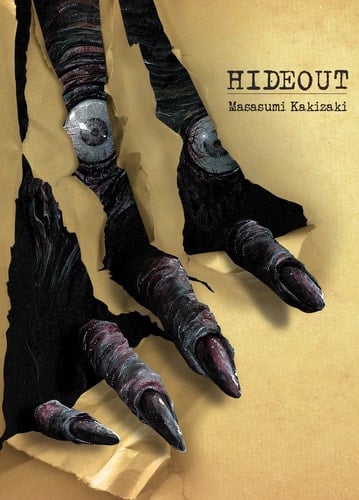
Hideout
Hideout
The climber
Shin-Ichi Sakamoto • 2011
Quand la nuit tombe
Rie Aruga • 2023
Usogui
Have you ever wondered why that 13-digit number on the back of a book costs $125 in the United States but is completely free in Canada and India? This book, The Global ISBN Handbook, is your 2025 guide to the International Standard Book Number. It explains everything about this global "fingerprint" for books. The ISBN is the most important cornerstone of the publishing industry. It started as a simple warehouse tool in the 1960s. Now, it is a complex digital identifier used in over 200 countries. This handbook deconstructs the entire system. It uses 15 distinct national case studies to do this. You will learn how the old 10-digit system changed to the new 13-digit one. We break down the five parts of the ISBN, from the "Bookland" prefix to the final check digit. The book explores the global governance framework, starting with the International ISBN Agency. Then, it dives deep into how different countries run their systems. You'll see the privatized, high-cost model in the United States. You'll compare it to Canada's free, government-run system. We explore the industry-led models in Brazil and Germany. We look at government-run systems in Mexico and India. We even cover the unique case of China, where the ISBN is not a simple identifier but a state-controlled publication license. The book also examines the systems in the UK , France , Russia , Japan , Australia , South Africa , Nigeria , and Egypt. Many books and websites can tell you how to get an ISBN. This handbook is the only resource that explains why the process is so different everywhere you look. It moves beyond a simple "how-to" and provides a true global analysis. It directly compares the privatized, for-profit models in the US and UK against the free, public-good systems in Canada and South Africa. You won't just learn the price; you will understand the cultural policies, market structures, and legal philosophies that shape that price. This book shows how the ISBN is a "global mirror". It reveals how a simple number can be a commercial product in one nation , a tool of cultural policy in another , and an instrument of state control in a third. This comparative insight is the missing piece for any author, publisher, or researcher trying to navigate the complex international publishing market. Disclaimer: This handbook is an independently produced resource for commentary and analysis. The author has no affiliation with the International ISBN Agency, R.R. Bowker, Library and Archives Canada, the National Press and Publication Administration, or any other national ISBN agency. This work is independently produced under the principle of nominative fair use.
Blood on the Tracks
Shuzo Oshimi • 2020
Devil's Line
Ryo Hanada • 2016
Homunculus
Hideo Yamamoto • 2023
Neon Genesis Evangelion
Yoshiyuki Sadamoto • 2004

Ajin 1: Demi-Human (Ajin: Demi-Human)
Ajin 1: Demi-Human (Ajin: Demi-Human)

Starving Anonymous, Vol. 1
Starving Anonymous, Vol. 1
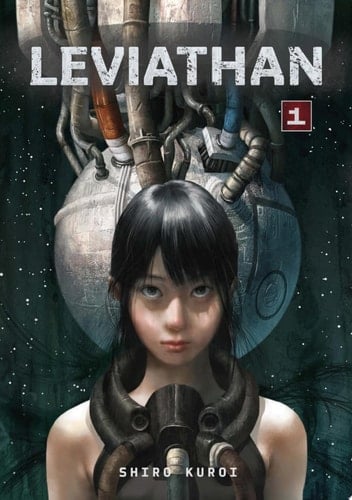
Leviathan Volume 1
Leviathan Volume 1
Blade of the Immortal
Hiroaki Samura • 2020
Blessures nocturnes
Osamu Mizutani • 2009
Ichi the killer
Hideo Yamamoto • 2015
Green blood
unknown author • 2012
20th century boys
Naoki Urasawa • 2018
Last hero Inuyashiki
Hiroya Oku • 2016
Shōjo
The one
Have you ever wondered why that 13-digit number on the back of a book costs $125 in the United States but is completely free in Canada and India? This book, The Global ISBN Handbook, is your 2025 guide to the International Standard Book Number. It explains everything about this global "fingerprint" for books. The ISBN is the most important cornerstone of the publishing industry. It started as a simple warehouse tool in the 1960s. Now, it is a complex digital identifier used in over 200 countries. This handbook deconstructs the entire system. It uses 15 distinct national case studies to do this. You will learn how the old 10-digit system changed to the new 13-digit one. We break down the five parts of the ISBN, from the "Bookland" prefix to the final check digit. The book explores the global governance framework, starting with the International ISBN Agency. Then, it dives deep into how different countries run their systems. You'll see the privatized, high-cost model in the United States. You'll compare it to Canada's free, government-run system. We explore the industry-led models in Brazil and Germany. We look at government-run systems in Mexico and India. We even cover the unique case of China, where the ISBN is not a simple identifier but a state-controlled publication license. The book also examines the systems in the UK , France , Russia , Japan , Australia , South Africa , Nigeria , and Egypt. Many books and websites can tell you how to get an ISBN. This handbook is the only resource that explains why the process is so different everywhere you look. It moves beyond a simple "how-to" and provides a true global analysis. It directly compares the privatized, for-profit models in the US and UK against the free, public-good systems in Canada and South Africa. You won't just learn the price; you will understand the cultural policies, market structures, and legal philosophies that shape that price. This book shows how the ISBN is a "global mirror". It reveals how a simple number can be a commercial product in one nation , a tool of cultural policy in another , and an instrument of state control in a third. This comparative insight is the missing piece for any author, publisher, or researcher trying to navigate the complex international publishing market. Disclaimer: This handbook is an independently produced resource for commentary and analysis. The author has no affiliation with the International ISBN Agency, R.R. Bowker, Library and Archives Canada, the National Press and Publication Administration, or any other national ISBN agency. This work is independently produced under the principle of nominative fair use.
Craque pour moi, Medaka !
Ran Kuze • 2024
Love of Kill
Fê • 2021
L'Amour est dans le Thé
Umebachi Yamanaka • 2023
Skip Beat!
Yoshiki Nakamura • 2008
Shōnen
Ultimate exorciste kiyoshi
Have you ever wondered why that 13-digit number on the back of a book costs $125 in the United States but is completely free in Canada and India? This book, The Global ISBN Handbook, is your 2025 guide to the International Standard Book Number. It explains everything about this global "fingerprint" for books. The ISBN is the most important cornerstone of the publishing industry. It started as a simple warehouse tool in the 1960s. Now, it is a complex digital identifier used in over 200 countries. This handbook deconstructs the entire system. It uses 15 distinct national case studies to do this. You will learn how the old 10-digit system changed to the new 13-digit one. We break down the five parts of the ISBN, from the "Bookland" prefix to the final check digit. The book explores the global governance framework, starting with the International ISBN Agency. Then, it dives deep into how different countries run their systems. You'll see the privatized, high-cost model in the United States. You'll compare it to Canada's free, government-run system. We explore the industry-led models in Brazil and Germany. We look at government-run systems in Mexico and India. We even cover the unique case of China, where the ISBN is not a simple identifier but a state-controlled publication license. The book also examines the systems in the UK , France , Russia , Japan , Australia , South Africa , Nigeria , and Egypt. Many books and websites can tell you how to get an ISBN. This handbook is the only resource that explains why the process is so different everywhere you look. It moves beyond a simple "how-to" and provides a true global analysis. It directly compares the privatized, for-profit models in the US and UK against the free, public-good systems in Canada and South Africa. You won't just learn the price; you will understand the cultural policies, market structures, and legal philosophies that shape that price. This book shows how the ISBN is a "global mirror". It reveals how a simple number can be a commercial product in one nation , a tool of cultural policy in another , and an instrument of state control in a third. This comparative insight is the missing piece for any author, publisher, or researcher trying to navigate the complex international publishing market. Disclaimer: This handbook is an independently produced resource for commentary and analysis. The author has no affiliation with the International ISBN Agency, R.R. Bowker, Library and Archives Canada, the National Press and Publication Administration, or any other national ISBN agency. This work is independently produced under the principle of nominative fair use.
Chainsaw Man
Tatsuki Fujimoto • 2020

JUJUTSU KAISEN 1 NE
JUJUTSU KAISEN 1 NE
Tokyo Ghoul
Sui Ishida • 2015
Vinland Saga
Makoto Yukimura • 2013
Kaiju No. 8
Naoya Matsumoto • 2021
Kagurabachi
Takeru Hokazono • 2025
Tougen Anki
Yura Urushibara • 2024
Gokurakugai
Yuto Sano • 2024
Dark fantasy
Trinity blood
Sunao Yoshida • 2006
Vampire Hunter D
Hideyuki Kikuchi • 2012
Drifters Drifters / Kohta Hirano
Kōta Hirano • 2011
Hellsing
Kohta Hirano • 2020
#DRCL
Shin'ichi Sakamoto • 2024
After God
Sumi Eno • 2024
Magical girl of the end
Kentaro Sato • 2015
Centuria
Toru Kuramori • 2025
The Bugle Call
Mozoku Sora • 2024
Claymore
Norihiro Yagi • 2006
Goth
God child
Kaori Yūki • 2005


