‧₊˚♪ 𝄞₊˚⊹
Items in this hypelist
Favorites

La petite fille de la mer (Remastered)
Song
Red Hot Chili Peppers
Artist
We went in search of ourselves as the band that we have somehow always been. Just for the fun of it we jammed and learned some old songs. Before long we started the mysterious process of building new songs. A beautiful bit of chemistry meddling that had befriended us hundreds of times along the way. Once we found that slip stream of sound and vision, we just kept mining. With time turned into an elastic waist band of oversized underwear, we had no reason to stop writing and rocking. It felt like a dream. When all was said and done, our moody love for each other and the magic of music had gifted us with more songs than we knew what to do with. Well we figured it out. 2 double albums released back to back. The second of which is easily as meaningful as the first or should that be reversed. 'Return of the Dream Canteen' is everything we are and ever dreamed of being. It’s packed. Made with the blood of our hearts, yours truly, the Red Hot Chili Peppers.
The Cranberries
Artist
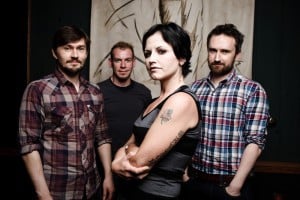
Combining the melodic jangle of post-<a href="spotify:artist:3yY2gUcIsjMr8hjo51PoJ8">Smiths</a> indie guitar pop with the lilting, trance-inducing sonic textures of late-'80s dream pop and adding a slight Celtic tint, the Cranberries became one of the more successful groups to emerge from the pre-Brit-pop indie scene of the early '90s. Led by vocalist <a href="spotify:artist:55s643XPig11NyYM8do64C">Dolores O'Riordan</a>, whose keening, powerful voice was the most distinctive element of the group's sound, they initially had little impact in the United Kingdom. It wasn't until the lush ballad "Linger" became a worldwide hit in 1993 that the band achieved mass success. Following "Linger," the Cranberries quickly became international stars, as both their 1993 debut album, Everybody Else Is Doing It, So Why Can't We?, and its 1994 follow-up, No Need to Argue, sold millions of copies and produced a string of hit singles. By the time of their third album, 1996's To the Faithful Departed, they had added distorted guitars to their sonic palette and began crafting more socially conscious music. They continued down this path into the 21st century before taking an extended hiatus in 2003 to pursue solo efforts. After nearly a decade, the quartet returned with 2012's Roses and 2017's Something Else. However, in early 2018, <a href="spotify:artist:55s643XPig11NyYM8do64C">O'Riordan</a> died from an accidental drowning in London. Her last vocal recordings were used to construct the Cranberries' final work, 2019's Grammy-nominated In the End, a goodbye to <a href="spotify:artist:55s643XPig11NyYM8do64C">O'Riordan</a>, fans, and the band itself. Originally, the Cranberries were a band called the Cranberry Saw Us. Brothers Noel and <a href="spotify:artist:467JmWxc2Gap3uh2d7qTgx">Mike Hogan</a> (guitar and bass, respectively) formed the band in Limerick, Ireland, with drummer Fergal Lawler in 1990. Following the departure of the group's original singer, Niall Quinn, the trio placed an advertisement for a female singer. <a href="spotify:artist:55s643XPig11NyYM8do64C">Dolores O'Riordan</a> responded to the advertisement and auditioned by writing lyrics and melodies to some of the band's existing demos. When she returned with a rough version of "Linger," the group hired her on the spot. Shortly after she joined, the band recorded a demo tape and sold it in record stores throughout Ireland. After the original run of 300 copies sold out, the group truncated its name to the Cranberries and sent another demo tape, which featured early versions of both "Linger" and "Dreams," to record companies throughout the U.K. The tape was made at Xeric Studios, which was run by Pearse Gilmore, who would later become their manager. At the time the tape was made, all of the members were still in their late teens. The demo tape earned the attention of both the U.K. press and record industry, and there was soon a bidding war between major British record labels. Eventually, the group signed with <a href="spotify:search:label%3A%22Island%22">Island</a>. The Cranberries headed into the studio with Gilmore as their producer to record their first single, "Uncertain." The title proved to be prophetic, as the band did indeed sound ill at ease on the single, leading to poor reviews in the press in addition to tensions between the group and Gilmore. Before they were scheduled to record their debut in 1992, the Cranberries discovered that Gilmore had signed a secret deal with <a href="spotify:search:label%3A%22Island%22">Island</a> to improve his studios. The tensions within the band became so great they nearly broke up. Instead, the Cranberries severed all relations with Gilmore, hired Geoff Travis of <a href="spotify:search:label%3A%22Rough+Trade%22">Rough Trade</a> as their new manager, and hired Stephen Street, who had previously worked with <a href="spotify:artist:3yY2gUcIsjMr8hjo51PoJ8">the Smiths</a>, as their new producer. The band's debut album, Everybody Else Is Doing It, So Why Can't We?, was released in the spring of 1993, followed by a single of "Dreams." Neither the album nor the single gained much attention, nor did the second single, "Linger." In the summer and fall of 1993, the band toured the United States, opening for <a href="spotify:artist:7cKtqv9cYVlOwnuCFH95ce">The The</a> and <a href="spotify:artist:6PHIK3kjWggLtVygsOtpqS">Suede</a>, respectively; frequently, the Cranberries were given a friendlier reception than either of the headliners. Their strong live shows led MTV to put "Linger" into heavy rotation. By the end of the year, the single was on its way to becoming a crossover hit. Eventually, the single reached number eight on the U.S. charts, while the album went double platinum. Everybody Else and "Linger" began to take off in Britain in early 1994; the album eventually peaked at number one during the summer. <a href="spotify:artist:55s643XPig11NyYM8do64C">O'Riordan</a> married the band's tour manager, Don Burton, in a much-publicized ceremony in July 1994. The marriage, as well as the group's videos, emphasized the singer as the focal point of the band. <a href="spotify:artist:55s643XPig11NyYM8do64C">O'Riordan</a>'s position in the group continued to rise with the fall release of the group's second album, No Need to Argue. Boasting a slightly harder, more streamlined sound, yet still produced by Stephen Street, the record debuted at number six on the U.S. charts and eventually outsold its predecessor; within a year it went triple platinum, spawning the enduring modern rock hit "Zombie" and "Ode to My Family." During the tour for No Need to Argue, rumors began to circulate that <a href="spotify:artist:55s643XPig11NyYM8do64C">O'Riordan</a> was going to leave the band to pursue a solo career, all of which the band vehemently denied. Nevertheless, the rumors persisted until the Cranberries began recording their next album with producer Bruce Fairbairn, who had previously worked with <a href="spotify:artist:7Ey4PD4MYsKc5I2dolUwbH">Aerosmith</a>. The resulting effort, To the Faithful Departed, was a tougher, more rock-oriented affair that centered upon loss and the pitfalls of fame. Released in April 1996, it rose to number 4 in the U.S., a chart peak, and shot to number one in Australasia. Lead single "Salvation" became their second U.S. Alternative chart-topper, with "Free to Decide" and "When You're Gone" charting across the globe. During the fall of 1996, the group canceled its Australian and European tours, sparking another round of rumors about <a href="spotify:artist:55s643XPig11NyYM8do64C">O'Riordan</a> launching a solo career. Yet, in 1999, the group released Bury the Hatchet, their last album to top multiple charts. The platinum-certified set featured more pop-oriented fare than its predecessor, spawning modest hits "Promises," "Animal Instinct," and the MTV favorite "Just My Imagination." The band quickly followed with 2001's Wake Up and Smell the Coffee, home to "Analyse" and "Time Is Ticking Out." Shortly after the release of a greatest-hits compilation in 2003, Stars: The Best of 1992-2002, the Cranberries officially declared that they were taking a break. This finally gave <a href="spotify:artist:55s643XPig11NyYM8do64C">O'Riordan</a> the time she needed to work on her long-teased solo album, Are You Listening?, which hit shelves in 2007. In 2009, <a href="spotify:artist:55s643XPig11NyYM8do64C">O'Riordan</a> released her second solo album, No Baggage. Around the same time, the Cranberries reunited for a North American tour that continued throughout Europe in 2010. Several live sets also appeared at the turn of the decade, including Bualadh Bos - The Cranberries Live, which charted in Europe and North America. In 2011, the band began work on a new album in Toronto with longtime producer Street. Released nearly a decade after the start of their extended hiatus, the resulting album, Roses, arrived in March 2012. A supporting tour followed, recorded for posterity on London 2012: Live at The Hammersmith Apollo. At the end of 2013, <a href="spotify:artist:55s643XPig11NyYM8do64C">O'Riordan</a> performed a New Year's Eve concert in Limerick with a string quartet from <a href="spotify:artist:5BEsC9s9MiyK1GKlef4TMN">the Irish Chamber Orchestra</a>. Inspired by the classical interpretation of the Cranberries sound, she approached the band with an idea to celebrate their silver anniversary. The result was a full album comprising string quartet renditions of the band's biggest hits. Something Else arrived in the spring of 2017, featuring their ten most successful singles culled from their first four albums, as well as three new songs. The band kicked off a tour in support of the album, but it was cut short due to <a href="spotify:artist:55s643XPig11NyYM8do64C">O'Riordan</a>'s ongoing back problems. On January 15, 2018, <a href="spotify:artist:55s643XPig11NyYM8do64C">O'Riordan</a> died of an accidental drowning at the age of 46 in London. At the time of her death, the Cranberries were in the middle of recording a new effort. After taking some time to process the tragedy, the remaining bandmembers decided to finish the project. Along with Stephen Street, they completed the LP using <a href="spotify:artist:55s643XPig11NyYM8do64C">O'Riordan</a>'s demo vocals. Released in April 2019, In the End featured the single "All Over Now" and served as the Cranberries' final album. Peaking in the Top Ten across Europe and in the U.S. side charts, the farewell set was later nominated for a Grammy for Best Rock Album. In the years that followed her passing, the band continued efforts to honor <a href="spotify:artist:55s643XPig11NyYM8do64C">O'Riordan</a>, issuing Remembering Dolores, a 2021 compilation of favorites that was released on what would have been her 50th birthday, and a 2023 deluxe reissue of To the Faithful Departed, which included the original album-era B-sides, outtakes, and demos recorded in Paris, as well as live recordings from 1996 shows at Molson Amphitheatre in Toronto and Pine Knob in Clarkston, Michigan. ~ Stephen Thomas Erlewine & Neil Z. Yeung, Rovi
The Cure
Artist
THE CURE - FEELS LIKE A HUNDRED WORDS BIOGRAPHY >FORMED IN CRAWLEY, SUSSEX, ENGLAND. PLAYED IT'S FIRST SHOW IN 1978. HAS PERFORMED AROUND 1,500 CONCERTS TO DATE >HAS RELEASED 13 STUDIO ALBUMS. SEVERAL CONCERT FILMS. A FEW LIVE ALBUMS. SOME SOUNDTRACK SONGS. MORE THAN 40 SINGLES. A COUPLE OF BOX SETS. A COUPLE OF BOOKS. A GREATEST HITS THING. A HANDFUL OF COVERS. AND VARIOUS OTHER STUFF >2019 ROCK’N’ROLL HALL OF FAMER HAS HAD 13 MEMBERS IN 42 YEARS. 2020 FEATURES 5 OF THEM: ROBERT SMITH (VOICE & GUITARS) / SIMON GALLUP (BASS) / JASON COOPER (DRUMS) / ROGER O'DONNELL (KEYBOARDS) / REEVES GABRELS (GUITARS) >PLEASE SEE THIS BIOGRAPHY FOR A LONGER STORY http://www.thecure.com/bio/
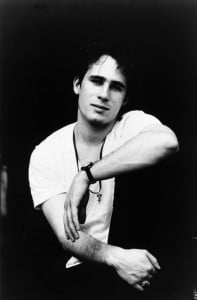
Jeff Buckley
Artist
Since he was the son of cult songwriter <a href="spotify:artist:6zHRqvws8dVeqL8D31ponr">Tim Buckley</a>, Jeff Buckley faced more expectations and preconceived notions than most singer/songwriters. Perhaps it wasn't surprising that Jeff Buckley's music was related to his father's by only the thinnest of margins. Buckley's voice was grand and sweeping, which fit with the mock-operatic grandeur of his <a href="spotify:artist:44NX2ffIYHr6D4n7RaZF7A">Van Morrison</a>-meets-<a href="spotify:artist:36QJpDe2go2KgaRleHCDTp">Led Zeppelin</a> music. His audacious debut, Grace, made him one of the most popular alternative artists of the '90s, accentuated by his early and tragic death in 1997, and his cover of <a href="spotify:artist:5l8VQNuIg0turYE1VtM9zV">Leonard Cohen</a>'s "Hallelujah" virtually redefined the song for a modern audience. Buckley began playing while in high school. Eventually, he moved to Los Angeles to study music; while he was there, he performed with several jazz and funk bands, as well as playing with <a href="spotify:artist:0AcEt9ujUBWQ50cZsaskWo">Shinehead</a>, a leader in the dancehall reggae movement. A few years later, he moved to New York, forming Gods & Monsters with the experimental guitarist <a href="spotify:artist:7pfGmIs49lIUBtoqAtyUEH">Gary Lucas</a>. The band became a hip name, yet its lifespan was short. Buckley began a solo career playing clubs and coffee houses, building up a considerable following. Soon, he signed a record deal with <a href="spotify:search:label%3A%22Columbia+Records%22">Columbia Records</a>, releasing the Live at Sin-e EP in November of 1993. It received good reviews, yet they didn't compare to the raves Buckley's full-length debut, 1994's Grace, received. Unlike the EP, the album was recorded with a full band, which gave the record textures that surprised some of his longtime New York followers. Nevertheless, it made several year-end "Best of 1994" lists and earned him a belated alternative hit, "Last Goodbye," in the spring of 1995. A long hiatus followed as Buckley worked on material for his follow-up effort, provisionally titled My Sweetheart the Drunk. Originally slated to be produced by <a href="spotify:artist:4rxXqaQUe5udkRsGRDDDIY">Tom Verlaine</a>, who later dropped out of the project, Buckley finally began work on the record in Memphis during the late spring of 1997. On the night of May 29, he and a friend traveled to the local Mud Island Harbor, where Buckley spontaneously decided to go swimming in the Mississippi River and waded into the water fully clothed. A few minutes later, he disappeared under the waves; authorities were quickly contacted, but to no avail -- on June 4, his body was finally found floating near the city's famed Beale Street area. Buckley was 30 years old. A collection of unreleased recordings, Sketches for My Sweetheart the Drunk, appeared in 1998, and two live albums arrived during 2000-2001, Mystery White Boy and Live a l'Olympia. Over the next decade and a half, other posthumous records appeared -- the compilation So Real: Songs from Jeff Buckley in 2007, the live album Grace Around the World in 2009 -- but the biggest excavation from the vaults was 2016's You and I, which presented cover versions the singer/songwriter had recorded early in his career. ~ Stephen Thomas Erlewine, Rovi
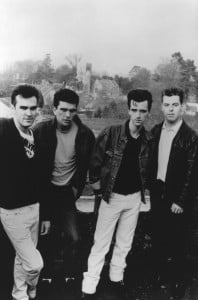
The Smiths
Artist
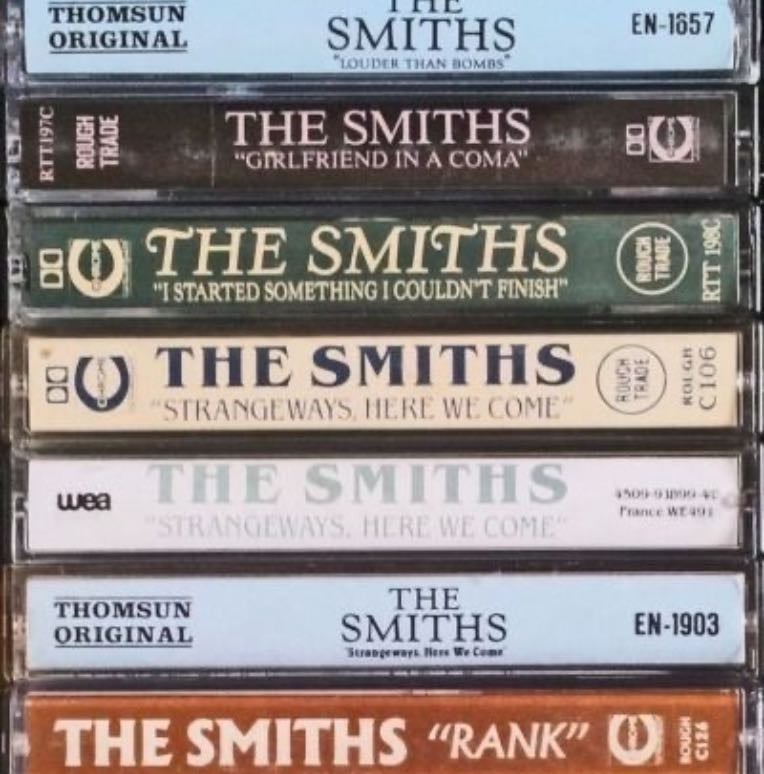
The Smiths were the definitive British indie rock band of the '80s, marking the end of synth-driven new wave and the beginning of the guitar rock that dominated English rock into the '90s. Sonically, the group was indebted to the British Invasion, crafting ringing, melodic three-minute pop singles, even for their album tracks. But their scope was far broader than that of a revivalist band. The group's core members, vocalist Morrissey and guitarist Johnny Marr, were obsessive rock fans inspired by the D.I.Y. ethics of punk, but they also had a fondness for girl groups, pop, and rockabilly. Morrissey and Marr also represented one of the strangest teams of collaborators in rock history. Marr was the rock traditionalist, looking like an elegant version of Keith Richards during the Smiths' heyday and meticulously layering his guitar tracks in the studio. Morrissey, on the other hand, broke from rock tradition by singing in a keening, self-absorbed croon, embracing the forlorn, romantic poetry of Oscar Wilde, publicly declaring his celibacy, and making no secret of his disgust for most of his peers. While it eventually led to the Smiths' early demise, the friction between Morrissey and Marr resulted in a flurry of singles and albums over the course of three years that provided the blueprint for British guitar rock in the following decade. Before forming the Smiths in 1982, Johnny Marr (born John Maher, October 31, 1963; guitar) had played in a variety of Manchester-based rock & roll bands, including Sister Ray, Freaky Part, White Dice, and Paris Valentinos. On occasion, Marr had come close to a record contract -- one of his bands won a competition Stiff Records held to have Nick Lowe "produce your band" -- but he never quite made the leap. Though Morrissey (born Steven Patrick Morrissey, May 22, 1959; vocals) had sung for a few weeks with the Nosebleeds and auditioned for Slaughter & the Dogs, he had primarily contented himself to being a passionate, vocal fan of both music and film. During his teens, he wrote the Melody Maker frequently, often getting his letters published. He had written the biography/tribute James Dean Isn't Dead, which was published by the local Manchester publishing house Babylon Books in the late '70s, as well as another book on the New York Dolls; he was also the president of the English New York Dolls fan club. Morrissey met Marr, who was then looking for a lyricist, through mutual friends in the spring of 1982. The pair began writing songs, eventually recording some demos with the Fall's drummer, Simon Wolstencroft. By the fall, the duo had settled on the name the Smiths and recruited Marr's schoolmate Andy Rourke as their bassist and Mike Joyce as their drummer. The Smiths made their live debut late in 1982, and by the spring of 1983, the group had earned a small but loyal following in their hometown of Manchester and had begun to make inroads in London. Rejecting a record deal with the Mancunian Factory Records, the band signed with Rough Trade for a one-off single, "Hand in Glove." With its veiled references to homosexuality and its ringing riffs, "Hand in Glove" became an underground sensation in the U.K., topping the independent charts and earning the praise of the U.K. music weeklies. Soon, Morrissey's performances became notorious as he appeared on-stage wearing a hearing aid and with gladioli stuffed in his back pockets. His interviews were becoming famous for his forthright, often contrary opinions, which helped the band become a media sensation. By the time of the group's second single, "This Charming Man," in late 1983, the Smiths had already been the subject of controversy over "Reel Around the Fountain," a song that had been aired on a BBC radio session and was alleged to condone child abuse. It was the first time that Morrissey's detached, literary, and ironic lyrics were misinterpreted and it wouldn't be the last. "This Charming Man" reached number 25 on the British charts in December of 1983, setting the stage for "What Difference Does It Make"'s peak of number 12 in February. The Smiths' rise to the upper reaches of the British charts was swift, and the passion of their fans, as well as the U.K. music press, indicated that the group had put an end to the synth-powered new wave that dominated Britain in the early '80s. After rejecting their initial stab at a first album, they released their debut, The Smiths, in the spring of 1984 to strong reviews and sales -- it peaked at number two. A few months later, the group backed '60s pop vocalist Sandie Shaw -- who Morrissey had publicly praised in an article -- on a version of "Hand in Glove" that was released and reached the Top 40. "Heaven Knows I'm Miserable Now" reached number ten, becoming their highest-charting single amid a storm of controversy about its B-side, "Suffer Little Children," which was about the notorious Moors Murders. More controversy appeared when Morrissey denounced the hunger-relief efforts of Band Aid, but the group's popularity was not affected. Though the Smiths had become the most popular new rock & roll group in Britain, the group failed to make it outside of underground and college radio in the U.S., partially because they never launched a full-scale tour. At the end of the year, "William It Was Really Nothing" became a Top 20 hit and Hatful of Hollow, a collection of B-sides, BBC sessions, and non-LP singles, went to the Top Ten, followed shortly by "How Soon Is Now," which peaked at number 24. Meat Is Murder, the band's second proper studio album, entered the British charts at number one in February of 1985, despite some criticism that it was weaker than The Smiths. Around the time of the release of Meat Is Murder, Morrissey's interviews were becoming increasingly political as he trashed the Thatcher administration and campaigned for vegetarianism; he even claimed that the Smiths were all vegetarians, and he forbade the remaining members to be photographed eating meat, even though they were still carnivores. Marr, for his part, was delving deeply into the rock & roll lifestyle and looked increasingly like a cross between Keith Richards and Brian Jones. By the time the non-LP "Shakespeare's Sister" reached number 26 in the spring of 1985, the Smiths had spawned a rash of soundalike bands, including James, who opened for the group on their spring 1985 tour, most of whom Morrissey supported. However, all of the media attention on the Smiths launched a mild backlash later in 1985, when "That Joke Isn't Funny Anymore" was pulled from Meat Is Murder and failed to reach the Top 40. "The Boy with the Thorn in His Side" revived the band's fortunes in the fall of 1985, and their third album, The Queen Is Dead, confirmed their popularity upon its release in the spring of 1986. Greeted with enthusiastic reviews and peaking at number two on the U.K. charts, The Queen Is Dead also expanded their cult following in the U.S., cracking the Top 100. Shortly before the album was completed, former Aztec Camera guitarist Craig Gannon became the band's rhythm guitarist, and he played with the band throughout their 1986 international tour, including a botched American tour. The non-LP "Panic," which was criticized as racist by some observers for its repeated refrain of "Burn down the disco...hang the DJ," reached number 11 late in the summer. A few months after its release, Marr was seriously injured in a car crash. During his recuperation, Gannon was fired from the band, as was Rourke, who was suffering from heroin addiction. Though Rourke was later reinstated, Gannon was never replaced. The Smiths may have been at the height of their popularity in early 1987, with the non-LP singles "Shoplifters of the World" and "Sheila Take a Bow" reaching number 11 and ten respectively, and the singles and B-sides compilation The World Won't Listen (revamped for U.S. release as Louder Than Bombs later in 1987) debuting at number two, but Marr was growing increasingly disenchanted with the band and the music industry. Over the course of the year, Morrissey and Marr became increasingly irritated with each other. The singer wished that Marr would stop playing with other artists like Bryan Ferry and Billy Bragg, while the guitarist was frustrated with Morrissey's devotion to '60s pop and his hesitancy to explore new musical directions. A few weeks before the fall release of Strangeways, Here We Come, Marr announced that he was leaving the Smiths. Morrissey disbanded the group shortly afterward and began a solo career, signing with Parlophone in the U.K. and staying with the Smiths' U.S. label, Reprise. Marr played as a sideman with a variety of artists, eventually forming Electronic with New Order frontman Bernard Sumner. Rourke retired from recording and Joyce became a member of the reunited Buzzcocks in 1991. Rank, a live album recorded on the Queen Is Dead tour, was released in the fall of 1988. It debuted at number two in the U.K. A widely criticized, two-part The Best of the Smiths compilation was released in 1992; the praised Singles compilation was released in 1995. Joyce and Rourke sued Morrissey and Marr in 1991, claiming they received only ten percent of the group's earnings while the songwriters received 40 percent. Rourke eventually settled out of court, but Joyce won his case in late 1996. ~ Stephen Thomas Erlewine
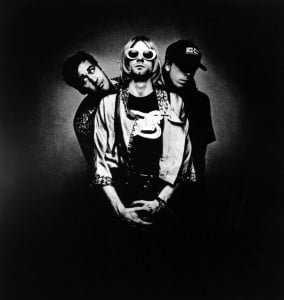
Nirvana
Artist
Nothing was ever quite the same after Nirvana. The band's second album, 1991's Nevermind, revolutionized popular music by bringing alternative rock above ground, introducing mainstream audiences to sounds and concepts that had previously existed only in shadowy record store corners and on low-frequency college radio airwaves. Nevermind's noisy, dissonant guitar rock, mumbled or howled surrealistic lyrics, and generally angsty punk attitudes were unlikely candidates for chart success, but the band undercut their grungy songs with enough pop melodicism to create a sound unlike anything average listeners had ever heard before, striking at the exact right moment to become an unprecedented success. Since Nirvana were rooted in an indie aesthetic but loved pop music, they fought their stardom while courting it, becoming some of the most notorious anti-rock stars in history. They consciously attempted to shed their audience with 1993's abrasive, <a href="spotify:artist:52ZFTGbQ9miWMX8JYBvtOO">Steve Albini</a>-produced third album In Utero, but vocalist/guitarist/songwriter <a href="spotify:artist:6pAuTi6FXi6qFQJ1dzMXQs">Kurt Cobain</a>'s growing mental health and substance abuse issues led to his death by suicide in 1994. Though Nirvana's story was cut tragically short, their legacy stands as one of the most influential in rock & roll history. <a href="spotify:artist:6pAuTi6FXi6qFQJ1dzMXQs">Kurt Cobain</a> (vocals, guitar) met <a href="spotify:artist:4BZKfXia2RPZnzCgQ2fG8M">Chris Novoselic</a> (born <a href="spotify:artist:4BZKfXia2RPZnzCgQ2fG8M">Krist Novoselic</a>) (bass) in 1985 in Aberdeen, Washington, a small logging town 100 miles away from Seattle. While <a href="spotify:artist:4BZKfXia2RPZnzCgQ2fG8M">Novoselic</a> came from a relatively stable background, <a href="spotify:artist:6pAuTi6FXi6qFQJ1dzMXQs">Cobain</a>'s childhood had been thrown into turmoil when his parents divorced when he was eight. Following the divorce, he lived at the homes of various relatives, developing a love for <a href="spotify:artist:3WrFJ7ztbogyGnTHbHJFl2">the Beatles</a> and then heavy metal in the process. Eventually, American hardcore punk worked its way into dominating his listening habits and he met <a href="spotify:artist:6aVjo0xHSiuW5hkasoYSR3">the Melvins</a>, an Olympia-based underground heavy punk band. <a href="spotify:artist:6pAuTi6FXi6qFQJ1dzMXQs">Cobain</a> began playing in punk bands like Fecal Matter, often with <a href="spotify:artist:6aVjo0xHSiuW5hkasoYSR3">the Melvins</a>' bassist <a href="spotify:artist:4IRzt4Zde0xpbbc2BtsRGm">Dale Crover</a>. Through <a href="spotify:artist:6aVjo0xHSiuW5hkasoYSR3">the Melvins</a>' leader, Buzz Osborne, <a href="spotify:artist:6pAuTi6FXi6qFQJ1dzMXQs">Cobain</a> met <a href="spotify:artist:4BZKfXia2RPZnzCgQ2fG8M">Novoselic</a>, who also had an intense interest in punk, which meant that he, like <a href="spotify:artist:6pAuTi6FXi6qFQJ1dzMXQs">Cobain</a>, felt alienated from the macho, redneck population of Aberdeen. The duo decided to form a band called the Stiff Woodies, with <a href="spotify:artist:6pAuTi6FXi6qFQJ1dzMXQs">Cobain</a> on drums, <a href="spotify:artist:4BZKfXia2RPZnzCgQ2fG8M">Novoselic</a> on bass, and a rotating cast of guitarists and vocalists. The group went through name changes as quickly as guitarists, before deciding that <a href="spotify:artist:6pAuTi6FXi6qFQJ1dzMXQs">Cobain</a> would play guitar and sing. Renamed <a href="spotify:artist:4opTS86dN9uO313J9CE8xg">Skid Row</a>, the new trio featured drummer Aaron Burkhart, who left the band by the end of 1986 and was replaced by Chad Channing. By 1987, the band was called Nirvana. Nirvana began playing parties in Olympia, gaining a cult following. Around 1987, the band made ten demos with producer <a href="spotify:artist:5WPz1DmtxRJBajeTYGiftU">Jack Endino</a>, who played the recordings to Jonathan Poneman, one of the founders of the Seattle-based indie label <a href="spotify:search:label%3A%22Sub+Pop%22">Sub Pop</a>. Poneman signed Nirvana, and in December of 1988, the band released its first single, a cover of <a href="spotify:artist:5WimOFbBnCU5wI6t5PPpEk">Shocking Blue</a>'s "Love Buzz." <a href="spotify:search:label%3A%22Sub+Pop%22">Sub Pop</a> orchestrated an effective marketing scheme, which painted the band as backwoods, logging-town hicks, which irritated <a href="spotify:artist:6pAuTi6FXi6qFQJ1dzMXQs">Cobain</a> and <a href="spotify:artist:4BZKfXia2RPZnzCgQ2fG8M">Novoselic</a>. While "Love Buzz" was fairly well-received, the band's debut album, Bleach, was what got the ball rolling. Recorded for just over $600 and released in June 1989, Bleach slowly became a hit on college radio, due to the group's consistent touring. Though Jason Everman was credited as a second guitarist on the sleeve of Bleach, he didn't appear on the record; he only toured in support of the album before leaving the band at the end of the year to join <a href="spotify:artist:5xUf6j4upBrXZPg6AI4MRK">Soundgarden</a> and then Mindfunk. Bleach sold 35,000 copies and Nirvana became favorites of college radio, the British weekly music press, and <a href="spotify:artist:5UqTO8smerMvxHYA5xsXb6">Sonic Youth</a>, <a href="spotify:artist:7LuYiSXiWs86rwWJjEEgB9">Mudhoney</a>, and <a href="spotify:artist:267VY6GX5LyU5c9M85ECZQ">Dinosaur Jr.</a>, which was enough to attract the attention of major labels. In July 1990, Nirvana recorded "Sliver"/"Dive" with <a href="spotify:artist:7LuYiSXiWs86rwWJjEEgB9">Mudhoney</a> drummer Dan Peters on drums and producer <a href="spotify:artist:0gTi2zsOHn6wtlkx66uxXM">Butch Vig</a>. The band also made a six-song demo with <a href="spotify:artist:0gTi2zsOHn6wtlkx66uxXM">Vig</a>, which was shopped to major labels, who soon began competing to sign the group. In August, they hit the road with <a href="spotify:artist:5UqTO8smerMvxHYA5xsXb6">Sonic Youth</a>'s Goo tour (including <a href="spotify:artist:4IRzt4Zde0xpbbc2BtsRGm">Crover</a> on drums). That September, <a href="spotify:artist:7mRVAzlt1fAAR9Cut6Rq8c">Dave Grohl</a>, formerly of the D.C.-based hardcore band <a href="spotify:artist:0wIhCBrT02x0GG5bKqcSAh">Scream</a>, became Nirvana's drummer and the band signed with <a href="spotify:search:label%3A%22DGC%22">DGC</a> for $287,000. Nirvana recorded their second album with <a href="spotify:artist:0gTi2zsOHn6wtlkx66uxXM">Vig</a>, completing the record in June of 1991. Nevermind was released in September, supported by a quick American tour. While <a href="spotify:search:label%3A%22DGC%22">DGC</a> was expecting a moderately successful release, in the neighborhood of 100,000 copies, Nevermind immediately became a smash hit, quickly selling out its initial shipment of 50,000 copies and creating a shortage across America. What helped the record become a success was "Smells Like Teen Spirit," a blistering four-chord rocker that was accompanied by a video that shot into heavy MTV rotation. By the beginning of 1992, "Smells Like Teen Spirit" had climbed into the American Top Ten and Nevermind bumped <a href="spotify:artist:3fMbdgg4jU18AjLCKBhRSm">Michael Jackson</a>'s much-touted comeback album Dangerous off the top of the album charts; it reached the British Top Ten shortly afterward. By February, the album had been certified triple platinum. Nirvana's success took the music industry by surprise, Nirvana included. From the moment Nirvana were met with mainstream visibility, <a href="spotify:artist:6pAuTi6FXi6qFQJ1dzMXQs">Cobain</a> used his newfound fame to relentlessly push his favorite independent artists as if their music was more important than his own. This took the form of bringing Japanese alt-pop trio <a href="spotify:artist:4ukJlDdlvuQOHZdD2NVsFD">Shonen Knife</a> on tour, covering lesser-known but formative artists like <a href="spotify:artist:0sTTw3dw3EA0c7NaZnrJd2">the Wipers</a>, <a href="spotify:artist:4wWQkHhmUNlXvhbHRUSqZW">the Vaselines</a>, and <a href="spotify:artist:2h9yQhKyqOMex3QFMVeq7F">Meat Puppets</a>, or wearing a homemade <a href="spotify:artist:1jeYbk5eqo6wgsQPjLeU5w">Daniel Johnston</a> t-shirt during television appearances and high-profile concerts. <a href="spotify:artist:6pAuTi6FXi6qFQJ1dzMXQs">Cobain</a>'s enthusiastic fandom introduced untold numbers of Nirvana fans to artists they most likely wouldn't have known to seek out on their own, and in the process, energized those artists' careers. It soon became apparent that Nirvana wasn't quite sure how to handle its success. Around the time of Nevermind's release, <a href="spotify:artist:6pAuTi6FXi6qFQJ1dzMXQs">Cobain</a> appeared on MTV's Headbangers Ball in drag; the group mocked the tradition of miming on the BBC's Top of the Pops, with <a href="spotify:artist:4BZKfXia2RPZnzCgQ2fG8M">Novoselic</a> constantly throwing his bass into the air and <a href="spotify:artist:6pAuTi6FXi6qFQJ1dzMXQs">Cobain</a> singing his live vocals in the style of Ian Curtis; and their traditional live destruction of instruments was immortalized on a Saturday Night Live performance that ended with <a href="spotify:artist:4BZKfXia2RPZnzCgQ2fG8M">Novoselic</a> and <a href="spotify:artist:7mRVAzlt1fAAR9Cut6Rq8c">Grohl</a> sharing a kiss. By early 1992, questions began to arise about the band's stability. <a href="spotify:artist:6pAuTi6FXi6qFQJ1dzMXQs">Cobain</a> married <a href="spotify:artist:4vI0xGbQl2cMnMiagUEBOj">Courtney Love</a>, the leader of the indie rock/foxcore band <a href="spotify:artist:5SHQUMAmEK5KmuSb0aDvsn">Hole</a>, in February of 1992, announcing that the couple was expecting a child. A few months later, Nirvana canceled several concerts and refused to mount a full-scale American tour during the summer. <a href="spotify:artist:6pAuTi6FXi6qFQJ1dzMXQs">Cobain</a> complained that he was suffering from chronic stomach troubles, which seemed to be confirmed when he was admitted to a Belfast hospital after a June concert. While he went through these problems,<a href="spotify:search:label%3A%22DGC%22">DGC</a> released the odds-and-ends compilation Incesticide late in 1992; the album reached number 39 U.S. and number 14 U.K. As Nirvana prepared to make their third album, they released "Oh, the Guilt" as a split single with <a href="spotify:artist:6r26MaDr8bqNALjXgYPXMa">the Jesus Lizard</a> on <a href="spotify:search:label%3A%22Touch+%26+Go+Records%22">Touch & Go Records</a>. Choosing <a href="spotify:artist:52ZFTGbQ9miWMX8JYBvtOO">Steve Albini</a> (<a href="spotify:artist:6zvul52xwTWzilBZl6BUbT">Pixies</a>, <a href="spotify:artist:1xgFexIwrf2QjbU0buCNnp">the Breeders</a>, <a href="spotify:artist:5EYkvHZuGM3pwU3DZUrrZ3">Big Black</a>, <a href="spotify:artist:6r26MaDr8bqNALjXgYPXMa">the Jesus Lizard</a>) as their producer, they recorded In Utero, in two weeks during. Februrary 1993. Later in the year, reports, including an article in Newsweek, circulated that DGC was unhappy with the forthcoming album, and making accusations that Nirvana deliberately made an uncommercial record. Both the band and the label denied such allegations. Deciding that <a href="spotify:artist:52ZFTGbQ9miWMX8JYBvtOO">Albini</a>'s production was too flat, Nirvana decided to remaster the album with <a href="spotify:artist:4KWTAlx2RvbpseOGMEmROg">R.E.M.</a> producer <a href="spotify:artist:1jBYxrGP7Ev7Qs0X5qJdDM">Scott Litt</a>, who also remixed the singles "Heart Shaped Box" and "All Apologies." In Utero was released in September of 1993 to positive reviews and strong initial sales, debuting at the top of the U.S. and U.K. charts. Nirvana supported it with an American tour, hiring former <a href="spotify:artist:39zgKjGWsiZzJ9h6gbrPFY">Germs</a> member <a href="spotify:artist:36AOO7vOYRSjm2nVgvu63E">Pat Smear</a> as an auxiliary guitarist. While the album and the tour were both successful, sales weren't quite as strong as expected, with several shows not selling out until the week of the concert. As a result, the group agreed to play MTV's acoustic Unplugged show at the end of the year, and sales of In Utero picked up after its December airing. After wrapping up their U.S. tour on January 8, 1994 with a show at Center Arena in Seattle, Nirvana embarked on a European tour in February. Following a concert in Munich on February 29, <a href="spotify:artist:6pAuTi6FXi6qFQJ1dzMXQs">Cobain</a> stayed in Rome to vacation with <a href="spotify:artist:4vI0xGbQl2cMnMiagUEBOj">Love</a>. On March 4, she awakened to find that <a href="spotify:artist:6pAuTi6FXi6qFQJ1dzMXQs">Cobain</a> had attempted suicide. When he returned to Seattle, his mental illness grew worse. <a href="spotify:artist:4vI0xGbQl2cMnMiagUEBOj">Love</a> and Nirvana's management organized an intervention program that resulted in <a href="spotify:artist:6pAuTi6FXi6qFQJ1dzMXQs">Cobain</a>'s admission to the Exodus Recovery Center in L.A. on March 30, but he left the clinic on April 1, returning to Seattle. His mother filed a missing persons report on April 4. On April 5, <a href="spotify:artist:6pAuTi6FXi6qFQJ1dzMXQs">Cobain</a> died by suicide at his Seattle home.After his death, <a href="spotify:artist:6pAuTi6FXi6qFQJ1dzMXQs">Kurt Cobain</a> was quickly anointed as a spokesman for Generation X, as well as a symbol of its tortured angst. <a href="spotify:artist:4BZKfXia2RPZnzCgQ2fG8M">Novoselic</a> and <a href="spotify:artist:7mRVAzlt1fAAR9Cut6Rq8c">Grohl</a> planned to release a double-disc live album at the end of 1994, but sorting through the tapes proved to be too painful, so MTV Unplugged in New York appeared in its place. The album debuted at the top of the British and American charts, as a home video comprised of live performances and interviews from the band's Nevermind era, titled Live! Tonight! Sold Out!, was issued at the same time (the project began prior to <a href="spotify:artist:6pAuTi6FXi6qFQJ1dzMXQs">Cobain</a>'s passing and was completed by surviving bandmembers). In 1996, MTV Unplugged in New York's electric counterpart, From the Muddy Banks of the Wishkah, was released, debuting at the top of the U.S. charts. Following <a href="spotify:artist:6pAuTi6FXi6qFQJ1dzMXQs">Cobain</a>'s death, <a href="spotify:artist:7mRVAzlt1fAAR9Cut6Rq8c">Grohl</a> formed <a href="spotify:artist:7jy3rLJdDQY21OgRLCZ9sD">the Foo Fighters</a>, releasing their self-titled debut album in 1995, followed by The Colour and the Shape in 1997 and There Is Nothing Left to Lose in 1999. <a href="spotify:artist:4BZKfXia2RPZnzCgQ2fG8M">Novoselic</a> formed the trio Sweet 75, releasing their debut in the spring of 1997, and also appeared along with former <a href="spotify:artist:30U8fYtiNpeA5KH6H87QUV">Dead Kennedys</a> frontman <a href="spotify:artist:1ddbFlSqbqp2vuJd5CuRcE">Jello Biafra</a> and former <a href="spotify:artist:5xUf6j4upBrXZPg6AI4MRK">Soundgarden</a> guitarist Kim Thayil on the 2000 live set Live from the Battle in Seattle under the name <a href="spotify:artist:0l6DIGXp0GGVDEieOA0D0P">the No W.T.O. Combo</a>. By the late '90s, <a href="spotify:artist:4BZKfXia2RPZnzCgQ2fG8M">Novoselic</a> began research for a proposed box set of previously unreleased songs from throughout Nirvana's career. The project was supposed to surface in the fall of 2001 (to coincide with the tenth anniversary release of Nevermind), but legal issues delayed its release. Finally, the Nirvana LLC partnership -- which included <a href="spotify:artist:7mRVAzlt1fAAR9Cut6Rq8c">Grohl</a>, <a href="spotify:artist:4BZKfXia2RPZnzCgQ2fG8M">Novoselic</a>, and <a href="spotify:artist:4vI0xGbQl2cMnMiagUEBOj">Love</a> -- came to an agreement and the album-length compilation Nirvana was released in October of 2002. Although that release included only one unreleased song, the long-awaited box set, titled With the Lights Out, appeared in late 2004, including three discs of rare and unreleased material plus a live DVD that featured material filmed as early as 1988. The band's 1992 set at the Reading Festival was released in 2009 as Live at Reading. The same year, <a href="spotify:search:label%3A%22Sub+Pop%22">Sub Pop</a> began a Nirvana studio album reissue campaign with Bleach; special 20th-anniversary editions of Nevermind and In Utero followed in 2011 and 2013, respectively. In 2014, Nirvana was inducted into the Rock & Roll Hall of Fame by <a href="spotify:artist:4KWTAlx2RvbpseOGMEmROg">R.E.M.</a>'s <a href="spotify:artist:2G1Lyk7bWbBBrtwyl3obNB">Michael Stipe</a>. <a href="spotify:artist:6pAuTi6FXi6qFQJ1dzMXQs">Cobain</a>'s place in the induction performance was taken by several vocalists, including Joan Jett and <a href="spotify:artist:3n8qeKQViV1waeCzZmS4Tx">Kim Gordon</a>. ~ Stephen Thomas Erlewine & Greg Prato, Rovi
Uncategorized
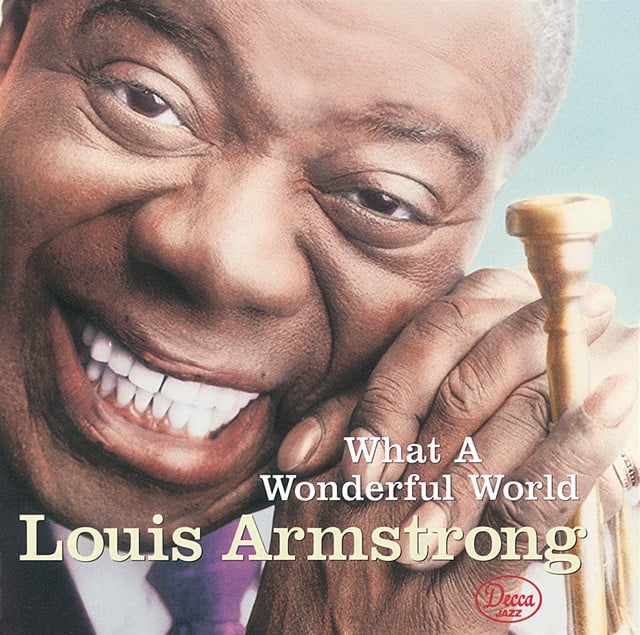
What A Wonderful World
Track · Louis Armstrong
Performed by Louis Armstrong, this song celebrates the simple beauty and wonder of the world.