𐙚 Neuroscience ¡!

Items in this hypelist
Finished
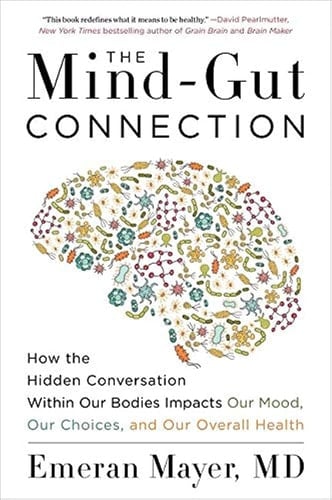
The Mind-Gut Connection: How the Hidden Conversation Within Our Bodies Impacts Our Mood, Our Choices, and Our Overall Health
Emeran Mayer • 2018
Combining cutting-edge neuroscience with the latest discoveries on the human microbiome, a practical guide in the tradition of Wheat Belly and Grain Brain that conclusively demonstrates the inextricable, biological link between mind and body.<br/>We have all experienced the connection between our mind and our gut—the decision we made because it “felt right”; the butterflies in our stomach before a big meeting; the anxious stomach rumbling when we’re stressed out. While the dialogue between the gut and the brain has been recognized by ancient healing traditions, including Ayurvedic and Chinese medicine, Western medicine has failed to appreciate the complexity of how the brain, gut, and more recently, the microbiome—the microorganisms that live inside us—communicate with one another. In The Mind-Gut Connection, Dr. Emeran Mayer, executive director of the UCLA Center for Neurobiology of Stress, offers a revolutionary look at this developing science, teaching us how to harness the power of the mind-gut connection to take charge of our health.<br/>The Mind-Gut Connection shows how to keep the brain-gut communication clear and balanced to:<br/>• heal the gut by focusing on a plant-based diet<br/>• balance the microbiome by consuming fermented foods and probiotics, fasting, and cutting out sugar and processed foods<br/>• promote weight loss by detoxifying and creating healthy digestion and maximum nutrient absorption<br/>• boost immunity and prevent the onset of neurological diseases such as Parkinson’s and<br/>Alzheimer’s<br/>• generate a happier mindset and reduce fatigue, moodiness, anxiety, and depression<br/>• prevent and heal GI disorders such as leaky gut syndrome, food sensitivities and allergies, and IBS, as well as digestive discomfort such as heartburn and bloating<br/>• and much more.
Psychology
Neil R. Carlson • 2010
Based on the connections between behavior and its biological underpinnings, Carlson presents psychological behavior in the context of its adaptive significance - effectively leading students through the discovery process and enabling them to think critically about contemporary issues.

Fundamental Neuroscience (Squire,Fundamental Neuroscience)
Larry Squire • 2012
The fourth edition of Fundamental Neuroscience reinvents itself as an engrossing and comprehensive presentation of the discipline of neuroscience, from molecules to cognition. Thorough but succinct, and lavishly illustrated, the book builds from an introductory section that includes fundamental neuroanatomy and goes on to cover cellular and molecular neuroscience, development, sensory systems, motor systems, regulatory systems, and behavioral and cognitive neuroscience. The book has been retooled to better serve its audience in the neuroscience and medical communities.<br/>The chapters include more than 100 boxes describing clinical conditions, techniques, and other special topics. Each chapter went through a thorough review process, giving the book an evenness of tone. The chapters are authored by outstanding working scientists who are experts on the topics they cover. Selected for inclusion in Doody's Core Titles 2013, an essential collection development tool for health sciences libraries 30 percent new material including new chapters on dendritic development and spine morphogenesis, chemical senses, cerebellum, eye movements, circadian timing, sleep and dreaming, and consciousness Accompanying website for students and instructors Additional text boxes describing key experiments, disorders, methods, and concepts More than 650 four color illustrations, micrographs, and neuroimages Multiple model system coverage beyond rats, mice, and monkeys Extensively expanded index for easier referencing
Reading
The Left Brain Speaks, the Right Brain Laughs
Ransom Stephens • 2016
The Brain: The Story of You
David Eagleman • 2017
From the renowned neuroscientist and New York Times bestselling author of Incognito comes the companion volume to the international PBS series about how your life shapes your brain, and how your brain shapes your life.<br/><br/>"An ideal introduction to how biology generates the mind.... Clear, engaging and thought-provoking." —Nature<br/><br/>Locked in the silence and darkness of your skull, your brain fashions the rich narratives of your reality and your identity. Join renowned neuroscientist David Eagleman for a journey into the questions at the mysterious heart of our existence. What is reality? Who are “you”? How do you make decisions? Why does your brain need other people? How is technology poised to change what it means to be human?<br/><br/>In the course of his investigations, Eagleman guides us through the world of extreme sports, criminal justice, facial expressions, genocide, brain surgery, gut feelings, robotics, and the search for immortality. Strap in for a whistle-stop tour into the inner cosmos. In the infinitely dense tangle of billions of brain cells and their trillions of connections, something emerges that you might not have expected to see in there: you.<br/><br/>Color illustrations throughout.
Conversations on Consciousness
Susan Blackmore • 2006
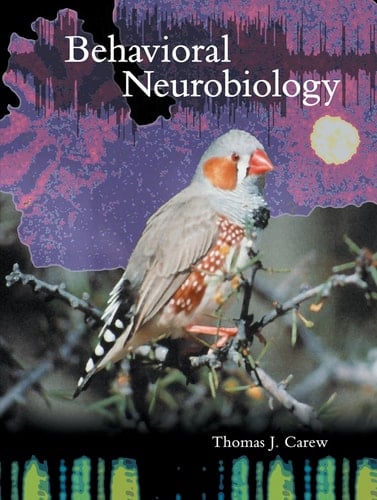
Behavioral Neurobiology: The Cellular Organization of Natural Behavior
Thomas J. Carew • 2004
Behavioral Neurobiology provides a novel treatment of the neural basis of behavior. The pedagogical premise of the book is that general insights into the neuronal organization of behavior can be gained by examining neural solutions that have evolved in animals to solve problems encountered in their particular environmental niches. Therefore, rather than organizing the chapters around general themes, such as "Motor Systems" or "Learning and Memory," the author presents in-depth "case studies" of individual animals; themes clearly emerge, but take on additional meaning by being considered in a real-world behavioral context.<br/><br/>While each chapter focuses on the world of a single animal, chapters are clustered into three major thematic sections: Sensory Worlds, Motor Strategies, and Behavioral Plasticity. At the end of each section is a "Coda" highlighting general principles of neuronal organization common to the chapters within it.<br/><br/>In writing the book, Dr. Carew has drawn on his many years of undergraduate teaching at Yale University. Behavioral Neurobiology does not presume a strong biological background, and is therefore suitable for a general undergraduate audience. However, the material is treated in sufficient depth to make the book useful for advanced undergraduate and graduate courses in behavioral neurobiology or neuroethology as well.
To Read
The God-Shaped Brain: How Changing Your View of God Transforms Your Life
Timothy R. Jennings • 2017
What you believe about God actually changes your brain. Brain research in neuroscience has found that our thoughts and beliefs affect our physical, mental, and spiritual health. Mind and body are interrelated, and we are designed for healthy relationships of love and trust. When we understand God as good and loving, we flourish. Unfortunately, many of us have distorted images of God and mostly think of him in fearful, punitive ways. This leads us into unhealthy patterns of self-defeating behaviors and toxic relationships. But our lives can change when God renews our minds with a truer picture of him. Psychiatrist Tim Jennings unveils how our brains and bodies thrive when we have a healthy understanding of who God is. He dispels common misconceptions about God and shows how different God concepts affect the brain differently. Our brains can adapt, change, and rewire with redeemed thinking that frees us from unnecessary pain and suffering. Discover how neuroscience and Scripture come together to bring healing and transformation to our lives. This expanded edition now includes a study guide for individual reflection or group discussion, with questions for learning from Scripture, science and nature, and experience.
NeuroWisdom: The New Brain Science of Money, Happiness, and Success
Mark Robert Waldman • 2017
The Myth of Mirror Neurons: The Real Neuroscience of Communication and Cognition
Gregory Hickok • 2014
The Craft of Scientific Communication (Chicago Guides to Writing, Editing, and Publishing)
Joseph E. Harmon • 2010