queer history books

Items in this hypelist
Books

Queercore: How to Punk a Revolution: An Oral History
Liam Warfield, Walter Crasshole, Yony Leyser · 2021

El feminismo queer es para todo el mundo
Gracia Trujillo · 2022

Identidades mal entendidas: Raza y clase en el retorno del supremacismo blanco
Asad Haider · 2020

A Queer History of the United States (REVISIONING HISTORY)
Michael Bronski · 2012

The Women's House of Detention: A Queer History of a Forgotten Prison
Hugh Ryan · 2022
<p> </p><p><b>This "crucial" (The Advocate) and "compelling" (BuzzFeed) history of a prison, and the queer women and trans people held there, is a window into the policing of queerness and radical politics in the twentieth century.</b><br><br> The Women’s House of Detention, a landmark that ushered in the modern era of women’s imprisonment, is now largely forgotten. But when it stood in New York City’s Greenwich Village, from 1929 to 1974, it was a nexus for the tens of thousands of individuals who inhabited its crowded cells.<br> <br> Historian Hugh Ryan reconstructs the little-known lives of these incarcerated New Yorkers, making a uniquely queer case for prison abolition—and demonstrating that by queering the Village, the House of Detention helped define queerness for the rest of America. From the lesbian communities forged through the Women’s House of D to the turbulent prison riots that presaged Stonewall, this is the story of one building and much more: the people it caged, the neighborhood it changed, and the resistance it inspired. </p>
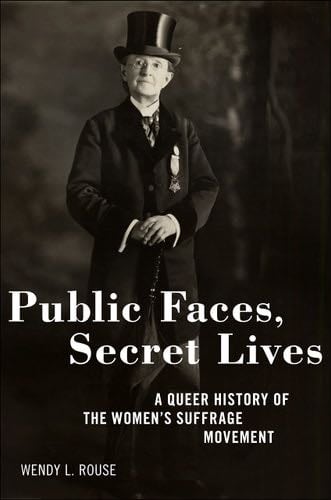
Public Faces, Secret Lives
Wendy L. Rouse · 2024

Sexuality and Socialism: History, Politics, and Theory of LGBT Liberation
Sexuality and Socialism: History, Politics, and Theory of LGBT Liberation
<p><b>Sexuality and Socialism</b> is a remarkably accessible analysis of many of the most challenging questions for those concerned with full equality for lesbian, gay, bisexual, and transgender (LGBT) people.</p> <p>Inside are essays on the roots of LGBT oppression, the construction of sexual and gender identities, the history of the gay movement, and how to unite the oppressed and exploited to win sexual liberation for all. Sherry Wolf analyzes different theories about oppression--including those of Marxism, postmodernism, identity politics, and queer theory--and challenges myths about genes, gender, and sexuality.</p> <p>"<b>Sexuality and Socialism</b> is the most intelligent and enlightened discussion on sexuality to come from the Left in a long time. No other work that comes to my mind explains the history of sexuality and sexual repression in the United States as comprehensively and compellingly."--<b>Ron Jacobs</b>, <i>Dissident Voice</i></p> <p>"Sherry Wolf: Lesbian, Activist, Communist & Badass-ist... spoke to a pre-National Equality March rally. She. Blew. It. Up."--<i>Austin Chronicle</i></p> <p>"Sherry speaks with such eloquence and plain common sense that I can't help but want to know more about her ideas and convictions."--<b>Derek Washington</b>, "In the LV" radio host, Director of LGBT Outreach, Clark County Democratic Black Caucus</p> <p>"The icons of the new generation of activists are people like Lady Gaga, Dustin Lance Black, Judy Shephard, Lt. Daniel Choi (ret.) and Sherry Wolf (author of <b>Sexuality and Socialism</b>)."--<b>Don Gorton</b>, Join the Impact Board Member</p> <p>"Surprisingly funny, very readable and a fitting tome for a new movement in these troubled times."--<b>Dave Zirin</b> for <i>Progressive</i>'s Best Books of 2009</p> <p>"'What humans have constructed they can tear down.' This is the powerful insight of this rare book that is at once politically important, theoretically and historically sophisticated, and clearly written. <b>Sexuality and Socialism</b> is enlivened in its engagement with a number of controversies, including those over the alleged biological determination of homosexuality, the myth of Black homophobia, and the consequences of postmodernist theories for the politics of gay liberation. Above all else, Wolf puts forward a cogent defense of the Marxist tradition--long and wrongly reviled as homophobic in itself--as a way to explain how LGBT oppression arose and what we can do to put it to bed."--<b>Dana Cloud</b>, University of Texas at Austin</p> <p><b>Sherry Wolf</b> is the associate editor of the International Socialist Review. She was on the executive committee of the National Equality March Oct. 11, 2009 and has written for publications including the <i>Nation</i>, <i>MRZine</i>, <i>Counterpunch</i>, <i>Dissident Voice</i>, and <i>Socialist Worker</i> and speaks frequently across the country on the struggle for LGBT liberation as well as a wide range of social and economic justice issue.</p>

Stonewall: Breaking Out in the Fight for Gay Rights
Stonewall: Breaking Out in the Fight for Gay Rights
That’s the Stonewall. The Stonewall Inn. Pay attention. History walks through that door. In 1969 being gay in the United States was a criminal offense. It meant living a closeted life or surviving on the fringes of society. People went to jail, lost jobs, and were disowned by their families for being gay. Most doctors considered homosexuality a mental illness. There were few safe havens. The Stonewall Inn, a Mafia-run, filthy, overpriced bar in New York City’s Greenwich Village, was one of them. Police raids on gay bars happened regularly in this era. But one hot June night, when cops pounded on the door of the Stonewall, almost nothing went as planned. Tensions were high. The crowd refused to go away. Anger and frustration boiled over. The raid became a riot. The riot became a catalyst. The catalyst triggered an explosive demand for gay rights. Ann Bausum’s riveting exploration of the Stonewall Riots and the national Gay Rights movement that followed is eye-opening, unflinching, and inspiring.

Gay Bar: Why We Went Out
Gay Bar: Why We Went Out

Queer Between the Covers: Histories of Queer Publishing and Publishing Queer Voices
Queer Between the Covers: Histories of Queer Publishing and Publishing Queer Voices
<p><i>Queer Between the Covers</i> presents a history of radical queer publishing and literature from 1880 to the modern day. Chronicling the gay struggle for acceptance and liberation, the book demonstrates how the fight for representation was often waged between the covers of books in a world where spaces for queer expression were taboo. The chapters provide an array of voices and histories from the famous, Derek Jarman and Oscar Wilde, to the lesser known and underappreciated, such as John Wieners and Valerie Taylor. It includes firsthand accounts of seminal moments in queer history, including the birth of Hazard Press and the Defend Gay's the Word Bookshop campaign in the 1980s.<br> <br> <br> <br> <i>Queer Between the Covers</i> demonstrates the importance of the book and how the queer community could be brought together through shared literature. The works discussed show the imaginative and radical ways in which queer texts have fought against censorship and repression and could be used as a political tool for organization and production. This study follows key moments in queer literary history, from the powerful community wide demonstrations for Gay's the Word during their battle with the British government, to the mapping of Chicago's queer spaces within Valerie Taylor's pulp novels, or the anonymous but likely shared authorship of the nineteenth century queer text <i>Teleny</i>. Queer publishing also often involved fascinating creative tactics for beating the censor, from the act of self-publishing to anonymous authorship as part of a so-called "cloaked resistance." Collage and repurposing found images and texts were key practices for many queer publishers and authors, from Derek Jarman to the artworks created by the Hazard Press.<br> <br> <br> <br> This is a fascinating and topical book on publishing history for those interested in how queer people throughout modernity have used literature as an important forum for self-expression and self-actualization when spaces and sites for queer expression were outlawed. </p>