Non fic goals

Items in this hypelist
To Read
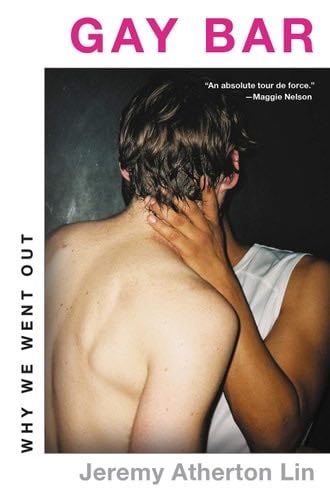
Gay Bar: Why We Went Out
Jeremy Atherton Lin · 2021
NATIONAL BOOK CRITICS CIRCLE AWARD WINNER NAMED ONE OF THE BEST BOOKS OF THE YEAR BY: The New York Times * NPR * Vogue * Gay Times * Artforum * “Gay Bar is an absolute tour de force.” –Maggie Nelson "Atherton Lin has a five-octave, Mariah Carey-esque range for discussing gay sex.” –New York Times Book Review As gay bars continue to close at an alarming rate, a writer looks back to find out what’s being lost in this indispensable, intimate, and stylish celebration of queer history. Strobing lights and dark rooms; throbbing house and drag queens on counters; first kisses, last call: the gay bar has long been a place of solidarity and sexual expression—whatever your scene, whoever you’re seeking. But in urban centers around the world, they are closing, a cultural demolition that has Jeremy Atherton Lin wondering: What was the gay bar? How have they shaped him? And could this spell the end of gay identity as we know it? In Gay Bar, the author embarks upon a transatlantic tour of the hangouts that marked his life, with each club, pub, and dive revealing itself to be a palimpsest of queer history. In prose as exuberant as a hit of poppers and dazzling as a disco ball, he time-travels from Hollywood nights in the 1970s to a warren of cruising tunnels built beneath London in the 1770s; from chichi bars in the aftermath of AIDS to today’s fluid queer spaces; through glory holes, into Crisco-slicked dungeons and down San Francisco alleys. He charts police raids and riots, posing and passing out—and a chance encounter one restless night that would change his life forever. The journey that emerges is a stylish and nuanced inquiry into the connection between place and identity—a tale of liberation, but one that invites us to go beyond the simplified Stonewall mythology and enter lesser-known battlefields in the struggle to carve out a territory. Elegiac, randy, and sparkling with wry wit, Gay Bar is at once a serious critical inquiry, a love story and an epic night out to remember.

Fed Up and Hungry: Women, Oppression & Food
Marilyn Lawrence · 1987
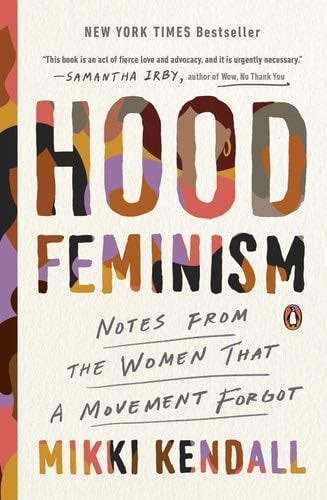
Hood Feminism: Notes from the Women That a Movement Forgot
Mikki Kendall · 2021
<b>A <i>NEW YORK TIMES</i> BESTSELLER<br><br> “<b>The fights against hunger, homelessness, poverty, health disparities, poor schools, homophobia, transphobia, and domestic violence are feminist fights. Kendall offers a feminism rooted in the livelihood of everyday women.”</b> <b>—Ibram X. Kendi, #1 <i>New York Times-</i>bestselling author of <i>How to Be an Antiracist</i>, in <i>The Atlantic</i></b><br><br>“One of the most important books of the current moment.”—<i>Time</i></b><br> <br> <b>“A rousing call to action... It should be required reading for everyone.”—Gabrielle Union, author of</b> <i><b>We’re Going to Need More Wine</b></i><br> <br> <b><br> <b>A potent and electrifying critique of today’s feminist movement announcing a fresh new voice in black feminism</b></b><br><br>Today's feminist movement has a glaring blind spot, and paradoxically, it is women. Mainstream feminists rarely talk about meeting basic needs as a feminist issue, argues Mikki Kendall, but food insecurity, access to quality education, safe neighborhoods, a living wage, and medical care are all feminist issues. All too often, however, the focus is not on basic survival for the many, but on increasing privilege for the few. That feminists refuse to prioritize these issues has only exacerbated the age-old problem of both internecine discord and women who rebuff at carrying the title. Moreover, prominent white feminists broadly suffer from their own myopia with regard to how things like race, class, sexual orientation, and ability intersect with gender. How can we stand in solidarity as a movement, Kendall asks, when there is the distinct likelihood that some women are oppressing others? <br><br>In her searing collection of essays, Mikki Kendall takes aim at the legitimacy of the modern feminist movement, arguing that it has chronically failed to address the needs of all but a few women. Drawing on her own experiences with hunger, violence, and hypersexualization, along with incisive commentary on reproductive rights, politics, pop culture, the stigma of mental health, and more, <i>Hood Feminism</i> delivers an irrefutable indictment of a movement in flux. An unforgettable debut, Kendall has written a ferocious clarion call to all would-be feminists to live out the true mandate of the movement in thought and in deed.

The Right to Sex
Amia Srinivasan · 2021
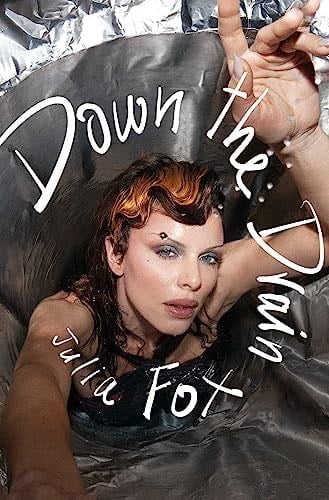
Down the Drain
Julia Fox · 2023

The New Age Of Sexism
Laura Bates

Men Who Hate Women: From incels to pickup artists, the truth about extreme misogyny and how it affects us all
Laura Bates · 2021
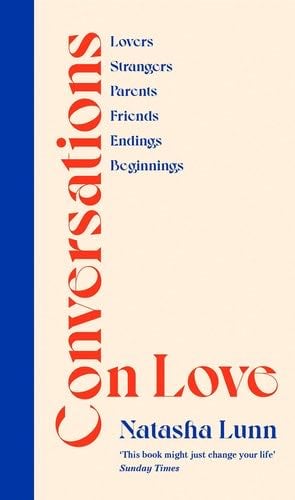
Conversations on Love
Lunn Natasha · 2021
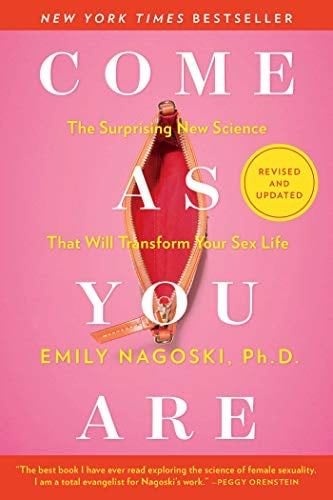
Come As You Are: Revised and Updated: The Surprising New Science That Will Transform Your Sex Life
Emily Nagoski Ph.D. · 2021
<b>A revised and updated edition of Emily Nagoski’s game-changing <i>New York Times </i>bestseller <i>Come As You Are</i>, featuring new information and research on mindfulness, desire, and pleasure that will radically transform your sex life.</b><br><br>For much of the 20th and 21st centuries, women’s sexuality was an uncharted territory in science, studied far less frequently—and far less seriously—than its male counterpart.<br> <br>That is, until Emily Nagoski’s <i>Come As You Are</i>, which used groundbreaking science and research to prove that the most important factor in creating and sustaining a sex life filled with confidence and joy is not what the parts are or how they’re organized but how you feel about them. In the years since the book’s initial publication, countless women have learned through Nagoski’s accessible and informative guide that things like stress, mood, trust, and body image are not peripheral factors in a woman’s sexual wellbeing; they are central to it—and that even if you don’t always feel like it, you are already sexually whole by just being yourself. This revised and updated edition continues that mission with new information and advanced research, demystifying and decoding the science of sex so that everyone can create a better sex life and discover more pleasure than you ever thought possible.

Bad Taste
Nathalie Olah · 2024
Reading
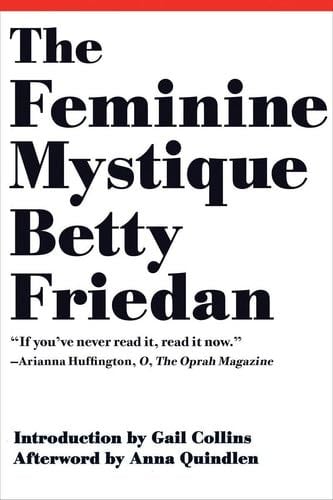
The Feminine Mystique
Betty Friedan · 2013
<b>"If you’ve never read it, read it now." —Arianna Huffington, <i>O, The Oprah Magazine</i> </b><br><p>Landmark, groundbreaking, classic—these adjectives barely do justice to the pioneering vision and lasting impact of <i>The Feminine Mystique</i>. Published in 1963, it gave a pitch-perfect description of “the problem that has no name”: the insidious beliefs and institutions that undermined women’s confidence in their intellectual capabilities and kept them in the home. Writing in a time when the average woman first married in her teens and 60 percent of women students dropped out of college to marry, Betty Friedan captured the frustrations and thwarted ambitions of a generation and showed women how they could reclaim their lives. Part social chronicle, part manifesto, <i>The Feminine Mystique</i> is filled with fascinating anecdotes and interviews as well as insights that continue to inspire. This 50th–anniversary edition features an afterword by best-selling author Anna Quindlen as well as a new introduction by Gail Collins.</p>