
social work books ݁₊ . ⟡

Items in this hypelist
Finished

Healing Justice Lineages: Dreaming at the Crossroads of Liberation, Collective Care, and Safety
Cara Page, Erica Woodland · 2023

My Grandmother''s Hands
Resmaa Menakem · 2017

Hood Feminism
Mikki Kendall · 2020

Freedom Is a Constant Struggle: Ferguson, Palestine, and the Foundations of a Movement
Angela Y. Davis · 2016
In this collection of essays, interviews, and speeches, the renowned activist examines today’s issues—from Black Lives Matter to prison abolition and more. Activist and scholar Angela Y. Davis has been a tireless fighter against oppression for decades. Now, the iconic author of Women, Race, and Class offers her latest insights into the struggles against state violence and oppression throughout history and around the world. Reflecting on the importance of black feminism, intersectionality, and prison abolitionism, Davis discusses the legacies of previous liberation struggles, from the Black Freedom Movement to the South African anti-Apartheid movement. She highlights connections and analyzes today’s struggles against state terror, from Ferguson to Palestine. Facing a world of outrageous injustice, Davis challenges us to imagine and build a movement for human liberation. And in doing so, she reminds us that “freedom is a constant struggle.” This edition of Freedom Is a Constant Struggle includes a foreword by Dr. Cornel West and an introduction by Frank Barat.

Care Work
Leah Lakshmi Piepzna-Samarasinha · 2018
In this collection of essays, Lambda Literary Award–winning writer and longtime activist and performance artist Leah Lakshmi Piepzna-Samarasinha explores the politics and realities of disability justice, a movement that centers the lives and leadership of sick and disabled queer, trans, Black, and brown people, with knowledge and gifts for all.<br/><br/>Care Work is a mapping of access as radical love, a celebration of the work that sick and disabled queer/people of color are doing to find each other and to build power and community, and a tool kit for everyone who wants to build radically resilient, sustainable communities of liberation where no one is left behind. Powerful and passionate, Care Work is a crucial and necessary call to arms.

Are Prisons Obsolete?
Angela Y. Davis
With her characteristic brilliance, grace and radical audacity, Angela Y. Davis has put the case for the latest abolition movement in American life: the abolition of the prison. As she quite correctly notes, American life is replete with abolition movements, and when they were engaged in these struggles, their chances of success seemed almost unthinkable. For generations of Americans, the abolition of slavery was sheerest illusion. Similarly,the entrenched system of racial segregation seemed to last forever, and generations lived in the midst of the practice, with few predicting its passage from custom. The brutal, exploitative (dare one say lucrative?) convict-lease system that succeeded formal slavery reaped millions to southern jurisdictions (and untold miseries for tens of thousands of men, and women). Few predicted its passing from the American penal landscape. Davis expertly argues how social movements transformed these social, political and cultural institutions, and made such practices untenable.<br/>In Are Prisons Obsolete?, Professor Davis seeks to illustrate that the time for the prison is approaching an end. She argues forthrightly for "decarceration", and argues for the transformation of the society as a whole.
To Read
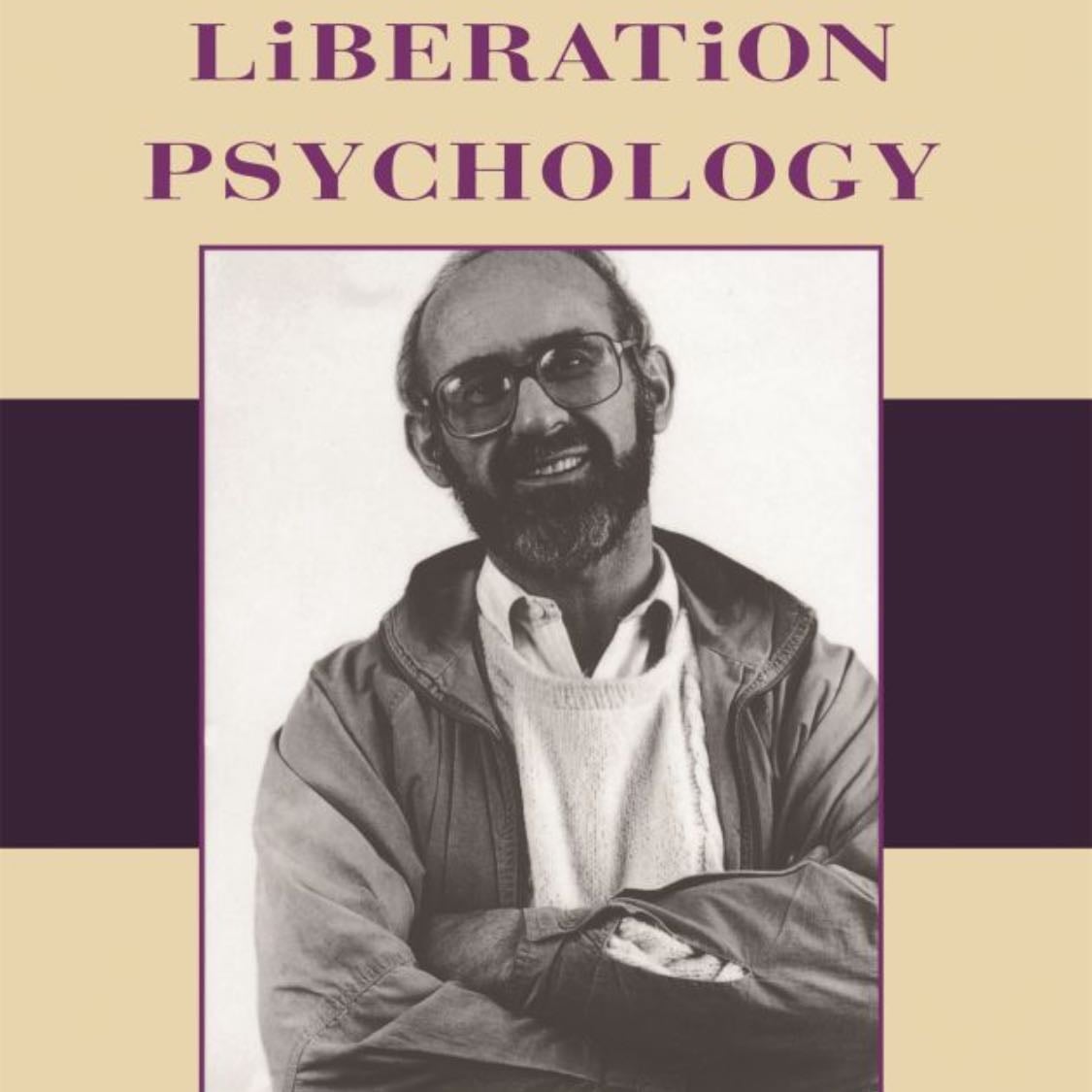
Writings for a Liberation Psychology
Ignacio Martín-Baró · 1996
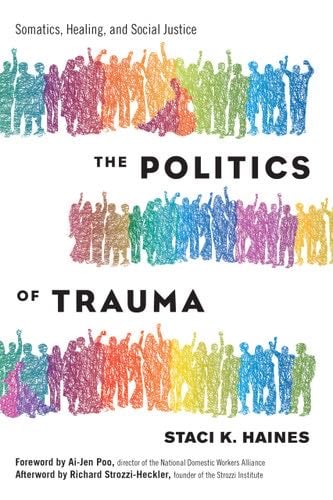
The Politics of Trauma: Somatics, Healing, and Social Justice
Staci Haines · 2019
An essential tool for healers, therapists, activists, and trauma survivors who are interested in a justice-centered approach to somatic transformation<br/><br/>The Politics of Trauma offers somatics with a social analysis. This book is for therapists and social activists who understand that trauma healing is not just for individuals—and that social change is not just for movement builders. Just as health practitioners need to consider the societal factors underlying trauma, so too must activists understand the physical and mental impacts of trauma on their own lives and the lives of the communities with whom they organize. Trauma healing and social change are, at their best, interdependent.<br/><br/>Somatics has proven to be particularly effective in addressing trauma, but in practice it typically focuses solely on the individual, failing to integrate the social conditions that create trauma in the first place. Staci K. Haines, somatic innovator and cofounder of generative somatics, invites readers to look beyond individual experiences of body and mind to examine the social, political, and economic roots of trauma—including racism, environmental degradation, sexism, and poverty. Haines helps readers identify, understand, and address these sources of trauma to help us bridge individual healing with social transformation.

Mad World: The Politics of Mental Health (Outspoken by Pluto)
Micha Frazer-Carroll · 2023
‘A radical antidote to the constraints of our current conceptualisation of mental health’ Dazed<br/>‘Exposes the underlying truth that capitalism is fundamentally incompatible with our wellbeing, and teaches us how to transform the ways we understand madness, illness, and disability to build a better world’ Beatrice Adler-Bolton, co-author of Health Communism<br/>Mental health is a political issue, but we often discuss it as a personal one. How is the current mental health crisis connected to capitalism, racism and other social issues? In a different world, how might we transform the ways that we think about mental health, diagnosis and treatment?<br/>These are some of the big questions Micha Frazer-Carroll asks as she reveals mental health to be an urgent political concern that needs deeper understanding beyond today's 'awareness-raising' campaigns.<br/>Exploring the history of asylums and psychiatry; the relationship between disability justice, queer liberation and mental health; art and creativity; prisons and abolition; and alternative models of care; Mad World is a radical and hopeful antidote to pathologisation, gatekeeping and the policing of imagination.<br/>Micha Frazer-Carroll is a columnist at the Independent. Micha has written for Vogue, HuffPost, Huck, gal-dem and Dazed. She was nominated for the Comment Awards’ Fresh New Voice of the Year Award, and the Observer/Anthony Burgess Award for Arts Criticism.

Medical Apartheid: The Dark History of Medical Experimentation on Black Americans from Colonial Times to the Present
Harriet A. Washington · 2008
NATIONAL BOOK CRITICS CIRCLE AWARD WINNER • The first full history of Black America’s shocking mistreatment as unwilling and unwitting experimental subjects at the hands of the medical establishment. No one concerned with issues of public health and racial justice can afford not to read this masterful book.<br/><br/>"[Washington] has unearthed a shocking amount of information and shaped it into a riveting, carefully documented book." —New York Times<br/><br/>From the era of slavery to the present day, starting with the earliest encounters between Black Americans and Western medical researchers and the racist pseudoscience that resulted, Medical Apartheid details the ways both slaves and freedmen were used in hospitals for experiments conducted without their knowledge—a tradition that continues today within some black populations.<br/><br/>It reveals how Blacks have historically been prey to grave-robbing as well as unauthorized autopsies and dissections. Moving into the twentieth century, it shows how the pseudoscience of eugenics and social Darwinism was used to justify experimental exploitation and shoddy medical treatment of Blacks. Shocking new details about the government’s notorious Tuskegee experiment are revealed, as are similar, less-well-known medical atrocities conducted by the government, the armed forces, prisons, and private institutions.<br/><br/>The product of years of prodigious research into medical journals and experimental reports long undisturbed, Medical Apartheid reveals the hidden underbelly of scientific research and makes possible, for the first time, an understanding of the roots of the African American health deficit. At last, it provides the fullest possible context for comprehending the behavioral fallout that has caused Black Americans to view researchers—and indeed the whole medical establishment—with such deep distrust.

Break the Cycle
Dr Mariel Buque

Loneliness: Human Nature and the Need for Social Connection
John T. Cacioppo, William Patrick · 2008
We Will Not Cancel Us: And Other Dreams of Transformative Justice (Emergent Strategy Series, 3)
adrienne maree brown · 2020

Arguing for a Better World: How Philosophy Can Help Us Fight for Social Justice
Arianne Shahvisi · 2023

Let This Radicalize You: Organizing and the Revolution of Reciprocal Care
Kelly Hayes, Mariame Kaba · 2023

Anchored: How to Befriend Your Nervous System Using Polyvagal Theory
Deborah Dana · 2021

The Color of Law: A Forgotten History of How Our Government Segregated America
Richard Rothstein · 2018
New York Times Bestseller • Notable Book of the Year • Editors' Choice Selection<br/>One of Bill Gates’ “Amazing Books” of the Year<br/>One of Publishers Weekly’s 10 Best Books of the Year<br/>Longlisted for the National Book Award for Nonfiction<br/>An NPR Best Book of the Year<br/>Winner of the Hillman Prize for Nonfiction<br/>Gold Winner • California Book Award (Nonfiction)<br/>Finalist • Los Angeles Times Book Prize (History)<br/>Finalist • Brooklyn Public Library Literary Prize<br/>This “powerful and disturbing history” exposes how American governments deliberately imposed racial segregation on metropolitan areas nationwide (New York Times Book Review).<br/>Widely heralded as a “masterful” (Washington Post) and “essential” (Slate) history of the modern American metropolis, Richard Rothstein’s The Color of Law offers “the most forceful argument ever published on how federal, state, and local governments gave rise to and reinforced neighborhood segregation” (William Julius Wilson). Exploding the myth of de facto segregation arising from private prejudice or the unintended consequences of economic forces, Rothstein describes how the American government systematically imposed residential segregation: with undisguised racial zoning; public housing that purposefully segregated previously mixed communities; subsidies for builders to create whites-only suburbs; tax exemptions for institutions that enforced segregation; and support for violent resistance to African Americans in white neighborhoods. A groundbreaking, “virtually indispensable” study that has already transformed our understanding of twentieth-century urban history (Chicago Daily Observer), The Color of Law forces us to face the obligation to remedy our unconstitutional past. 13 illustrations

Women, Race & Class
Angela Y. Davis · 1983
From one of our most important scholars and civil rights activist icon, a powerful study of the women’s liberation movement and the tangled knot of oppression facing Black women.<br/><br/>“Angela Davis is herself a woman of undeniable courage. She should be heard.”—The New York Times<br/><br/>Angela Davis provides a powerful history of the social and political influence of whiteness and elitism in feminism, from abolitionist days to the present, and demonstrates how the racist and classist biases of its leaders inevitably hampered any collective ambitions. While Black women were aided by some activists like Sarah and Angelina Grimke and the suffrage cause found unwavering support in Frederick Douglass, many women played on the fears of white supremacists for political gain rather than take an intersectional approach to liberation. Here, Davis not only contextualizes the legacy and pitfalls of civil and women’s rights activists, but also discusses Communist women, the murder of Emmitt Till, and Margaret Sanger’s racism. Davis shows readers how the inequalities between Black and white women influence the contemporary issues of rape, reproductive freedom, housework and child care in this bold and indispensable work.
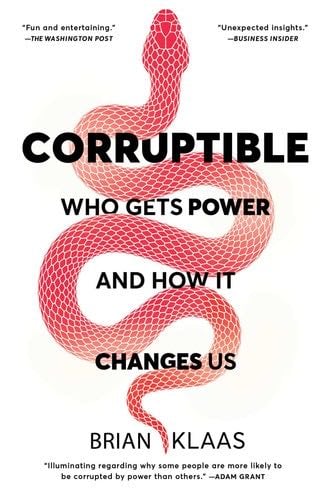
Corruptible: Who Gets Power and How It Changes Us
Brian Klaas · 2022

The Revolution Will Not Be Funded: Beyond the Non-Profit Industrial Complex
INCITE! Women of Color Against Violence · 2017
A trillion-dollar industry, the US non-profit sector is one of the world's largest economies. From art museums and university hospitals to think tanks and church charities, over 1.5 million organizations of staggering diversity share the tax-exempt 501(c)(3) designation, if little else. Many social justice organizations have joined this world, often blunting political goals to satisfy government and foundation mandates. But even as funding shrinks, many activists often find it difficult to imagine movement-building outside the non-profit model. The Revolution Will Not Be Funded gathers essays by radical activists, educators, and non-profit staff from around the globe who critically rethink the long-term consequences of what they call the "non-profit industrial complex." Drawing on their own experiences, the contributors track the history of non-profits and provide strategies to transform and work outside them. Urgent and visionary, The Revolution Will Not Be Funded presents a biting critique of the quietly devastating role the non-profit industrial complex plays in managing dissent.<br/><br/>Contributors. Christine E. Ahn, Robert L. Allen, Alisa Bierria, Nicole Burrowes, Communities Against Rape and Abuse (CARA), William Cordery, Morgan Cousins, Ruth Wilson Gilmore, Stephanie Guilloud, Adjoa Florência Jones de Almeida, Tiffany Lethabo King, Paul Kivel, Soniya Munshi, Ewuare Osayande, Amara H. Pérez, Project South: Institute for the Elimination of Poverty and Genocide, Dylan Rodríguez, Paula X. Rojas, Ana Clarissa Rojas Durazo, Sisters in Action for Power, Andrea Smith, Eric Tang, Madonna Thunder Hawk, Ije Ude, Craig Willse

Trauma Stewardship
Laura van Dernoot Lipsky, Connie Burk · 2009

The End of Policing
Alex S. Vitale · 2017

Invisible Women: Data Bias in a World Designed for Men
Caroline Criado Perez · 2021
The landmark, prize-winning, international bestselling examination of how a gender gap in data perpetuates bias and disadvantages women.<br/><br/>#1 International Bestseller * Winner of the Financial Times and McKinsey Business Book of the Year Award * Winner of the Royal Society Science Book Prize<br/><br/>Data is fundamental to the modern world. From economic development to health care to education and public policy, we rely on numbers to allocate resources and make crucial decisions. But because so much data fails to take into account gender, because it treats men as the default and women as atypical, bias and discrimination are baked into our systems.<br/><br/>And women pay tremendous costs for this insidious bias: in time, in money, and often with their lives.<br/><br/>Celebrated feminist advocate Caroline Criado Perez investigates this shocking root cause of gender inequality in Invisible Women. Examining the home, the workplace, the public square, the doctor’s office, and more, Criado Perez unearths a dangerous pattern in data and its consequences on women’s lives.<br/><br/>Product designers use a “one-size-fits-all” approach to everything from pianos to cell phones to voice recognition software, when in fact this approach is designed to fit men. Cities prioritize men’s needs when designing public transportation, roads, and even snow removal, neglecting to consider women’s safety or unique responsibilities and travel patterns. And in medical research, women have largely been excluded from studies and textbooks, leaving them chronically misunderstood, mistreated, and misdiagnosed.<br/><br/>Built on hundreds of studies in the United States, in the United Kingdom, and around the world, and written with energy, wit, and sparkling intelligence, this is a groundbreaking, highly readable exposé that will change the way you look at the world.

Why Are All the Black Kids Sitting Together in the Cafeteria?
Beverly Daniel Tatum · 2017

Braiding Sweetgrass: Indigenous Wisdom, Scientific Knowledge and the Teachings of Plants
Robin Wall Kimmerer · 2015
A New York Times Bestseller<br/>A Washington Post Bestseller<br/>Named a "Best Essay Collection of the Decade" by Literary Hub<br/><br/>As a botanist, Robin Wall Kimmerer has been trained to ask questions of nature with the tools of science. As a member of the Citizen Potawatomi Nation, she embraces the notion that plants and animals are our oldest teachers. In Braiding Sweetgrass, Kimmerer brings these two lenses of knowledge together to take us on “a journey that is every bit as mythic as it is scientific, as sacred as it is historical, as clever as it is wise” (Elizabeth Gilbert).<br/><br/>Drawing on her life as an indigenous scientist, and as a woman, Kimmerer shows how other living beings―asters and goldenrod, strawberries and squash, salamanders, algae, and sweetgrass―offer us gifts and lessons, even if we've forgotten how to hear their voices. In reflections that range from the creation of Turtle Island to the forces that threaten its flourishing today, she circles toward a central argument: that the awakening of ecological consciousness requires the acknowledgment and celebration of our reciprocal relationship with the rest of the living world. For only when we can hear the languages of other beings will we be capable of understanding the generosity of the earth, and learn to give our own gifts in return.

Laziness Does Not Exist
Devon Price Ph.D. · 2022
From social psychologist Dr. Devon Price, a conversational, stirring call to “a better, more human way to live” (Cal Newport, New York Times bestselling author) that examines the “laziness lie”—which falsely tells us we are not working or learning hard enough.<br/><br/>Extra-curricular activities. Honors classes. 60-hour work weeks. Side hustles.<br/><br/>Like many Americans, Dr. Devon Price believed that productivity was the best way to measure self-worth. Price was an overachiever from the start, graduating from both college and graduate school early, but that success came at a cost. After Price was diagnosed with a severe case of anemia and heart complications from overexertion, they were forced to examine the darker side of all this productivity.<br/><br/>Laziness Does Not Exist explores the psychological underpinnings of the “laziness lie,” including its origins from the Puritans and how it has continued to proliferate as digital work tools have blurred the boundaries between work and life. Using in-depth research, Price explains that people today do far more work than nearly any other humans in history yet most of us often still feel we are not doing enough.<br/><br/>Filled with practical and accessible advice for overcoming society’s pressure to do more, and featuring interviews with researchers, consultants, and experiences from real people drowning in too much work, Laziness Does Not Exist “is the book we all need right now” (Caroline Dooner, author of The F*ck It Diet).

Caste: The Origins of Our Discontents
Isabel Wilkerson · 2023

Beyond Survival: Strategies and Stories from the Transformative Justice Movement
Leah Lakshmi Piepzna-Samarasinha · 2020
Transformative justice seeks to solve the problem of violence at the grassroots level, without relying on punishment, incarceration, or policing. Community-based approaches to preventing crime and repairing its damage have existed for centuries. However, in the putative atmosphere of contemporary criminal justice systems, they are often marginalized and operate under the radar. Beyond Survival puts these strategies front and center as real alternatives to today’s failed models of confinement and “correction.” In this collection, a diverse group of authors focuses on concrete and practical forms of redress and accountability, assessing existing practices and marking paths forward. They use a variety of forms—from toolkits to personal essays—to delve deeply into the “how to” of transformative justice, providing alternatives to calling the police, ways to support people having mental health crises, stories of community-based murder investigations, and much more. At the same time, they document the history of this radical movement, creating space for long-time organizers to reflect on victories, struggles, mistakes, and transformations.
Reading
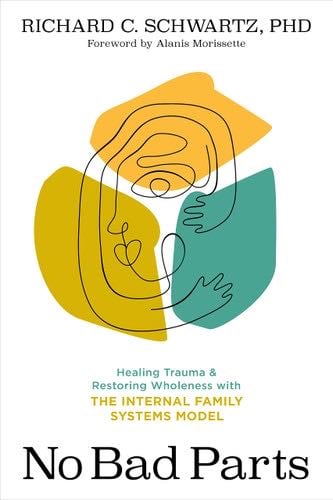
No Bad Parts: Healing Trauma and Restoring Wholeness with the Internal Family Systems Model
Richard Schwartz Ph.D. · 2021
Discover an empowering new way of understanding your multifaceted mind―and healing the many parts that make you who you are.<br/><br/>Is there just one “you”? We’ve been taught to believe we have a single identity, and to feel fear or shame when we can’t control the inner voices that don’t match the ideal of who we think we should be. Yet Dr. Richard Schwartz’s research now challenges this “mono-mind” theory. “All of us are born with many sub-minds―or parts,” says Dr. Schwartz. “These parts are not imaginary or symbolic. They are individuals who exist as an internal family within us―and the key to health and happiness is to honor, understand, and love every part.”<br/><br/>Dr. Schwartz’s Internal Family Systems (IFS) model has been transforming psychology for decades. With No Bad Parts, you’ll learn why IFS has been so effective in areas such as trauma recovery, addiction therapy, and depression treatment―and how this new understanding of consciousness has the potential to radically change our lives. Here you’ll explore:<br/><br/>• The IFS revolution―how honoring and communicating with our parts changes our approach to mental wellness<br/>• Overturning the cultural, scientific, and spiritual assumptions that reinforce an outdated mono-mind model<br/>• The ego, the inner critic, the saboteur―making these often-maligned parts into powerful allies<br/>• Burdens―why our parts become distorted and stuck in childhood traumas and cultural beliefs<br/>• How IFS demonstrates human goodness by revealing that there are no bad parts<br/>• The Self―discover your wise, compassionate essence of goodness that is the source of healing and harmony<br/>• Exercises for mapping your parts, accessing the Self, working with a challenging protector, identifying each part’s triggers, and more<br/><br/>IFS is a paradigm-changing model because it gives us a powerful approach for healing ourselves, our culture, and our planet. As Dr. Schwartz teaches, “Our parts can sometimes be disruptive or harmful, but once they’re unburdened, they return to their essential goodness. When we learn to love all our parts, we can learn to love all people―and that will contribute to healing the world.”


