spencer reid books

Items in this hypelist
Books
Strangers on a Train
Patricia Highsmith • 1950

War and Peace
Leo Tolstoy · 1869
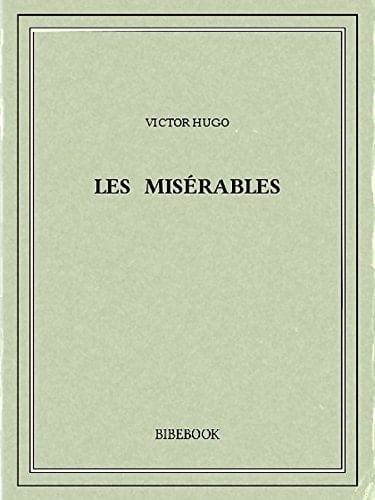
Les Misérables
Victor Hugo · 1862

Don Quixote
Miguel de Cervantes Saavedra · 1615

Crime and Punishment
Fyodor Dostoevsky · 1866
<b>Hailed by <i>Washington Post Book World</i> as “the best [translation] currently available" when it was first published, this second edition of <i>Crime and Punishment </i>has been updated in honor of the 200th anniversary of Dostoevsky’s birth. • <b>ONE OF <i>TIME MAGAZINE</i>'S 100 BEST MYSTERY AND THRILLER BOOKS OF ALL TIME</b></b><br><br>With the same suppleness, energy, and range of voices that won their translation of <i>The Brothers Karamazov</i> the PEN/Book-of-the-Month Club Prize, Richard Pevear and Larissa Volokhonsky offer a brilliant translation of <i>Crime and Punishment, </i>Dostoevsky's astounding pyschological thriller, newly revised for his bicentenniel. <br><br>In <i>Crime and Punishment</i>, when Raskolnikov, an impoverished student living in the St. Petersburg of the tsars, commits an act of murder and theft, he sets into motion a story that is almost unequalled in world literature for its excruciating suspense, its atmospheric vividness, and its depth of characterization and vision. Dostoevsky’s drama of sin, guilt, and redemption transforms the sordid story of an old woman’s murder into the nineteenth century’s profoundest and most compelling philosophical novel.
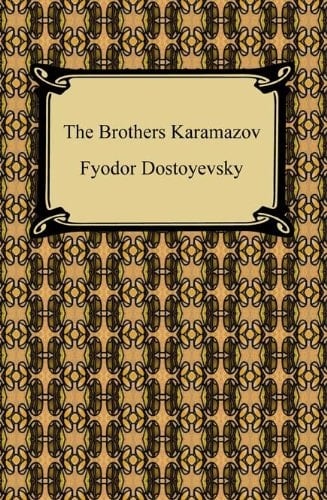
The Brothers Karamazov
Fyodor Dostoyevsky · 1880
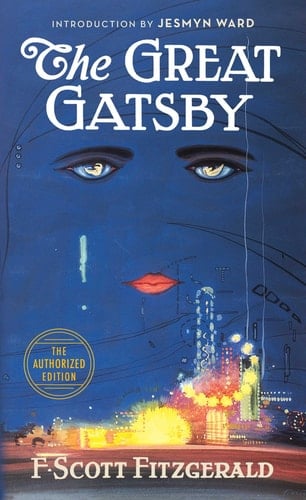
The Great Gatsby
F. Scott Fitzgerald · 1925
<b><b>The only edition of the beloved classic that is authorized by Fitzgerald’s family and from his lifelong publisher. </b></b><br><br>This edition is the enduring original text, updated with the author’s own revisions, a foreword by his granddaughter, and with a new introduction by National Book Award winner Jesmyn Ward.<br> <br><i>The Great Gatsby</i>, F. Scott Fitzgerald’s third book, stands as the supreme achievement of his career. First published by Scribner in 1925, this quintessential novel of the Jazz Age has been acclaimed by generations of readers. The story of the mysteriously wealthy Jay Gatsby and his love for the beautiful Daisy Buchanan is an exquisitely crafted tale of America in the 1920s.
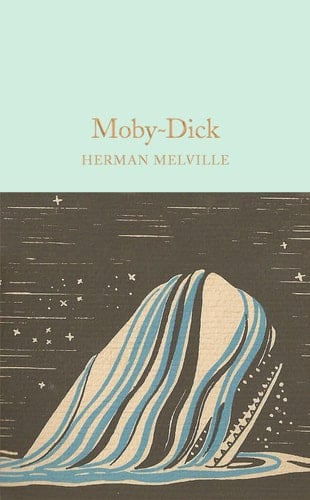
Moby-Dick
Herman Melville · 1851

Pride and Prejudice (Penguin Classics)
Jane Austen · 1813
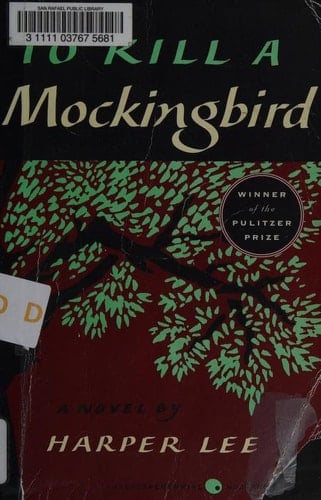
To Kill a Mockingbird
Harper Lee · 1960
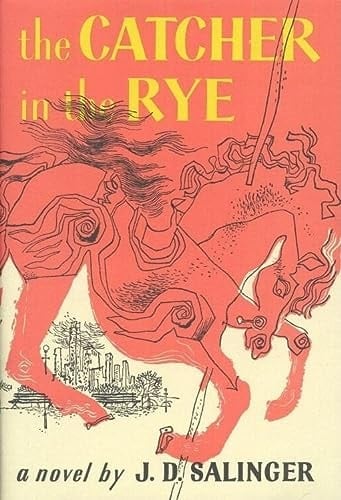
The Catcher in the Rye
J. D. Salinger · 1951

Alices Adventure in Wonderland
Lewis Carroll • 1865

Great Expectations
Charles Dickens · 1861
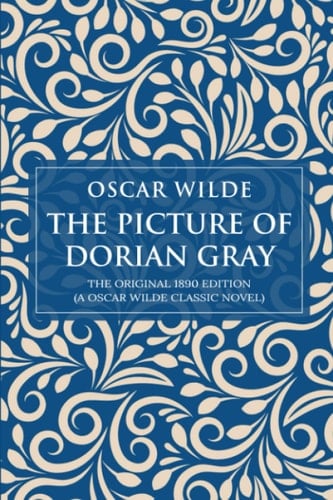
The Picture of Dorian Gray The Original 1890 Edition
Oscar Wilde · 1890
“The books that the world calls immoral are books that show the world its own shame.” ― Oscar Wilde, The Picture of Dorian Gray<br/><br/>The Picture of Dorian Gray is a 1891 gothic and philosophical novel by Irish writer and playwright Oscar Wilde. First published as a serial story in the July 1890 issue of Lippincott's Monthly Magazine, the editors feared the story was indecent, and without Wilde's knowledge, deleted five hundred words before publication.<br/><br/>Despite that censorship, The Picture of Dorian Gray offended the moral sensibilities of British book reviewers, some of whom said that Oscar Wilde merited prosecution for violating the laws guarding the public morality. In response, Wilde aggressively defended his novel and art in correspondence with the British press.<br/><br/>Wilde revised and expanded the magazine edition of The Picture of Dorian Gray (1890) for publication as a novel; the book edition (1891) featured an aphoristic preface — an apologia about the art of the novel and the reader. The content, style and presentation of the preface made it famous in its own literary right, as social and cultural criticism. In April 1891, the editorial house Ward, Lock and Company published the revised version of The Picture of Dorian Gray.<br/><br/>A True Classic that Belongs on Every Bookshelf!
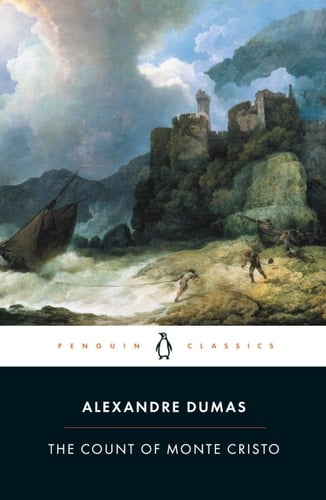
The Count of Monte Cristo
Alexandre Dumas · 1844
Beyond Good and Evil
Friedrich Wilhelm Nietzsche • 1886
The Interpretation of Dreams
Sigmund Freud • 1899
On the Origin of Species
Charles Darwin • 1859
The Structure of Scientific Revolutions
Thomas S. Kuhn • 1962
A Brief History of Time
Stephen Hawking • 1988
Gödel, Escher, Bach An Eternal Golden Braid
Douglas R. Hofstadter • 1979
The Demon-Haunted World: Science as a Candle in the Dark
Carl Sagan • 1996
Man's Search for Meaning
Viktor Emil Frankl • 1946
Meditations
Marco Aurelio (Emperador de Roma) • ~180 CE
Civilization and Its Discontents
*Sigmund Freud • 1930
The Selfish Gene
Richard Dawkins • 1976
The Complete Sherlock Holmes Collection
Arthur Conan Doyle • 1887-1927
In Cold Blood
Truman Capote • 1966
The Stranger
Albert Camus • 1942
The Silence of the Lambs
Thomas Harris • 1988
Slaughterhouse-Five
Kurt Vonnegut • 1969
Fahrenheit 451 A Novel
Ray Bradbury • 1953
The Time Machine
H. G. Wells • 1895
A Clockwork Orange
Anthony Burgess • 1965
Of Mice and Men
John Steinbeck • 1937
The Metamorphosis
Franz Kafka • 1915
Lord of the Flies
William Golding • 1954
The Iliad
Homer • 8th century BCE
The Odyssey
Homer • 8th century BCE
The Divine Comedy
Dante Alighieri • 1320
One Hundred Years of Solitude
Gabriel García Márquez • 1967
A Study in Scarlet
Arthur Conan Doyle • 1887
The Sign of Four
Arthur. Conan Doyle • 1890
The Narrative of John Smith
Arthur Conan Doyle •
Isolde Queen of the Western Isle
Rosalind Miles • 2002
The Maid of the White Hands The Second of the Tristan and Isolde Novels
Rosalind Miles • 2003
The Lady of the Sea The Third of the Tristan and Isolde Novels
Rosalind Miles • 2004
Conjectures of a Guilty Bystander
Thomas Merton • 1968
Thoughts in Solitude
Thomas Merton • 1998
Mother Night A Novel
Kurt Vonnegut • 1961
I, Robot
Isaac Asimov • 1950
They mustn't harm a human being, they must obey human orders, and they must protect their own existence.. .but only if doing so doesn't violate rules one and two. With these Three Laws of Robotics, humanity embarks on perhaps its greatest adventure: the invention of the first positronic man. <br/> <br/>Isaac Asimov's I, Robot launches readers on an adventure into a not-so-distant future where man and machine struggle to redefine life, love, and consciousness itself. For the scientists who invented the earliest robots weren't content that their creations should remain programmed helpers, companions, and semisentient worker- machines. And soon the robots themselves, aware of their own intelligence, power, and humanity, aren't satisfied either. Now human men and women find themselves confronting telepathic robots, robot politicians, robots gone mad, and vast robotic intelligences that may already secretly control the world in the next great evolutionary struggle for survival. And both man and robot are asking the same questions: What is human? And is humanity obsolete? <br/>--back cover
The Caves of Steel The Robot Series
Isaac Asimov • 1953
Empty Planet The Shock of Global Population Decline
Darrell Bricker • 2019
The Alchemist
Paulo Coelho • 1988
Rumple Buttercup: A Story of Bananas, Belonging, and Being Yourself
Matthew Gray Gubler • 2019
<b>The #1 <i>New York Times</i> bestseller written and illustrated by Matthew Gray Gubler. This charming and inspiring story is the perfect gift for kids (and grown-up kids) alike!</b><br><br>Rumple Buttercup has five crooked teeth, three strands of hair, green skin, and his left foot is slightly bigger than his right.<br><br>He is weird.<br><br>Join him and Candy Corn Carl (his imaginary friend made of trash) as they learn the joy of individuality as well as the magic of belonging.
The Little Kid with the Big Green Hand
Matthew Gray Gubler • 2023
<p><b>From the #1 <i>New York Times</i> bestselling author and illustrator Matthew Gray Gubler comes a heartwarming story of colors, creatures, and connection.<br> <br> An instant <i>New York Times</i> bestseller!<br> "A feel-good read reaffirming the power of empathy."</b> --<b><i>Kirkus Reviews</i><br> "A heartfelt ode to finding beauty in different perspectives."</b> --<b><i>Publishers Weekly</i></b><br> <br> Join two unlikely friends, Chuck and Lenore, as they embark on a dreamlike adventure and uncover the magic of seeing the world through each other's eyes. Lovingly hand-drawn, and featuring a cloth cover and ribbon bookmark, it's a book to treasure, read, and re-read.</p>
Synchronicity: An Acausal Connecting Principle.
C. G Jung • 1952
The Illustrated Man
Ray Bradbury • 1951
The Collector
John Fowles • 1963
One Thousand and One Nights
Hanan Shaykh • 2011
Harry Potter and the Order of the Phoenix
J.K. Rowling • 2003
Swanns Way
Marcel Proust • 1913
Dante's Inferno
Dante Alighieri • -1320
The Parliament of Fowls
Chaucer, Geoffrey, d. • 1383
East of Eden (Penguin Twentieth Century Classics)
John Steinbeck • 1952
The Arthurian Legends
Richard W. Barber • 1979
The Once and Future King
Terence Hanbury White • 1958
The Fisher King
Leonore Fleischer • 1991
Solaris
Stanisław Lem • 1961