tbr 🫶

Items in this hypelist
fic

The Will of the Many (1) (Hierarchy)
James Islington · 2023

Martyr!: A novel
Kaveh Akbar · 2024
<b><i>NEW YORK TIMES</i> BESTSELLER • SHORTLISTED FOR THE NATIONAL BOOK AWARD • ONE OF <i>THE NEW YORK TIMES BOOK REVIEW'S </i>10 BEST BOOKS OF THE YEAR <b>• <b>A<b> <i>TIME</i> MUST-READ BOOK OF THE YEAR</b></b> • </b>A newly sober, orphaned son of Iranian immigrants, guided by the voices of artists, poets, and kings, embarks on a remarkable search for a family secret that leads him to a terminally ill painter living out her final days in the Brooklyn Museum. Electrifying, funny, and wholly original<i>, Martyr!</i> heralds the arrival of an essential new voice in contemporary fiction.<br><br>“Kaveh Akbar is one of my favorite writers. Ever.” —Tommy Orange, Pulitzer Prize–nominated author of <i>There There</i><br><br>“The best novel you'll ever read about the joy of language, addiction, displacement, martyrdom, belonging, homesickness.” —Lauren Groff, best-selling author of <i>Matrix</i> and <i>Fates and Furies</i></b><br><br>Cyrus Shams is a young man grappling with an inheritance of violence and loss: his mother’s plane was shot down over the skies of the Persian Gulf in a senseless accident; and his father’s life in America was circumscribed by his work killing chickens at a factory farm in the Midwest. Cyrus is a drunk, an addict, and a poet, whose obsession with martyrs leads him to examine the mysteries of his past—toward an uncle who rode through Iranian battlefields dressed as the angel of death to inspire and comfort the dying, and toward his mother, through a painting discovered in a Brooklyn art gallery that suggests she may not have been who or what she seemed.<br><br>Kaveh Akbar’s <i>Martyr!</i> is a paean to how we spend our lives seeking meaning—in faith, art, ourselves, others.

Oathbound
Tracy Deonn · 2025
não fic

Thinking in Systems: International Bestseller
Donella H. Meadows · 2008
Thinking in Systems is a concise and crucial book offering insight for problem-solving on scales ranging from the personal to the global. This essential primer brings systems thinking out of the realm of computers and equations and into the tangible world, showing readers how to develop the systems-thinking skills that thought leaders across the globe consider critical for 21st-century life. While readers will learn the conceptual tools and methods of systems thinking, the heart of the book is grander than methodology. Donella Meadows was known as much for nurturing positive outcomes as she was.
On Palestine
Ilan Pappe Noam Chomsky · 2015
"On Palestine is Noam Chomsky and Ilan Pappe's indispensable update on a suffering region. What is the future of the Boycott, Divestment, and Sanctions movement directed at Israel? Which is more viable, the binational or one state solution? Ilan Pappe and Noam Chomsky, two leading voices in the struggle to liberate Palestine, discuss these critical questions and more in this urgent and timely book, a sequel to their acclaimed Gaza in Crisis. Chomsky is a global phenomenon ... he may be the most widely read American voice on foreign policy on the planet. (The New York Times Book Review). Ilan Pappe is Israel's bravest, most principled, most incisive historian. (John Pilger). This sober and unflinching analysis should be read and reckoned with by anyone concerned with practicable change in the long-suffering region. (Publishers Weekly (on Gaza in Crisis)). Noam Chomsky is the author of numerous bestselling and influential political books, including Hegemony or Survival, Failed States, Interventions, Hopes and Prospects, Gaza in Crisis, Making the Future and Occupy. Ilan Pappe is the author of the bestselling The Ethnic Cleansing of Palestine, A History of Modern Palestine, and The Israel/Palestine Question. Frank Barat is a human rights activist and coordinator of the Russell Tribunal on Palestine."--Publisher's description.
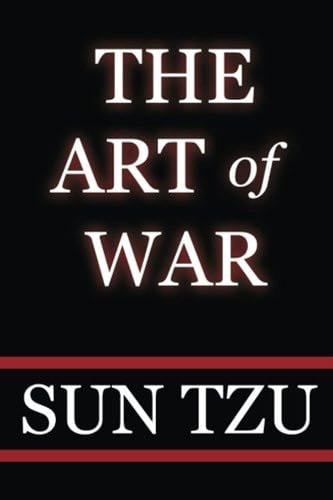
The Art Of War
Sun Tzu · 2007

Late Fascism
Alberto Toscano · 2023

How Fascism Works
Jason Stanley · 2018
NEW YORK TIMES BESTSELLER • “No single book is as relevant to the present moment.”—Claudia Rankine, author of Citizen “With unsettling insight and disturbing clarity, How Fascism Works is an essential guidebook to our current national dilemma of democracy vs. authoritarianism.”—Jelani Cobb, New Yorker staff writer A Yale philosopher identifies the ten pillars of fascist politics, and charts their horrifying rise and deep history. As a scholar of philosophy and propaganda and the child of refugees of WWII Europe, Jason Stanley has long understood that democratic societies, including the United States, can be vulnerable to fascism. In How Fascism Works, he identifies ten pillars of fascist politics—an appeal to the mythic past, propaganda, anti-intellectualism, unreality, hierarchy, victimhood, law and order, sexual anxiety, favoring “the heartland,” and a dismantling of public goods and unions—that amount to an urgent diagnosis of the tactics right-wing politicians use to break down democracies and a critical lens on the current moment. Stanley knits together reflections on history, philosophy, sociology, and critical race theory with stories from contemporary Hungary, Poland, India, Myanmar, and the United States, among other nations, making clear the immense dangers of language and beliefs that separate people into an “us” and a “them.” By uncovering disturbing patterns that are as prevalent today as ever, Stanley reveals that the stuff of politics—rhetoric and myth—can become policy and reality all too quickly. Only by recognizing them, he argues, can we begin to resist their most harmful effects and return to democratic ideals.

Burning the Books: A History of the Deliberate Destruction of Knowledge
Richard Ovenden · 2022

The Cultural Politics of Emotion
Sara Ahmed · 2014
Praise for the first edition<br/>"Ahmed's work contributes to cultural studies and rhetorical theory by elaborating a process through which we can approach everyday emotional practices as rich and complex sites interwoven in struggles for social change."--Rachel C. Riedner, JAC<br/>What do emotions do? How do emotions move us or get us stuck? In developing a theory of the cultural politics of emotion, Sara Ahmed focuses on the relationship between emotions, language, and bodies. She shows how emotions are named in speech acts, as well as how they involve sensations that can be felt not only emotionally, but physically. A new methodology for reading 'the emotionality of texts' is offered as are analyses of the role of emotions in debates on international terrorism, asylum and migration, and reconciliation and reparation. Attending to the intersections between race, gender, and sexuality, The Cultural Politics of Emotion is in dialogue with key trends in gender studies and cultural studies, the psychology and sociology of emotions, and phenomenology and psychoanalysis. It takes as its point of entry different emotions -- pain, hate, fear, disgust, shame, and love -- and reflects on the role of emotions in feminist and queer politics.<br/>In a special afterword to this tenth anniversary edition, Ahmed explains to readers how this classic book relates to other key works in the emergent field of affect studies and also reflects on the way the book has been part of her own intellectual trajectory.

Queer Phenomenology: Orientations, Objects, Others
Sara Ahmed · 2006
In this groundbreaking work, Sara Ahmed demonstrates how queer studies can put phenomenology to productive use. Focusing on the “orientation” aspect of “sexual orientation” and the “orient” in “orientalism,” Ahmed examines what it means for bodies to be situated in space and time. Bodies take shape as they move through the world directing themselves toward or away from objects and others. Being “orientated” means feeling at home, knowing where one stands, or having certain objects within reach. Orientations affect what is proximate to the body or what can be reached. A queer phenomenology, Ahmed contends, reveals how social relations are arranged spatially, how queerness disrupts and reorders these relations by not following the accepted paths, and how a politics of disorientation puts other objects within reach, those that might, at first glance, seem awry.<p>Ahmed proposes that a queer phenomenology might investigate not only how the concept of orientation is informed by phenomenology but also the orientation of phenomenology itself. Thus she reflects on the significance of the objects that appear—and those that do not—as signs of orientation in classic phenomenological texts such as Husserl’s <i>Ideas</i>. In developing a queer model of orientations, she combines readings of phenomenological texts—by Husserl, Heidegger, Merleau-Ponty, and Fanon—with insights drawn from queer studies, feminist theory, critical race theory, Marxism, and psychoanalysis. <i>Queer Phenomenology</i> points queer theory in bold new directions.</p>
psico
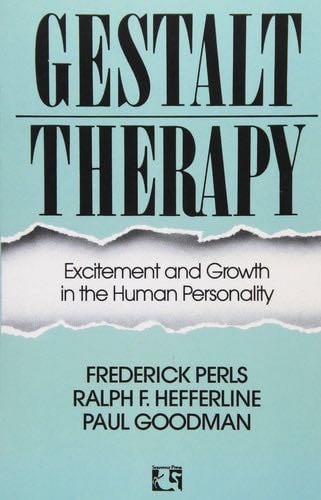
Gestalt Therapy
M.D., Ph.D. Frederick S. Perls, Ph.D. Ralph F. Hefferline, Ph.D. Paul Goodman · 1994
A seminal book that placed the study of human behaviour in a new perspective, demolished many schools of psychology and brought about a return to the dynamic view of human personality.<br/>It invites the reader to go on a course of self-therapy designed to develop an awareness of the self and a growth of the personality. Employing the wide-ranging techniques of the Gestalt approach to heighten sensory perception and motoric behaviour and to deepen the capacity to enjoy interpersonal relationships, it is a practical insight into one of the most important psychotherapeutic techniques. Starting with the premise that experience begins at the contact boundary it examines the nature of that experience and the various obstacles that can stand in the way of growth.<br/>Gestalt therapy is explained in detail, with its basis in the methods of psychotherapy from Freud to the present outlined. First published in 1951, Gestalt Therapy has remained constantly in print ever since and is regarded as one of the most important studies of self-awareness available.
lidos
All About Love: New Visions (Love Song to the Nation)
bell hooks · 2018
<p>A New York Times bestseller and enduring classic, All About Love is the acclaimed first volume in feminist icon bell hooks' "Love Song to the Nation" trilogy. All About Love reveals what causes a polarized society, and how to heal the divisions that cause suffering. Here is the truth about love, and inspiration to help us instill caring, compassion, and strength in our homes, schools, and workplaces.<br></p><p>"The word 'love' is most often defined as a noun, yet we would all love better if we used it as a verb, " writes bell hooks as she comes out fighting and on fire inAll About Love. Here, at her most provocative and intensely personal, renowned scholar, cultural critic and feminist bell hooks offers a proactive new ethic for a society bereft with lovelessness--not the lack of romance, but the lack of care, compassion, and unity. People are divided, she declares, by society's failure to provide a model for learning to love.<br></p><p>Asbellhooksuses her incisive mind to explore the question "What is love?" her answers strike at both the mind and heart. Razing the cultural paradigm that the ideal love is infused with sex and desire, she provides a new path to love that is sacred, redemptive, and healing for individuals and for a nation. TheUtne Readerdeclared bell hooks one of the "100 Visionaries Who Can Change Your Life."All About Loveis a powerful, timely affirmation of just how profoundly her revelations can change hearts and minds for the better.<br></p>

Historia da Sexualidade Vol. 1 - A vontade de saber (Em Portugues do Brasil)
Michel Foucault · 2019

Microfisica Do Poder
Michel Foucault · 2009

Quem tem medo do feminismo negro? (Portuguese Edition)
Djamila Ribeiro · 2018
HISTORIA DA RIQUEZA DO HOMEM
LEO HUBERMAN · 1986
Do Feudalismo ao Capitalismo. Sacerdotes, guerreiros e trabalhadores. Entra em cena o comerciante. Rumo à cidade. Surgem novas idéias. O camponês rompe amarras. E nenhum estrangeiro trabalhará... Aí vem o Rei!. Homem rico... Homem pobre, mendigo, ladrão. Precisam-se trabalhadores - crianças de dois anos podem candidatar-se. Ouro, grandeza e glória. Deixem-nos em paz! A velha ordem mudou. Do Capitalismo ao... De onde vem o dinheiro. Revolução - na indústria, agricultura, transporte. A semente que semeais, outro colhe... Leis naturais de quem?.
lidos psico

Existencia Essencia

Gestalt Therapy Verbatim
Frederick S. Perls · 1992

Gestalt-Terapia: Refazendo um Caminho
Jorge Ponciano Ribeiro · 2012
linguistic

Wordslut: A Feminist Guide to Taking Back the English Language
Amanda Montell · 2020
<p>"As funny as it is informative, this book will have you laughing out loud while you contemplate the revolutionary power of words." --Camille Perri, author of The Assistants and When Katie Met Cassidy</p> <p>A brash, enlightening, and wildly entertaining feminist look at gendered language and the way it shapes us.</p> <p>The word bitch conjures many images, but it is most often meant to describe an unpleasant woman. Even before its usage to mean "a female canine," bitch didn't refer to women at all--it originated as a gender-neutral word for "genitalia." A perfectly innocuous word devolving into an insult directed at females is the case for tons more terms, including hussy, which simply meant "housewife"; and slut, which meant "an untidy person" and was also used to describe men. These are just a few of history's many English slurs hurled at women.</p> <p>Amanda Montell, reporter and feminist linguist, deconstructs language--from insults, cursing, gossip, and catcalling to grammar and pronunciation patterns--to reveal the ways it has been used for centuries to keep women and other marginalized genders from power. Ever wonder why so many people are annoyed when women speak with vocal fry or use like as filler? Or why certain gender-neutral terms stick and others don't? Or where stereotypes of how women and men speak come from in the first place?</p> <p>Montell effortlessly moves between history, science, and popular culture to explore these questions--and how we can use the answers to affect real social change. Her irresistible humor shines through, making linguistics not only approachable but downright hilarious and profound. Wordslut gets to the heart of our language, marvels at its elasticity, and sheds much-needed light on the biases that shadow women in our culture and our consciousness.</p>

Because Internet: Understanding the New Rules of Language
Gretchen McCulloch · 2019
The Art of Language Invention: From Horse-Lords to Dark Elves to Sand Worms, the Words Behind World-Building
David J. Peterson · 2015

The Etymologicon
Mark Forsyth · 2016
fic lido

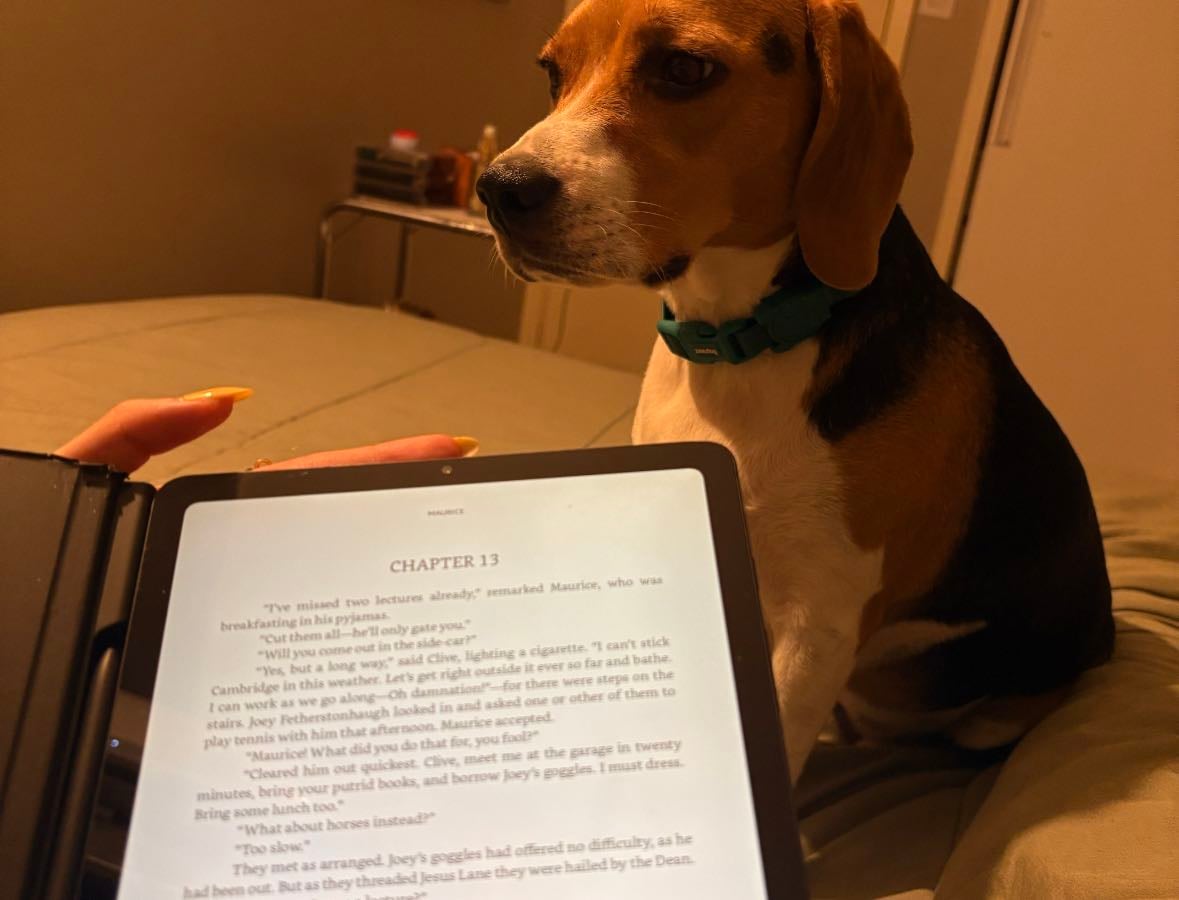
Maurice: A Novel
E. M. Forster · 2005
pol/ econ

Who Makes the Fash
Luca Carboni · 2020
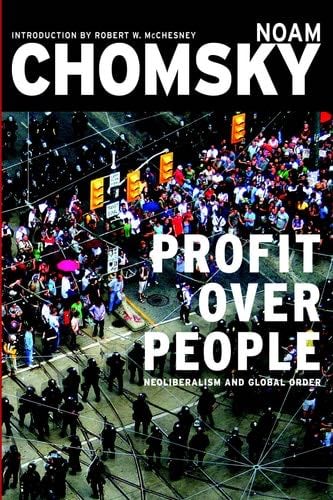
Profit Over People: Neoliberalism & Global Order
Noam Chomsky · 1999

Global Political Economy: A Marxist Critique
Bill Dunn · 2008

The Myth of Capitalism: Monopolies and the Death of Competition
Jonathan Tepper · 2018
The Myth of Capitalism tells the story of how America has gone from an open, competitive marketplace to an economy where a few very powerful companies dominate key industries that affect our daily lives. Digital monopolies like Google, Facebook and Amazon act as gatekeepers to the digital world. Amazon is capturing almost all online shopping dollars. We have the illusion of choice, but for most critical decisions, we have only one or two companies, when it comes to high speed Internet, health insurance, medical care, mortgage title insurance, social networks, Internet searches, or even consumer goods like toothpaste. Every day, the average American transfers a little of their pay check to monopolists and oligopolists. The solution is vigorous anti-trust enforcement to return America to a period where competition created higher economic growth, more jobs, higher wages and a level playing field for all. The Myth of Capitalism is the story of industrial concentration, but it matters to everyone, because the stakes could not be higher. It tackles the big questions of: why is the US becoming a more unequal society, why is economic growth anemic despite trillions of dollars of federal debt and money printing, why the number of start-ups has declined, and why are workers losing out.

The Economics of Killing: How the West Fuels War and Poverty in the Developing World
Vijay Mehta · 2012
Globalisation has created an interconnected world, but has not diminished violence, militarism and inequality. The Economics of Killing describes how the power of global elites, entrenched under globalisation, has created a deadly cycle of violence.<br/><br/>In this groundbreaking work, Vijay Mehta shows how attempts at peaceful national development are routinely blocked by Western powers. He locates the 2008 financial crisis in US attempts to block China's model of development. He shows how Europe and the US conspire with regional dictators to prevent countries from developing advanced industries, and how this system has fed terrorism.<br/><br/>Mehta argues that a different world is possible, based on policies of disarmament, demilitarisation and sustainable development. This original and thought-provoking book will be of great interest to anyone concerned about the consequences of endless war fuelled by the West.

Capital in the Twenty-First Century
Thomas Piketty · 2017
<p><b>A <i>New York Times</i> #1 Bestseller<br>A <i>Wall Street Journal</i> #1 Bestseller<br>A <i>USA Today</i> Bestseller<br>A <i>Sunday Times</i> Bestseller<br>A <i>Guardian</i> Best Book of the 21st Century<br>Winner of the <i>Financial Times</i> and McKinsey Business Book of the Year Award<br>Winner of the British Academy Medal<br>Finalist, National Book Critics Circle Award</b><br><br>“It seems safe to say that <i>Capital in the Twenty-First Century</i>, the magnum opus of the French economist Thomas Piketty, will be the most important economics book of the year—and maybe of the decade.”<br>—Paul Krugman, <i>New York Times</i><br><br>“The book aims to revolutionize the way people think about the economic history of the past two centuries. It may well manage the feat.”<br>—<i>The Economist</i><br><br>“Piketty’s <i>Capital in the Twenty-First Century</i> is an intellectual tour de force, a triumph of economic history over the theoretical, mathematical modeling that has come to dominate the economics profession in recent years.”<br>—Steven Pearlstein, <i>Washington Post</i><br><br>“Piketty has written an extraordinarily important book...In its scale and sweep it brings us back to the founders of political economy.”<br>—Martin Wolf, <i>Financial Times</i><br><br>“A sweeping account of rising inequality...Piketty has written a book that nobody interested in a defining issue of our era can afford to ignore.”<br>—John Cassidy, <i>New Yorker</i><br><br>“Stands a fair chance of becoming the most influential work of economics yet published in our young century. It is the most important study of inequality in over fifty years.”<br>—Timothy Shenk, <i>The Nation</i></p>

The Wealth and Poverty of Nations
David Landes · 1999