Books on Religion

From a non-religious person who loves to question god
Items in this hypelist
Politics & Religion

Jesus and John Wayne: How White Evangelicals Corrupted a Faith and Fractured a Nation
Kristin Kobes Du Mez · 2021
NEW YORK TIMES BESTSELLER<br/>The “paradigm-influencing” book (Christianity Today) that is fundamentally transforming our understanding of white evangelicalism in America.<br/>Jesus and John Wayne is a sweeping, revisionist history of the last seventy-five years of white evangelicalism, revealing how evangelicals have worked to replace the Jesus of the Gospels with an idol of rugged masculinity and Christian nationalism―or in the words of one modern chaplain, with “a spiritual badass.”<br/>As acclaimed scholar Kristin Du Mez explains, the key to understanding this transformation is to recognize the centrality of popular culture in contemporary American evangelicalism. Many of today’s evangelicals might not be theologically astute, but they know their VeggieTales, they’ve read John Eldredge’s Wild at Heart, and they learned about purity before they learned about sex―and they have a silver ring to prove it. Evangelical books, films, music, clothing, and merchandise shape the beliefs of millions. And evangelical culture is teeming with muscular heroes―mythical warriors and rugged soldiers, men like Oliver North, Ronald Reagan, Mel Gibson, and the Duck Dynasty clan, who assert white masculine power in defense of “Christian America.” Chief among these evangelical legends is John Wayne, an icon of a lost time when men were uncowed by political correctness, unafraid to tell it like it was, and did what needed to be done.<br/>Challenging the commonly held assumption that the “moral majority” backed Donald Trump in 2016 and 2020 for purely pragmatic reasons, Du Mez reveals that Trump in fact represented the fulfillment, rather than the betrayal, of white evangelicals’ most deeply held values: patriarchy, authoritarian rule, aggressive foreign policy, fear of Islam, ambivalence toward #MeToo, and opposition to Black Lives Matter and the LGBTQ community. A much-needed reexamination of perhaps the most influential subculture in this country, Jesus and John Wayne shows that, far from adhering to biblical principles, modern white evangelicals have remade their faith, with enduring consequences for all Americans. 15 black-and-white illustrations

White Too Long: The Legacy of White Supremacy in American Christianity
Robert P. Jones · 2020
<p>"An indispensible study" ( Kirkus Reviews, starred review) drawing on history, public opinion surveys, and personal experience that presents a provocative examination of the unholy relationship between American Christianity and white supremacy, and issues an urgent call for white Christians to reckon with this legacy for the sake of themselves and the nation. As the nation grapples with demographic changes and the legacy of racism in America, Christianity's role as a cornerstone of white supremacy has been largely overlooked. But white Christians—from evangelicals in the South to mainline Protestants in the Midwest and Catholics in the Northeast—have not just been complacent or complicit; rather, as the dominant cultural power, they have constructed and sustained a project of protecting white supremacy and opposing black equality that has framed the entire American story.With his family's 1815 Bible in one hand and contemporary public opinion surveys by Public Religion Research Institute (PRRI) in the other, Robert P. Jones delivers "a refreshing blend of historical accounting, soul searching reflection, and analysis" ( Publishers Weekly ) of the repressed relationship between Christianity and white supremacy. White Too Long is "a marvel" ( Booklist, starred review) that demonstrates how deeply racist attitudes have become embedded in the DNA of white Christian identity over time and calls for an honest reckoning with a complicated, painful, and even shameful past. Jones challenges white Christians to acknowledge that public apologies are not enough—accepting responsibility for the past requires work toward repair in the present. White Too Long is not an appeal to altruism. It is "a powerful and much-needed book" (Eddie S. Glaude Jr, professor at Princeton University and author of Begin Again ) drawing on lessons gleaned from case studies of communities beginning to face these challenges. Jones argues that contemporary white Christians must confront these unsettling truths because this is the only way to salvage the integrity of their faith and their own identities. More broadly, it is no exaggeration to say that not just the future of white Christianity, but the outcome of the American experiment is at stake.<br></p>

The Righteous Mind: Why Good People Are Divided by Politics and Religion
Jonathan Haidt · 2013
Religious History

No god but God
Reza Aslan · 2005

How Jesus Became God
Bart D. Ehrman · 2014
New York Times bestselling author and Bible expert Bart Ehrman reveals how Jesus’s divinity became dogma in the first few centuries of the early church. The claim at the heart of the Christian faith is that Jesus of Nazareth was, and is, God. But this is not what the original disciples believed during Jesus’s lifetime—and it is not what Jesus claimed about himself. How Jesus Became God tells the story of an idea that shaped Christianity, and of the evolution of a belief that looked very different in the fourth century than it did in the first. A master explainer of Christian history, texts, and traditions, Ehrman reveals how an apocalyptic prophet from the backwaters of rural Galilee crucified for crimes against the state came to be thought of as equal with the one God Almighty, Creator of all things. But how did he move from being a Jewish prophet to being God? In a book that took eight years to research and write, Ehrman sketches Jesus’s transformation from a human prophet to the Son of God exalted to divine status at his resurrection. Only when some of Jesus’s followers had visions of him after his death—alive again—did anyone come to think that he, the prophet from Galilee, had become God. And what they meant by that was not at all what people mean today. Written for secular historians of religion and believers alike, How Jesus Became God will engage anyone interested in the historical developments that led to the affirmation at the heart of Christianity: Jesus was, and is, God.
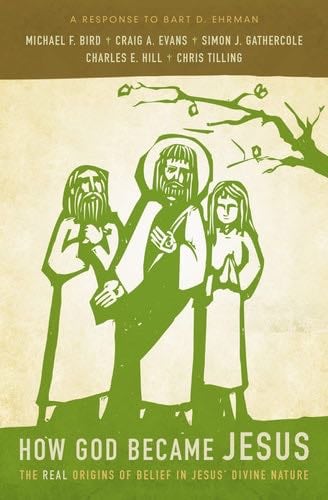
How God Became Jesus: The Real Origins of Belief in Jesus' Divine Nature---A Response to Bart D. Ehrman
Michael F. Bird, Craig A. Evans, Simon Gathercole, Charles E. Hill, Chris Tilling · 2014

Muhammad: A Prophet for Our Time
Karen Keishin Armstrong · 2007

Zealot: The Life and Times of Jesus of Nazareth
Reza Aslan · 2014
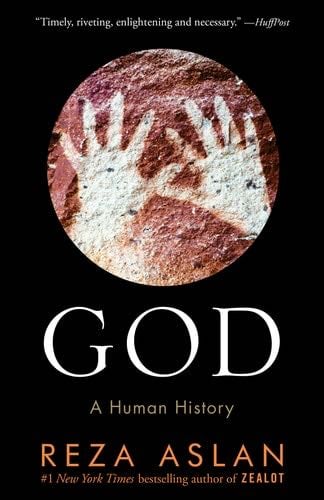
God: A Human History
Reza Aslan · 2019
<b><i>NEW YORK TIMES</i> BESTSELLER • The author of <i>Zealot </i>explores humanity’s quest to make sense of the divine in this concise and fascinating history of our understanding of God.</b><br><b> </b><br> In <i>Zealot,</i> Reza Aslan replaced the staid, well-worn portrayal of Jesus of Nazareth with a startling new image of the man in all his contradictions. In his new book, Aslan takes on a subject even more immense: God, writ large.<br> <br>In layered prose and with thoughtful, accessible scholarship, Aslan narrates the history of religion as a remarkably cohesive attempt to understand the divine by giving it human traits and emotions. According to Aslan, this innate desire to humanize God is hardwired in our brains, making it a central feature of nearly every religious tradition. As Aslan writes, “Whether we are aware of it or not, and regardless of whether we’re believers or not, what the vast majority of us think about when we think about God is a divine version of ourselves.”<br> <br> But this projection is not without consequences. We bestow upon God not just all that is good in human nature—our compassion, our thirst for justice—but all that is bad in it: our greed, our bigotry, our penchant for violence. All these qualities inform our religions, cultures, and governments.<br> <br> More than just a history of our understanding of God, this book is an attempt to get to the root of this humanizing impulse in order to develop a more universal spirituality. Whether you believe in one God, many gods, or no god at all, <i>God: A Human History</i> will challenge the way you think about the divine and its role in our everyday lives.<br><br><b>Praise for God</b><br><br>“Timely, riveting, enlightening and necessary.”<b>—</b><i><b><i>HuffPost</i></b><br><br> </i>“Tantalizing . . . Driven by [Reza] Aslan’s grace and curiosity, God . . . helps us pan out from our troubled times, while asking us to consider a more expansive view of the divine in contemporary life.”<b><i><b><i>—The Seattle Times</i></b><br><br> </i></b>“A fascinating exploration of the interaction of our humanity and God.”<b><i><b>—<i>Pittsburgh Post-Gazette</i></b><br><br> </i></b>“[Aslan’s] slim, yet ambitious book [is] the story of how humans have created God with a capital G, and it’s thoroughly mind-blowing.”<b><i><b><i>—Los Angeles Review of Books</i></b><br><br> </i></b>“Aslan is a born storyteller, and there is much to enjoy in this intelligent survey.”<b><i><b>—<i>San Francisco Chronicle</i></b></i></b>
Uncategorized

The Bible Says So: What We Get Right (and Wrong) About Scripture’s Most Controversial Issues
Dan McClellan · 2025