
Must-read books for PM

Items in this hypelist
Product Design

Measure What Matters: How Google, Bono, and the Gates Foundation Rock the World with OKRs
John Doerr · 2018
Lean Analytics
Alistair Croll, Benjamin Yoskovitz · 2024
Whether you're a startup founder trying to disrupt an industry or an entrepreneur trying to provoke change from within, your biggest challenge is creating a product people actually want. Lean Analytics steers you in the right direction. This book shows you how to validate your initial idea, find the right customers, decide what to build, how to monetize your business, and how to spread the word. Packed with more than thirty case studies and insights from over a hundred business experts, Lean Analytics provides you with hard-won, real-world information no entrepreneur can afford to go without. Understand Lean Startup, analytics fundamentals, and the data-driven mindset Look at six sample business models and how they map to new ventures of all sizes Find the One Metric That Matters to you Learn how to draw a line in the sand, so you'll know it's time to move forward Apply Lean Analytics principles to large enterprises and established products

User Story Mapping: Discover the Whole Story, Build the Right Product
Jeff Patton, Peter Economy, Martin Fowler, Alan Cooper, Marty Cagan · 2014

Value Proposition Design
Alexander Osterwalder, Yves Pigneur, Gregory Bernarda, Alan Smith · 2015

Jobs to be Done: Theory to Practice
Anthony W. Ulwick · 2016

Hooked
Nir Eyal · 2014
Updated with a new case study, this revised edition is a how-to guide for building habit-forming products. How do successful companies create products people can’t put down? Why do some products capture widespread attention while others flop? What makes us engage with certain products out of sheer habit? Is there a pattern underlying how technologies hook us? In Hooked, Nir Eyal answers these questions (and many more) by explaining the Hook Model—a four-step process embedded into the products of many successful companies to subtly encourage customer behavior. Through consecutive “hook cycles,” these products reach their ultimate goal of bringing users back again and again without depending on costly advertising or aggressive messaging. Based on years of research, consulting, and practical experience, Eyal wrote the book he wished had been available to him as a start-up founder—not abstract theory, but a how-to guide for building better products. Eyal provides readers with: • Practical insights to create user habits that stick. • Actionable steps for building products people love. • Fascinating examples from the iPhone to Twitter, Pinterest to the Bible App, and many other habit-forming products. Hooked is for product managers, designers, marketers, start-up founders, and anyone who seeks to understand how products influence our behavior.
Metrics and Analytics

Measuring the User Experience
Bill Albert, Tom Tullis · 2010
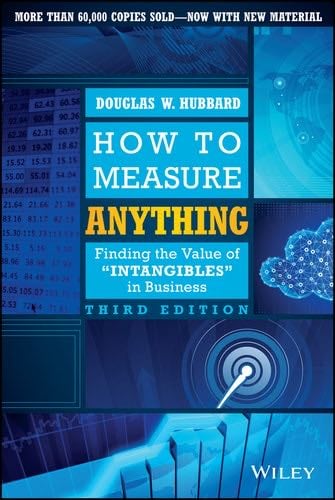
How to Measure Anything
Douglas W. Hubbard · 2014
<p>Now updated with new measurement methods and new examples, How to Measure Anything shows managers how to inform themselves in order to make less risky, more profitable business decisions<br></p><p>This insightful and eloquent book will show you how to measure those things in your own business, government agency or other organization that, until now, you may have considered "immeasurable, " including customer satisfaction, organizational flexibility, technology risk, and technology ROI.<br></p><ul> <li>Adds new measurement methods, showing how they can be applied to a variety of areas such as risk management and customer satisfaction </li> <li>Simplifies overall content while still making the more technical applications available to those readers who want to dig deeper </li> <li>Continues to boldly assert that any perception of "immeasurability" is based on certain popular misconceptions about measurement and measurement methods </li> <li>Shows the common reasoning for calling something immeasurable, and sets out to correct those ideas </li> <li>Offers practical methods for measuring a variety of "intangibles" </li> <li>Provides an online database (www.howtomeasureanything.com) of downloadable, practical examples worked out in detailed spreadsheets </li></ul><p>Written by recognized expert Douglas Hubbard—creator of Applied Information Economics— How to Measure Anything, Third Edition illustrates how the author has used his approach across various industries and how any problem, no matter how difficult, ill defined, or uncertain can lend itself to measurement using proven methods.<br></p>
User Research
Continuous Discovery Habits
Teresa Torres · 2021
The Mom Test: How to talk to customers & learn if your business is a good idea when everyone is lying to you
Rob Fitzpatrick · 2013
Growth
Traction: How Any Startup Can Achieve Explosive Customer Growth
Gabriel Weinberg, Justin Mares · 2015

Product-Led Growth: How to Build a Product That Sells Itself (Product-Led Growth Series)
Wes Bush · 2019
The Cold Start Problem: How to Start and Scale Network Effects
Andrew Chen · 2021
A startup executive and investor draws on expertise developed at the premier venture capital firm Andreessen Horowitz and as an executive at Uber to address how tech’s most successful products have solved the dreaded "cold start problem”—by leveraging network effects to launch and scale toward billions of users. Although software has become easier to build, launching and scaling new products and services remains difficult. Startups face daunting challenges entering the technology ecosystem, including stiff competition, copycats, and ineffective marketing channels. Teams launching new products must consider the advantages of “the network effect,” where a product or service’s value increases as more users engage with it. Apple, Google, Microsoft, and other tech giants utilize network effects, and most tech products incorporate them, whether they’re messaging apps, workplace collaboration tools, or marketplaces. Network effects provide a path for fledgling products to break through, attracting new users through viral growth and word of mouth. Yet most entrepreneurs lack the vocabulary and context to describe them—much less understand the fundamental principles that drive the effect. What exactly are network effects? How do teams create and build them into their products? How do products compete in a market where every player has them? Andrew Chen draws on his experience and on interviews with the CEOs and founding teams of LinkedIn, Twitch, Zoom, Dropbox, Tinder, Uber, Airbnb, and Pinterest to offer unique insights in answering these questions. Chen also provides practical frameworks and principles that can be applied across products and industries. The Cold Start Problem reveals what makes winning networks thrive, why some startups fail to successfully scale, and, most crucially, why products that create and compete using the network effect are vitally important today.
Hacking Growth: How Today's Fastest-Growing Companies Drive Breakout Success
Sean Ellis, Morgan Brown · 2017
Uncategorized

Sprint: How to Solve Big Problems and Test New Ideas in Just Five Days
Jake Knapp, John Zeratsky, Braden Kowitz · 2016
Empowered: Ordinary People, Extraordinary Products (Silicon Valley Product Group)
Marty Cagan · 2020

Agile Product Management with Scrum
Roman Pichler · 2010
Inspired: How to Create Tech Products Customers Love (Silicon Valley Product Group)
Marty Cagan · 2017