Reading for creatives
Items in this hypelist
To Read
The Little Book of Aston Martin
Philip Raby • 2007
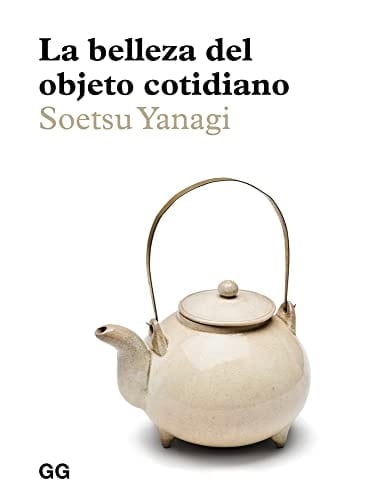
La belleza del objeto cotidiano (Spanish Edition)
Soetsu Yanagi • 2020
Al despertar, lo primero que percibimos es el tacto de nuestras sá banas, la luz con la que nos envuelve la lá mpara que encendemos, la forma y color de la vajilla del desayuno... Desde ese momento y hasta terminar el dí a, cuando cerramos de nuevo los ojos sobre el textil de la almohada, nuestro cuerpo se habrá topado y desenvuelto con una infinidad de objetos diversos. Se trata de cosas modestas, comunes y ordinarias, que usamos constantemente sin prestarles apenas atenció n. Pero los objetos son tambié n unos compañ eros constantes en nuestra vida y, como tales, afirma Soetsu Yanagi, deben hacerse con cuidado y fabricarse para que duren. Deben ser tratados con respeto e incluso afecto. Y deben aunar perfectamente belleza y utilidad. Soetsu Yanagi es un pensador imprescindible hasta ahora iné dito en castellano, y una de las voces clave del siglo XX en llamar la atenció n sobre el valor de los objetos cotidianos y la artesaní a anó nima. Este libro, que recopila los ensayos breves del crí tico japoné s, nos enseñ ará a mirar con nuevos ojos a nuestro alrededor y a admirar el increí ble valor material e intangible de las creaciones anó nimas, siempre bellas y honestas, que forman parte de nuestra vida cotidiana.

Diseño del siglo XX
Peter Fiell, Charlotte Fiell · 2012
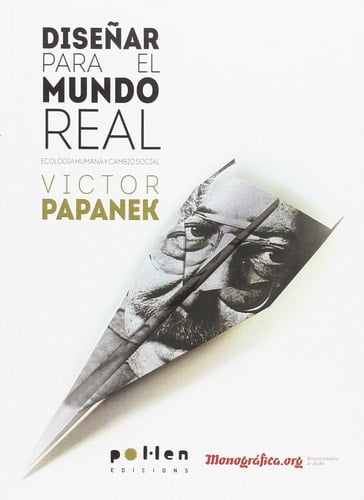
Diseñar para el mundo real: Ecología humana y cambio social (Producció Neta) (Spanish Edition)
Victor Papanek • 2014

El diseño como storytelling
Ellen Lupton, Álvaro Marcos Lantero · 2019

¿Cómo nacen los objetos?
Bruno Munari • 2016

The Story of Art
Ernst Hans Gombrich · 1995

Interior desing
Desing
Have you ever wondered why that 13-digit number on the back of a book costs $125 in the United States but is completely free in Canada and India? This book, The Global ISBN Handbook, is your 2025 guide to the International Standard Book Number. It explains everything about this global "fingerprint" for books. The ISBN is the most important cornerstone of the publishing industry. It started as a simple warehouse tool in the 1960s. Now, it is a complex digital identifier used in over 200 countries. This handbook deconstructs the entire system. It uses 15 distinct national case studies to do this. You will learn how the old 10-digit system changed to the new 13-digit one. We break down the five parts of the ISBN, from the "Bookland" prefix to the final check digit. The book explores the global governance framework, starting with the International ISBN Agency. Then, it dives deep into how different countries run their systems. You'll see the privatized, high-cost model in the United States. You'll compare it to Canada's free, government-run system. We explore the industry-led models in Brazil and Germany. We look at government-run systems in Mexico and India. We even cover the unique case of China, where the ISBN is not a simple identifier but a state-controlled publication license. The book also examines the systems in the UK , France , Russia , Japan , Australia , South Africa , Nigeria , and Egypt. Many books and websites can tell you how to get an ISBN. This handbook is the only resource that explains why the process is so different everywhere you look. It moves beyond a simple "how-to" and provides a true global analysis. It directly compares the privatized, for-profit models in the US and UK against the free, public-good systems in Canada and South Africa. You won't just learn the price; you will understand the cultural policies, market structures, and legal philosophies that shape that price. This book shows how the ISBN is a "global mirror". It reveals how a simple number can be a commercial product in one nation , a tool of cultural policy in another , and an instrument of state control in a third. This comparative insight is the missing piece for any author, publisher, or researcher trying to navigate the complex international publishing market. Disclaimer: This handbook is an independently produced resource for commentary and analysis. The author has no affiliation with the International ISBN Agency, R.R. Bowker, Library and Archives Canada, the National Press and Publication Administration, or any other national ISBN agency. This work is independently produced under the principle of nominative fair use.