Libros
Items in this hypelist
Redes e internet

Interface Culture
Steven A. Johnson • 1999

Media Research Methods
Ina Bertrand • 2017
Against Technoableism: Rethinking Who Needs Improvement (A Norton Short)
Ashley Shew • 2023
Quantum Ecology
Stefano Calzati • 2024
Poetry's Data Digital Humanities and the History of Prosody
Meredith Martin • 2025
A Sexual History of the Internet
Mindy Seu • 2025
Writings
Vilém Flusser • 2002
Immersion, Narrative, and Gender Crisis in Survival Horror Video Games
Andrei Nae • 2022

Electric Dreams Sex Robots and the Failed Promises of Capitalism
Heather Parry (Writer and editor) • 2024
Domain Errors! Cyberfeminist Practices
Maria Fernandez • 2002
The Rise of the Network Society
Manuel Castells • 2000
Platform Brutality
Geert Lovink • 2025
Bibliotech
Nathan Jones • 2024
Cibercultura
Pierre Levy • 2010
Web-Based Learning
Gayle V. Davidson-Shivers • 2017
Slow Technology Reader A Tool for Shaping Divergent Futures
Carolyn F. Strauss • 2025
Diálogos posdigitales Las TRIC como medios para la transformación social
Carmen Marta-Lazo • 2023
Cyberfeminism Index
Julianne Pierce • 2022
Los condenados de la pantalla
Hito Steyerl • 2014
The Intersectional Internet
Noble, Safiya Umoja / Tynes, Brendesha M. (eds) • 2016
Teoría literaria
Poética
Aristóteles • 2018
Una introducción a la teoría literaria
Terry Eagleton • 1998
Variaciones sobre la escritura
Roland Barthes • 2022
El marco del lenguaje
Roman Jakobson • 1988
Filosofía y poesía
María Zambrano • 2016
Lo Roto Precede a Lo Entero 125 Infraensayos
Cristina Rivera Garza • 2020

Para no olvidar crónicas y otros textos
Clarice Lispector • 2011
Contar con el lenguaje
Ensayos críticos sobre la obra de Cristina Rivera Garza
Have you ever wondered why that 13-digit number on the back of a book costs $125 in the United States but is completely free in Canada and India? This book, The Global ISBN Handbook, is your 2025 guide to the International Standard Book Number. It explains everything about this global "fingerprint" for books. The ISBN is the most important cornerstone of the publishing industry. It started as a simple warehouse tool in the 1960s. Now, it is a complex digital identifier used in over 200 countries. This handbook deconstructs the entire system. It uses 15 distinct national case studies to do this. You will learn how the old 10-digit system changed to the new 13-digit one. We break down the five parts of the ISBN, from the "Bookland" prefix to the final check digit. The book explores the global governance framework, starting with the International ISBN Agency. Then, it dives deep into how different countries run their systems. You'll see the privatized, high-cost model in the United States. You'll compare it to Canada's free, government-run system. We explore the industry-led models in Brazil and Germany. We look at government-run systems in Mexico and India. We even cover the unique case of China, where the ISBN is not a simple identifier but a state-controlled publication license. The book also examines the systems in the UK , France , Russia , Japan , Australia , South Africa , Nigeria , and Egypt. Many books and websites can tell you how to get an ISBN. This handbook is the only resource that explains why the process is so different everywhere you look. It moves beyond a simple "how-to" and provides a true global analysis. It directly compares the privatized, for-profit models in the US and UK against the free, public-good systems in Canada and South Africa. You won't just learn the price; you will understand the cultural policies, market structures, and legal philosophies that shape that price. This book shows how the ISBN is a "global mirror". It reveals how a simple number can be a commercial product in one nation , a tool of cultural policy in another , and an instrument of state control in a third. This comparative insight is the missing piece for any author, publisher, or researcher trying to navigate the complex international publishing market. Disclaimer: This handbook is an independently produced resource for commentary and analysis. The author has no affiliation with the International ISBN Agency, R.R. Bowker, Library and Archives Canada, the National Press and Publication Administration, or any other national ISBN agency. This work is independently produced under the principle of nominative fair use.
Desire in Language A Semiotic Approach to Literature and Art
Julia Kristeva • 1980
Ää: manifiestos sobre la diversidad lingüística
Yásnaya Elena Aguilar Gil • 2020
Cervantes o la crítica de la lectura
Carlos Fuentes • 2023
El lenguaje como semiótica social la interpretación social del lenguaje y del significado
M. A. K. Halliday • 1982
The Forgotten Language
Erich Fromm • 2013

Lo Roto Precede a Lo Entero 125 Infraensayos
Cristina Rivera Garza • 2020

Great Ideas Why I Write
George Orwell • 2005
In the Margins: On the Pleasures of Reading and Writing
Elena Ferrante • 2022
Tratado de semiótica general
Umberto Eco • 2018
Cómo leer literatura
Terry Eagleton • 2017
Cómo leer un poema
Terry Eagleton • 2010

El escritor y sus fantasmas
Ernesto Sábato • 2011
Dentro de la literatura
Suso de Toro • 2022

El oficio de escritor
VV. AA. • 1968
Para Escribir Hay Que Leer
Vanni Santoni • 2022
The Carrier Bag Theory of Fiction
Ursula K. Le Guin • 2019
The Fall of Language
Alexander Stern • 2019
El gótico transmigrado narrativa puertorriqueña de horror, misterio y terror en el siglo XXI
Sandra Casanova Vizcaíno • 2021
Poetry's Data Digital Humanities and the History of Prosody
Meredith Martin • 2025
El orden del discurso
Michel Foucault • 2022
Teoría de la interpretación discurso y excedente de sentido
Paul Ricoeur • 1995

Writings
Vilém Flusser • 2002

Las mujeres y los estudios del libro y la edición en Iberoamérica Panorama histórico y enfoques interdisciplinarios
Marina Garone Gravier • 2023
La dimensión política del lenguaje Introducción a la glotopolítica
Giohanny Olave • 2024
The Routledge Handbook of Discourse Analysis
Michael Handford • 2023

Syntactic Structures
Noam Chomsky • 2015
Lingüística y colonialismo breve tratado de glotofagia
Louis-Jean Calvet • 2005
Language and Politics
Noam Chomsky • 2004
Discurso y poder
Teun A. van Dijk • 2005

Lenguaje inclusivo y exclusión de clase
Vasallo Brigitte • 2024
La arquitectura del lenguaje
Noam Chomsky • 2003
Language and a Sense of Place
Chris Montgomery • 2017
Ää: manifiestos sobre la diversidad lingüística
Yásnaya Elena Aguilar Gil · 2020
Leer los artículos de Yásnaya Aguilar reunidos en este volumen, así como los múltiples comentarios en redes sociales que los acompañan y enriquecen, es un placer que recomiendo de todo corazón a las lectoras y lectores. A lo largo de estos textos, tan amenos como refrescantes, queda claro que Yásnaya Aguilar ha sido capaz de ver más allá de las imposiciones y de la violencia, impulsada por su profunda pasión por las lenguas, por la lingüística, por la literatura, para rebasar los confines de su nativo ayuujk y de su aprendido español, hasta acercarse a los idiomas más hablados del mundo, como el ruso, pero también a las incontables lenguas indígenas que en todo el planeta se encuentran marginadas, amenazadas y, a veces, al borde de la desaparición. En su uso sin pretensiones del llano dialecto mexicano del castellano, destaca la generosidad constante de su estilo, su humor y sinceridad, que le permite construir una defensa tan apasionada como razonable, tan rigurosa como amena, del valor de las lenguas indígenas, de la pluralidad cultural, de la vitalidad de las tradiciones de nuestros pueblos originarios. Esta claridad da mayor fuerza también a sus denuncias contra la discriminación lingüística, contra el menosprecio a las lenguas indígenas y contra la prepotencia de los defensores del español como lengua nacional. Escrito a lo largo de una década, este libro está destinado a ser un exponente de un auténtico florecer y renacimiento del pensamiento contemporáneo hablante de lenguas indígenas. (Federico Navarrete)
Cómo se comenta un texto literario
Fernando Lázaro Carreter • 1980
La vida no es útil
Ailton Krenak • 2023
Melancolía y suicidios literarios de Aristóteles a Alejandra Pizarnik
Toni Montesinos Gilbert • 2014
Curso de lingüística general
Ferdinand de Saussure • 2005
La dignidad e igualdad de las lenguas crítica de la discriminación lingüística
Juan Carlos Moreno Cabrera • 2016
Mientras escribo
Stephen King • 2021
Cultura
Como el aire que respiramos el sentido de la cultura
Antonio Monegal • 2022
Para raros, nosotros
Paul Bohannan • 1996
Historia de la cultura
Alfred Weber • 1941
Antropología filosófica introducción a una filosofía de la cultura
Ernst Cassirer • 2003
Geografía, arquitectura, urbanismo
Space, Knowledge and Power
Stuart Elden • 2016
Territorialism
Paola Viganò • 2014
Los no lugares (Cla-de-ma) (Spanish Edition)
Marc Auge • 2010
Muerte y vida de las grandes ciudades
Jane Jacobs • 2011
La naturaleza del espacio técnica y tiempo, razón y emoción
Milton Santos • 2000
La ciudad de los cuidados
Izaskun Chinchilla Moreno • 2020
Habitar como un pájaro modos de hacer y pensar los territorios
Vinciane Despret • 2022
Ruralism The Future of Villages and Small Towns in an Urbanizing World
Vanessa Miriam Carlow • 2016
Principles of Urban Structure
Nikos Angelos Salingaros • 2014
Alegorías urbanas Mapas de ciudades mexicanas
Ribera Carbó, Eulalia • 2024
Walkscapes Walking as an Aesthetic Practice
Francesco Careri • 2002
The Future of Public Space
Amy Gill • 2017
Geomedia Networked Cities and the Future of Public Space
Scott McQuire • 2017
Cómo leer edificios
Carol Davidson Cragoe • 2013
Mapping Society The Spatial Dimensions of Social Cartography
Laura Vaughan • 2018
RECUPERANDO LA TIERRA
MOYO SAM • 2022
Geografías de la diferencia. Espacialidad, política y acción social
Edgar Alberto Novoa Torres • 2016
La humanización del espacio urbano La vida social entre los edificios
Jan Gehl • 2006
Literature and Cartography Theories, Histories, Genres
Anders Engberg-Pedersen • 2017
Walking As Embodied Worldmaking Bodies, Borders, Knowledgescapes
2025
Cartographics Designing the Modern Map
Shan ben tu shu • 2016
Diccionario de urbanismo geografía urbana y ordenación del territorio
Florencio Zoido Naranjo • 2013
Language and a Sense of Place
Chris Montgomery • 2017

Geografías del Compartir: Tres métodos para cartografiar territorios, experiencias y cuerpos (Spanish Edition)
Juan Manuel Diez Tetamanti • 2024
Diseño
El arte del color
Johannes Itten • 2020
Interseccionalidad

Contesting the Anthropocene - Latin American Perspectives Beyond Coloniality and Capitalism
Olaf Kaltmeier • 2026

Regarding the Pain of Others
Susan Sontag • 2004
On Women
Susan Sontag • 2023
Sobre cultura femenina
Rosario Castellanos • 2013

Tsunami 2
Gabriela Jauregui · 2022
<p>¿Cómo respondemos? ¿Con la voz entrecortada? ¿Con el cuerpo? ¿Con la lata de aerosol? ¿Con un coctel molotov? ¿Con toda nuestra rabia? ¿Con nuestra inteligencia? ¿Con todo lo que tenemos y somos? ¿Cuántas formas posibles de respuesta hay? Tantas como nosotras. «Nuestra arma es la voz», dijo Marichuy en la toma reciente del INPI y ya había mencionado Gloria Anzaldúa que la responsabilidad es nuestra habilidad de responder: con la boca, la voz, y en las puntas de los dedos cargamos y enunciamos esa responsabilidad. Las voces aquí reunidas cuestionan el amor tradicional entre una hija y su madre, las relaciones posibles y el deseo en una comunidad zapoteca; reflexionan sobre las historias que nos han contado sobre la identidad, sobre los cuerpos normados, las periferias, las disidencias; se preguntan por las luchas de izquierda que hacen jerarquías entre los cuerpos, por la «sororidad» entre unas a costa de otras; cuestionan nuestra participación en el juego de la estupidez desde la valentía adolescente; se duelen por el extractivismo que penetra nuestros cuerpos-territorios; ponen en entredicho las teorías racistas, clasistas y discriminatorias de ciertas manifestaciones radicales del feminismo, e imaginan las posibilidades de un futuro alegre después del hartazgo y el dolor, desde las perlas-cicatriz o los monumentos vueltos archivos íntimos, y las voces que la historia quiso borrar hablan fuerte y claro. Escriben para un nosotras que se vuelve un bosque de mujeres —metáfora potente de la diferencia y la equidad—. Porque si el feminismo y las luchas de las mujeres no son de todas y para la emancipación de todas entonces no son para ninguna.<br></p>
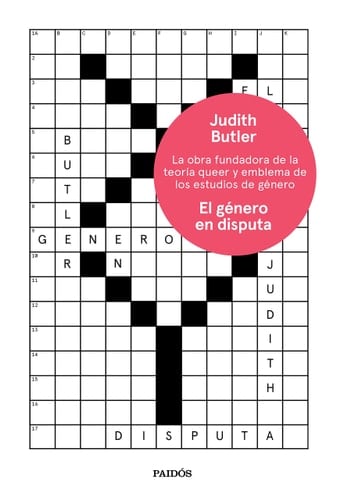
El género en disputa
Judith Butler · 2017
El libro constituye una lúcida crítica a la idea esencialista de que las identidades de género son inmutables y encuentran su arraigo en la naturaleza, en el cuerpo o en una heterosexualidad normativa y obligatoria. Interdisciplinario, inscrito en la filosofía, la antropología, la teoría literaria y el psicoanálisis, este texto es deudor de un prolongado acercamiento de la autora al feminismo teórico, a los debates sobre el carácter socialmente construido del género, al psicoanálisis, a los estudios pioneros sobre el travestismo, y a su activa participación en movimientos defensores de la diversidad sexual. Con un pie en la academia y otro en la militancia, apoyada en su lectura de autores como Jacques Lacan, Sigmund Freud, Simone de Beauvoir, Claude Lévi-Strauss, Luce Irigaray, Julia Kristeva, Monique Wittig y Michel Foucault, Butler ofrece aquí una teoría original, polémica y subversiva.

El segundo sexo
Simone de Beauvoir · 2017
" El segundo sexo " no sólo ha nutrido a todo el feminismo que se ha hecho en la segunda mitad del siglo XX, sino que es el ensayo feminista más importante de esa centuria. Todo lo que se ha escrito después en el campo de la teoría feminista ha tenido que contar con esta obra, bien para continuarla en sus planteamientos y seguir desarrollándolos, bien para criticarlos oponiéndose a ellos." El segundo sexo " , que es el ensayo de una filósofa existencialista, se encuadra en el ámbito más amplio de un pensamiento ilustrado que toma de la ilustración precisamente sus aspectos positivos, emancipatorios; ante todo, una concepción igualitaria de los seres humanos, según la cual la diferencia de sexos no altera su radical igualdad de condición.Al mismo tiempo, es un ensayo filosófico que analiza el hecho de la condición femenina en las sociedades occidentales desde múltiples puntos de vista: el científico, el histórico, el psicológico, el sociológico, el ontológico y el cultural. Se trata de un estudio totalizador donde se investiga el porqué de la situación en que se encuentra esa mitad de la humanidad que somos las mujeres." El segundo sexo " no sólo ha nutrido a todo el feminismo que se ha hecho en la segunda mitad del siglo XX, sino que es el ensayo feminista más importante de esa centuria. Todo lo que se ha escrito después en el campo de la teoría feminista ha tenido que contar con esta obra, bien para continuarla en sus planteamientos y seguir desarrollándolos, bien para criticarlos oponiéndose a ellos." El segundo sexo " , que es el ensayo de una filósofa existencialista, se encuadra en el ámbito más amplio de un pensamiento ilustrado que toma de la ilustración precisamente sus aspectos positivos, emancipatorios; ante todo, una concepción igualitaria de los seres humanos, según la cual la diferencia de sexos no altera su radical igualdad de condición.Al mismo tiempo, es un ensayo filosófico que analiza el hecho de la condición femenina en las sociedades occidentales desde múltiples puntos de vista: el científico, el histórico, el psicológico, el sociológico, el ontológico y el cultural. Se trata de un estudio totalizador donde se investiga el porqué de la situación en que se encuentra esa mitad de la humanidad que somos las mujeres.
El ABC del género / The ABC of Gender. Minimal Notions to Discuss the Matter
Mariana Gabarrot · 2022
<b>¿Cuáles son las diferencias entre sexo y género? ¿Son biológicas o culturales? ¿Qué queremos decir cuando hablamos de feminismo? ¿Existe el patriarcado? ¿Cómo detectamos el machismo? ¿Por qué tanto debate sobre el lenguaje incluyente? ¿Qué significan y para que utilizamos las siglas LGBTTTIQ+? ¿Qué son el acoso y la violencia de género? ¿Cómo entender los feminicidios?</b> <br> <br> Mariana Gabarrot nos aclara estas y muchas más preguntas con un lenguaje sencillo y amable, desentrañando que la idea de género no es una lucha entre hombres y mujeres; para entender la relación entre ser mujer y ser femenina, y ser hombre y ser masculino; para reconocer la estructura social que obliga a las mujeres a cumplir con el cuidado del hogar y de los hijos, mientras que los hombres deben ejercer el poder y ser el sostén de la familia. <br> <br> <i>El ABC del género</i> es, como su subtítulo menciona, un manual con nociones mínimas para que podamos reflexionar, reconstruir el discurso y, de ser necesario, replantear nuestra mirada. Este libro busca abrir conversación sin polarizarla, propiciar el diálogo y la escucha sobre temas que parecen imposibles de debatir sin conflicto, pero de los cuales es apremiante hablar y generar espacios de encuentro para la toma de decisiones a nivel personal, familiar e institucional (en la escuela, el trabajo y las instancias de gobierno). <br> <br> «No son nuestras diferencias lo que nos dividen. Es nuestra incapacidad de reconocer, aceptar y celebrar esas diferencias.» - ̶Audre Lorde<br> <br><b>ENGLISH DESCRIPTION</b><br><br><b>What are the differences between sex and gender? Are they biological or cultural? What do we mean when we speak of feminism? Is there such a thing as patriarchy? How do we identify sexism? Why debate over inclusive language? What does the acronym LGBTTTIQ+ mean and why do we use it? What are harassment and gender violence? How do we understand feminicides?</b><br> <br> Mariana Gabarrot clarifies these questions and many more with a plain and kind language, unraveling the idea that gender is not a battle among men and women, to understand the link between being a woman and being feminine, and between being a man and being masculine, and to acknowledge the social structure that forces women to fulfill a role looking after the home and the children, while men wield the power and support the family.<br> <i> </i><br> <i>The ABC of Gender</i> is, as the subtitle mentions, a minimal notions manual to encourage reflection, reconstruct discourses, and if necessary, rethink our views. This book means to open unpolarized conversations to promote dialogue and listening with regard to topics that seem impossible to discuss free of conflict, but of which it is imperative to talk about and create meeting spaces for decision making on a personal, family, and institutional level (at school, at work, and within government branches.)<br> <br> “It is not our differences that divides us. It is our inability to acknowledge, accept, and celebrate those differences.” —Andre Lorde
Filosofía

Ecce Homo
Friedrich Nietzsche • 2007
Ontology—The Hermeneutics of Facticity
Martin Heidegger • 2008
Amor líquido
Zygmunt Bauman • 2018
La Sociedad del Cansancio
Byung-Chul Han • 2021
Arte y curaduría
AI Art Machine Visions and Warped Dreams
Joanna Zylinska • 2020
Curating Digital Art From Presenting and Collecting Digital Art to Networked Co-curation
Annet Dekker • 2021

Curating Art Now
Lilian Cameron • 2022
Visible Art As Policies for Care: Socially Engaged Art, 2010-Ongoing
Martina Angelotti • 2024
Museo digital futuros y posibilidades
2019
How to Be an Artist
Jerry Saltz • 2020
Rethinking Curating Art after New Media
Beryl Graham • 2015
Medios inestables: De objetos técnicos y arte
Doreen A. Ríos • 2025
El arte es una forma de hacer (no una cosa que se hace) Reflexiones a partir de una conversación de Luis Camnitzer y María Acaso
David Lanau • 2018
Investigative Aesthetics
Matthew Fuller • 2021

Curadurías del fin del mundo
Kekena Corvalán · 2022
Museums and the Shaping of Knowledge
Eileen Hooper Greenhill • 2015
Reading
Los muertos indóciles Necroescrituras y desapropiación
Cristina Rivera Garza • 2019
Uncategorized

Marcos de guerra : las vidas lloradas
Judith Butler • 2017
Del Topos Al Logos: Propuestas de Geopoética
Fernando Aínsa • 2006

What Design Can't Do Essays on Design and Disillusion
Silvio Lorusso · 2024
<p><b>A witty, tongue-in-cheek discussion of design's potentials and pitfalls</b></p><p>In focusing on creating preferable conditions, the discipline of design is optimistic by default. And yet, vernacular manifestations of skepticism, dissatisfaction and even resentment toward design abound. Instead of systematically discarding them, can these "sad passions" shed a valuable light on the blind spots of the field? Can disillusion be something more than disillusionment? Can it become an emotional method to unveil design's dysfunctions and contradictions?<br>Author Silvio Lorusso looks into historical and present manifestations of design disillusion to shorten the gap between expectations and reality when it comes to the everyday practice of designers. Using humorous and irreverent visuals, often containing jokes about design, Lorusso constructs thoughtful dichotomies on such topics as synthesis and autonomy, power and impotence, and aspirations and compromise. The result is an amusing yet academic consideration of the design profession and its future.<br><b>Silvio Lorusso</b> (born 1985) is the author of <i>Entreprecariat: Everyone Is an Entrepreneur. Nobody Is Safe</i>. He holds a PhD in Design Sciences from the Iuav University of Venice, and is an assistant professor and vice-director of the Center for Other Worlds at the Lusófona University in Lisbon.</p>
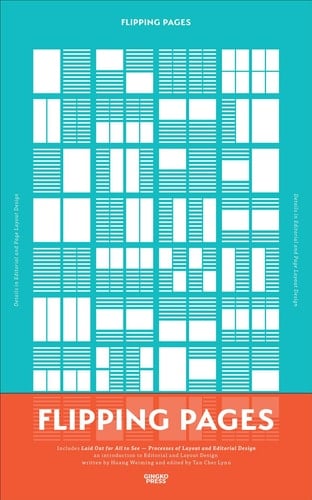
Flipping Pages Details in Editorial and Page Layout Design
Huang Weiming · 2017
Exploring layout design from the inside out, Flipping Pages offers an insightful look at what makes book design really sing. This useful book opens with its most practical chapter - Laid Out for all to See. Herein, the elements of an optimal layout design; from symmetry to composition, the use grids and paragraph rules, and best practices for production ready files are explained in great detail. The book then moves on to provide ample material designers can draw on for inspiration. These showcase sections of top-notch layout examples are offered both with and without overlaying grid systems. Finally, the book offers a glossary of terms followed by binding, folding and paper size resources.

NUEVO DISEÑO EDITORIAL
WANG SHAOQIANG · 2022
Este libro presenta innumerables ejemplos de sugerentes páginas maquetadas con información practica que ofrece una base técnica sólida para conseguir un exitoso diseño editorial. Nuevo diseño editorial reúne explicaciones técnicas completas acerca de los principios básicos de maquetación, un área extensa que abarca la colocación de las fuentes, las imágenes, los colores, los objetos y las cuadrículas en una página. Además, sus páginas muestran una visión de las tendencias y estilos contemporáneos en diseño editorial a través de una selección de proyectos, desde periódicos y revistas a catálogos, libros, folletos y pósteres. Asimismo, este título reúne casos de estudios, trucos y consejos. Este libro proporciona unos conocimientos generales sobre los fundamentos del diseño editorial tales como, los tamaños estándar de papel, las medidas tipográficas, las tipografías, la maquetación y la retícula. Se trata de una referencia perfecta para diseñadores gráficos que buscan soluciones prácticas e inspiración.
99 reflexiones sobre el diseño editorial
Jorge de Buen Unna · 2021
Jorge de Buen desarrolla en estas reflexiones una inteligente crítica a algunos de los usos habituales en la composición de textos y el diseño de libros, a la vez que revaloriza conceptos y procesos de la tipografía tradicional para destacar su importancia y utilidad en la edición actual, desmontando otras prácticas cuestionables que se mantienen 'porque siempre se ha hecho así'.

Legibilidad y tipografía : la composición de los textos
Horacio F. Gorodischer · 2020
About the Author<br/><br/>El autor es argentino y solo tiene un apellido.
The Book
Keith Houston · 2016
<b>“Everybody who has ever read a book will benefit from the way Keith Houston explores the most powerful object of our time. And everybody who has read it will agree that reports of the book’s death have been greatly exaggerated.”—Erik Spiekermann, typographer</b><br><p>We may love books, but do we know what lies behind them? In <i>The Book</i>, Keith Houston reveals that the paper, ink, thread, glue, and board from which a book is made tell as rich a story as the words on its pages—of civilizations, empires, human ingenuity, and madness. In an invitingly tactile history of this 2,000-year-old medium, Houston follows the development of writing, printing, the art of illustrations, and binding to show how we have moved from cuneiform tablets and papyrus scrolls to the hardcovers and paperbacks of today. Sure to delight book lovers of all stripes with its lush, full-color illustrations, <i>The Book</i> gives us the momentous and surprising history behind humanity’s most important—and universal—information technology.</p>

Who Can Afford to be Critical? An Inquiry Into what We Can't Do Alone, as Designers, and Into what We Might be Able to Do Together, as People
Silvio Lorusso · 2022
<p>On the conditions and limits of critical thinking for design culture under capitalism</p><p>Design schools increasingly urge students to address social, political and environmental issues in their work. But who can afford to work in this way after graduation?<br>In a dynamic style that draws from multiple contributors, <i>Who Can Afford to Be Critical?</i> discusses the limits that affordability, class and labor impose upon the educational promise of holding a "critical" practice. Why do we tend to ignore the material and socioeconomic constraints that bind us as designers, claiming instead that we can be powerful agents of change? Instead of focusing on the dream of ethical work under capitalism, could we instead focus first on designers' own working conditions, as one immediate site for collective action? Over the course of four chapters, this publication delves into the modes of precarity in critical graphic work and possible paths toward emancipation from that position.</p>
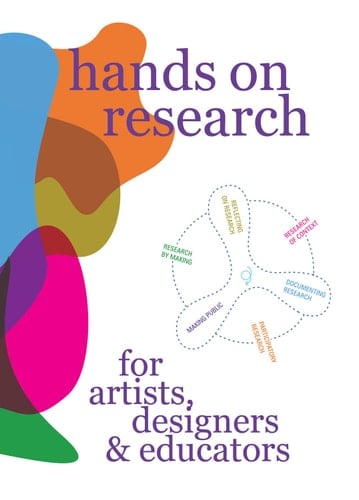
Hands on Research for Artists, Designers & Educators
Miriam Rasch · 2025
<p><b>A user-friendly manual to research methods in art and design practices </b></p><p>This volume presents the Circle of Doing Research: a model to get you started in art and design research. Conceived within the contextual setting of the art school, it is holistic, multidisciplinary and prioritizes practice. It consists of six actions. The basis of the circle is formed by the following: research by making, research of context and participatory research, where information, prototypes, encounters and experiences are gathered and produced. The remaining three actions are concerned with documenting research, publicizing research and reflecting on research. The Circle of Doing Research is an open, accessible and non-linear model. Each action can be an entry point, whether you want to start with material experiments, conversations with others, or in the library. All actions are connected and inform each other which encourages a process of iteration and constant reflection. The Circle can be enriched with methods, sources and focal points according to specific disciplines and needs. The book contains research trajectories of art and design students throughout, illustrating the rich possibilities to be uncovered in the unfolding of a research project. This illuminating model can be useful to all, from those beginning to learn about research in art and design to more advanced practitioners.</p>

Design for the Real World
Victor Papanek · 2019
<p><i>Design for the Real World</i> has been translated into over twenty languages since it first appeared in 1971; it has become the world's most widely read book on design and is an essential text in many design and architectural schools. This edition offers a blueprint for survival in the third millennium.<br> <br> Victor Papanek's lively and instructive guide shows how design can reduce pollution, overcrowding, starvation, obsolescence and other modern ills. He leads us away from 'fetish objects for a wasteful society' towards a new age of morally and environmentally responsible design.</p>
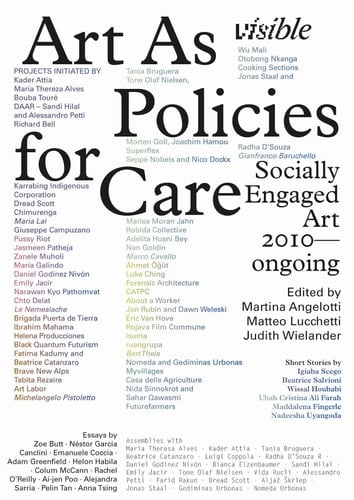
Visible Art As Policies for Care: Socially Engaged Art, 2010-Ongoing
Martina Angelotti · 2024
The book Visible: Art as Policies for Care. Socially Engaged Art (2010-Ongoing) was born from the editors' enduring curatorial research into long-term situated art projects that exist within the social sphere, beyond the logic of the traditional art system, confronting unjust systems, and prefiguring novel visions for living together. The socially engaged art projects collected here hold a significant place in the constantly evolving trans-local art scene of the past two decades, and form a lens through which to observe changing realities and their urgencies; they redefine the concept of art in light of current climatic, political, and social changes and foster the dematerialization of the artwork in processes that become policies of culture and care. The publication is composed of four main sections with overarching photo documentation - interviews, essays, forums, and short literary texts - collecting contributions by artists, anthropologists, novelists, activists, and sociologists, such as Anna Tsing, Wissal Houbabi, Maria Thereza Alves, Tania Bruguera, Jonas Staal, DAAR - Decolonizing Architecture Art Research, Giuseppe Campuzano and Nan Goldin. (Verlagsangaben)

Designing Design
Kenya Hara · 2015
<p>A tribute to long overlooked Japanese icons and images, from an influential figure behind the success of MUJI</p><p>Representing a new generation of designers in Japan, Kenya Hara (born 1958) pays tribute to his mentors, using long overlooked Japanese icons and images in much of his work. In <i>Designing Design</i>, he impresses upon the reader the importance of emptiness in both the visual and philosophical traditions of Japan, and its application to design, made visible by means of numerous examples from his own work: Hara for instance designed the opening and closing ceremony programs for the Nagano Winter Olympic Games 1998. In 2001, he enrolled as a board member for the Japanese label MUJI and has considerably moulded the identity of this successful corporation as communication and design advisor ever since. Kenya Hara, alongside Naoto Fukasawa one of the leading design personalities in Japan, has also called attention to himself with exhibitions such as <i>Re-Design: The Daily Products of the 21st Century</i>.</p>
La responsabilidad de los intelectuales
Noam Chomsky • 2020
El anti-edipo capitalismo y esquizofrenia
Gilles Deleuze • 1985
Cómo se lee una fotografía interpretaciones de la mirada
José Javier Marzal Felici • 2009
Feminist Theory From Margin to Center
bell hooks • 2015
MICROPOLÍTICA
FELIX / ROLNIK, SUELY GUATTARI • 2021
¿Qué mundo es este? fenomenología y pandemia
Judith Butler • 2023
Palestina en pedazos
Lina Meruane • 2023
Fenomenología de la percepción
Maurice Merleau-Ponty • 1997
La fuerza de la no violencia
Judith Butler • 2021
The Politics of Dispossession
Edward W. Said • 2012
Art and Agency
Alfred Gell • 1998
Tecnologías del yo: Y otros textos afines (Pensamiento Contemporaneo/ Contemporary Thought) (Spanish Edition)
Michel Foucault • 1990
La poética del espacio
Gaston Bachelard • 2020
La patología de la normalidad
Erich Fromm • 2024
Ciencia ficción capitalista Cómo los multimillonarios nos salvarán del fin del mundo
Michel Nieva • 2024

Contra la interpretación y otros ensayos
Susan Sontag • 2008
La estructura ausente
Umberto Eco • 2011
Coloquio de las quiltras
Lina Meruane • 2025
Periodismo y memoria histórica la contribución del periodismo en la recuperación de la memoria histórica a partir de testimonios orales
Margarita Antón Crespo • 2013
Conflict and Correspondence Belonging and Urban Community in Guadalajara, Mexico, 1939-1947
Jason H. Dormady · 2025
In the decades following the 1910 Mexican Revolution, Guadalajara faced immense demographic and economic transformation, stunning both longtime residents and new arrivals. The city's population nearly tripled from 1920 to 1950, and the resultant population boom strained government resources and challenged living standards for all.<br> <br> <br> <br> In <i>Conflict and Correspondence</i> Jason H. Dormady examines the critical transition period when Guadalajara lost control of urban growth after 1939 and when the newly empowered state and federal governments began to exercise immense control over the development of the city in 1947. As the city changed around them, residents used petitions and letters to municipal officials to help address their feelings of alienation, isolation, and separation from the community around them. Petitions took the form of sensate, moral, recreational, spiritual, and gendered arguments about creating livable communities and avoiding the disorientation experienced by urban transformation. In the context of infrastructure failures, tight housing markets, and a dramatic aesthetic transition, petitions on these topics reinforced to residents--and, they hoped, city officials--their belonging to the community. Resident petitions reveal how everyday people lived the consequences of the 1910 revolution as they advocated for shaping space and building place in midcentury Guadalajara.<br> <br>

Contra la cancelación y otros sueños de justicia transformativa
Adrienne Maree Brown • 2025
Origen México
Claudia Espinoza García • 2019

Desplazar el centro
Ngugi wa Thiong'o • 2025

Economía y sociedad
Max Weber • 2022

Las venas abiertas de América Latina
Eduardo Galeano • 2020
El Interes Detras Del Desinteres - Pierre Bourdieu: El Estado Moderno, Las Pujas De Poder Y La Definición Del Bienún, De Bourdieu, Pierre. Editorial Siglo Xxi Editores, Tapa Blanda En Español
Bourdieu • unde
Crítica de la razón negra Ensayo sobre el racismo contemporáneo
Achille Mbembe • 2016
Territorios del Terror y La Otredad
Roger Bartra • 2013
Sociología de la cultura
Raymond Williams • 2015
Imperfect Solidarities
Aruna D'Souza • 2024
Archivo agonía
Marina Azahua • 2024
To Photograph is to Learn how to Die An Essay with Digressions
Tim Carpenter • 2022
The Routledge Handbook of Memory Activism
Yifat Gutman • 2024

Economía y sociedad
Weber • 2020
La idea de la fenomenología
Edmund Husserl • 2012
Coloquio de las quiltras argumentos caninos ante las crisis del feminismo
Lina Meruane • 2024

Monstruas y centauras
Marta Sanz · 2018
<p><b><strong>Una meditación sobre el feminismo el año de la huelga feminista y el #MeToo.</strong></b></p> <p>Tres acontecimientos más una sentencia (el #MeToo, la carta de las intelectuales francesas, la huelga feminista del 8 de marzo y la sentencia de La Manada) han marcado la agenda en los últimos meses y han puesto en el punto de mira el concepto del feminismo hoy. Marta Sanz reflexiona acerca de lo que ello supone, cómo posicionarse ante esos hechos concretos, cómo «proteger» la lucha feminista de la simplificación y comercialización de un capitalismo que lo puede absorber todo, y piensa también sobre las cuotas y el poder, para llegar a la conclusión de que quizás lo que deba modificarse sea la noción de poder misma...</p><p>Una reflexión de una mujer que se pregunta, en sus actuaciones públicas y privadas, en cada gesto y cada palabra, cuál es el camino hacia la igualdad.</p>
Entre el pasado y el futuro: Ocho ejercicios sobre la reflexión política
Hannah Arendt • 2018

Desertores: el Auge de la Extrema Derecha Latina y Su Repercusión en Estados Unidos / Defectors
Paola Ramos · 2024
<b>Paola Ramos explora cómo la raza, la identidad y el trauma político han influido en el auge de la extrema derecha latina, y cómo este grupo puede moldear la política de Estados Unidos.<br> <br></b> Históricamente, los demócratas han asumido que pueden contar con el voto latino, pero las elecciones recientes han puesto esa lealtad en tela de juicio. A pesar de su retórica antiinmigrante y sus desastrosas políticas fronterizas, Donald Trump ganó un mayor porcentaje del voto latino en 2020 comparado con 2016. Ahora, la periodista Paola Ramos analiza a estos votantes, viajando por todo el país para descubrir qué los motiva a apoyar posiciones que parecen tan contrarias a sus intereses.<br> <br> De costa a costa, de ciudades a zonas rurales, <i>Desertores</i> nos presenta a candidatos republicanos desfavorecidos, insurrectos del 6 de enero, pastores evangélicos y defensores de la guerra cultural, tratando de identificar las influencias que empujan este movimiento hacia la derecha. A través de sus historias, Ramos nos muestra cómo el tribalismo, el tradicionalismo y el trauma político dentro de la comunidad latina han sido usados como un arma para radicalizar y convertir a votantes, que temen perder su lugar en la sociedad estadounidense.<br> <br> <i>Desertores</i> es un informe cuidadoso e intercultural que resalta cómo uno de los electorados más poderosos e incomprendidos de Estados Unidos puede llegar a definir el futuro de la política de este país.<br> <b><br> ENGLISH DESCRIPTION<br> <br> An award-winning journalist's deeply reported exploration of how race, identity and political trauma have influenced the rise in far-right sentiment among Latinos, and how this group can shape American politics</b><br> <br> Democrats have historically assumed they can rely on the Latino vote, but recent elections have called that loyalty into question. In fact, despite his vociferous anti-immigrant rhetoric and disastrous border policies, Trump won a higher percentage of the Latino vote in 2020 than he did in 2016. Now, journalist Paola Ramos pulls back the curtain on these voters, traveling around the country to uncover what motivates them to vote for and support issues that seem so at odds with their self-interest.<br> <br> From coast to coast, cities to rural towns, <i>Defectors</i> introduces readers to underdog GOP candidates, January 6th insurrectionists, Evangelical pastors and culture war crusaders, aiming to identify the influences at the heart of this rightward shift. Through their stories, Ramos shows how tribalism, traditionalism, and political trauma within the Latino community has been weaponized to radicalize and convert voters who, like many of their white counterparts, are fearful of losing their place in American society.<br> <br> We meet Monica de la Cruz, a Republican congresswoman from the Rio Grande Valley who won on a platform centered on finishing "what Donald Trump started" and pushing the Great Replacement Theory; David Ortiz, a Mexican man who refers to himself as a Spaniard and opposed the removal of a statue of a Spanish conquistador in New Mexico; Luis Cabrera, an evangelical pastor pushing to "<i>Make America Godly Again</i>;" Anthony Aguero, an independent journalist turned border vigilante; and countless other individuals and communities that make up the rising conservative Latino population.<br> <br> Cross-cultural and assiduously reported, <i>Defectors</i> highlights how one of America's most powerful and misunderstood electorates may come to define the future of American politics.
Modos de ver
John Berger • 2016

El Antropologo Inocente
Nigel Barley • 2020
Introduction to Intersectional Qualitative Research
Jennifer Esposito • 2022
Moments of Meaning-Making On Anachronism, Becoming, and Conceptualizing
Mieke Bal • 2025
La máquina estética (Serie mayor / Instituto de Investigaciones Estéticas) (Spanish Edition)
Manuel Felguérez • 1983
Esto es agua : algunas ideas, expuestas en una ocasión especial, sobre cómo vivir con compasión
David Foster Wallace • 2014
DELEUZE Y LA BRUJERIA
Matt Lee • 2009
Aprendiendo de Paulo Freire para la investigación transdisciplinaria Principios, métodos y experiencias
Ulli Vilsmaier • 2025

Las palabras del regreso
María Zambrano • 2009
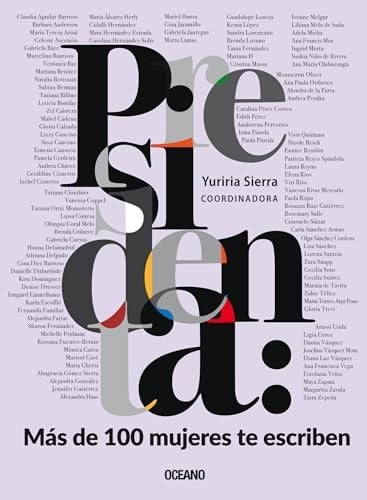
Presidenta más de 100 mujeres te escriben
Yuriria Sierra • 2024

Sociología y antropología
Marcel Mauss • 1971