philosophy reading list

Items in this hypelist
ancient greek

Meditations
Marcus Aurelius · 2020
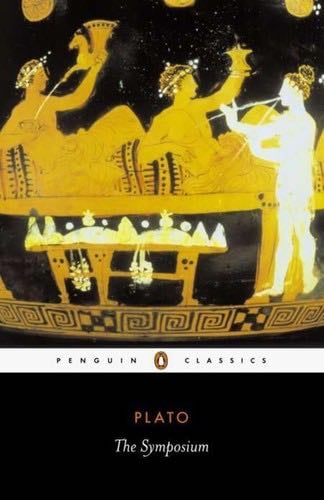
The Symposium (Penguin Classics)
Plato · 2003
A fascinating discussion on sex, gender, and human instincts, as relevant today as ever<br/><br/>In the course of a lively drinking party, a group of Athenian intellectuals exchange views on eros, or desire. From their conversation emerges a series of subtle reflections on gender roles, sex in society and the sublimation of basic human instincts. The discussion culminates in a radical challenge to conventional views by Plato's mentor, Socrates, who advocates transcendence through spiritual love. The Symposium is a deft interweaving of different viewpoints and ideas about the nature of love—as a response to beauty, a cosmic force, a motive for social action and as a means of ethical education.<br/><br/>For more than seventy years, Penguin has been the leading publisher of classic literature in the English-speaking world. With more than 1,700 titles, Penguin Classics represents a global bookshelf of the best works throughout history and across genres and disciplines. Readers trust the series to provide authoritative texts enhanced by introductions and notes by distinguished scholars and contemporary authors, as well as up-to-date translations by award-winning translators.
existentialism/absurdism

The Stranger
Albert Camus · 1989
With the intrigue of a psychological thriller, The Stranger—Camus's masterpiece—gives us the story of an ordinary man unwittingly drawn into a senseless murder on an Algerian beach. With an Introduction by Peter Dunwoodie; translated by Matthew Ward.<br/><br/>Behind the subterfuge, Camus explores what he termed "the nakedness of man faced with the absurd" and describes the condition of reckless alienation and spiritual exhaustion that characterized so much of twentieth-century life.<br/><br/>“The Stranger is a strikingly modern text and Matthew Ward’s translation will enable readers to appreciate why Camus’s stoical anti-hero and devious narrator remains one of the key expressions of a postwar Western malaise, and one of the cleverest exponents of a literature of ambiguity.” —from the Introduction by Peter Dunwoodie<br/><br/>First published in 1946; now in translation by Matthew Ward.
What Is Existentialism? (Penguin Great Ideas)
Simone De Beauvoir · 2021
The groundbreaking writings on the philosophy of the individual by iconic feminist and social thinker, Simone de Beauvoir<br/><br/>How should we think and act in the world? These writings on the human condition by one of the twentieth century's great philosophers explore the absurdity of our notions of good and evil, and show instead how we make our own destiny simply by being.<br/><br/>Throughout history, some books have changed the world. They have transformed the way we see ourselves - and each other. They have inspired debate, dissent, war and revolution. They have enlightened, outraged, provoked and comforted. They have enriched lives--and upended them. Now Penguin brings you a new set of the acclaimed Great Ideas, a curated library of selections from the works of the great thinkers, pioneers, radicals and visionaries whose ideas shook civilization and helped make us who we are.
The Plague (Vintage International)
Albert Camus · 2012
“Its relevance lashes you across the face.” —Stephen Metcalf, The Los Angeles Times • “A redemptive book, one that wills the reader to believe, even in a time of despair.” —Roger Lowenstein, The Washington Post A haunting tale of human resilience and hope in the face of unrelieved horror, Albert Camus' iconic novel about an epidemic ravaging the people of a North African coastal town is a classic of twentieth-century literature. The townspeople of Oran are in the grip of a deadly plague, which condemns its victims to a swift and horrifying death. Fear, isolation and claustrophobia follow as they are forced into quarantine. Each person responds in their own way to the lethal disease: some resign themselves to fate, some seek blame, and a few, like Dr. Rieux, resist the terror. An immediate triumph when it was published in 1947, The Plague is in part an allegory of France's suffering under the Nazi occupation, and a timeless story of bravery and determination against the precariousness of human existence.

Nausea
Jean-Paul Sartre · 1969
The diary of Antoine Roquentin follows his thoughts as he gradually sinks into a metaphysical crisis of despair, in this the first novel by the leader of French Existentialism