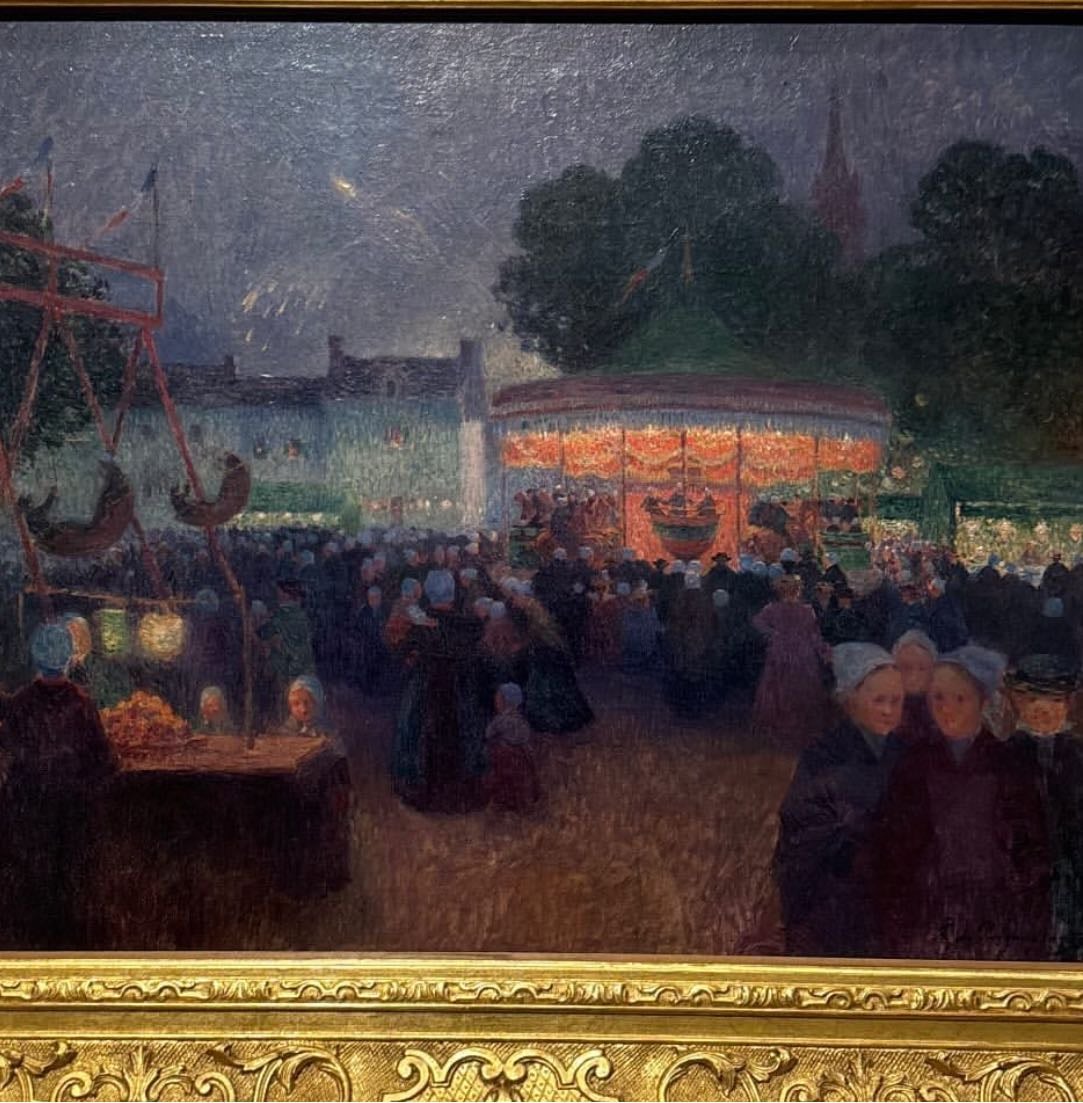
to read: philosophy

Items in this hypelist
Simone De Beauvoir

What Is Existentialism?
Simone de Beauvoir · 2020
'It is possible for man to snatch the world from the darkness of absurdity' How should we think and act in the world? These writings on the human condition by one of the twentieth century's great philosophers explore the absurdity of our notions of good and evil, and show instead how we make our own destiny simply by being. One of twenty new books in the bestselling Penguin Great Ideas series. This new selection showcases a diverse list of thinkers who have helped shape our world today, from anarchists to stoics, feminists to prophets, satirists to Zen Buddhists.

The Ethics of Ambiguity
Simone de Beauvoir · 2018
From the groundbreaking author of The Second Sex comes a radical argument for ethical responsibility and freedom. In this classic introduction to existentialist thought, French philosopher Simone de Beauvoir’s The Ethics of Ambiguity simultaneously pays homage to and grapples with her French contemporaries, philosophers Jean-Paul Sartre and Maurice Merleau-Ponty, by arguing that the freedoms in existentialism carry with them certain ethical responsibilities. De Beauvoir outlines a series of “ways of being” (the adventurer, the passionate person, the lover, the artist, and the intellectual), each of which overcomes the former’s deficiencies, and therefore can live up to the responsibilities of freedom. Ultimately, de Beauvoir argues that in order to achieve true freedom, one must battle against the choices and activities of those who suppress it. The Ethics of Ambiguity is the book that launched Simone de Beauvoir’s feminist and existential philosophy. It remains a concise yet thorough examination of existence and what it means to be human.

The Woman Destroyed
Simone De Beauvoir · 1987
One of the most influential thinkers of her generationdraws us into the lives of three women, all past their first youth, all facing unexpected crises in these three “immensely intelligent stories about the decay of passion” (The Sunday Herald Times).<br/><br/>Suffused with de Beauvoir’s remarkable insights into women, The Woman Destroyed gives us a legendary writer at her best. Includes "The Age of Discretion," "The Monologue," and "The Woman Destroyed."<br/><br/>"Witty, immensely adroit...These three women are believable individuals presented with a wry mixture of sympathy and exasperation." —The Atlantic

A Very Easy Death
Simone De Beauvoir · 1985
A Very Easy Death has long been considered one of Simone de Beauvoir’s masterpieces. The profoundly moving, day-by-day recounting of her mother’s death “shows the power of compassion when it is allied with acute intelligence” (The Sunday Telegraph). Powerful, touching, and sometimes shocking, this is an end-of-life account that no reader is likely to forget.<br/><br/>Translated by Patrick O'Brian

Memoirs of a Dutiful Daughter (Perennial Classics)
Simone de Beauvoir · 2005
“A book that will leave no one indifferent, and no one affected in quite the same way.” —New York Times<br/>A superb autobiography by one of the great literary figures of the twentieth century<br/>Simone de Beauvoir's Memoirs of a Dutiful Daughter offers an intimate picture of growing up in a bourgeois French family, rebelling as an adolescent against the conventional expectations of her class, and striking out on her own with an intellectual and existential ambition exceedingly rare in a young woman in the 1920s.<br/>Beauvoir vividly evokes her friendships, love interests, mentors, and the early days of the most important relationship of her life, with fellow student Jean-Paul Sartre, against the backdrop of a turbulent political time.

Inseparable
Simone de Beauvoir · 2021
Finalist for the French-American Florence Gould Translation Prize A novel by the iconic Simone de Beauvoir of an intense and vivid girlhood friendship that, unpublished in her lifetime, displays “Beauvoir's genius as a fiction writer” (Wall Street Journal) From the moment Sylvie and Andrée meet in their Parisian day school, they see in each other an accomplice with whom to confront the mysteries of girlhood. For the next ten years, the two are the closest of friends and confidantes as they explore life in a post-World War One France, and as Andrée becomes increasingly reckless and rebellious, edging closer to peril. Sylvie, insightful and observant, sees a France of clashing ideals and religious hypocrisy—and at an early age is determined to form her own opinions. Andrée, a tempestuous dreamer, is inclined to melodrama and romance. Despite their different natures they rely on each other to safeguard their secrets while entering adulthood in a world that did not pay much attention to the wills and desires of young women. Deemed too intimate to publish during Simone de Beauvoir’s life, Inseparable offers fresh insight into the groundbreaking feminist’s own coming-of-age; her transformative, tragic friendship with her childhood friend Zaza Lacoin; and how her youthful relationships shaped her philosophy. Sandra Smith’s vibrant translation of the novel will be long cherished by de Beauvoir devotees and first-time readers alike.
Others
Al-Ghazali's "Moderation in Belief"
Al-Ghazali · 2017
Discourses and Selected Writings (Penguin Classics)
Epictetus · 2008

The Problems of Philosophy
Bertrand Russell · 2020
The Problems of Philosophy by Bertrand Russell is an essential read for anyone interested in philosophy. This seminal work provides a concise introduction to the fundamental questions of philosophy, such as the nature of truth, the existence of the external world, and the nature of knowledge. Written in a clear and accessible style, Russell's book offers an in-depth exploration of the fundamental problems that have occupied thinkers for centuries. It covers topics such as the nature of language, the limits of human knowledge, the relationship between thought and reality, and the moral implications of philosophical thought. This work is an invaluable resource for anyone studying philosophy and provides a comprehensive overview of the field. Its timeless relevance and Russell's clear, accessible writing make it an essential read for both students and scholars alike.<br/><br/>Bertrand Arthur William Russell (1872-1970) was a renowned British philosopher, mathematician, social critic, and political activist. He is widely considered one of the most influential thinkers of the 20th century and is best known for his contributions to the fields of logic, mathematics, and the philosophy of language. Born in Wales to an aristocratic family, Russell demonstrated an aptitude for mathematics from a young age and was educated at Cambridge University, where he studied mathematics and philosophy. He soon became a professor of philosophy and wrote extensively on a variety of topics, including logic, language, ethics, and metaphysics. His most influential works include The Principles of Mathematics (1903), The Problems of Philosophy (1912), and An Inquiry into Meaning and Truth (1940). Throughout his life, Russell remained active in politics and was an outspoken advocate for social justice. He was especially critical of the Cold War, nuclear weapons, and oppressive regimes. His work in philosophy and activism earned him numerous awards and accolades, including the Nobel Prize for Literature in 1950. In addition to his scholarly pursuits, Russell was also a prolific writer, producing numerous books and essays on a wide range of topics. He continued to write and lecture well into his 90s and died in 1970 at the age of 98. His legacy continues to live on, with his work continuing to inspire future generations of philosophers and social activists.
Discourse on the Method and Meditations on First Philosophy
René Descartes · 2024

Fear and Trembling
Soren Kierkegaard · 2013

Ways of Seeing: Based on the BBC Television Series (Penguin Books for Art)
John Berger · 1990

No Exit
Jean-Paul Sarte, Jean-Paul Sartre · 1958
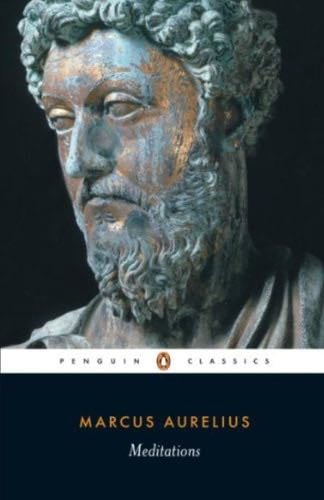
Meditations (Penguin Classics)
Marcus Aurelius · 2006
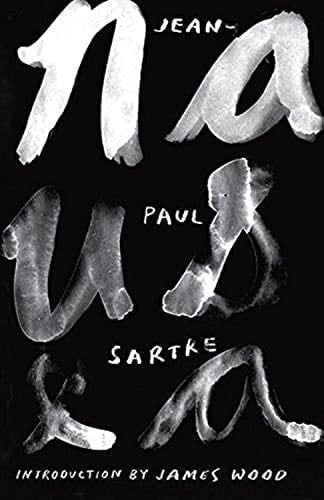
Nausea (New Directions Paperbook)
Jean-Paul Sartre · 2013
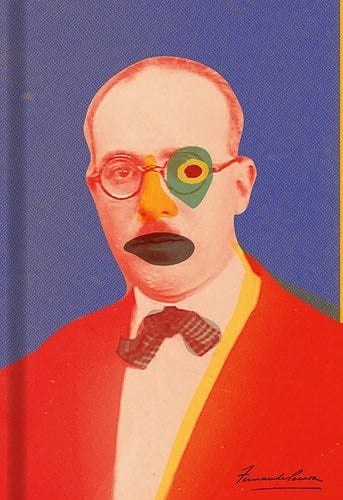
The Book of Disquiet: The Complete Edition
Fernando Pessoa · 2017

How To Be a Stoic (Penguin Great Ideas)
Epictetus, Seneca, Marcus Aurelius · 2020
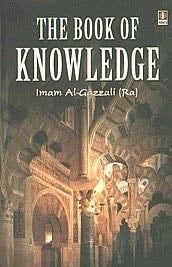
The Book Of Knowledge
Imam Al-Ghazzali · 2008

Ethics: Subjectivity and Truth (Essential Works of Foucault, 1954-1984, Vol. 1)
Michel Foucault · 1998

Monkey, Wu Ch’eng-en

Notes on Suicide
Critchley Simon · 2020
This book is not a suicide note. Ten days after Edouard Leve handed in the manuscript of Suicide to his publisher in 2007, he hanged himself in his apartment. He was 42. Two years after Jean Amery's On Suicide was published in 1976, the author took an overdose of sleeping pills. He was 65. In 1960, some eighteen years after Albert Camus had raised and - so he thought - resolved the question of suicide in The Myth of Sisyphus, he was killed in a car accident. He is alleged to have said that dying in a car crash is the most absurd of all deaths. The absurdity of his death is compounded by the fact he had an unused train ticket in his pocket. He was 46. Let me say at the outset, at the risk of disappointing the reader, that I have no plans to kill myself ... just yet. Nor do I wish to join the chorus of those who proclaim loudly against suicide and claim that the act of taking one's own life is irresponsible and selfish, even shameful and cowardly, that people must stay alive whatever the cost. Suicide, in my view, is neither a legal nor moral offence, and should not be seen as such. My intention here is to simply try to understand the phenomenon, the act itself, what precedes it and what follows. I'd like to consider suicide from the point of view of those who have made the leap, or have come close to it-we might even find that the capacity to take that leap is what picks us out as humans. I want to look at suicide closely, carefully, and perhaps a little coldly, without immediately leaping to judgements or asserting moral principles like the right to life or death. We have to look suicide in the face, long and hard, and see what features, what profile, what inherited character traits and wrinkles emerge. Perhaps what we see when we look closely is our own distorted reflection staring back at us.

On Friendship (Penguin Great Ideas)
Michel de Montaigne · 2005
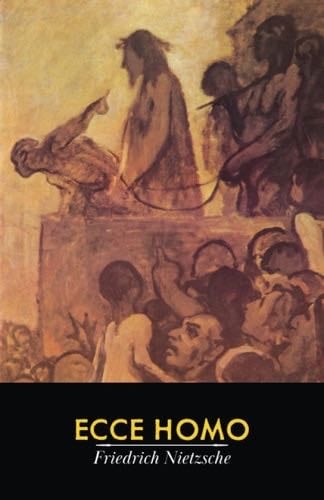
Ecce Homo: How One Becomes What One Is
Friedrich Nietzsche · 2022

Being and Time (Harper Perennial Modern Thought)
Martin Heidegger · 2008
"What is the meaning of being?" This is the central question of Martin Heidegger's profoundly important work, in which the great philosopher seeks to explain the basic problems of existence. A central influence on later philosophy, literature, art, and criticism—as well as existentialism and much of postmodern thought—Being and Time forever changed the intellectual map of the modern world. As Richard Rorty wrote in the New York Times Book Review, "You cannot read most of the important thinkers of recent times without taking Heidegger's thought into account." This first paperback edition of John Macquarrie and Edward Robinson's definitive translation also features a new foreword by Heidegger scholar Taylor Carman.

Existentialism Is a Humanism
Jean-Paul Sartre · 2007
<DIV><B>A new translation of two seminal works of existentialism</B><BR /><BR /> It was to correct common misconceptions about his thought that Jean-Paul Sartre, the most dominent European intellectual of the post-World War II decades, accepted an invitation to speak on October 29, 1945, at the Club Maintenant in Paris. The unstated objective of his lecture (“Existentialism Is a Humanism”) was to expound his philosophy as a form of “existentialism,” a term much bandied about at the time. Sartre asserted that existentialism was essentially a doctrine for philosophers, though, ironically, he was about to make it accessible to a general audience. The published text of his lecture quickly became one of the bibles of existentialism and made Sartre an international celebrity.<BR /><BR /> The idea of freedom occupies the center of Sartre’s doctrine. Man, born into an empty, godless universe, is nothing to begin with. He creates his essence—his self, his being—through the choices he freely makes (“existence precedes essence”). Were it not for the contingency of his death, he would never end. Choosing to be this or that is to affirm the value of what we choose. In choosing, therefore, we commit not only ourselves but all of mankind. This book presents a new English translation of Sartre’s 1945 lecture and his analysis of Camus’s <I>The Stranger</I>, along with a discussion of these works by acclaimed Sartre biographer Annie Cohen-Solal. This edition is a translation of the 1996 French edition, which includes Arlette Elkaïm-Sartre’s introduction and a Q&A with Sartre about his lecture.</DIV>

The Enchiridion
Epictetus · 2017
The Enchiridion is a short manual of Stoic ethical advice compiled by Arrian, a 2nd-century disciple of the Greek philosopher Epictetus. For many centuries, the Enchiridion maintained its authority both with Christians and Pagans. Eschewing metaphysics, Arrian focused his attention on Epictetus's work applying philosophy in daily life: “What upsets people is not things themselves but their judgments about the things.” - Epictetus

Letters from a Stoic (Penguin Classics)
Lucius Annaeus Seneca · 1969
"It is philosophy that has the duty of protecting us...without it no one can lead a life free of fear or worry."<br/><br/>For several years of his turbulent life, Seneca was the guiding hand of the Roman Empire. His inspired reasoning derived mainly from the Stoic principles, which had originally been developed some centuries earlier in Athens. This selection of Seneca's letters shows him upholding the austere ethical ideals of Stoicism—the wisdom of the self-possessed person immune to overmastering emotions and life’s setbacks—while valuing friendship and the courage of ordinary men, and criticizing the harsh treatment of slaves and the cruelties in the gladiatorial arena. The humanity and wit revealed in Seneca’s interpretation of Stoicism is a moving and inspiring declaration of the dignity of the individual mind.<br/><br/>For more than seventy years, Penguin has been the leading publisher of classic literature in the English-speaking world. With more than 1,700 titles, Penguin Classics represents a global bookshelf of the best works throughout history and across genres and disciplines. Readers trust the series to provide authoritative texts enhanced by introductions and notes by distinguished scholars and contemporary authors, as well as up-to-date translations by award-winning translators.
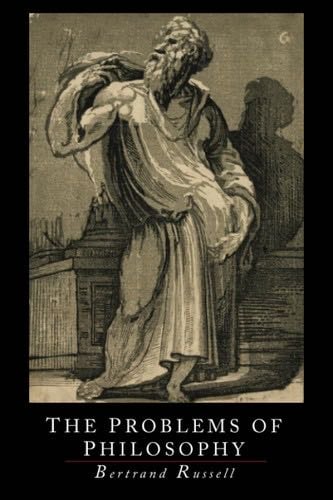
The Problems of Philosophy
Bertrand Russell · 2013
2013 Reprint of 1912 Edition. Full facsimile of the original edition, not reproduced with Optical Recognition Software. In this little book Russell has provided an intelligible and stimulating guide to a branch of knowledge which is often mistakenly considered too abstruse for the lay mind. He has confined himself chiefly to those problems of philosophy concerning which he thought it possible to say something positive and constructive. For this reason, theory of knowledge occupies a larger space than metaphysics, and some topics much discussed by philosophers are treated briefly. The work is concise, free from technical terms and perfectly clear to the general reader with no prior knowledge of the subject.

Discourses and Selected Writings (Penguin Classics)
Epictetus · 2008
A new translation of the influential teachings of the great Stoic philosopher<br/><br/>Despite being born into slavery, Greco-Roman philosopher Epictetus became one of the most influential thinkers of his time. Discourses and Selected Writings is a transcribed collection of informal lectures given by the philosopher around AD 108. A gateway into the life and mind of a great intellectual, it is also an important example of the usage of Koine or “common” Greek, an ancestor to Standard Modern Greek.
Meditations: A New Translation
Marcus Aurelius · 2003
NATIONAL BESTSELLER • “Meditations offers a glimpse into [Marcus Aurelius’s] mind, his habits, and his approach to life. . . . I think any reader would find something useful to take away from it.”—James Clear, #1 New York Times bestselling author of Atomic Habits<br/><br/>“To me, this is the greatest book ever written. . . . It is the definitive text on self-discipline, personal ethics, humility, self-actualization, and strength. . . . If you’re going to read it, you absolutely have to go with the Gregory Hays translation.”—Ryan Holiday, #1 New York Times bestselling author of The Obstacle Is the Way<br/><br/>“It is unbelievable to see how the emperor’s words have stood the test of time. . . . Read a page or two anytime you feel like the world is too much.”—Arnold Schwarzenegger, The Wall Street Journal<br/><br/>Nearly two thousand years after it was written, Meditations remains profoundly relevant for anyone seeking to lead a meaningful life.<br/><br/>Your ability to control your thoughts—treat it with respect. It’s all that protects your mind from false perceptions—false to your nature, and that of all rational beings.<br/><br/>A series of spiritual exercises filled with wisdom, practical guidance, and profound understanding of human behavior, Marcus Aurelius’s Meditations remains one of the greatest works of spiritual and ethical reflection ever written. With bite-size insights and advice on everything from living in the world to coping with adversity and interacting with others, Meditations has become required reading not only for statesmen and philosophers alike, but also for generations of readers who responded to the straightforward intimacy of his style.<br/><br/>In Gregory Hays’s translation—the first in nearly four decades—Marcus’s thoughts speak with a new immediacy. In fresh and unencumbered English, Hays vividly conveys the spareness and compression of the original Greek text. Never before have Marcus’s insights been so directly and powerfully presented.<br/><br/>With an Introduction that outlines Marcus’s life and career, the essentials of Stoic doctrine, the style and construction of the Meditations, and the work’s ongoing influence, this edition makes it possible to fully rediscover the thoughts of one of the most enlightened and intelligent leaders of any era.
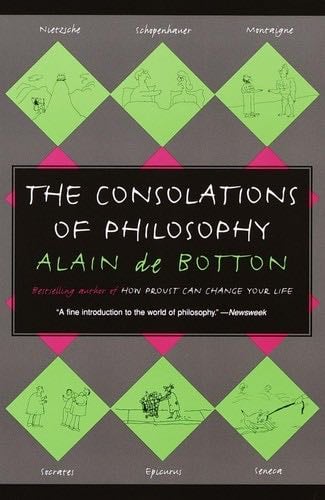
The Consolations of Philosophy
Alain De Botton · 2001
From the internationally heralded author of How Proust Can Change Your Life comes a remarkable book that presents the wisdom of some of the greatest thinkers of the ages as advice for our day to day struggles.<br/><br/>"A fine introduction the world of philosophy." —Newsweek<br/><br/>Solace for the broken heart can be found in the words of Schopenhauer. The ancient Greek Epicurus has the wisest, and most affordable, solution to cash flow problems. A remedy for impotence lies in Montaigne. Seneca offers advice upon losing a job. And Nietzsche has shrewd counsel for everything from loneliness to illness. The Consolations of Philosophy is a book as accessibly erudite as it is useful and entertaining.
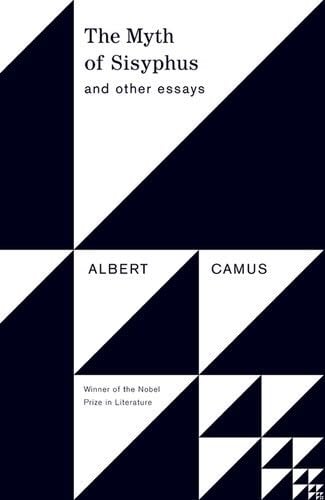
The Myth of Sisyphus And Other Essays
Albert Camus · 2012
One of the most influential works of this century, The Myth of Sisyphus and Other Essays is a crucial exposition of existentialist thought. Influenced by works such as Don Juan and the novels of Kafka, these essays begin with a meditation on suicide; the question of living or not living in a universe devoid of order or meaning. With lyric eloquence, Albert Camus brilliantly posits a way out of despair, reaffirming the value of personal existence, and the possibility of life lived with dignity and authenticity.

SIDDHARTA
HERMANN HESSE · 2013
Siddartha, de Hermann Hesse, supuso un acercamiento desde la literatura a la religión y filosofía oriental. <br/> <br/>Novela de aprendizaje espiritual del hijo de un brahman. Se trata más de una novela de evolución interior que de una novela de acción. A través del encuentro con diferentes personajes, asistimos al desarrollo personal del protagonista hacia la pureza espiritual y la paz interior. <br/>La novela ambientada en la India tradicional, relata la vida de Siddharta , un hombre para quien el camino de la verdad pasa por la renuncia y la comprensión de la unidad que subyace en todo lo existente. En sus páginas, el autor ofrece todas las opciones espirituales del hombre.

Capitalist Realism: Is There No Alternative?
Mark Fisher · 2022
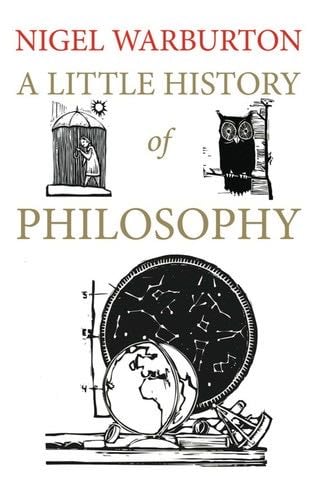
A Little History of Philosophy
Nigel Warburton · 2011
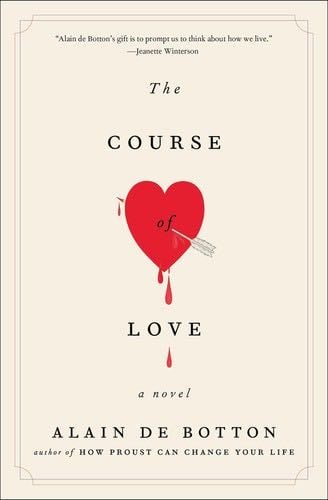
The Course of Love: A Novel
Alain de Botton · 2017
“An engrossing tale [that] provides plenty of food for thought” (People, Best New Books pick), this playful, wise, and profoundly moving second novel from the internationally bestselling author of How Proust Can Change Your Life tracks the beautifully complicated arc of a romantic partnership.<br/><br/>We all know the headiness and excitement of the early days of love. But what comes after? In Edinburgh, a couple, Rabih and Kirsten, fall in love. They get married, they have children—but no long-term relationship is as simple as “happily ever after.” The Course of Love explores what happens after the birth of love, what it takes to maintain, and what happens to our original ideals under the pressures of an average existence. We see, along with Rabih and Kirsten, the first flush of infatuation, the effortlessness of falling into romantic love, and the course of life thereafter. Interwoven with their story and its challenges is an overlay of philosophy—an annotation and a guide to what we are reading. As The New York Times says, “The Course of Love is a return to the form that made Mr. de Botton’s name in the mid-1990s….love is the subject best suited to his obsessive aphorizing, and in this novel he again shows off his ability to pin our hopes, methods, and insecurities to the page.”<br/><br/>This is a Romantic novel in the true sense, one interested in exploring how love can survive and thrive in the long term. The result is a sensory experience—fictional, philosophical, psychological—that urges us to identify deeply with these characters and to reflect on his and her own experiences in love. Fresh, visceral, and utterly compelling, The Course of Love is a provocative and life-affirming novel for everyone who believes in love. “There’s no writer alive like de Botton, and his latest ambitious undertaking is as enlightening and humanizing as his previous works” (Chicago Tribune).

Gender Trouble: Feminism and the Subversion of Identity (Routledge Classics)
Judith Butler · 2006
One of the most talked-about scholarly works of the past fifty years, Judith Butler’s Gender Trouble is as celebrated as it is controversial.<br/>Arguing that traditional feminism is wrong to look to a natural, 'essential' notion of the female, or indeed of sex or gender, Butler starts by questioning the category 'woman' and continues in this vein with examinations of 'the masculine' and 'the feminine'. Best known however, but also most often misinterpreted, is Butler's concept of gender as a reiterated social performance rather than the expression of a prior reality.<br/>Thrilling and provocative, few other academic works have roused passions to the same extent.

When Nietzsche Wept
Irvin D. Yalom · 2019
In nineteenth-century Vienna, a drama of love, fate, and will is played out amid the intellectual ferment that defined the era. Josef Breuer, one of the founding fathers of psychoanalysis, is at the height of his career. Friedrich Nietzsche, Europe's greatest philosopher, is on the brink of suicidal despair, unable to find a cure for the headaches and other ailments that plague him. When he agrees to treat Nietzsche with his experimental “talking cure,” Breuer never expects that he too will find solace in their sessions. Only through facing his own inner demons can the gifted healer begin to help his patient. In When Nietzsche Wept, Irvin Yalom blends fact and fiction, atmosphere and suspense, to unfold an unforgettable story about the redemptive power of friendship.
Plato
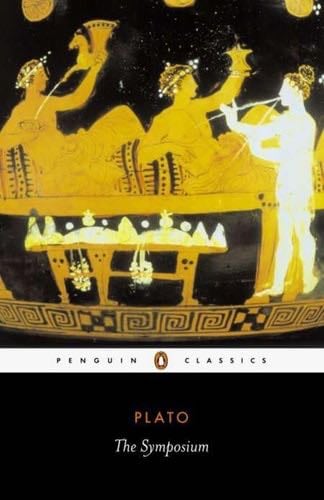
The Symposium (Penguin Classics)
Plato · 2003
Fyodor Dostoevsky

The Idiot (Vintage Classics)
Fyodor Dostoevsky · 2003
<p>Richard Pevear and Larissa Volokhonsky’s masterful translation of <b>The Idiot</b> is destined to stand with their versions of <b>Crime and Punishment, The Brothers Karamazov</b><i>, </i>and <b>Demons</b> as the definitive Dostoevsky in English.<br><br>After his great portrayal of a guilty man in <b>Crime and Punishment</b><i>,</i> Dostoevsky set out in <b>The Idiot</b> to portray a man of pure innocence. The twenty-six-year-old Prince Myshkin, following a stay of several years in a Swiss sanatorium, returns to Russia to collect an inheritance and “be among people.” Even before he reaches home he meets the dark Rogozhin, a rich merchant’s son whose obsession with the beautiful Nastasya Filippovna eventually draws all three of them into a tragic denouement. In Petersburg the prince finds himself a stranger in a society obsessed with money, power, and manipulation. Scandal escalates to murder as Dostoevsky traces the surprising effect of this “positively beautiful man” on the people around him, leading to a final scene that is one of the most powerful in all of world literature.</p>
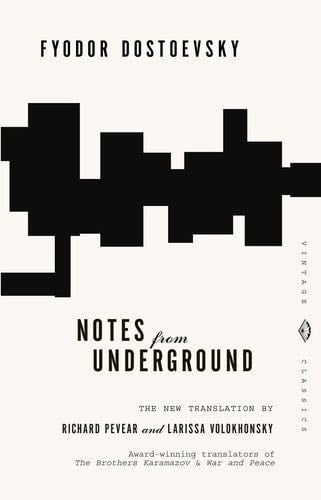
Notes from Underground (Vintage Classics)
Fyodor Dostoevsky · 1994
<b>Award-winning translators Richard Pevear and Larissa Volokhonsky give us a brilliantly faithful rendition of this classic novel, in all its tragedy and tormented comedy. In this second edition, they have updated their translation in honor of the 200th anniversary of Dostoevsky’s birth.</b> <br><br>One of the most remarkable characters in literature, the unnamed narrator of Dostoevsky's most revolutionary novel is a former official who has defiantly withdrawn into an underground existence. In full retreat from society, he scrawls a passionate, obsessive, self-contradictory narrative that serves as a devastating attack on social utopianism and an assertion of man’s essentially irrational nature.