reading list for ‘25

literature + philosophy + politics + theory
Items in this hypelist
to read!
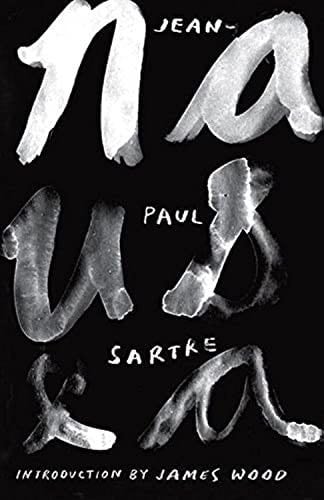
Nausea (New Directions Paperbook)
Jean-Paul Sartre · 2013
Sartre's greatest novel ― and existentialism's key text ― now introduced by James Wood.<br/>Nausea is the story of Antoine Roquentin, a French writer who is horrified at his own existence. In impressionistic, diary form he ruthlessly catalogs his every feeling and sensation. His thoughts culminate in a pervasive, overpowering feeling of nausea which “spreads at the bottom of the viscous puddle, at the bottom of our time ― the time of purple suspenders and broken chair seats; it is made of wide, soft instants, spreading at the edge, like an oil stain.”<br/>Winner of the 1964 Nobel Prize in Literature (though he declined to accept it), Jean-Paul Sartre ― philosopher, critic, novelist, and dramatist ― holds a position of singular eminence in the world of French letters. La Nausée, his first and best novel, is a landmark in Existential fiction and a key work of the twentieth century.
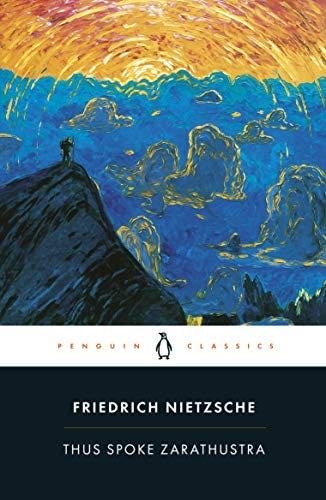
Thus Spoke Zarathustra
Friedrich Nietzsche · 1974
Nietzsche Was One Of The Most Revolutionary And Subversive Thinkers In Western Philosophy, And Thus Spoke Zarathustra Remains His Most Famous And Influential Work. It Describes How The Ancient Persian Prophet Zarathustra Descends From His Solitude In The Mountains To Tell The World That God Is Dead And That The Superman, The Human Embodiment Of Divinity, Is His Successor. With Blazing Intensity And Poetic Brilliance, Nietzsche Argues That The Meaning Of Existence Is Not To Be Found In Religiouspieties Or Meek Submission, But In An All-powerful Life Force: Passionate, Chaotic & Free.

The Idiot (Vintage Classics)
Fyodor Dostoevsky · 2003
<p>Richard Pevear and Larissa Volokhonsky’s masterful translation of <b>The Idiot</b> is destined to stand with their versions of <b>Crime and Punishment, The Brothers Karamazov</b><i>, </i>and <b>Demons</b> as the definitive Dostoevsky in English.<br><br>After his great portrayal of a guilty man in <b>Crime and Punishment</b><i>,</i> Dostoevsky set out in <b>The Idiot</b> to portray a man of pure innocence. The twenty-six-year-old Prince Myshkin, following a stay of several years in a Swiss sanatorium, returns to Russia to collect an inheritance and “be among people.” Even before he reaches home he meets the dark Rogozhin, a rich merchant’s son whose obsession with the beautiful Nastasya Filippovna eventually draws all three of them into a tragic denouement. In Petersburg the prince finds himself a stranger in a society obsessed with money, power, and manipulation. Scandal escalates to murder as Dostoevsky traces the surprising effect of this “positively beautiful man” on the people around him, leading to a final scene that is one of the most powerful in all of world literature.</p>
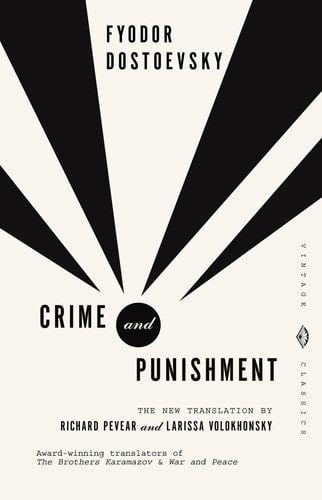
Crime and Punishment (Vintage Classics)
Fyodor Dostoevsky · 1993
<b>Hailed by <i>Washington Post Book World</i> as “the best [translation] currently available" when it was first published, this second edition of <i>Crime and Punishment </i>has been updated in honor of the 200th anniversary of Dostoevsky’s birth. • <b>ONE OF <i>TIME MAGAZINE</i>'S 100 BEST MYSTERY AND THRILLER BOOKS OF ALL TIME</b></b><br><br>With the same suppleness, energy, and range of voices that won their translation of <i>The Brothers Karamazov</i> the PEN/Book-of-the-Month Club Prize, Richard Pevear and Larissa Volokhonsky offer a brilliant translation of <i>Crime and Punishment, </i>Dostoevsky's astounding pyschological thriller, newly revised for his bicentenniel. <br><br>In <i>Crime and Punishment</i>, when Raskolnikov, an impoverished student living in the St. Petersburg of the tsars, commits an act of murder and theft, he sets into motion a story that is almost unequalled in world literature for its excruciating suspense, its atmospheric vividness, and its depth of characterization and vision. Dostoevsky’s drama of sin, guilt, and redemption transforms the sordid story of an old woman’s murder into the nineteenth century’s profoundest and most compelling philosophical novel.

Dekada '70
Lualhati Bautista · 1991
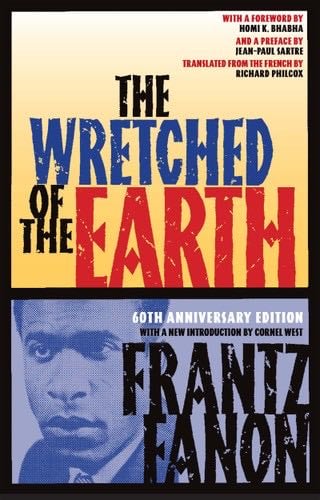
The Wretched of the Earth
Frantz Fanon · 2021
The sixtieth anniversary edition of Frantz Fanon’s landmark text, now with a new introduction by Cornel West<br/>First published in 1961, and reissued in this sixtieth anniversary edition with a powerful new introduction by Cornel West, Frantz Fanon’s The Wretched of the Earth is a masterfuland timeless interrogation of race, colonialism, psychological trauma, and revolutionary struggle, and a continuing influence on movements from Black Lives Matter to decolonization. A landmark text for revolutionaries and activists, The Wretched of the Earth is an eternal touchstone for civil rights, anti-colonialism, psychiatric studies, and Black consciousness movements around the world. Alongside Cornel West’s introduction, the book features critical essays by Jean-Paul Sartre and Homi K. Bhabha. This sixtieth anniversary edition of Fanon’s most famous text stands proudly alongside such pillars of anti-colonialism and anti-racism as Edward Said’s Orientalism and The Autobiography of Malcolm X.

Anna Karenina (Wordsworth Classics)
Leo Tolstoy · 1997
Anna Karenina by Leo Tolstoy. Anna Karenina is one of the most loved and memorable heroines of literature. Her overwhelming charm dominates a novel of unparalleled richness and density. Tolstoy considered this book to be his first real attempt at a novel form, and it addresses the very nature of society at all levels,- of destiny, death, human relationships and the irreconcilable contradictions of existence. It ends tragically, and there is much that evokes despair, yet set beside this is an abounding joy in life's many ephemeral pleasures, and a profusion of comic relief.

The Count of Monte Cristo (Penguin Classics)
Alexandre Dumas père · 2003
Alexandre Dumas’s epic tale of suffering and retribution, inspired by a real-life case of wrongful imprisonment—nominated as one of America’s best-loved novels by PBS’s The Great American Read<br/><br/>Thrown in prison for a crime he has not committed, Edmond Dantes is confined to the grim fortress of If. There he learns of a great hoard of treasure hidden on the Isle of Monte Cristo, and he becomes determined not only to escape, but also to unearth the treasure and use it to plot the destruction of the three men responsible for his incarceration.<br/><br/>Robin Buss’s lively translation is complete and unabridged, and remains faithful to the style of Dumas’s original. This edition includes an introduction, explanatory notes, and suggestions for further reading.<br/><br/>Penguin Classics is the leading publisher of classic literature in the English-speaking world, representing a global bookshelf of the best works throughout history and across genres and disciplines. Readers trust the series to provide authoritative texts enhanced by introductions and notes by distinguished scholars and contemporary authors, as well as up-to-date translations by award-winning translators.
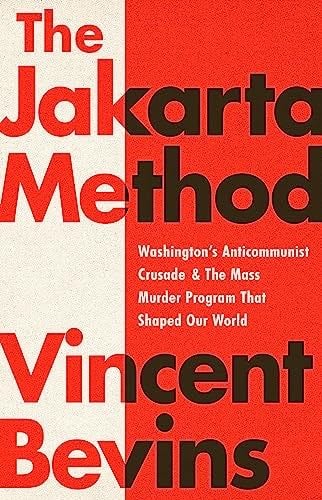
The Jakarta Method: Washington's Anticommunist Crusade and the Mass Murder Program that Shaped Our World
Vincent Bevins · 2021
NAMED ONE OF THE BEST BOOKS OF 2020 BY NPR, THE FINANCIAL TIMES, AND GQ<br/><br/>The hidden story of the wanton slaughter -- in Indonesia, Latin America, and around the world -- backed by the United States.<br/><br/>In 1965, the U.S. government helped the Indonesian military kill approximately one million innocent civilians. This was one of the most important turning points of the twentieth century, eliminating the largest communist party outside China and the Soviet Union and inspiring copycat terror programs in faraway countries like Brazil and Chile. But these events remain widely overlooked, precisely because the CIA's secret interventions were so successful.<br/><br/>In this bold and comprehensive new history, Vincent Bevins builds on his incisive reporting for the Washington Post, using recently declassified documents, archival research and eye-witness testimony collected across twelve countries to reveal a shocking legacy that spans the globe. For decades, it's been believed that parts of the developing world passed peacefully into the U.S.-led capitalist system. The Jakarta Method demonstrates that the brutal extermination of unarmed leftists was a fundamental part of Washington's final triumph in the Cold War.

Memoirs of a Geisha: A Novel
Arthur Golden · 1999
A literary sensation and runaway bestseller, this brilliant debut novel tells with seamless authenticity and exquisite lyricism the true confessions of one of Japan's most celebrated geisha.<br/><br/>Nominated as one of America’s best-loved novels by PBS’s The Great American Read<br/><br/>Speaking to us with the wisdom of age and in a voice at once haunting and startlingly immediate, Nitta Sayuri tells the story of her life as a geisha. It begins in a poor fishing village in 1929, when, as a nine-year-old girl with unusual blue-gray eyes, she is taken from her home and sold into slavery to a renowned geisha house. We witness her transformation as she learns the rigorous arts of the geisha: dance and music; wearing kimono, elaborate makeup, and hair; pouring sake to reveal just a touch of inner wrist; competing with a jealous rival for men's solicitude and the money that goes with it.<br/><br/>In Memoirs of a Geisha, we enter a world where appearances are paramount; where a girl's virginity is auctioned to the highest bidder; where women are trained to beguile the most powerful men; and where love is scorned as illusion. It is a unique and triumphant work of fiction—at once romantic, erotic, suspenseful—and completely unforgettable.
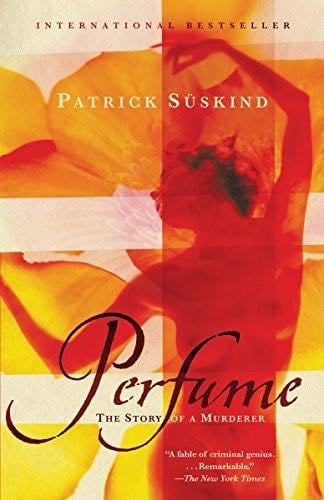
Perfume: The Story of a Murderer
Patrick Suskind · 2001
INTERNATIONAL BESTSELLER • Set in eighteenth-century France, the classic novel that provokes a terrifying examination of what happens when one man’s indulgence in his greatest passion—his sense of smell—leads to murder.<br/><br/>In the slums of eighteenth-century France, the infant Jean-Baptiste Grenouille is born with one sublime gift—an absolute sense of smell. As a boy, he lives to decipher the odors of Paris, and apprentices himself to a prominent perfumer who teaches him the ancient art of mixing precious oils and herbs. But Grenouille’s genius is such that he is not satisfied to stop there, and he becomes obsessed with capturing the smells of objects such as brass doorknobs and fresh-cut wood. Then one day he catches a hint of a scent that will drive him on an ever-more-terrifying quest to create the “ultimate perfume”—the scent of a beautiful young virgin. Told with dazzling narrative brilliance, Perfume is a hauntingly powerful tale of murder and sensual depravity.<br/><br/>Translated from the German by John E. Woods.
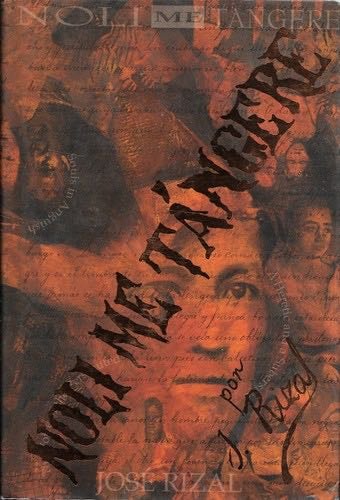
Noli me tangere
José Rizal · 1996

El Filibusterismo
José Rizal · 1968

The Second Sex
Simone de Beauvoir · 2012
The essential masterwork that has provoked and inspired generations of men and women. “From Eve’s apple to Virginia Woolf’s room of her own, Beauvoir’s treatise remains an essential rallying point, urging self-sufficiency and offering the fruit of knowledge.” —Vogue This unabridged edition reinstates significant portions of the original French text that were cut in the first English translation. Vital and groundbreaking, Beauvoir’s pioneering and impressive text remains as pertinent today as when it was first published, and will continue to provoke and inspire generations of men and women to come.
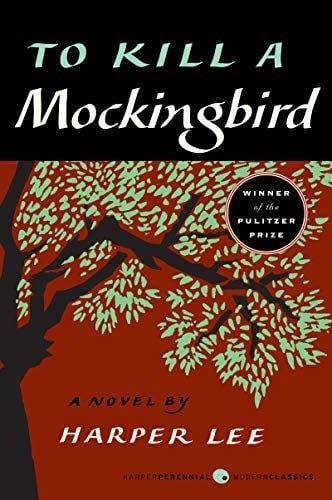
To Kill a Mockingbird
Harper Lee · 2002
Voted America's Best-Loved Novel in PBS's The Great American Read<br/>Harper Lee's Pulitzer Prize-winning masterwork of honor and injustice in the deep South—and the heroism of one man in the face of blind and violent hatred<br/>One of the most cherished stories of all time, To Kill a Mockingbird has been translated into more than forty languages, sold more than forty million copies worldwide, served as the basis for an enormously popular motion picture, and was voted one of the best novels of the twentieth century by librarians across the country. A gripping, heart-wrenching, and wholly remarkable tale of coming-of-age in a South poisoned by virulent prejudice, it views a world of great beauty and savage inequities through the eyes of a young girl, as her father—a crusading local lawyer—risks everything to defend a black man unjustly accused of a terrible crime.
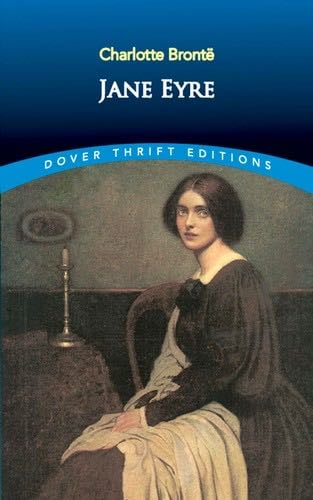
Jane Eyre (Dover Thrift Editions: Classic Novels)
Charlotte Brontë · 2003
Charlotte Brontë characterized the eponymous heroine of her 1847 novel as being "as poor and plain as myself." Presenting a heroine with neither great beauty nor entrancing charm was an unprecendented maneuver, but Brontë's instincts proved correct, for readers of her era and ever after have taken Jane Eyre into their hearts. The author drew upon her own experience to depict Jane's struggles at Lowood, an oppressive boarding school, and her troubled career as a governess. Unlike Jane, Brontë had the advantage of a warm family circle that shared and encouraged her literary pursuits. She found immediate success with this saga of an orphan girl forced to make her way alone in the world, from Lowood School to Thornfield, the estate of the majestically moody Mr. Rochester, and beyond. A selection of the Common Core State Standards Initiative.
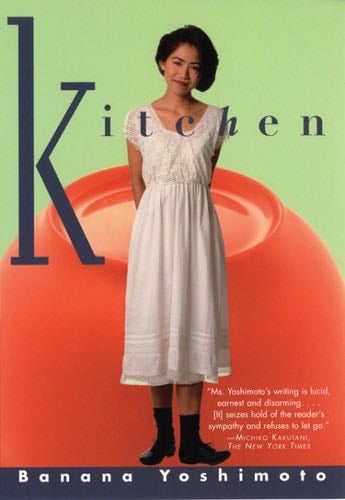
Kitchen
Banana Yoshimoto · 2015
<p>The acclaimed debut of Japan's "master storyteller" ( Chicago Tribune ). With the publication of Kitchen, the dazzling English-language debut that is still her best-loved book, the literary world realized that Banana Yoshimoto was a young writer of enduring talent whose work has quickly earned a place among the best of contemporary Japanese literature. Kitchen is an enchantingly original book that juxtaposes two tales about mothers, love, tragedy, and the power of the kitchen and home in the lives of a pair of free-spirited young women in contemporary Japan. Mikage, the heroine, is an orphan raised by her grandmother, who has passed away. Grieving, Mikage is taken in by her friend Yoichi and his mother (who is really his cross-dressing father) Eriko. As the three of them form an improvised family that soon weathers its own tragic losses, Yoshimoto spins a lovely, evocative tale with the kitchen and the comforts of home at its heart. In a whimsical style that recalls the early Marguerite Duras, Kitchen and its companion story, Moonlight Shadow, are elegant tales whose seeming simplicity is the ruse of a very special writer whose voice echoes in the mind and the soul. "Lucid, earnest and disarming... [It] seizes hold of the reader's sympathy and refuses to let go." —Michiko Kakutani, The New York Times<br></p>

The Waves
Virginia Woolf · 1978
“I am made and remade continually. Different people draw different words from me.”<br/><br/>Innovative and deeply poetic, The Waves is often regarded as Virginia Woolf’s masterpiece. It begins with six children—three boys and three girls—playing in a garden by the sea, and follows their lives as they grow up, experience friendship and love, and grapple with the death of their beloved friend Percival. Instead of describing their outward expressions of grief, Woolf draws her characters from the inside, revealing their inner lives: their aspirations, their triumphs and regrets, their awareness of unity and isolation.

Dune
Frank Herbert · 2003
• DUNE: PART TWO • THE MAJOR MOTION PICTURE Directed by Denis Villeneuve, screenplay by Denis Villeneuve and Jon Spaihts, based on the novel Dune by Frank Herbert • Starring Timothée Chalamet, Zendaya, Rebecca Ferguson, Josh Brolin, Austin Butler, Florence Pugh, Dave Bautista, Christopher Walken, Stephen McKinley Henderson, Léa Seydoux, with Stellan Skarsgård, with Charlotte Rampling, and Javier Bardem Frank Herbert’s classic masterpiece—a triumph of the imagination and one of the bestselling science fiction novels of all time. Set on the desert planet Arrakis, Dune is the story of Paul Atreides—who would become known as Muad'Dib—and of a great family's ambition to bring to fruition mankind's most ancient and unattainable dream. A stunning blend of adventure and mysticism, environmentalism and politics, Dune won the first Nebula Award, shared the Hugo Award, and formed the basis of what is undoubtedly the grandest epic in science fiction.

The Myth of Sisyphus
Albert Camus · 1955

The Plague (Vintage International)
Albert Camus · 2012
“Its relevance lashes you across the face.” —Stephen Metcalf, The Los Angeles Times • “A redemptive book, one that wills the reader to believe, even in a time of despair.” —Roger Lowenstein, The Washington Post A haunting tale of human resilience and hope in the face of unrelieved horror, Albert Camus' iconic novel about an epidemic ravaging the people of a North African coastal town is a classic of twentieth-century literature. The townspeople of Oran are in the grip of a deadly plague, which condemns its victims to a swift and horrifying death. Fear, isolation and claustrophobia follow as they are forced into quarantine. Each person responds in their own way to the lethal disease: some resign themselves to fate, some seek blame, and a few, like Dr. Rieux, resist the terror. An immediate triumph when it was published in 1947, The Plague is in part an allegory of France's suffering under the Nazi occupation, and a timeless story of bravery and determination against the precariousness of human existence.

The Fall
Albert Camus · 1991
NOBEL PRIZE-WINNING AUTHOR • One of the most widely read novels of all time—from one of the best-known writers of all time—about a lawyer from Paris who brilliantly illuminates the human condition.<br/><br/>Elegantly styled, Camus' profoundly disturbing novel of a Parisian lawyer's confessions is a searing study of modern amorality.
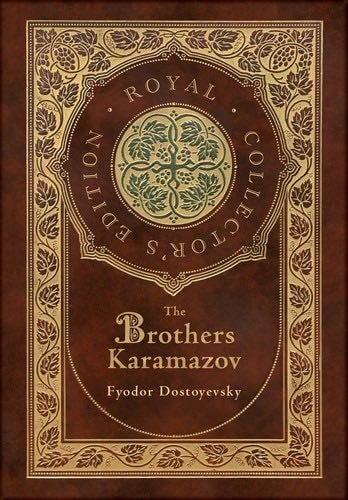
The Brothers Karamazov (Royal Collector's Edition) (Case Laminate Hardcover with Jacket)
Fyodor Dostoevsky · 2021
Fyodor Pavlovich's is a 55-year-old buffoon who takes no interest in his children, and lives at the expense of others. Fyodor three son's, the youthful Alyosha, the impetuous Dmitri, and the logical Ivan, are involved in several triangular love affairs. Throughout their encounters, the family is confronted with deep-seated philosophical issues, protestations of love, murder, and an exhilarating trial.<br/>The Brothers Karamazov is a passionate philosophical novel, set in 19th-century Russia, that enters deeply into the ethical debates of God, free will, and morality. It is a spiritual drama of moral struggles concerning faith, doubt, judgment, and reason, set against a modernizing Russia, with a plot which revolves around the subject of patricide. Since its publication, it has been acclaimed as one of the supreme achievements in world literature.<br/>This case laminate collector's edition includes a Victorian inspired dust-jacket.

The Master and Margarita: 50th-Anniversary Edition (Penguin Classics Deluxe Edition)
Mikhail Bulgakov · 2016
A 50th-anniversary Deluxe Edition of the incomparable 20th-century masterpiece of satire and fantasy, in a newly revised version of the acclaimed Pevear and Volokhonsky translation<br/><br/>Nothing in the whole of literature compares with The Master and Margarita. One spring afternoon, the Devil, trailing fire and chaos in his wake, weaves himself out of the shadows and into Moscow. Mikhail Bulgakov’s fantastical, funny, and devastating satire of Soviet life combines two distinct yet interwoven parts, one set in contemporary Moscow, the other in ancient Jerusalem, each brimming with historical, imaginary, frightful, and wonderful characters. Written during the darkest days of Stalin’s reign, and finally published in 1966 and 1967, The Master and Margarita became a literary phenomenon, signaling artistic and spiritual freedom for Russians everywhere.<br/><br/>This newly revised translation, by the award-winning team of Pevear and Volokhonsky, is made from the complete and unabridged Russian text.<br/><br/>For more than seventy years, Penguin has been the leading publisher of classic literature in the English-speaking world. With more than 1,700 titles, Penguin Classics represents a global bookshelf of the best works throughout history and across genres and disciplines. Readers trust the series to provide authoritative texts enhanced by introductions and notes by distinguished scholars and contemporary authors, as well as up-to-date translations by award-winning translators.
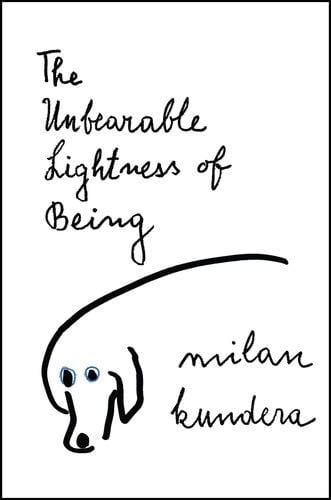
The Unbearable Lightness of Being
Milan Kundera · 2005
International Bestseller • Winner of the Los Angeles Times Book Prize for Fiction<br/>“Far more than a conventional novel. It is a meditation on life, on the erotic, on the nature of men and women and love . . . full of telling details, truths large and small, to which just about every reader will respond.” — People<br/>In The Unbearable Lightness of Being, acclaimed author Milan Kundera tells the story of two couples: a young woman in love with a man torn between his love for her and his incorrigible womanizing, and one of his mistresses and her humbly faithful lover. In a world in which lives are shaped by irrevocable choices and by fortuitous events, a world in which everything occurs but once, existence seems to lose its substance, its weight. Hence, we feel "the unbearable lightness of being" not only as the consequence of our pristine actions but also in the public sphere, and the two inevitably intertwine.<br/>This magnificent novel is a story of passion and politics, infidelity and ideas, and encompasses the extremes of comedy and tragedy, illuminating all aspects of human existence.
Ake: The Years of Childhood
Wole Soyinka · 2013

Orientalism
Edward W. Said · 1979

How Europe Underdeveloped Africa
Walter Rodney · 2018
<b>The classic work of political, economic, and historical analysis, powerfully introduced by Angela Davis</b><br><br>In his short life, the Guyanese intellectual Walter Rodney emerged as one of the leading thinkers and activists of the anticolonial revolution, leading movements in North America, South America, the African continent, and the Caribbean. In each locale, Rodney found himself a lightning rod for working class Black Power. His deportation catalyzed 20th century Jamaica's most significant rebellion, the 1968 Rodney riots, and his scholarship trained a generation how to think politics at an international scale. In 1980, shortly after founding of the Working People's Alliance in Guyana, the 38-year-old Rodney would be assassinated.<br><br>In his magnum opus, <i>How Europe Underdeveloped Africa</i>, Rodney incisively argues that grasping "the great divergence" between the west and the rest can only be explained as the exploitation of the latter by the former. This meticulously researched analysis of the abiding repercussions of European colonialism on the continent of Africa has not only informed decades of scholarship and activism, it remains an indispensable study for grasping global inequality today.

Pedagogy of the Oppressed: 50th Anniversary Edition
Paulo Freire · 2018

Women, Race and Class
Angela Y. Davis · 2000
In this classic work the famous communist activist, who was jailed for her beliefs, brings her passion and scholarship to confront three major crucial issues of feminism: women, race and class.

Imperialism the Highest Stage of Capitalism
Vladimir Ilich Lenin · 2011

Simulacra and Simulation (The Body, In Theory: Histories Of Cultural Materialism)
Jean Baudrillard · 1994
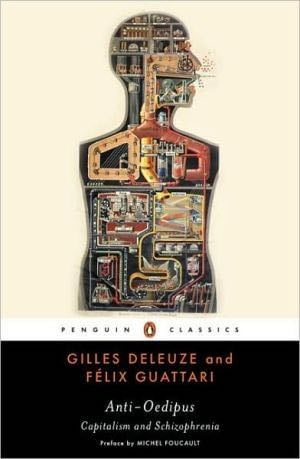
Anti-Oedipus: Capitalism and Schizophrenia (Penguin Classics)
Gilles Deleuze, Felix Guattari · 2009
Madness and Civilization
Michel Foucault · 2001
Aesthetics and Politics
Theodor Adorno, Walter Benjamin, Ernst Bloch, Bertolt Brecht, Georg Lukacs · 2020
Meditations
Marcus Aurelius · 2006

Digital Minimalism
Cal Newport · 2019
<b>A <i>New York Times, Wall Street Journal, Publishers Weekly, </i>and <i>USA Today </i>bestseller<br><br>"Newport is making a bid to be the Marie Kondo of technology: someone with an actual plan for helping you realize the digital pursuits that do, and don't, bring value to your life."--Ezra Klein, Vox<br><br>Minimalism is the art of knowing how much is just enough. Digital minimalism applies this idea to our personal technology. It's the key to living a focused life in an increasingly noisy world.</b><br><br>In this timely and enlightening book, the bestselling author of <i>Deep Work</i> introduces a philosophy for technology use that has already improved countless lives.<br><br>Digital minimalists are all around us. They're the calm, happy people who can hold long conversations without furtive glances at their phones. They can get lost in a good book, a woodworking project, or a leisurely morning run. They can have fun with friends and family without the obsessive urge to document the experience. They stay informed about the news of the day, but don't feel overwhelmed by it. They don't experience "fear of missing out" because they already know which activities provide them meaning and satisfaction.<br><br>Now, Newport gives us a name for this quiet movement, and makes a persuasive case for its urgency in our tech-saturated world. Common sense tips, like turning off notifications, or occasional rituals like observing a digital sabbath, don't go far enough in helping us take back control of our technological lives, and attempts to unplug completely are complicated by the demands of family, friends and work. What we need instead is a thoughtful method to decide what tools to use, for what purposes, and under what conditions.<br><br>Drawing on a diverse array of real-life examples, from Amish farmers to harried parents to Silicon Valley programmers, Newport identifies the common practices of digital minimalists and the ideas that underpin them. He shows how digital minimalists are rethinking their relationship to social media, rediscovering the pleasures of the offline world, and reconnecting with their inner selves through regular periods of solitude. He then shares strategies for integrating these practices into your life, starting with a thirty-day "digital declutter" process that has already helped thousands feel less overwhelmed and more in control.<br><br>Technology is intrinsically neither good nor bad. The key is using it to support your goals and values, rather than letting it use you. This book shows the way.

The Happiness Hypothesis
Jonathan Haidt · 2006
Jonathan Haidt skillfully combines two genres-philosophical wisdom and scientific research-delighting the reader with surprising insights. He explains, for example, why we have such difficulty controlling ourselves and sticking to our plans; why no achievement brings lasting happiness, yet a few changes in your life can have profound effects, and why even confirmed atheists experience spiritual elevation. In a stunning final chapter, Haidt addresses the grand question "How can I live a meaningful life?," offering an original answer that draws on the rich inspiration of both philosophy and science. <p>Ê</p> "<i>The Happiness Hypothesis</i>is a wonderful and nuanced book that provides deep insight into the some of the most important questions in life--Why are we here?Ê What kind of life should we lead?Ê What paths lead to happiness?Ê From the ancient philosophers to cutting edge scientists, Haidt weaves a tapestry of the best and the brightest.Ê His highly original work on elevation and awe--two long-neglected emotions--adds a new weave to that tapestry.Ê A truly inspiring book."Ê -<b>David M. Buss</b>, author of<i>The Evolution of Desire:Ê Strategies of Human Mating</i> Ê ÒIn this beautifully written book, Jonathan Haidt shows us the deep connection that exists between cutting-edge psychological research and the wisdom of the ancients.Ê It is inspiring to see how much modern psychology informs life's most central and persistent questions <b>-Barry Schwartz, author of<i>The Paradox of Choice: Why More Is Less</i></b> Ê ÊÒIn our quest for happiness, we must find a balance between modern science and ancient wisdom, between East and West, and between Ôleft brainÕ and Ôright brain.Õ Jon Haidt has struck that balance perfectly, and in doing so has given us the most brilliant and lucid analysis ofÊvirtue and well-being in the entire literature of positive psychology.Ê For the reader who seeks to understand happiness, my advice is: Begin with Haidt.Ó -<b>Martin E.P. Seligman, Director, Positive Psychology Center at the University of Pennsylvania and author of<i>Authentic Happiness</i></b> <b>Ê</b> ÒHaidt is a fine guide on this journey between past and present, discussing the current complexities of psychological theory with clarity and humor. . . HaidtÕs is an open-minded, robust look at philosophy, psychological fact and spiritual mystery, of scientific rationalism and the unknowable ephemeral Ð an honest inquiry that concludes that the best life is, perhaps, one lived in the balance of opposites.Ó -<b>Bookpage</b>

Thinking, Fast and Slow
Daniel Kahneman · 2013
Infinite Jest
David Foster Wallace · 2006

Tao Te Ching
Lao Tzu · 2019
The Path to Peace<br/><br/>The Tao Te Ching is a series of meditations on the mysterious nature of the Tao—the Way, the Light, the very Source of all existence. According to Lao Tzu (a name meaning "the old master"), the Tao is found where we would least expect it—not in the strong but in the weak; not in speech but in silence; not in doing but in "not-doing."<br/><br/>Compiled in China around 2,500 years ago, the Tao Te Ching is beloved by seekers all the world over. This edition is rendered in poetic language by Sam Torode, based on the 1919 translation by Dwight Goddard, making this ancient work accessible to contemporary readers.

In the Buddha's Words
Bodhi · 2005
Discourses and Selected Writings
Epictetus · 2008

The Republic (Plato)
Plato · 2017
The Republic of Plato is the longest of his works with the exception of the Laws, and is certainly the greatest of them. There are nearer approaches to modern metaphysics in the Philebus and in the Sophist; the Politicus or Statesman is more ideal; the form and institutions of the State are more clearly drawn out in the Laws; as works of art, the Symposium and the Protagoras are of higher excellence. But no other Dialogue of Plato has the same largeness of view and the same perfection of style; no other shows an equal knowledge of the world, or contains more of those thoughts which are new as well as old, and not of one age only but of all. Nowhere in Plato is there a deeper irony or a greater wealth of humour or imagery, or more dramatic power. Nor in any other of his writings is the attempt made to interweave life and speculation, or to connect politics with philosophy. The Republic is the centre around which the other Dialogues may be grouped; here philosophy reaches the highest point (cp, especially in Books V, VI, VII) to which ancient thinkers ever attained. Plato among the Greeks, like Bacon among the moderns, was the first who conceived a method of knowledge, although neither of them always distinguished the bare outline or form from the substance of truth; and both of them had to be content with an abstraction of science which was not yet realized.
Nichomachean Ethics
Aristotle · 1977
Siddhartha
Herman Hesse · 2022
When Herman Hesse visited India in the early days of the 20th century, he was captivated by the people, their customs, their culture, and their religion. On returning to Germany, he wrote a masterpiece on a young man's search for identity and meaning in a civilization that has lost its way. Loosely based on the early life of the Buddha, the book documents the journey of self-discovery and spiritual awakening of a character called Siddhartha.<br/><br/>The name Siddhartha was the one the Buddha was known by before his renunciation. Siddhartha in Sanskrit is translated as "Siddha" (achieved) and "artha" (what was searched for). The novel follows Siddhartha from a life of comfort of privilege to his quest for truth in a world plagued by sorrow and suffering.<br/><br/>The themes of Siddhartha are universal in that they are an account of a young person’s search for meaning — one that all readers can relate to. As Hesse skillfully takes us on a journey, he uses his poetic prose to challenge our preconceived notions of what a spiritual life and meaningful self-enrichment entail. Blind adherence to all systems of belief is shunned in favor of living in the moment and appreciating its ever-changing nature. Generations of readers have and will continue to find wisdom in the pages of Siddhartha.

Frankenstein: The 1818 Text (Penguin Classics)
Mary Shelley · 2018
<b>Mary Shelley’s classic novel, presented in its original 1818 text, with an introduction from National Book Critics Circle award-winner Charlotte Gordon</b><br> <br> <b>Nominated as one of America’s best-loved novels by PBS’s <i>The Great American Read</i></b><br> <br>The original 1818 text of <i>Frankenstein</i> preserves the hard-hitting and politically-charged aspects of Shelley’s original writing, as well as her unflinching wit and strong female voice. This edition also emphasizes Shelley’s relationship with her mother—trailblazing feminist Mary Wollstonecraft, who penned <i>A Vindication of the Rights of Woman</i>—and demonstrates her commitment to carrying forward her mother’s ideals, placing her in the context of a feminist legacy rather than the sole female in the company of male poets, including Percy Shelley and Lord Byron.<br> <br> This edition includes a new introduction and suggestions for further reading by National Book Critics Circle award-winner and Shelley expert Charlotte Gordon, literary excerpts and reviews selected by Gordon, and a chronology and essay by preeminent Shelley scholar Charles E. Robinson. <br> <br>Penguin Classics is the leading publisher of classic literature in the English-speaking world, representing a global bookshelf of the best works throughout history and across genres and disciplines. Readers trust the series to provide authoritative texts enhanced by introductions and notes by distinguished scholars and contemporary authors, as well as up-to-date translations by award-winning translators.

Cats Cradle
Kurt Vonnegut Jr. · 2020
A Room of Ones Own
Virginia Woolf · 2015
Product Description <br/>If Shakespeare had a sister as talented as he, would she have not the same opportunities to develop her skills ? Constructed around Woolf's idea that to write fiction a woman must have money and a room of her own, this revolutionary work depicts a woman's predicaments as she struggles deep within for some place of her own where she can work without restrictions. It brings forth the differences, biases and conventional attitudes that have caused immense suffering to women across the centuries. A Room of One's Own is a major work of the twentieth-century feminist literature.<br/> About the Author <br/>Born as Adeline Virginia Stephen in Kensington, London, in 1882, Virginia Woolf was raised by her parents in their literate and well-connected household. She was influenced by the Victorian Literary society and the prominent British intellectuals of her time. Virginia began writing in her teens.
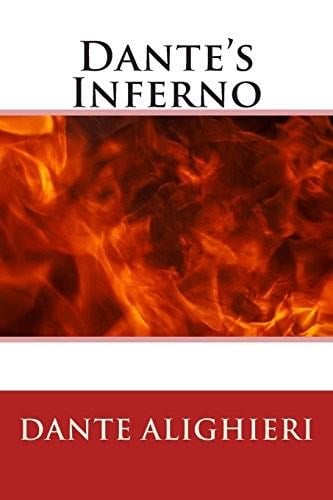
Dante’s Inferno
Dante Alighieri · 2013
currently reading
![At The Existentialist Cafe: Freedom, Being, and Apricot Cocktails [Hardcover] [Jan 01, 2012] NA - Sarah Bakewell · 2016](/_next/image?url=https%3A%2F%2Fassets.hypelist.com%2FuserAssets%2F8HFav3dCOIenWxXu4KUVibiA8MD2%2Fhypelists%2Fitems%2FD76DE29D-C7BC-4B89-AA90-3C25D69203FD.jpg&w=3840&q=85)
At The Existentialist Cafe: Freedom, Being, and Apricot Cocktails [Hardcover] [Jan 01, 2012] NA
Sarah Bakewell · 2016

Giovanni''s Room
James Baldwin · 2016
"The groundbreaking novel by one of the most important twentieth-century American writers--now in an Everyman's Library Contemporary Classics hardcover edition. Giovanni's Room is set in the Paris of the 1950s, where a young American expatriate finds himself caught between his repressed desires and conventional morality. David has just proposed marriage to his American girlfriend, but while she is away on a trip he becomes involved in a doomed affair with a bartender named Giovanni. With sharp, probing insight, James Baldwin's classic narrative delves into the mystery of love and tells an impassioned, deeply moving story that reveals the unspoken complexities of the human heart. Introduction by Colm Toibin"--