philosophy books to stare at the ceiling w

Items in this hypelist
Books

Surplus-Enjoyment
Slavoj Žižek · 2022
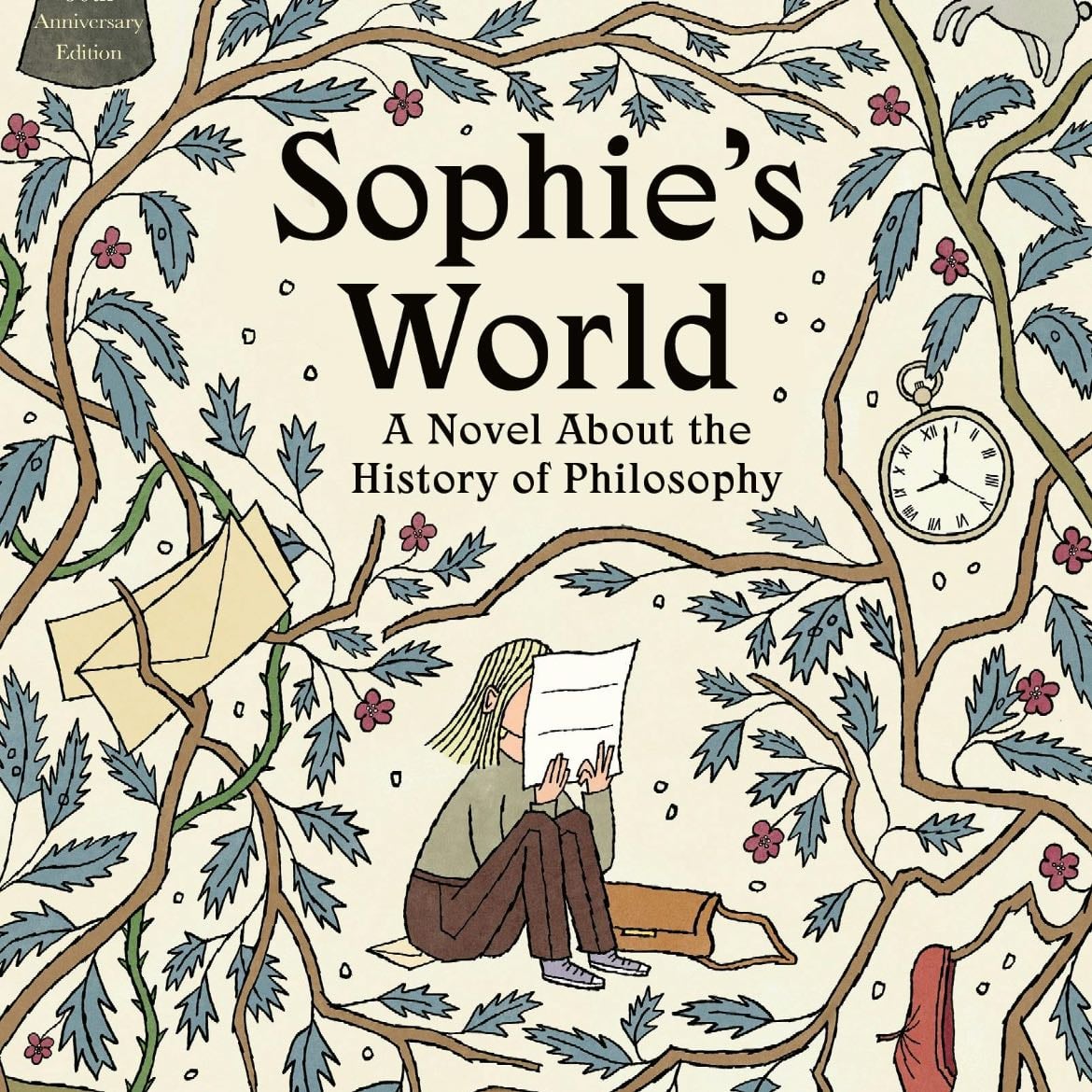
Sophies World
Gaarder, Jostein

The Brothers Karamazov
Fyodor Dostoevsky · 2002
<p><b>Winner of the Pen/Book-of-the-Month Club Translation Prize<br></b><br><b>The award-winning translation of Fyodor Dostoevsky's classic novel of psychological realism.</b><br><br><i>The Brothers Karamazov</i> is a murder mystery, a courtroom drama, and an exploration of erotic rivalry in a series of triangular love affairs involving the “wicked and sentimental” Fyodor Pavlovich Karamazov and his three sons—the impulsive and sensual Dmitri; the coldly rational Ivan; and the healthy, red-cheeked young novice Alyosha. Through the gripping events of their story, Dostoevsky portrays the whole of Russian life, is social and spiritual striving, in what was both the golden age and a tragic turning point in Russian culture. <br><br>This award-winning translation by Richard Pevear and Larissa Volokhonsky remains true to the verbal<br>inventiveness of Dostoevsky’s prose, preserving the multiple voices, the humor, and the surprising modernity of the original. It is an achievement worthy of Dostoevsky’s last and greatest novel.</p>

Being and Nothingness: An Essay in Phenomenological Ontology
Jean-Paul Sartre · 2018
<p>First published in French in 1943, Jean-Paul Sartre's <i>L'Être et le Néant </i>is one of the greatest philosophical works of the twentieth century. In it, Sartre offers nothing less than a brilliant and radical account of the human condition. The English philosopher and novelist Iris Murdoch wrote to a friend of "the excitement - I remember nothing like it since the days of discovering Keats and Shelley and Coleridge". This new translation, the first for over sixty years, makes this classic work of philosophy available to a new generation of readers.</p><p>What gives our lives significance, Sartre argues in <i>Being and Nothingness</i>, is not pre-established for us by God or nature but is something for which we ourselves are responsible. At the heart of this view are Sartre's radical conceptions of consciousness and freedom. Far from being an internal, passive container for our thoughts and experiences, human consciousness is constantly projecting itself into the outside world and imbuing it with meaning. Combining this with the unsettling view that human existence is characterized by radical freedom and the inescapability of choice, Sartre introduces us to a cast of ideas and characters that are part of philosophical legend: anguish; the "bad faith" of the memorable waiter in the café; sexual desire; and the "look" of the Other, brought to life by Sartre's famous description of someone looking through a keyhole. </p><p>Above all, by arguing that we alone create our values and that human relationships are characterized by hopeless conflict, Sartre paints a stark and controversial picture of our moral universe and one that resonates strongly today.</p><p>This new translation includes a helpful Translator's Introduction, a comprehensive Index and a Foreword by Richard Moran, Brian D. Young Professor of Philosophy, Harvard University, USA.</p><p>Translated by Sarah Richmond, University College London, UK.</p>

Aphorisms on Love and Hate
Friedrich Nietzsche · 2015
'We must learn to love, learn to be kind, and this from our earliest youth ... Likewise, hatred must be learned and nurtured, if one wishes to become a proficient hater' This volume contains a selection of Nietzsche's brilliant and challenging aphorisms, examining the pleasures of revenge, the falsity of pity, and the incompatibility of marriage with the philosophical life. Introducing Little Black Classics: 80 books for Penguin's 80th birthday. Little Black Classics celebrate the huge range and diversity of Penguin Classics, with books from around the world and across many centuries. They take us from a balloon ride over Victorian London to a garden of blossom in Japan, from Tierra del Fuego to 16th-century California and the Russian steppe. Here are stories lyrical and savage; poems epic and intimate; essays satirical and inspirational; and ideas that have shaped the lives of millions. Friedrich Nietzsche (1844-1900). Nietzsche's works available in Penguin Classics are A Nietzsche Reader, Beyond Good and Evil, Ecce Homo, Human, All Too Human, On the Genealogy of Morals, The Birth of Tragedy, The Portable Nietzsche, Thus Spoke Zarathustra, Twilight of Idols and Anti-Christ.
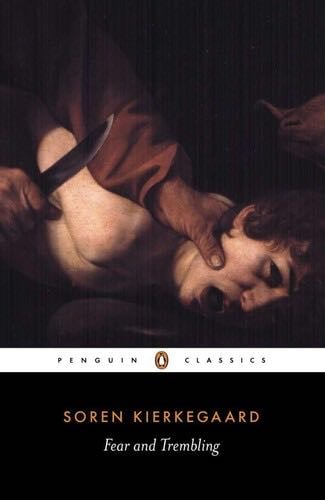
Fear and Trembling (Penguin Classics)
Soren Kierkegaard · 1986
<b>The infamous and controversial work that made a lasting impression on both modern Protestant theology and existentialist philosophers such as Sartre and Camus</b><br><br>Writing under the pseudonym of "Johannes de silentio," Kierkegaard expounds his personal view of religion through a discussion of the scene in Genesis in which Abraham prepares to sacrifice his son Isaac at God's command. Believing Abraham's unreserved obedience to be the essential leap of faith needed to make a full commitment to his religion, Kierkegaard himself made great sacrifices in order to dedicate his life entirely to his philosophy and to God. The conviction shown in this religious polemic—that a man can have an exceptional mission in life—informed all Kierkegaard's later writings. His "teleological suspension of the ethical" challenged the contemporary views of Hegel's universal moral system, and was also hugely influential for both protestant theology and the existentialist movement. <br><br> Alastair Hannay's introduction evaluates Kierkegaard's philosophy and the ways in which it conflicted with more accepted contemporary views. This edition also includes detailed notes to complement this groundbreaking analysis of religion, and a new chronology. <br><br>For more than seventy years, Penguin has been the leading publisher of classic literature in the English-speaking world. With more than 1,700 titles, Penguin Classics represents a global bookshelf of the best works throughout history and across genres and disciplines. Readers trust the series to provide authoritative texts enhanced by introductions and notes by distinguished scholars and contemporary authors, as well as up-to-date translations by award-winning translators.

Voice and Phenomenon
Jacques Derrida, Leonard Lawlor · 2011
Published in 1967, when Derrida is 37 years old, <i>Voice and Phenomenon</i> appears at the same moment as <i>Of Grammatology</i> and <i>Writing and Difference</i>. All three books announce the new philosophical project called “deconstruction.” Although Derrida will later regret the fate of the term “deconstruction,” he will use it throughout his career to define his own thinking. While <i>Writing and Difference</i> collects essays written over a 10 year period on diverse figures and topics, and Of Grammatology aims its deconstruction at “the age of Rousseau,” <i>Voice and Phenomenon</i> shows deconstruction engaged with the most important philosophical movement of the last hundred years: phenomenology. <br> <br> Only in relation to phenomenology is it possible to measure the importance of deconstruction. Only in relation to Husserl’s philosophy is it possible to understand the novelty of Derrida’s thinking. <i>Voice and Phenomenon</i> therefore may be the best introduction to Derrida’s thought in general. To adapt Derrida’s comment on Husserl’s <i>Logical Investigations</i>, it contains “the germinal structure” of Derrida’s entire thought. Lawlor’s fresh translation of <i>Voice and Phenomenon</i> brings new life to Derrida’s most seminal work.
The Ethics of Ambiguity
Simone de Beauvoir · 2018
From the groundbreaking author of The Second Sex comes a radical argument for ethical responsibility and freedom. In this classic introduction to existentialist thought, French philosopher Simone de Beauvoir’s The Ethics of Ambiguity simultaneously pays homage to and grapples with her French contemporaries, philosophers Jean-Paul Sartre and Maurice Merleau-Ponty, by arguing that the freedoms in existentialism carry with them certain ethical responsibilities. De Beauvoir outlines a series of “ways of being” (the adventurer, the passionate person, the lover, the artist, and the intellectual), each of which overcomes the former’s deficiencies, and therefore can live up to the responsibilities of freedom. Ultimately, de Beauvoir argues that in order to achieve true freedom, one must battle against the choices and activities of those who suppress it. The Ethics of Ambiguity is the book that launched Simone de Beauvoir’s feminist and existential philosophy. It remains a concise yet thorough examination of existence and what it means to be human.
Either / Or
Soren Kierkegaard · 1971
The book description for the previously published "Kierkegaard's Writings, III: Either/Or: A Fragment of Life" is not yet available.

Fear and Trembling (Penguin Classics)
Soren Kierkegaard · 1986
<b>The infamous and controversial work that made a lasting impression on both modern Protestant theology and existentialist philosophers such as Sartre and Camus</b><br><br>Writing under the pseudonym of "Johannes de silentio," Kierkegaard expounds his personal view of religion through a discussion of the scene in Genesis in which Abraham prepares to sacrifice his son Isaac at God's command. Believing Abraham's unreserved obedience to be the essential leap of faith needed to make a full commitment to his religion, Kierkegaard himself made great sacrifices in order to dedicate his life entirely to his philosophy and to God. The conviction shown in this religious polemic—that a man can have an exceptional mission in life—informed all Kierkegaard's later writings. His "teleological suspension of the ethical" challenged the contemporary views of Hegel's universal moral system, and was also hugely influential for both protestant theology and the existentialist movement. <br><br> Alastair Hannay's introduction evaluates Kierkegaard's philosophy and the ways in which it conflicted with more accepted contemporary views. This edition also includes detailed notes to complement this groundbreaking analysis of religion, and a new chronology. <br><br>For more than seventy years, Penguin has been the leading publisher of classic literature in the English-speaking world. With more than 1,700 titles, Penguin Classics represents a global bookshelf of the best works throughout history and across genres and disciplines. Readers trust the series to provide authoritative texts enhanced by introductions and notes by distinguished scholars and contemporary authors, as well as up-to-date translations by award-winning translators.
Letters from a Stoic (Penguin Classics)
Lucius Annaeus Seneca · 1969
"It is philosophy that has the duty of protecting us...without it no one can lead a life free of fear or worry."<br/><br/>For several years of his turbulent life, Seneca was the guiding hand of the Roman Empire. His inspired reasoning derived mainly from the Stoic principles, which had originally been developed some centuries earlier in Athens. This selection of Seneca's letters shows him upholding the austere ethical ideals of Stoicism—the wisdom of the self-possessed person immune to overmastering emotions and life’s setbacks—while valuing friendship and the courage of ordinary men, and criticizing the harsh treatment of slaves and the cruelties in the gladiatorial arena. The humanity and wit revealed in Seneca’s interpretation of Stoicism is a moving and inspiring declaration of the dignity of the individual mind.<br/><br/>For more than seventy years, Penguin has been the leading publisher of classic literature in the English-speaking world. With more than 1,700 titles, Penguin Classics represents a global bookshelf of the best works throughout history and across genres and disciplines. Readers trust the series to provide authoritative texts enhanced by introductions and notes by distinguished scholars and contemporary authors, as well as up-to-date translations by award-winning translators.

Siddhartha
Hermann Hesse · 2002
Aristotle's Nicomachean Ethics
Aristotle · 2012
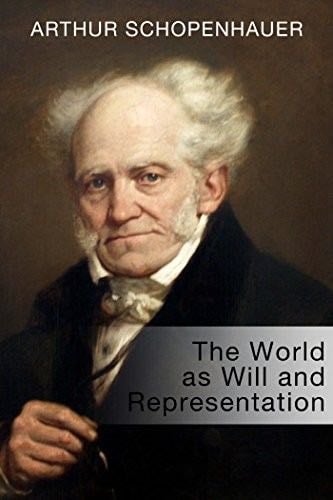
The World as Will and Representation
Schopenhauer Arthur · 2016
The World As Will And Representation Is The Central Work Of The German Philosopher Arthur Schopenhauer. One Of The Most Important Philosophical Works Of The Nineteenth Century, The Basic Statement Of One Important Stream Of Post-kantian Thought. It Is Without Question Schopenhauer's Greatest Work. Conceived And Published Before The Philosopher Was 30 And Expanded 25 Years Later, It Is The Summation Of A Lifetime Of Thought. ...this Book Will Be Of Interest To General Readers, Undergraduates, Graduates, And Scholars In The Field. --george Lăzăroiu, Phd, Institute Of Interdisciplinary Studies In Humanities And Social Sciences, New York, Analysis And Metaphysics
The Phenomenology of Spirit
Georg Wilhelm Friedrich Hegel · 2019
<p>The Phenomenology of Spirit, first published in 1807, is G. W. F. Hegel's remarkable philosophical text that examines the dynamics of human experience from its simplest beginnings in consciousness through its development into ever more complex and self-conscious forms. The work explores the inner discovery of reason and its progressive expansion into spirit, a world of intercommunicating and interacting minds reconceiving and re-creating themselves and their reality. The Phenomenology of Spirit is a notoriously challenging and arduous text that students and scholars have been studying ever since its publication.<br></p><p>In this long-awaited translation, Peter Fuss and John Dobbins provide a succinct, highly informative, and readily comprehensible introduction to several key concepts in Hegel's thinking. This edition includes an extensive conceptual index, which offers easy reference to specific discussions in the text and elucidates the more subtle nuances of Hegel's concepts and word usage. This modern American English translation employs natural idioms that accurately convey what Hegel means. Throughout the book, the translators adhered to the maxim: if you want to understand Hegel, read him in the English. This book is intended for intellectuals with a vested interest in modern philosophy and history, as well as students of all levels, seeking to access or further engage with this seminal text.<br></p>
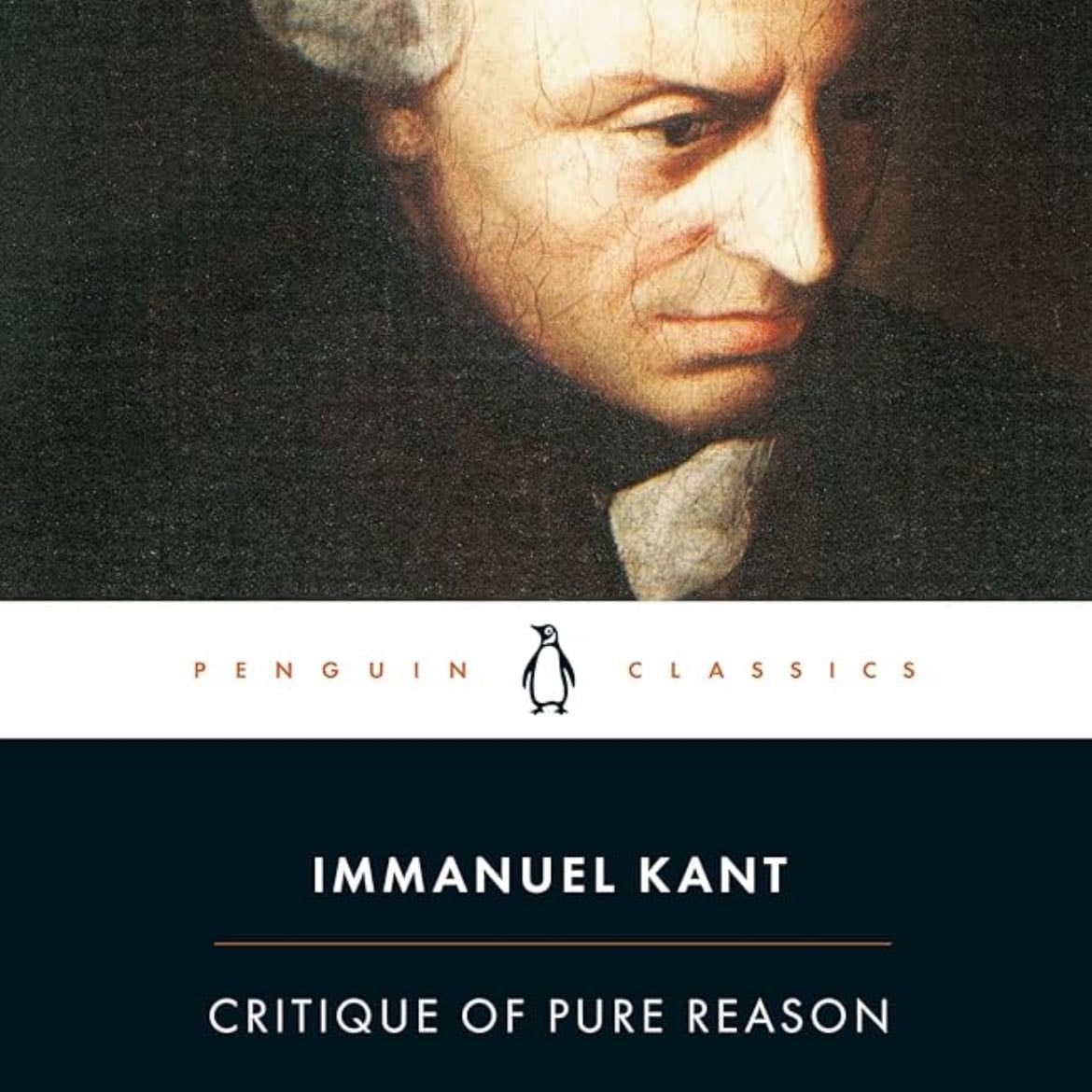
Critique of Pure Reason
Immanuel Kant · 2021
A new edition of Immanuel Kant's monumental philosophical treatise Critique of Pure Reason, which seeks to determine the limits and scope of metaphysics. Though it received little attention when it was first published, the Critique of Pure Reason eventually drew fire from both empiricist and rationalist critics, and became a source of substantial controversy before becoming one of the most enduringly influential works of Western philosophy. The book is now considered to be the culmination of several centuries of early modern philosophy and the inauguration of modern philosophy.<br/><br/>This edition is based on Kant's 1787 second edition of Critique of Pure Reason and uses the 1872 version of a translation by John Miller Dow Meiklejohn (1836 – 1902).<br/><br/>Immanuel Kant (1724-1804) is widely considered to be one of the greatest thinkers of all time and one of the most important figures in Western philosophy. He is best known for his seminal work, the Critique of Pure Reason, which is credited with revolutionizing philosophical thought and laying the foundations for modern philosophy. Kant's philosophy was deeply rooted in the Enlightenment tradition and focused on the concept of universal morality and the power of reason. He believed that all humans have a moral obligation to obey certain laws, and that these laws should be based on rational principles. Kant also argued that all knowledge comes from experience, and that the ultimate truth lies in a synthesis of intuition and reason. Further, he argued that morality must be based on universal principles, rather than on subjective considerations. Kant's work has had a profound impact on the development of many philosophical schools of thought, including Kantianism, Neo-Kantianism, and Post-Kantianism. His influence continues to be felt in many fields, from philosophy to theology and beyond.
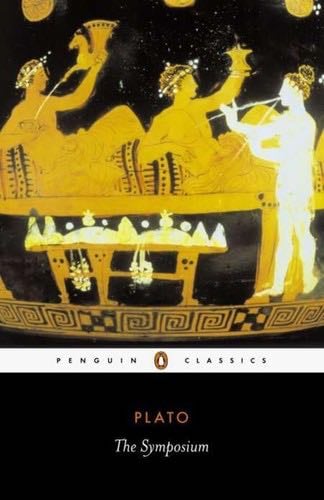
The Symposium
Plato · 2003
A fascinating discussion on sex, gender, and human instincts, as relevant today as ever<br/><br/>In the course of a lively drinking party, a group of Athenian intellectuals exchange views on eros, or desire. From their conversation emerges a series of subtle reflections on gender roles, sex in society and the sublimation of basic human instincts. The discussion culminates in a radical challenge to conventional views by Plato's mentor, Socrates, who advocates transcendence through spiritual love. The Symposium is a deft interweaving of different viewpoints and ideas about the nature of love—as a response to beauty, a cosmic force, a motive for social action and as a means of ethical education.<br/><br/>For more than seventy years, Penguin has been the leading publisher of classic literature in the English-speaking world. With more than 1,700 titles, Penguin Classics represents a global bookshelf of the best works throughout history and across genres and disciplines. Readers trust the series to provide authoritative texts enhanced by introductions and notes by distinguished scholars and contemporary authors, as well as up-to-date translations by award-winning translators.
Defence of Socrates, Euthyphro, Crito
Plato · 2008
The Problems of Philosophy
Bertrand Russell Earl · 2001
'Is there any knowledge in the world which is so certain that no reasonable man could doubt it?'Philosophy is the attempt to answer such ultimate questions, not carelessly and dogmatically, as we might deal with them in ordinary life, but critically, after analysing how and why the questions arise and clarifying the assumptions and concepts on which they are based.This classic work, first published in 1912, has never been supplanted as an approachable introduction to the theory of philosophical enquiry. It gives Russell's views on such subjects as the distinction between appearance and reality, the existence and nature of matter, idealism, knowledge by acquaintance and by description, induction, and the limits and value of philosophical knowledge.This edition includes an introduction by John Skorupski contextualizing Russell's work, and a guide to further reading.

Meditations on First Philosophy
René Descartes · 1993
Descartes's Meditations on First Philosophy, the fundamental and originating work of the modern era in Western philosophy, is presented here in Donald Cress's completely revised edition of his well-established translation, bringing this version even closer to Descartes's original, while maintaining its clear and accessible style.
The Consolations of Philosophy
Alain De Botton · 2001
'Witty, thoughtful, entertaining ...a stylish book, which manages to make philosophy both enjoyable and relevant, at the same time providing a very sensible digest of consolations for many of our current psychological ills' - Anthony Clare, "LiteraryReview".
The Problems of Philosophy
Bertrand Russel · 2018
Complete and unabridged edition.<br/>The Problems of Philosophy is a 1912 book by Bertrand Russell, in which Russell attempts to create a brief and accessible guide to the problems of philosophy. Focusing on problems he believes will provoke positive and constructive discussion, Russell concentrates on knowledge rather than metaphysics: If it is uncertain that external objects exist, how can we then have knowledge of them but by probability. There is no reason to doubt the existence of external objects simply because of sense data.<br/>Source: Wikipedia.

Plato: Five Dialogues: Euthyphro, Apology, Crito, Meno, Phaedo
Plato · 2002
The second edition of Five Dialogues presents G. M. A. Grube's distinguished translations, as revised by John Cooper for Plato, Complete Works. A number of new or expanded footnotes are also included along with an updated bibliography.
Meditations on First Philosophy
René Descartes · 19960418
The Meditations, one of the key texts of Western philosophy, is the most widely studied of all Descartes' writings. This authoritative translation by John Cottingham, taken from the much acclaimed three-volume Cambridge edition of the Philosophical Writings of Descartes, is based upon the best available texts and presents Descartes' central metaphysical writings in clear, readable modern English. As well as the complete text of the Meditations, the reader will find a thematic abridgement of the Objections and Replies (which were originally published with the Meditations) containing Descartes' replies to his critics. These extracts, specially selected for the present volume, indicate the main philosophical difficulties which occurred to Descartes' contemporaries and show how Descartes developed and clarified his arguments in response. This edition contains a new comprehensive introduction to Descartes' philosophy by John Cottingham and the classic introductory essay on the Meditations by Bernard Williams.
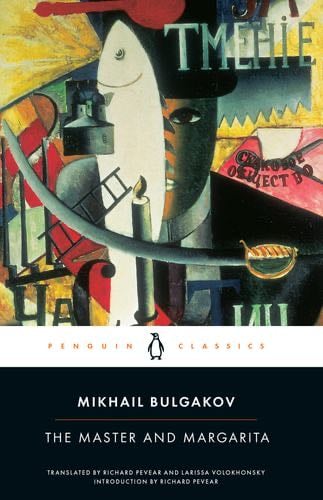
The Master and Margarita
Mikhail Bulgakov · 2001
Of Human Freedom
Epictetus · 2010
In this personal and practical guide to moral self-improvement and living a good life, the second-century philosopher Epictetus tackles questions of freedom and imprisonment, stubbornness and fear, family, friendship and love, and leaves an intriguing document of daily life in the classical world. GREAT IDEAS. Throughout history, some books have changed the world. They have transformed the way we see ourselves - and each other. They have inspired debate, dissent, war and revolution. They have enlightened, outraged, provoked and comforted. They have enriched lives - and destroyed them. Now Penguin brings you the works of the great thinkers, pioneers, radicals and visionaries whose ideas shook civilization and helped make us who we are.
What Is Existentialism?
Simone de Beauvoir · 2020
'It is possible for man to snatch the world from the darkness of absurdity' How should we think and act in the world? These writings on the human condition by one of the twentieth century's great philosophers explore the absurdity of our notions of good and evil, and show instead how we make our own destiny simply by being. One of twenty new books in the bestselling Penguin Great Ideas series. This new selection showcases a diverse list of thinkers who have helped shape our world today, from anarchists to stoics, feminists to prophets, satirists to Zen Buddhists.

Discourses and Selected Writings (Penguin Classics)
Epictetus · 2008
A new translation of the influential teachings of the great Stoic philosopher<br/><br/>Despite being born into slavery, Greco-Roman philosopher Epictetus became one of the most influential thinkers of his time. Discourses and Selected Writings is a transcribed collection of informal lectures given by the philosopher around AD 108. A gateway into the life and mind of a great intellectual, it is also an important example of the usage of Koine or “common” Greek, an ancestor to Standard Modern Greek.
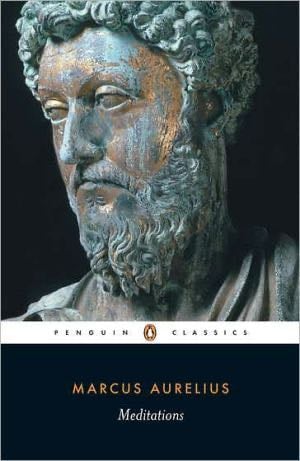
Meditations (Penguin Classics)
Marcus Aurelius · 2006
A clear and eloquent leading translation of the Roman emperor’s reflections of human life and death, timeless Stoic philosophy that inspires countless others including The Daily Stoic author Ryan Holiday to use philosophy as a tool for self-improvement and resilience to live a better life<br/><br/>Written in Greek by an intellectual Roman emperor without any intention of publication, the Meditations of Marcus Aurelius offer a wide range of fascinating spiritual reflections and exercises developed as the leader struggled to understand himself and make sense of the universe. Spanning from doubt and despair to conviction and exaltation, they cover such diverse topics as the question of virtue, human rationality, the nature of the gods and the values of leadership. But while the Meditations were composed to provide personal consolation, in developing his beliefs Marcus also created one of the greatest of all works of philosophy: a series of wise and practical aphorisms that have been consulted and admired by statesmen, thinkers and ordinary readers for almost two thousand years.<br/><br/>To provide a full understanding of Aurelius's seminal work, this edition includes explanatory notes, a general index, an index of quotations, an index of names, and an introduction by Diskin Clay putting the work in its biographical, historical, and literary context, a chronology of Marcus Aurelius's life and career.<br/><br/>Penguin Classics is the leading publisher of classic literature in the English-speaking world, representing a global bookshelf of the best works throughout history and across genres and disciplines. Readers trust the series to provide authoritative texts enhanced by introductions and notes by distinguished scholars and contemporary authors, as well as up-to-date translations by award-winning translators.
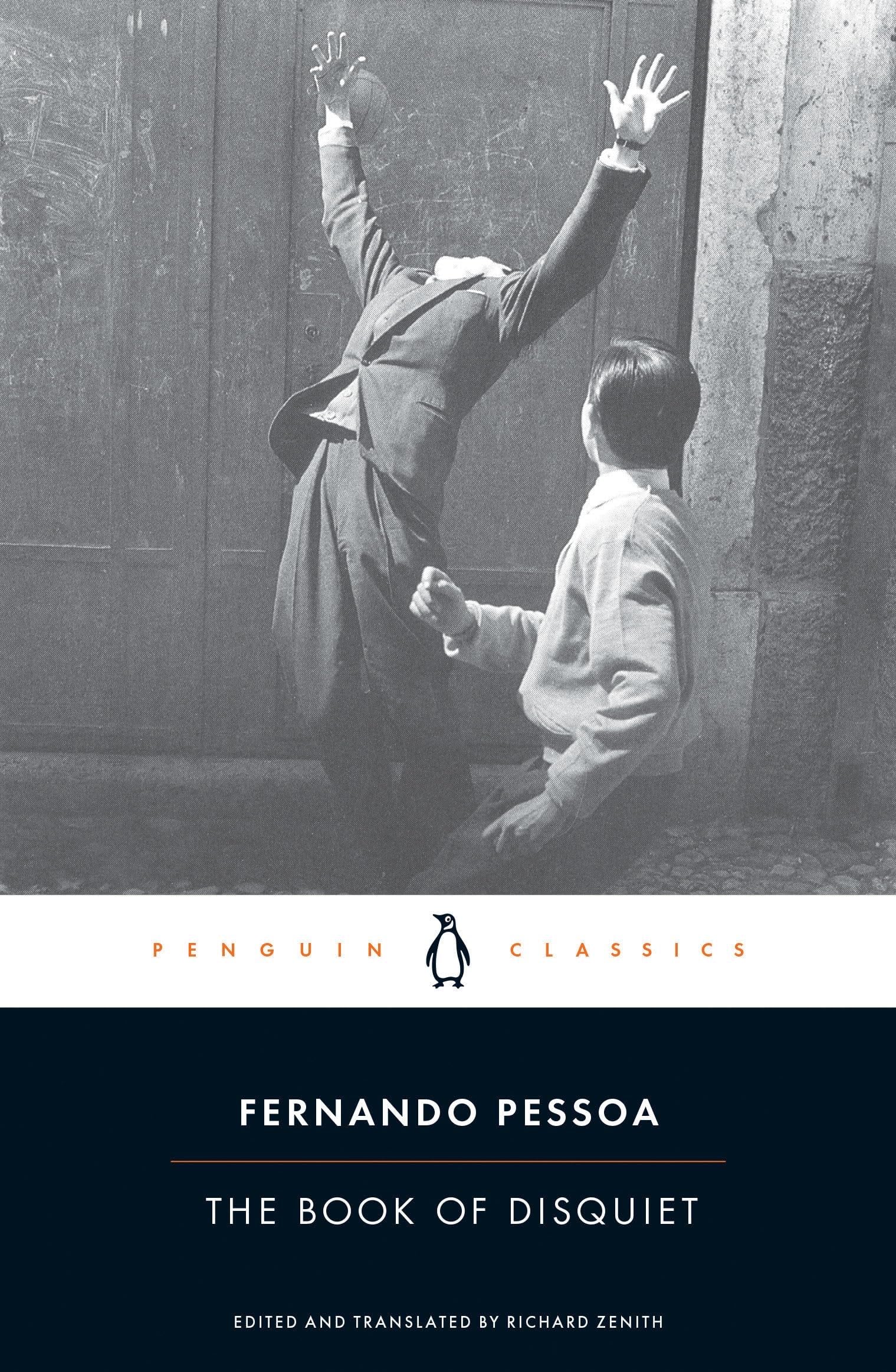
The Book of Disquiet (Penguin Classics)
Fernando Pessoa · 2002
The prizewinning, complete and unabridged translation—“the best English-language version we are likely to see for a long time, if ever” (The Guardian)—of a work of unclassifiable genius: the crowning achievement of Portugal’s modern master<br/><br/>Edited, Translated, and with an Introduction by Richard Zenith, the author of the Pulitzer Prize finalist Pessoa: A Biography<br/><br/>Winner of the Calouste Gulbenkian Translation Prize for Portuguese Translation<br/><br/>A Penguin Classic<br/><br/>Fernando Pessoa was many writers in one. He attributed his prolific writings to a wide range of alternate selves, each of which had a distinct biography, ideology, and horoscope. When he died in 1935, Pessoa left behind a trunk filled with unfinished and unpublished writings, among which were the remarkable pages that make up his posthumous masterpiece, The Book of Disquiet, an astonishing work that, in George Steiner's words, "gives to Lisbon the haunting spell of Joyce's Dublin or Kafka's Prague."<br/><br/>Published for the first time some fifty years after his death, this unique collection of short, aphoristic paragraphs comprises the "autobiography" of Bernardo Soares, one of Pessoa's alternate selves. Part intimate diary, part prose poetry, part descriptive narrative, captivatingly translated by Richard Zenith, The Book of Disquiet is one of the greatest works of the twentieth century.<br/><br/>“Pessoa is a genius.” —André Aciman
The Myth of Sisyphus (Vintage International)
Albert Camus · 2018
A Nobel Prize-winning author delivers one of the most influential works of the twentieth century, showing a way out of despair and reaffirming the value of existence.<br/><br/>Influenced by works such as Don Juan and the novels of Kafka, these essays begin with a meditation on suicide—the question of living or not living in a universe devoid of order or meaning. With lyric eloquence, Albert Camus brilliantly presents a crucial exposition of existentialist thought.